

Your Stories Don’t Define You
How You Tell Them Will
A podcast to unlock your stories and uncover meaningful insights.
Episode 97: Your Identity is Created by the Stories You Share
Family Narratives Can Impact Your Identity - For Better or For Worse
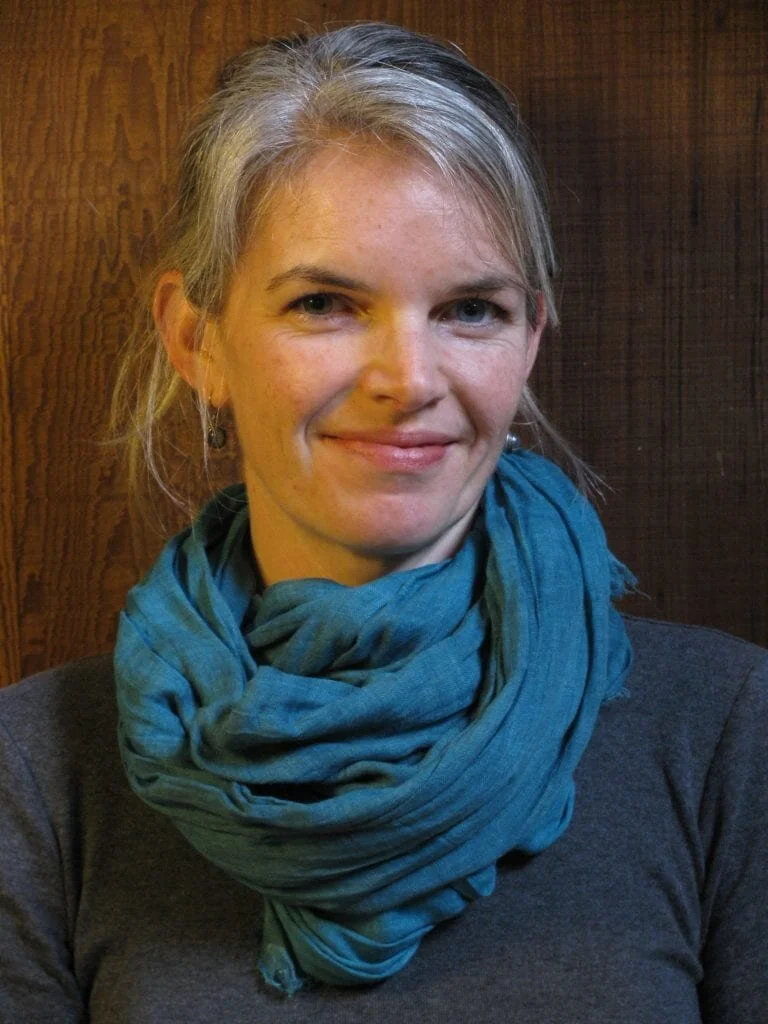
Dr. Kate McLean
Dr. Kate McLean was raised by a man who loved to share stories. Her father is a master storyteller, entertaining family and friends for hours with his sense of humor and insights. It’s not surprising that Kate found herself compelled by the narratives she heard in her first research position, focused on attachment theory in human development and psychology. She was so touched by the trust of people sharing their most intimate memories and experiences, that she knew her area of focus would revolve around the impact of telling those stories on the people sharing them and on the people hearing them.
Some of her colleagues focus their research on early childhood narrative, Kate’s area of interest revolves more around the transformative years between young adulthood and adulthood, roughly 17 - 22 years old.
She finds that the stories parents and caregivers share about their children in front of them, can have positive and negative effects in terms of their relationship, and how the young adult moves through those transformative years.
If the stories a parent or caregiver share about the young adult’s childhood don’t fit how that young adult sees themselves and how they are transforming into adulthood, conflict develops between them, and the transformation can become stilted.
On the other hand, if the narrative continues to resonate with the young adult, it may help them move forward with confidence in their identity as they move into adulthood.
Our conversation took some twists and turns, one thing that struck me was our mutual respect and admiration for those who share their stories with us. When someone chooses to trust you with their most intimate memories, we must respect that story and the person sharing it.
Learn more about Dr. McLean’s work, and check out her book, The Co-Authored Self.
Kate C. McLean, Professor of Psychology at Western Washington University, was trained in Developmental and Personality Psychology at the University of California, Santa Cruz (Ph.D., 2004). Her research focuses on adolescent and emerging adult identity development. She is on the governing council for the Society for the Study of Emerging Adulthood, and is an Associate Editor for the Journal Personality and Social Psychology: PPID. She teaches courses in Developmental and Personality Psychology, as well as research methods. She currently serves as the Director for the Center for Cross-Cultural Research at WWU.
Your History is Your Story; It Doesn't Have to Be Your Future
Shelley Beth Brown is one of those creative people that, when we first meet her, we assume has always thrived in creative environments. Her writing is whimsical, raw, and full of childhood imagination.
At Some Point, We Must Take Responsibility for Our Happiness
Shelley Beth Brown is one of those creative people that, when we first meet her, we assume has always thrived in creative environments. Her writing is whimsical, raw, and full of childhood imagination.
I asked her to be a guest on the podcast because I knew there was a lot to her history, and how her family and early career shaped her incredible storytelling.
It turns out that we have one important thing in common in our childhood: Our families had a similar definition of success that included having money and things. We were shaped by the belief that there was some recipe for success that included making a lot of money, and for some reason, people with a lot of money and things were to be admired.
Thinking that way shaped our career decisions in a big way, and now we're both finding that though we don't regret those decisions because of the learning and growth opportunities they provided. Those decisions didn't fit our needs, or our true definition of success, but they led us to insights and a different understanding of ourselves and the world around us.
But now, as adults, we're finding that success looks very different to us than it did to our parents. Success in Shelley's life means spending time with her adorable dog, in the city she loves, writing and creating stories from her extensive childhood daydreams. What it takes to make an income to support that success almost doesn't matter, as long as it involves a supportive team and a creative environment.
Shelley Brown is a connector of humans, and is addicted to helping people. On her days off, you might find her standing at an intersection near an L station in Chicago, with a sign "free directions", literally helping stranded travelers find their way. She's also a gifted writer, just discovering here profound impact on the people around her through her imaginative, hilarious stories that are as relatable as anything we can imagine from our childhood. Her Write Naked article has inspired me and many others to expose our true selves in order to grow and build authentic relationships.
Her professional strength is in sales, and when she's in an environment with people who "get" her, she simply glides into highly successful relationships with the clients she serves. Connect with her on LinkedIn to learn more.