
Your Stories Don’t Define You
How You Tell Them Will
A podcast to unlock your stories and uncover meaningful insights.
Episode 188: Podcast Brief 2 - Strategic and Activator Might Just Look Impulsive
She called me Speedy Gonzalez. My first coach after becoming a Gallup certified StrengthsFinder coach had a gorgeous Barcelonan accent, and she said: “Sarah, you’re like Speedy Gonzalez. Imagine you notice the village is running low on cheese, so you take money from the village coffer, run fast, as you do, to a nearby village, buy cheese, and run back. Problem solved! Except that when you return, you hear the villagers having a discussion about what kind of cheese to get this time… or maybe they won’t get cheese, maybe it’ll be salami instead… But you’ve already solved the problem, right?”
I’m such a visual person, I immediately imagined the tiny mouse running, like a blur, to the next village and running back carrying a huge block of cheese over his head.
And just like that (snap), I had a deep insight into how I sometimes get in my own way.
Using Self-Reflection To Improve Relationships & Life Satisfaction
This week’s episode of Your Stories Don’t Define You is part 2 of a series I’m exploring:

Podcast cover art with image and quote from Sarah Elkins
Last week I shared what it is like to have Command in your top talents using the StrengthsFinder assessment. This week I’m sharing about what my top two talents, Strategic & Activator look like for me, and next week I’ll share stories of how these talents, combined with Ideation and Adaptability, all of my top 5, show up in my life, for better and for worse.
As a Gallup certified StrengthsFinder coach, I’ve taken opportunities to work with other coaches for two reasons, one is that I believe in this stuff, the idea that when we understand our own way of thinking, our natural, instinctive talents, and when we understand where we might be getting in our own way, we find more satisfaction in our lives. Another reason is that to be a coach and to have a coach demonstrates my belief that this works, that working with a good coach adds value. I know that the more I know about my own talents and blind spots, the more effective I can be for my clients.
As I mentioned, today you’ll hear how my top two strengths, Strategic & Activator, show up in my daily life, and some strategies I now use to make sure they’re working for me and not against me.
When I saw the word Strategic on the Strengths report as my number one talent I laughed out loud. “I’m not strategic. This so far off. This is one of the reasons I don’t like these personality assessments.”
“Chances are good that you sometimes delve into opportunities or situations to find clues for handling them. It’s very likely that you customarily pinpoint the core problems and identify the best solutions.”

Notice the strategically taken photo! ~ Sarah Elkins, photographer, image of Robert Downs with dog in forefront, Helena, Montana
But because it was a dear friend, Tom Dietzler, who gave me this gift, I decided to look at my results in a different way. I sent the description of Strategic as it was written in my report to my sister and husband, the two people I believe know me sometimes better than I know myself, and did NOT include the word Strategic in the message. I asked: “What do you think of this? Do you think it describes me?” I didn’t want to influence their answers, so I did my best to ask without a hint of how ridiculous I thought it was.
My sister responded almost immediately: “wow, Sarah, they sure have your number. That’s exactly you.”
I called her to ask for specific examples, stories of times when she thought that description showed up in our interactions. She had LOTS of examples. So did my husband.
That’s when I invested in a StrengthsFinder coach. I had to find out more about this talent that I couldn’t see in myself.

Speedy Gonzalez, the little Robin Hood of Cheese
She called me Speedy Gonzalez. My first coach after becoming a Gallup certified StrengthsFinder coach had a gorgeous Barcelonan accent, and she said: “Sarah, you’re like Speedy Gonzalez. Imagine you notice the village is running low on cheese, so you take money from the village coffer, run fast, as you do, to a nearby village, buy cheese, and run back. Problem solved! Except that when you return, you hear the villagers having a discussion about what kind of cheese to get this time… or maybe they won’t get cheese, maybe it’ll be salami instead… But you’ve already solved the problem, right?”
I’m such a visual person, I immediately imagined the tiny mouse running, like a blur, to the next village and running back carrying a huge block of cheese over his head.
And just like that (snap), I had a deep insight into how I sometimes get in my own way.
My strategic brain immediately comes up with a solution to a puzzle or problem. Many times it comes so fast that I’m not even sure I thought about it, the solution simply popped into my head. And because my Strategic is immediately followed by Activator, I just GO. I take the first step and know I’ll deal with obstacles or consequences as I meet them… or hit them face first.
Most of the time this way of thinking is awesome. It guides me to the fastest, simplest solutions to complex problems. I make decisions quickly, and the majority of the time, they have been excellent decisions. When I worked as a Peoplesoft consultant with Federal agencies in the DC area, those skills are what made me successful in identifying solutions for the help desk, creating easy to understand training materials, and finding solutions to implementation issues around data collection.
But for most of my life I considered myself impulsive because I didn’t realize my brain was actually coming to the solution before I could fully process what that meant. The map is in my head and I’m taking the first step. And I don’t always take stakeholders on the ride with me, causing communication issues and the appearance that I’m impulsive.
Here’s an example:

Fresh basil won’t keep in the car, either! (Image, fresh basil being made into pesto)
When I get into the car to run more than one errand, before I even plug my seatbelt in I have the route in my head. Not because I’m a planner, or because I think about it with intention, but because that’s how my brain works. The route is specific, many things taken into account, like not wanting to turn left across traffic on a busy street, not wanting to backtrack but wanting an efficient route, and knowing the grocery store has to be the last stop because it’s 80 degrees outside and I’ll have frozen peas in the car.
It wasn’t until a few months after my first conversation with a coach that I came to this realization. And years later I continue to see where my Strategic shows up in my daily activities. What’s especially interesting to me is that many people struggle in seeing that first, number 1 talent as a talent, or even as something that truly describes them.

Podcast cover art with image and quote from Sarah Elkins
Here’s why: Those top two strengths are so natural, so innate, that we cannot even see how they’re unique or special. I can tell when I’ve identified a true talent when I ask my client to tell me about the most common compliment they receive and they tell me, and then qualify it by saying something like: “But everyone does that.” Or “Doesn’t everyone do that?” They dismiss the compliment because the skill or talent comes too easily for them. They cannot own this natural talent because it wasn’t a struggle to get good at it… isn’t that kind of silly when you think about it?
Here’s another way I know I’ve uncovered something special in a client: When I ask them about how they feel when other people don’t think in the natural way they do, like when my husband drives us on errands and I have to bite my tongue because he doesn’t seem to have a route in his head, it feels like each turn he takes is an assault on my brain. I get annoyed, I’ll admit it, and I used to think: “How is this possible? He’s the smartest guy I know! Why would he turn left here, doesn’t he know that now he’ll have to go left across traffic on the busiest street in town?”
I worked with a coach to better understand my talents and how to apply them with intention, it also helped me know which talent to employ at different times. When I get annoyed because someone isn’t doing something the way I would do it, I use my Ideation (my #3 talent that magically comes up with ideas all. The. Time.), to focus my brain on curiosity about the situation. I begin to ask myself questions like: why am I getting prickly & annoyed, what’s triggering this? Does it matter right now if he takes a different route, am I in a hurry? And when I’ve answered those questions, I may ask my husband what his plan his for our errands, what he’s thinking about for our shopping list.
I do this at work, with my children, and even when I’m driving behind someone who seems to be lost.
My drivers are Strategic / Activator, neither of which are in the relationship building domain of the four StrengthsFinder domains. That alone is a clue about where my motivation is, which is mostly task-based, not people-based. And now that I know that, my communication has shifted, I’m using those talents with far more intention, and my relationships and leadership has improved dramatically.
The only way we grow as humans, the only way we can truly find satisfaction in our relationships, is to be self-reflective. This is not the same as being hyper critical of ourselves!
Being self-reflective means understanding our role in every situation, in every relationship. What am I doing to move this conversation in a positive direction? What was my role in the conflict with my coworker? What natural talents am I using in ways that are positive, and where am I getting in my own way?
If you enjoyed this podcast brief, stay tuned for next week’s episode, when we’ll explore Ideation & Adaptability, rounding out my top 5 talents.
ABOUT SARAH:
elkins consulting logo plus image of sarah elkins"Uncovering the right stories for the right audiences so executives, leaders, public speakers, and job seekers can clearly and actively demonstrate their character, values, and vision."
In my work with coaching clients, I guide people to improve their communication using storytelling as the foundation of our work together. What I’ve realized over years of coaching and podcasting is that the majority of people don’t realize the impact of the stories they share - on their internal messages, and on the people they’re sharing them with.
My work with leaders and people who aspire to be leaders follows a similar path to the interviews on my podcast, uncovering pivotal moments in their lives and learning how to share them to connect more authentically with others, to make their presentations and speaking more engaging, to reveal patterns that have kept them stuck or moved them forward, and to improve their relationships at work and at home.
The audiobook, Your Stories Don’t Define You, How You Tell Them Will is now available!
Included with your purchase are two bonus tracks, songs recorded by Sarah's band, Spare Change, in her living room in Montana.
Episode 101: Impulsive But Not Stupid
What is one thing you’ve been saying about yourself for decades? What are the stories you share that give you and your listeners the perceptions that match that thing you’ve been saying about yourself, confirming those characteristics in a positive or negative way?
Stories We Tell Have an Impact On Our Perceptions of Ourselves
“Just to make sure I understand this: If I sign the lease before the other two women in the house, I have the option of bringing a small pet. If I don’t choose to have one, I still have one of only two leases with that clause, which means if I don’t bring a small pet, that will be one fewer pet in the house. Is that right?”
“Yes, that’s right.”
“Excellent. How much is the deposit again?”
It was the end of the spring semester and I was signing a lease to share a four bedroom house with three other women starting fall semester at Colorado State University in Fort Collins. A few minutes later, I was on my way home to my parent’s house in Colorado Springs to spend the summer working and saving money for the next school year.
It was a fun summer working in a fancy restaurant, mostly lunch service, with a ridiculously fun crew, and the weeks flew by quickly. Just a few days before I was scheduled to move into the house in Fort Collins, I got a phone call from the landlord.
Her father bought the big house for her to live in and manage for the time she was going to be in school. As a student in the pre-veterinary program, they knew she’d be spending at least 4-6 years there and made a very wise investment by buying a house for her instead of renting. If I have any regrets in life, it’s not finding a way to buy a small house there while I was in school. Just a few years later, Fort Collins became a bedroom community for the Denver area, and still retains its lovely, small-town feel, and the property values have sky-rocketed there.
I answered her call to hear an abrupt, challenging tone:
“I’ve decided you can’t have a small pet in the house after all.”
“But that was in the lease I signed, Jessica.”
“I know, but I changed my mind.”
“Um… that’s not legal. Besides, what changed your mind?”
“I was only going to bring one of my cats from home in Albuquerque but I decided I want to bring both, and my dad said we couldn’t have more than two cats in the house.”
I’m not normally unreasonable, and I certainly wasn’t a particularly spiteful 20 year old, but her challenging, abrupt, aggressive tone really put me off. If she had just explained the situation and apologized for trying to change a legal document, I’m sure I would have been fine with it. But she wasn’t. And I was, well, 20, and pretty impulsive.
“What if I already got a kitten?”
“Can you take it back?” Again in a challenging and aggressive tone.
“What? Take it BACK? Are you serious? No! I can’t just TAKE IT BACK.”
“Okay then. We’ll just have to hide him when my dad comes to visit.”
Seconds after hanging up the phone I grabbed the newspaper off the kitchen table and combed the classifieds for free kittens. Two hours later I was driving home with my sister, with a kitten on my lap in my ’74 gold VW Super Beetle, stopping to pick up a cat box, cat litter, cat food, and a couple of toys for a kitten I couldn’t afford, didn’t really want, and hadn’t considered naming yet.
I can’t even imagine what my parents were thinking when I brought that kitten home. We were a dog family, through & through, and hadn’t had a cat since I was five years old. I didn’t even like cats.
But Clawed became an important part of my life, the only stable, reliable thing I experienced for at least six years, until I met my husband. He was all the things a cat can be: Mischievous, snuggly (on his terms), playful, and loving. And he was mine, completely mine. He tolerated other people, but I was HIS. I loved that cat for 9 years through multiple moves, the final one from Washington DC to Montana, where he died just a few months later. He brought me comfort in times of uncertainty, and gave me memories that have become legendary stories in my family. He was a beautiful accident to come out of a spiteful, impulsive decision.
I’ve been describing myself as impulsive for as long as I can remember, and most people who know me well would agree. And while I can be impulsive sometimes, I realize now when I look back, that most of the time my behavior was not as spontaneous as it appeared at the time.
It wasn’t until I started getting deeply into my StrengthsFinder results that I saw myself and those quick decisions as less impulsive and more strategic. As I mentioned in an earlier episode, my top strengths are Strategic and Activator, and it took me at least four months to see where strategic showed up in my daily life.
That’s one of the cool things about that particular assessment: It opens your eyes to the possibility that something you considered a weakness before can be shifted to be seen from a different perspective, even as a strength.

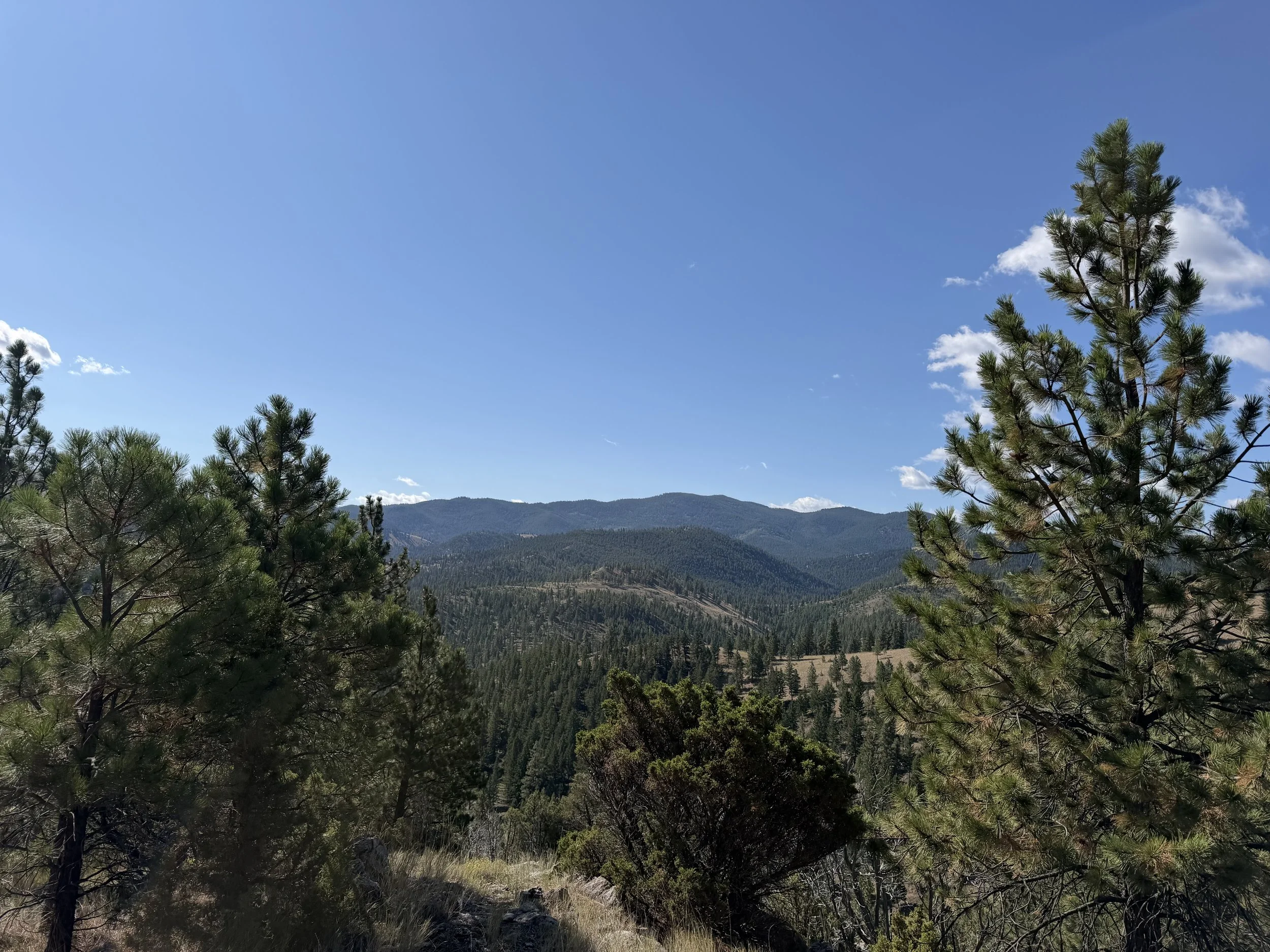
Summit looking south east, Mt. Helena, Helena, Montana
In that earlier episode, I mentioned that my strategic shows up in my hamster-brain thinking process as I’m getting ready to do something. The example I used was that in the seconds it took me to bundle up for a hike on the mountain behind my house, I had a plan for the route I would take that day, complete with an explanation for every part of my plan: I’d take a steep trail up to get my heart rate up and warm my core, I’d take the two-block route to the trail that would allow for the dog to poop where it could easily be picked up and disposed of, and I’d be sure not to take the steep trail back because my knees were a little achy.
It was that “ah ha” moment on the mountain that I could finally see that strategic showed up a LOT in my life, like when I am in the car, and before I even click my seatbelt on, I know exactly the route I will take to run errands, and the reasons for the route.
And in the time between that discovery and today, I’ve started to see how strategic was showing up in my past, impulsive-looking decisions.
Getting Clawed was absolutely impulsive, there’s no sugar-coating that decision, when my Activator went crazy and Strategic took a back seat.
But the time (seemingly out of nowhere) I asked my husband to marry me after 8 months dating wasn’t nearly as impulsive as it seemed. And the time, two days after we moved from Washington DC to Montana, I drove our 218,000 mile Honda Accord into the Subaru dealer parking lot with a failing transmission and drove out less than two hours later in a Subaru Outback Sport. And the time I walked through an 1890 Victorian home for a few minutes, called Bob to come look at it, and made an offer at 4:00 that afternoon. And the time I talked to Neil Hughes in late October about maybe starting a podcast, and launching it on December 26, 2017 with a handful of episodes in the hopper for a weekly publication. Was I thinking long term about any of those things? Absolutely not.

22 Anniversary, Bob and Sarah at the Missouri River, 2019
And yet, here I am, married for more than 22 years (and still like him an awful lot, but that’s another story), driving our third Subaru since purchasing that first one in 1999, all from the same awesome dealership, living in a charming, “project house” for nearly 20 years with loads of extraordinary memories of raising two wonderful boys, hosting guests, parties, and music in it, and here we are at episode 101 of that crazy idea of a weekly podcast I had nearly two years ago.
So. This is what Strategic-Activator looks like in me. None of those decisions were actually impulsive in the sense that they were exclusively spontaneous. Now – to someone with Deliberative or Intellection in their top strengths (like my husband), they certainly look that way, but that’s because a) they’re not in my head with me, where a ridiculously detailed but very fast internal dialog has happened before I take a step, and b) I haven’t taken them along for that ride.
Before asking my husband to marry me, my hamster brain had spent considerable effort (but not time, necessarily) thinking about things like: I haven’t ever wanted to spend this much time with one person, especially a guy, he treats me like I matter, like I’m smart and insightful, beautiful and sexy, reliable and practical (mostly), he brings me an espresso in bed every morning we’re together, which looks a lot like “love” and “cherish” to me, he’s kind, challenges me, is crazy-smart, warm, and tolerates my crazy – and my family’s crazy, with patience and is even mildly entertained by it. Those all felt like real things to me at the time, they still do, and asking him to marry me just felt right.
Buying that first Subaru wasn’t an instant decision either. And I had seen enough houses in the area we wanted to live, that I knew the deal-breakers for me. Of course, I didn’t REALLY understand what he meant when Bob said: “You know this is a project house, right?” But we haven’t ever regretted those decisions, nearly 20 years later. They were both good, reasonable decisions.
And when I took on that podcast project? I knew I had the support and resources to make it work long before I recorded the first episode. So no, it wasn’t even part of my imagination to consider I’d still be doing this, 101 episodes later. But then, at 20 years old, I thought the only thing I’d ever do for more than 20 years was breathe… and have a cat for a while.
I told a story at a live storytelling event a few years ago, explaining the thought process before getting my one and only tattoo at 44 years old. It’s called I’m Impulsive, Not Stupid.
I’ve been telling myself for most of my life that I’m impulsive, maybe somewhat smart, but definitely lucky for how most of those impulsive decisions turned out well. I told myself I simply trusted my instincts. And yet, as I become more intentional with my strengths, I’m able to see those decisions from a completely different perspective. It has shifted my confidence in a big way, and as a communication coach, has offered me incredible insights into others, particularly those with similar - and opposite - strengths from mine.
Being more aware of how my strengths work has also improved my communication with my husband, family, and close friends. When I’m working through an important decision, I now take those involved for the ride on that hamster wheel in my brain, so they can hear the reasoning behind where I’m leaning in that decision. And even more important, they can see the flaws and/or beauty of the reasoning to help me make those decisions more thoughtful and reliable.
If I surrounded myself only with people who thought like me, I’d miss out on making better decisions, and on recognizing and demonstrating that I value the strengths in the people around me, which is always good for relationships.
What is one thing you’ve been saying about yourself for decades? What are the stories you share that give you and your listeners the perceptions that match that thing you’ve been saying about yourself, confirming those characteristics in a positive or negative way?
Consider where those characteristics might not be what you’ve been telling yourself all these years, and maybe, just maybe you’ll see yourself in a more true, positive light.