
Your Stories Don’t Define You
How You Tell Them Will
A podcast to unlock your stories and uncover meaningful insights.
Episode 115: This Too Shall Pass, For Better or For Worse
This would be my last hike on the mountain for at least a month, and as my dog panted and slobbered by my legs, I felt it – grief. I would leave my mountain and my dog for an entire month. Maybe this was a mistake. I sat down on a rock and tried to meditate, to just be still for a few minutes to let the thoughts flow and clear.
Everything in Life is Temporary, Embrace the Transient Nature
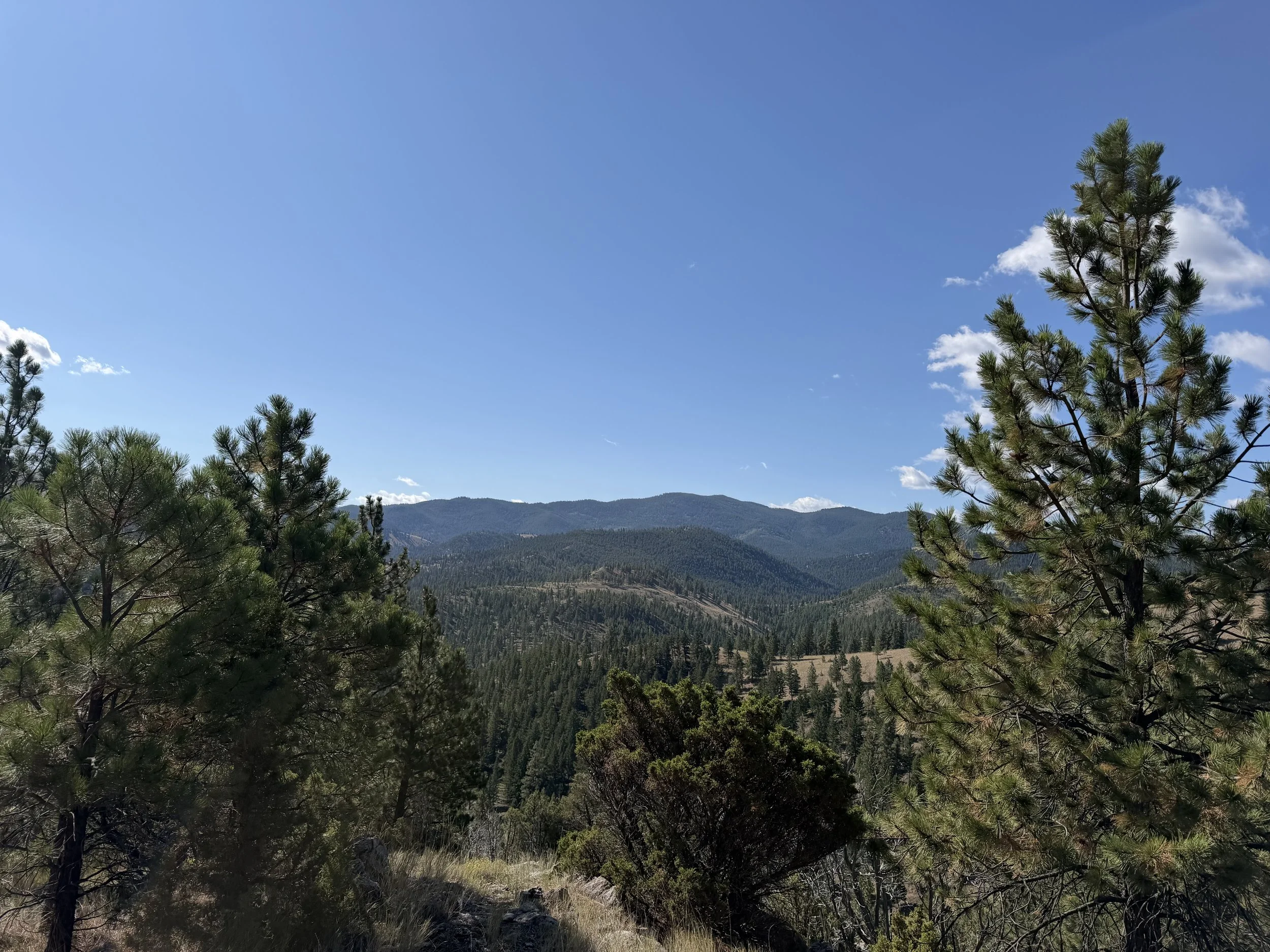
I stood at the summit of my mountain, Mount Helena in #Montana, breathing hard after the fast climb I took, trying to keep up with the dog.
Summit of Mt. Helena, Helena, MT January 2020
It was spectacular, as always. No matter how many times I get up there, probably nearly a hundred times in the 20 years we’ve lived here, it always takes my breath away, literally and figuratively. Gazing to the southwest, there are no buildings, just huge, snow covered mountains and forest as far as I can see. To the north is our town’s guardian, the #SleepingGiant, a #mountain I had an opportunity to climb a few years ago. I looked east to see our small city 1,000 feet below me, the Cathedral, the dome of our Capitol building, and the beautiful buildings of #CarrollCollege slightly north of downtown.

Sleeping Giant - head to the right, large nose, Montana
This would be my last hike on the mountain for at least a month, and as my dog panted and slobbered by my legs, I felt it – grief. I would leave my mountain and my dog for an entire month. Maybe this was a mistake. I sat down on a rock and tried to meditate, to just be still for a few minutes to let the thoughts flow and clear.
But I had too much going on in my head, packing, making sure everything was in order in the house, plans to check in with our son who would be taking care of the house and the dog. Far too much clutter was in my head, and I knew the only solution was to raise my heart rate again by jogging down the mountain, watching for trip hazards and ice, not allowing distraction by focusing on what was right in front of me.
When our youngest started high school, my husband and I started talking about what we would do when he left home. My husband already worked remotely for a company, so he could work from anywhere. It was my job that kept us in Montana year-round, and one idea that really appealed to us was living in different places for four to eight weeks at a time, getting to know another town, locals, cultures, and exploring different parts of the world.
Over the next few years, I started to build my #coaching and #speaking business with that idea in my head. I could either make this business successful and generate income, or I would have to find a company that would allow me to work remotely. My eyes were always open to opportunities with companies I thought would be a good fit for me, but nothing ever quite fit. #ElkinsConsulting would have to generate more income.
Our son started as a freshman in college last fall, and when we moved him into the dormitory, my husband and I talked again about our dream to work somewhere else for a month or so. We settled on the central coast of #California for our first experiment in living away like that.
Lots of research later, we decided on a #beach house within our price range, paid the deposit, and began the preparation to live away for an entire month in the winter. No #snow shoveling, no bundling up in hat, coat, mittens and snow boots to go to the grocery store for a whole month. We were both eager, excited, and a little anxious.
It was the day before our trip would begin, and I found myself sitting on the top of the mountain, worried and feeling a sense of grief – of loss – as I contemplated leaving my beautiful mountain, my boys, and that trusty dog by my side.
The next day, we were only 10 miles from home when started thinking of the things we forgot, things we had intended to bring with us, but decided not to go back. And the next evening we were checking into our home away from home, late at night, in the dark. As I used the code to unlock the front door, I could hear the #ocean nearby, but I couldn’t see it.
On our first morning, we walked the block west from our house to the beach and marveled at the little town we would call home.
We went out for breakfast that first morning, and as I walked into the little café with my Gates of the Mountains cap on (a famous section of the Missouri River near Helena, home to a boat tour through part of the Lewis & Clark expedition route), the young woman at the counter said: “Is that hat from Montana?”
Yes, the very first person I met on my first day in a little beach town in California was from Helena. She went to the same high school our boys went to, and had moved to live with her father and finish her senior year in California. Small, small world. That interaction felt like confirmation that we were right where we were supposed to be.
I completely overbooked my schedule that month with travel in the area and guests coming to spend time with us. The time absolutely flew by, but I took great advantage of my time there. I walked on the beach almost every day, took off my shoes and waded up to mid-shins in the ocean, picked up beach glass, shells, and sand dollars, and almost every evening my husband and I would walk to the pier to watch the sunset.
On our last day, after I had most of our things packed up, I walked by myself back to the beach and took off my shoes to feel the #sand and the #sea. Standing there, watching the waves, breathing the briny scent of the ocean, and watching the birds poke in the sand looking for food, it happened again. That moment of grief – of loss – as I contemplated leaving that beautiful place.
Cayucos, CA, February 2020
This time, though, it didn’t last as long as it did on my mountain. I realized it was exactly the same feeling of #grief and #discomfort as I felt before I left my mountain just 4 weeks before. Smiling to myself, I took in my surroundings, deeply #grateful for both the ocean and the mountains, and filled with the kind of #comfort and #peace you can only find when you embrace the temporary nature of life, and make a #conscious choice to live in grace and #gratitude.
Episode 114: An Accidental and Rewarding Career
Ash Rao fell into a career that now, ten years into it, she continues to find rewarding and challenging. What she seems to love most about her work as a recruiter and career coach is that moment when she identifies something special about the person in front of her or on the phone. When she figures that out about a person, she can truly help them find a job they love.
Stories That Shape Us Aren't Always Our Own
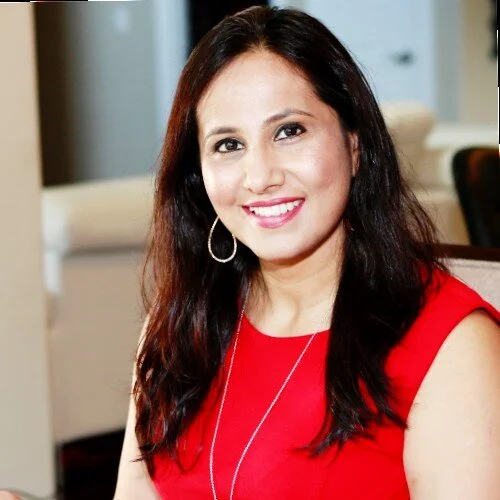
Ash Rao, Career Coach
Ash Rao fell into a career that now, ten years into it, she continues to find rewarding and challenging. What she seems to love most about her work as a recruiter and career coach is that moment when she identifies something special about the person in front of her or on the phone. When she figures that out about a person, she can truly help them find a job they love.
Because so much of our happiness and satisfaction in life depends on having a job we feel good about, Ash's work makes a huge difference in the lives of the people she serves, and she honors that with every conversation.
Our conversation was rich with ideas about career transitions, what makes her feel rewarded and satisfied in her work, and the legacy we can envision, especially as we experience grief.
Ash Rao works as a Global Talent Acquisition expert at verizon. She is a certified career coach and a published author. Her work has appeared in major publications like Thrive Global, Fast Company, and powerhouse global magazine.
Last year she contributed to the published book Tough Road Creates Tough People.
Her new podcast "Passion to Profession" is launching March 2020.
Connect with Ash on LinkedIn to learn more!
Episode 113: Stories that Create and Build Life-Long Friendships
I went to four different elementary schools, moved from Washington DC to Denver, then to Los Angeles, and then back to Colorado in Colorado Springs just before starting junior high. My closest friends were always my siblings because we moved so much in those early days.
It’s a Different Kind of Love in Life-Long Friendship

I went to four different elementary schools, moved from Washington DC to Denver, then to Los Angeles, and then back to Colorado in Colorado Springs just before starting junior high. My closest friends were always my siblings because we moved so much in those early days.
But in 2nd grade, I met Amorisa Lynn at Devonshire Elementary School in Chatsworth, CA. We were best friends immediately because we had SO much in common. We were both tiny, and had long, very straight, very fine brown hair. And in 2nd grade, that’s all it takes.
I remember when a boy who liked her broke her pinky finger. Again, 2nd grade.
And I remember going to her home after school and for sleepovers. Her Taiwanese grandmother lived with them, and would fix us snacks and Ramen noodles - and wouldn’t let me use a fork or spoon - so I learned to use chopsticks like a natural.

Aimee, Sarah, Gwenda (Aimee’s little sister) - 1978, Chatsworth, California
Amorisa moved around even more often than I did, so our long-term friendship seems even more unlikely.
Aimee remembers lots of things I had forgotten, like the fact that I taught her how to flip an egg in a skillet, and how to make “Super Eggies”, which are typically known as egg-in-a-nest.
The strange part about our long friendship is that we only lived in the same place for a very brief amount of time. After 2nd grade I switched schools, then she moved away from our neighborhood. She finally got back to our neighborhood at the beginning of 6th grade and started school at the same school I attended, but then I moved, two weeks into the school year, to Colorado Springs.

We kept in touch all those years the old fashioned way - as Pen Pals. Yes, we wrote letters to each other throughout elementary school, junior high, and high school. We visited each other a few times, traveling across the country by ourselves and living as part of each other’s families for a few weeks at a time during the summer.
Here we are, nearly 43 years later, spending a weekend together in Cayucos, California, where my husband and I decided to rent a beach house for a month to work remotely in a place where we didn’t have to shovel snow.

Panorama fun in Cayucos, CA February 2020
I took the opportunity to record this episode of Your Stories Don’t Define You with Aimee, all about friendship, our friendship, and the idea of friendship itself, while we were together. This is the first time in at least 20 years that we’ve had time to spend together like this, and we took full advantage of every moment. And just like any other true friendship, we picked up right where we left off, never skipping a beat, like no time had passed between visits. The only evidence being a few gray hairs and images of grown children.
Amorisa Lynn Denzel is a freelance artist living in Ventura, California.

Photo of a painting by Amorisa Lynn Denzel
Episode 112: Why Do We Believe Lyrics?
I opened my eyes and the restaurant had become very quiet. Many of the conversations had stopped momentarily, and I noticed the host and a server standing at the edge of the dining room, listening. For the first time that evening, I had the attention of the busy customers and staff. Finishing the song, I could see from the expressions that the song hit its mark.
Lyrics Create Powerful Internal Connections through Stories and Emotion
“...but it’s the little things, the little things,
not expectations
that make life worth living, worth living.”
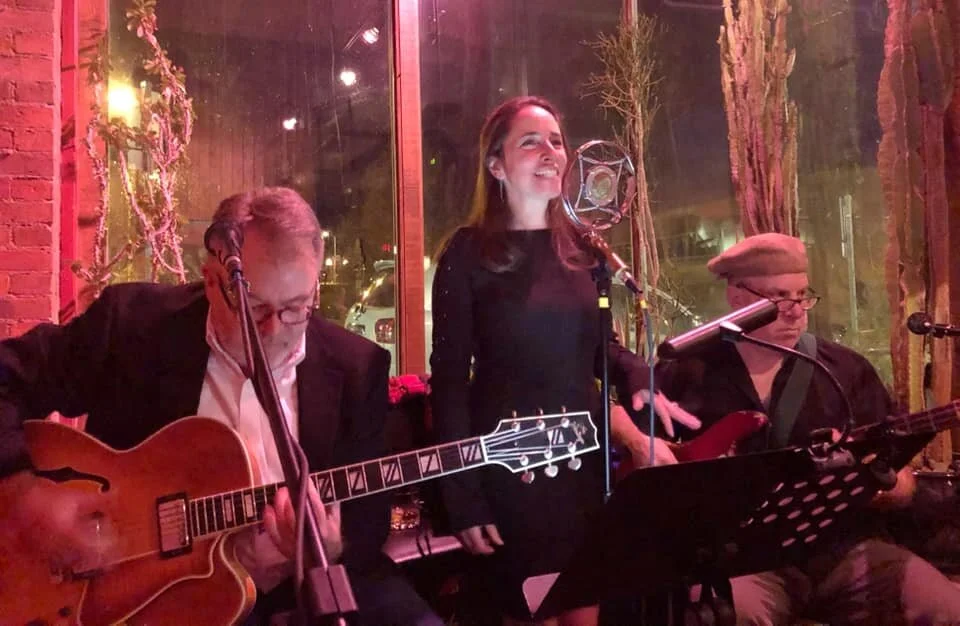
Spare Change at On Broadway, Helena, Montana (Photo credit, Angie Fiskum)
Those were the lyrics I was hearing in my head over and over again as I processed the previous two weeks of drama at our house. My husband had discovered this song by JJ Grey and Mofro, and had suggested we work on it to perform with one of our bands.
The first time we practiced that song, it was everything in me to sing it without tears dripping down my cheeks. The soulfulness that JJ Grey infuses as he performs it, through his tone, his phrasing, and his emotion, is captivating and heartbreaking.
I hadn't heard of JJ Grey before we started learning that song, but it didn't take long for me to find a few songs that were equally powerful.
As I performed it for the first time at a gig, I closed my eyes as I reached the chorus:
“Glory glory, hallelujah
The sun is shining, shining down
Glory glory, hallelujah
I’m alive, and I’m feeling, feeling fine.”
I opened my eyes and the restaurant had become very quiet. Many of the conversations had stopped momentarily, and I noticed the host and a server standing at the edge of the dining room, listening. For the first time that evening, I had the attention of the busy customers and staff. Finishing the song, I could see from the expressions that the song hit its mark.
Later that evening, as I was visiting with another musician who had come to support us, she asked me about the song. “I could tell it was really meaningful to you, Sarah.”
I couldn’t stop thinking about the response of the audience to that song as I tried to go to sleep that night. It struck me how powerful lyrics can be, and I started to wonder what it is about songs, lyrics, poems, and other forms of art that reach into your heart and soul and grip them in fierce joy and devastating sorrow.
What is it about music and lyrics that make us BELIEVE them? Why is it that we believe that there is truth in them, without any knowledge of the songwriter's credentials? Is he a psychoanalyst? How does she KNOW?
Think about the song you listen to when you’re sad, when you’re happy, the music that helps you process experiences. They tell stories with messages in them, and for some reason, even with no data or research to support the assertions, we believe them. Why?
Maybe it’s the fact that they speak to a human condition, common themes that we experience in life, isolation, pain, love, heartbreak. All the things we experience on a unique, individual level, but that resonate across all human life - even as we say: “You don’t understand” to someone who tries to help.

Spare Change at Draughtworks, Missoula, Montana 2019
Isn’t it puzzling that we respond in that way, to our parents, to our friends, “you don’t understand”, but then listen to a song written by a total stranger and find great comfort that he or she understands, even when the lyrics have nothing in common with our actual, individual experience?
My friend Trent doesn’t believe in empathy, and I can understand why. He says that when we say: “I know how you feel,” we’re shifting the conversation and making it about ourselves. How can we possibly know how someone feels if we cannot hear the internal voice that’s screaming at them?
And yet… we know, thanks to neuroscience, that we often cannot help mirroring - reflecting the emotions of another person. Which is basically the definition of empathy. But that’s not actually FEELING what someone else is feeling. It’s reflecting our version of their emotion, based on our own experience and internal messaging.
I do believe in empathy. I believe some people can actually feel what another is feeling, in terms of emotion, otherwise music and lyrics simply wouldn’t have the impact they have on us. And I don’t believe empathy is something we can or should teach. I would much prefer to help people learn compassion by learning to observe the emotions in others, and maybe have a sense through those observations about their happiness and pain through our own lens of experience.
Lyrics and music speaks to our humanity, our common language of the spectrum of emotion from euphoria to sorrow, bringing us comfort by demonstrating, through the songwriter and performer, that we are not alone in this world, that someone, somewhere went through something similar and came out on the other side.
I’m a big believer in identifying theme songs for different situations in our lives, selecting songs that speak to us when we’re feeling insecure, sad, lonely, or absurdly happy and satisfied.
I’ve found that when I have my theme song in my head, James Brown’s I Feel Good, before I step in front of an audience for a keynote, my energy is almost immediately transferred to the people in front of me.
What will your theme song be the next time you’re stepping out of your comfort zone? What lyrics will you have in your head that bring you comfort, that you believe to be absolutely true, to know you’re not alone as you step into the spotlight?
Episode 111: Learning by Trial and Error
And Teaching Others By Example
Dr. Liz Stincelli knew the traditional training format didn’t work for her. She had taken plenty of coursework on training and education, and used the traditional method of standing in front of a classroom and presenting material, and had been somewhat successful.
She knew two things right away:
That format didn’t help HER learn.
That format didn’t make her feel successful or engaged with the participants.
And Teaching Others By Example
Dr. Liz Stincelli knew the traditional training format didn’t work for her. She had taken plenty of coursework on training and education, and used the traditional method of standing in front of a classroom and presenting material, and had been somewhat successful.
She knew two things right away:
That format didn’t help HER learn.
That format didn’t make her feel successful or engaged with the participants.
So she changed it up. Her story is inspiring at many levels, the first being that she took a risk to change a tradition, and the second that she continued her quest to improve training despite setbacks and what I lovingly call “opportunities for improvement.”
Connect with Liz on LinkedIn to learn more about her, and to follow the great content she writes and shares!
Episode 110: If That's Not Nice, I Don't Know What Is - Kurt Vonnegut
Right after reading an article by Stephen Moegling, I walked into our living room, took a deep, satisfied breath, and took in the scene: Our older son, 21, was on the floor, snuggling our giant chocolate lab mix in front of a beautiful fire in the wood stove. Then I thought to myself: “If this isn’t nice, I don’t know what is.”
To Balance Bad Memories with Good Ones, We Must Actively Acknowledge the Good Stuff in Daily Life
Right after reading an article by Stephen Moegling, I walked into our living room, took a deep, satisfied breath, and took in the scene: Our older son, 21, was on the floor, snuggling our giant chocolate lab mix in front of a beautiful fire in the wood stove. Then I thought to myself: “If this isn’t nice, I don’t know what is.”

Then I went back to my computer and reached out to Stephen via LinkedIn, asking him if he’d please be a guest on my podcast. He said yes.
He’s just as warm and kind as his article gave the impression. We spent an hour talking about how he came to write the article, the changes he experienced as he addressed his stress during his divorce through a brilliant counselor, Frank, and the result of years of practicing the mindfulness strategies Frank taught him.
Stephen didn’t always have this calm and relatively easy-going presence. He describes his pre-mindful life as stressed, high-strung, type A, dissatisfied and generally unhappy. But what I experienced during our call was the opposite, I’d describe him using my sister’s phrase, baseline happy.
What can cause that kind of transformation? Being mindful of the good things in life, which doesn’t necessarily come naturally. According to the article, our brains hold onto those things we pay attention to, and it’s human nature to pay attention to the negative things that happen in our lives. We replay those old, negative memories/stories over and over again, creating almost permanent neural pathways around the emotions that accompany those memories.
But what if, like Kurt Vonnegut suggests, we notice those happy, satisfying moments. What if we stopped for just a few seconds to really take in the goodness around us, noticing how we feel, and creating a strong mental image of that satisfaction?
Listen into our conversation to hear how he was able to transform his mindset and his life, the stories he shares now to help others, and the beautiful way he now sees the world around him.
Thanks to friends Kimberly Davis and Melissa Hughes for sharing Stephen’s article on Facebook!

Episode 109: The Microwave Generation
It was somewhere in the late 1970s when my father came home with a microwave oven. Definitely one of the first on our block and huge, my father proudly showed it to my mom as the "next great invention."
Distraction May Not Be the Opposite of Focus - Why Boredom is a Good Thing
It was somewhere in the late 1970s when my father came home with a microwave oven. Definitely one of the first on our block and huge, my father proudly showed it to my mom as the "next great invention."
We had no idea what to do with it, though the booklet had recipes, and settings to defrost meats and soften butter. I remember using it regularly to heat up our frozen vegetables, peas, corn, green beans. I also remember experimenting with the defrost feature, and failing miserably, cooking to death a beautiful steak or a pound of ground beef to devastating effects -- precious commodities because money was tight. We made scrambled eggs a few times, but cleaning the crusty containers was a hassle so we didn't do that very often.
When my parents splurged on a baby sitter for a date night, I remember the excitement of getting to pick out special frozen dinners at the store, made especially for heating in the microwave. Full of salt and fat, they were such a luxury for me and my siblings. Ick. We would walk through the frozen food aisle, gazing longingly at the variety of Swanson's and Banquet options, knowing we had to avoid any in foil containers, which was most of them.
When we would find a few "Now in Microwaveable Containers!", we would excitedly pull them from the reach-in freezer and read the directions on the back of the package. While I was perfectly happy to pick one that read "hot and ready to eat in 18 minutes", my younger sister would compromise on her selection to get one that took less time, maybe 15 or 16 minutes.
A few years later, as the microwave generation started to take off and find its way through the frozen food aisle, I remember looking at the back of the package and returning it to the freezer if it said anything more than 12 minutes. Those 6 minutes meant hot food even faster! It was also a signal, now that I can see it from a few decades into the future, that our tolerance for waiting for anything had dropped dramatically, in a very short amount of time.

Solitaire is my go-to distraction.
We don't use the microwave for TV dinners or other prepared food in our household now, except for the occasional Hot Pocket snuck into the house by one of our boys, but we do use it (very carefully) to defrost meats & fish, to warm up leftovers and frozen peas, and to soften butter and boil water. When we upgraded our old microwave a couple of years ago, I was pleasantly surprised to find the technology had improved so much that I could now boil water in under 3 minutes.
Oh dear.
This is why I call my generation the microwave generation. Every time we improve our technology and make things move faster, we decrease our tolerance and patience for waiting. You do NOT want to see me at Sea World or LEGOLAND these days.
What about you? Have you noticed a decrease in your tolerance for waiting -- for everything? What do you attribute that to? Do you find it more and more difficult to settle in and wait for things?
I noticed a while ago that people, myself included, avoid boredom by picking up their devices, phone, laptop, tablet, when they’re waiting for anything. My go-to is whatever version of Solitair is handy, or maybe scrolling through Facebook, checking my email, etc.
Outside of Lewistown, Montana - 7+ hour road trip can lead to major boredom!
What we’re doing, though, is limiting our opportunities to be mindful, to exploring our thoughts and letting our minds wander and explore. Why is that important?
I recently read an article by Jamie Ducharme on the Time website about boredom and its relationship to creativity and innovation. The author suggested that one of the critical factors in our lack of creativity is the fact that we have so much distraction available to us, that we’re rarely bored.
“If you’re waiting for brilliance to strike, try getting bored first. That’s the takeaway of a study published recently in the journal Academy of Management Discoveries, which found that boredom can spark individual productivity and creativity.” (Link to the article.)
The author suggested that we allow ourselves to sit with boredom when we experience it, to choose not to pick up our phone while waiting at a railroad crossing – or while we’re on the toilet. He suggested that when we allow ourselves to be bored for a little while, our brains start to wake up again, to start that slow whirring of idea creation, to begin to take a detour from our regular patterns of thought and explore different perspectives – it gives our brains the space to be creative again.
Distraction isn’t necessarily the opposite of focus, and mindfulness isn’t actually about focus, specifically. Mindfulness is about allowing your thoughts to shift, while coming back periodically to the moment, to paying attention to your physical body, and changing your relationship with those thoughts that cross your mind.
My friend Shelley Brown talks about mindfulness in a truly applied, accessible way. She suggests that when we stop to consider where our thoughts come from, to take a few moments to think about the thought from the perspective of someone on the outside looking in, we can see the reality behind the thoughts, which may be totally based in fear, unrealistic in their assumptions, and damaging to our relationships with ourselves and others. Perhaps if we give ourselves opportunities to be bored, we can also take a little time between a frustrating experience or conversation – and how we choose to respond to it.
There is that moment, after all, between stimulus and response, where we can choose how we see that stimulus. When something happens, like waking up to six inches of snow and single digit temperatures in April, we can choose how we respond to it. I can choose to see it as negative, positive, or neutral. My first reaction is usually: “No! I’m so sick of winter!” But if I take a moment to consider how I want to respond, I realize that the weather isn’t good or bad – it just IS, and I have no control over it.
I think it’s important to allow ourselves a negative response sometimes, at least for a few minutes, but after taking some time to be mindful of our emotions, we do have a choice.
The next time you’re waiting in line for your Starbucks pumpkin spiced latte, waiting for the download of the latest operating system update, or waiting for the water to boil in the microwave to make tea, try not to open the game or email or social media app on your phone. Instead, let your mind wander. Let thoughts come and go, like clouds shifting overhead. Maybe, just maybe, you’ll have an “ah ha” moment, a brilliant idea, a realization about how to solve a major problem you’ve been grappling with.
Use your short attention span to practice mindfulness – rather than finding distraction while you’re waiting, try being bored for a few minutes. Yes, really. It may be just the thing to help you find what you’re looking for.