


It's Part of the Adventure
Find the value in your obstacles and challenges, find little bits of joy and peace along the way, and remember that though you're on your own journey, others can provide good company.
Stranded in the Philadelphia Airport
I'm sorry, it's highly unlikely you'll get home to Montana today. All of your flights were canceled because of the snow storm.
I burst into tears. Highly unusual for me to cry at all, much less in public. And there I was, uncontrollable sobs escaping my lips.
No, I'm sorry for falling apart like this. I buried my father two days ago and just want to be home with my family. I know it's not your fault. What should I do? Do you have any ideas for me?
She suggested I get through security, and then walk from counter to counter to try to get on a flight -- any flight -- out of Philadelphia before the next storm hit, predicted in the next 12 hours.
I did what she suggested; for the next two hours I wandered through the airport, adding my name to the standby list on almost every flight heading west. She was right. I was not getting home to Montana that day.
After receiving an incredible gift from a stranger, I wiped my eyes, blew my nose, and started to make arrangements for the night and, hopefully, for getting home the next day. My husband did some research and found a deal on a beautiful downtown hotel room, making sure I'd have an easy way to get back to the airport early the next morning. I sent a message to my brother and sister, to let them know my situation, and to find out whether they were stranded, too. They weren't.
My sister called a friend who lived in the area to let him know I was there; he sent me a text: "Where should I pick you up so I can take you to dinner?"
My hero of the day took me to a dark, quiet Italian restaurant across the street from my hotel, and afterward we walked together through the oldest part of the city. When we returned to the hotel, he made sure I was set up with a ride to the airport the next morning, and then hugged me fiercely. "You've been through a lot, Sarah. Be gentle with yourself."
Sitting by the window on the 18th floor of the hotel, I looked out at the lights, thought of my father and enjoyed the quiet, peaceful night.
It took me a few minutes to realize how quiet it was in the room, and how much peace I found in those moments.
If I had made my flights, I'd be home by now, which would be nice. But if I was home at that moment, I wouldn't have had the quiet time to myself. If I was home at that moment, I wouldn't have had the opportunity for introspection and deep breathing. If I was home at that moment, I would have missed out on this amazing view, and time to put all of the events of the past year into some form that I could put into perspective and learn from before going back to my hectic life of work, home, and kids.
I've always been a pretty flexible traveler, taking obstacles and challenges in stride; this experience confirmed my belief that those delays and obstacles can be a great and important part of the adventure.
When you're traveling this season, and your plans get derailed and re-railed, and derailed again, remember this:
One way or another, you'll make it to your destination.
Find the value in your obstacles and challenges, find little bits of joy and peace along the way, and remember that though you're on your own journey, others can provide good company.
Be kind to yourself; be kind to others.

No Such Thing as Work/Life Balance
Unless you are one of those people for whom this equation works comfort=happiness, you are going to have to get comfortable being uncomfortable.
Every time I hear someone profess to know the secret to work/life balance, I bristle. First, there is no such thing as work/life balance, and second, there are no easy answers to finding a comfortable position in life when you are continually growing and changing.
No Work/Life Balance, Only Life Balance
I'm not sure it was ever possible to separate your personal and professional lives, but it was probably more likely before the age of the Internet and social media. In the past, people had their jobs, and then they went home to family and friends. You never really knew what went on behind closed doors, once an employee left the office, the only way for his colleagues to see his misbehavior is if they came to the family BBQ and witnessed his behavior after a few too many beers.
Get Comfortable Being Uncomfortable
Unless you are one of those people for whom this equation works comfort=happiness, you are going to have to get comfortable being uncomfortable. When you put yourself in a place of discomfort, doing something out of your normal routine, you grow. As long as you stay in your routine, comfortable and generally unchallenged, you will stagnate. The only way to grow and improve, the only way to reach your goals and make your dream life is to step out of that comfort zone and take some risks.
Work/Life Balance Means Something is Missing
If you feel like your work and life are balanced, it may mean you are compartmentalizing. That's not always a bad thing, but it isn't something that is sustainable. When we compartmentalize, we are separating our thoughts and feelings into distinct categories, home vs. work, which means that we are not addressing the underlying issues and concerns in our overall lives. Our brains are most effective and efficient when all of the parts are interacting and engaging. According to Melissa Hughes in her book, Happy Hour with Einstein:
While specific regions of the brain are responsible for specific things, we are aware that the brain functions as a whole system. The better the regions integrate with each other, the better they all work independently.
If you really want change; if you really want to do something different with your life, stop working so hard for balance, and try being unbalanced for a while. Take risks; take the leap, and realize true growth.
don't miss this opportunity to grow. Register for No Longer virtual today!
Do You Value Yourself? How Much?
What is your budget for inspiration, encouragement, and solid strategy for improvement? I want to know, because I want to help.
Do you value yourself? Do you value your professional and personal development? How much?
What is your budget for inspiration, encouragement, and solid strategy for improvement? I want to know, because I want to help.
"Hope is not a strategy."
Wiser words have rarely been spoken, and thanks to Trent Selbrede, those words are burned into my mind and have dramatically changed the way I write and think. Instead of writing hope, hopeful, or hopefully, I write intend, plan, and will.
"Fear is a liar."
This sentence is next in line in my current thought process, thanks to Trish Goff. When I find myself falling into my gerbil-like mind with circular thinking about what could go wrong, that is the sentence that I will into my consciousness.
If someone else had planned something like the No Longer Virtual conference, I would invest quite a lot to attend. As a matter of fact, I AM investing quite a lot to attend, and here's why:
The people facilitating these interactive sessions are some of the most competent, motivated, inspiring and inspired people I've had the pleasure to meet; I've only met one of them face-to-face. The people already registered are some of the smartest, most self-aware, kind, ambitious and motivated people I've met, and I've only met one of them face-to-face.
I know that to maximize my learning from these incredible people I must meet them face-to-face. It is worth the investment I'm making to have this experience because I know that -
what I put into it is exactly what I'll get out of it.
And I intend (not hope) to make this a life-changing experience.
I know that I need to continue to learn strategies to leverage my online network in my offline life. This agenda is full of topics I know will help me move my business and my life forward, and I know it will be worth the investment.
The question is, how much can you - should you - invest to avoid missing this opportunity?

Don't Lose Your Sparkle
I had the travel bug; I was even more independent. And I was afraid that after a while I'd regress and lose the gains I made when I was away. I knew I had changed, and I didn't want to give in and go back to that sense of entitlement, safety, and the desire for comfort at the cost of adventure, curiosity, and compassion.
*When something you read inspires you or makes you think, consider sharing it. Writers tend to be a little needy... when you comment and share their work, it encourages them to keep writing.
After nearly six months away studying abroad in Australia, and two weeks adventuring in New Zealand, I got off the plane in San Francisco. I planned to stay a couple of days with my brother before I returned home to Colorado to finish my sophomore year at Colorado State University in Fort Collins.
I was wearing a brightly colored sundress and sandals, with a straw hat in my hands. It was January. It was a cold ride in his jeep to my brother's place in Santa Cruz. When we arrived at his house, I walked straight into his room, my sandals slipped off my feet, and I collapsed on my stomach on his bed. Traveling back from New Zealand took two full days, though the calendar hadn't changed. I left on January 7th, traveled for nearly 48 hours, and arrived on January 7th.
Get your filthy feet off my bed! Go wash them right now!
I turned over, puzzled. I had been wearing shoes for the entire return trip, so when I looked down at my feet, leaning forward off the edge of the bed, I was a little surprised. They did look filthy, but they weren't. Both of the bottoms of my feet were dark brown, solid calluses. Gross. That's what your feet look like when you hitchhike barefoot through New Zealand for two weeks.
We had a nice couple of days together swapping study abroad stories. He had spent a year in France a couple of years before I left for my adventure. I was grateful to spend a few days with someone who had done something similar and understood what it was like to come back to the US after a trip like that. Even though I was living in an English-speaking country, the culture shock was pretty intense.
Those first few months back were really hard. Re-immersing myself into the Colorado culture should have been easier. The language was (mostly) the same, many foods were similar, and many of my friends were there when I returned. So why was re-entry such a challenge?
My cousin recently returned from two years as a Peace Corps volunteer in Cambodia. As I think about her re-entry, I'm reminded of some of the emotions and difficulty I had coming back from Australia. It's not the same; she was gone for two full years, in a country without indoor plumbing (generally), completely different foods & culture, and a difficult language barrier. I'm guessing, though, that most people returning from overseas after a few months or more have a hard time, regardless of where they spent that time.
When I was in Australia and New Zealand, I shifted from being independent to being fiercely independent. As a woman, particularly a small woman, people assume I need help with things like luggage, reaching things from high shelves, and car maintenance. As an adult I take advantage of offers of help; back then, especially after my study abroad experience, I found myself bristling, indignant, and somewhat defensive with any offer of assistance. Through gritted teeth:
"I can do it myself."
Looking back, I see things much more clearly. Isn't that always the way? I realize now that part of my difficulty came from fear. In my time away, I had changed. I had grown up in a different way from my friends who didn't leave. I had the travel bug; I was even more independent. And I was afraid that after a while I'd regress and lose the gains I made when I was away. I knew I had changed, and I didn't want to give in and go back to that sense of entitlement, safety, and the desire for comfort at the cost of adventure, curiosity, and compassion. Those are the characteristics I observed around me when I returned to my cozy, spoiled life.
I was afraid that I would lose my sparkle.
It would have been easy to fall back into the routines of my life before living abroad. My family and friends were there to fall back on; life is easier when we allow ourselves to regress to where people expect us to be.
But I didn't. That fear motivated me to keep moving forward. Those observations of the people around me were enough to keep me grounded and motivated to live my life with integrity & consistent growth. Those observations continue to motivate me to be curious and spontaneous. For some people, comfort = happiness. That equation just doesn't fit me.
After my study abroad experience, every day I worked toward something bigger, something that felt like the right next step. Even a small adjustment to each day improved my motivation and kept me from stagnating in my old routine. I changed my walking route to classes each day, sat up front in every class and made sure my instructors knew who I was, set a goal to meet at least 3 new people each week, and kept my eyes open for opportunities -- especially the ones I thought might be out of reach. (That's my internship story, coming in the next couple of weeks.)
I'm so proud of my cousin; she's independent, kind, smart, curious, and adventurous. I know she'll struggle with re-entry, we all do. I also know she'll come out of this part of her life even more motivated to help our communities around the globe. She'll find ways to make her mark in improving the lives of the people around her. She most certainly will not lose her sparkle.
When you get really excited about a possibility, about the world around you, do you let the people around you talk you out of your ideas and dreams? When you return from a great conference, where you were full of energy, do you let the people you come back to pull you back into the groove, losing that momentum?
Have you lost your sparkle lately? It's never too late to find it again. Surround yourself with people who believe in you. Surround yourself with people, when they hear what you dream of doing, say "how can I help?"
THANK YOU FOR READING, COMMENTING ON, AND SHARING MY POSTS!
Please sign up here for email notifications of new posts:

When You Don't Know Where to Start
I crouched in front of her, worried: “What’s wrong? Are you ok?” She looked up, so sad, big brown eyes filled with anxiety: “I…(sob)… don’t (sob)… know (sob)… where to… start… (sob).”
Paralyzed By A Decision
It was early in the afternoon when I arrived at my sister’s apartment to help her move from Sacramento to a place in San Francisco. Our mother was holding my 18 month old son; we had flown in from Montana less than an hour before and headed straight out to help my sister.
We walked in to find her sitting on the floor near the kitchen, knees pulled up to her chest, head down, crying. I crouched in front of her, worried: “What’s wrong? Are you ok?” She looked up, so sad, big brown eyes filled with anxiety: “I…(sob)… don’t (sob)… know (sob)… where to… start… (sob).” I sat down in front of her, so relieved it wasn’t something worse. Then I stood up and offered her my hands to pull her from the floor.
I picked up the nearest box and put it into her hands. “Here. Take this. Go into the bathroom, pull everything out from under the sink, and put it all into this box.” She looked at me, a little puzzled, then turned around and did what I said. That was it. She was fine after that. She was more than fine after that. She was efficient and capable and we had the entire apartment packed in just a few hours.
There are those times when the next step is completely overwhelming. I’ve been there; paralyzed with a decision to make. What’s next? The only thing to do is take a small step forward – or perhaps take a side-step, depending on the obstacle in front of you. The important thing is to move, to shift, to make something happen, even if it’s a tiny movement.
My cousin called just before she graduated from college to ask for advice. Partway through her question she started to cry, paralyzed by the decision she had to make. Just as with my sister, I put one small action in front of her.
It’s easy to get caught up in a moment and briefly forget all that you know. For my sister, she needed a little push to remind her that she needed to take this one step at a time. For my cousin, she needed the reminder that whatever decision she made at that moment could be un-made if she needed to change things. When I’m faced with a major decision, I remind myself that everything can change in an instant and that a decision I make right now is unlikely to derail a future part of my life. If I need to quantify a decision, I will use this handy tool.
Of course there are exceptions
– people make impulsive decisions that can have huge, long-term impacts –
sex, driving while on drugs or alcohol, sky diving.
When faced with a major decision I find it comforting to look back at other decisions I saw as life-changing at the time I was making them. Looking back helps put current concerns into perspective. There are methods to quantify a qualitative decision by scoring your priorities, but in the end, it's still your decision to make.
The next time you’re faced with a decision and you feel paralyzed in the moment, remember that whatever decision you make is the right one for that moment. Just take it one step at a time.
We should all start to live before we get too old. Fear is stupid. So are regrets.” ― Marilyn Monroe
What decisions have you made that you decided to un-make? How did that work out for you?
Thank you for reading, commenting on, and sharing my posts!
Sign up to receive notification when I publish new posts:
We All Need a Foundation to Step Out of Our Comfort Zone
It's a mattress! It's not practical to keep a mattress when I've managed to give away and throw away the majority of my "stuff" so we can travel, untethered.
I can't let go of it, even though I know I should.
"What do you mean, you know you should?"
It's a mattress! It's not practical to keep a mattress when I've managed to give away and throw away the majority of my "stuff" so we can travel, untethered.
It's not about the mattress, though. It's about the values you've attached to it, right?
She was talking about the mattress she bought after leaving her abusive husband, sleeping in her car for 6 months, and had finally moved into an apartment by herself. That mattress represented the first real thing she owned, free and clear, since leaving him -- and all of her things -- behind. Now she's in the midst of disrupting her life, again, is remarried to a wonderful, adventurous guy, and is downsizing to live as minimally as possible so they can travel all over the world.
Don't get rid of it. You have a storage area that can hold it for you for a while. Keep it until you don't feel like you need it any more. We all need something to help us feel grounded when we're about to take a leap out of our comfort zone.
Healthy toddlers are known to wander away from their parents, though usually they will turn to see them, to make sure they can still see them, before they get too far. If you read anything by my friend Sara Jacobovici, you'll read that in infant and child development, we need a close bond with someone (or something) in order to become independent. It's a paradox for sure, but not too surprising. Read child development articles and they will describe how thumb-suckers are statistically more likely to be more confident teenagers because they've had the ability to self-sooth. I believe in thumb-sucking - no one can take away the thing that can bring you comfort!
I had a good, solid, healthy childhood for the most part. My parents were loving and we always had a roof over our heads and plenty of food to eat. We have a warm, huggy, sometimes overwhelmingly loving extended family of aunts, uncles, cousins, and friends who became family wherever we lived. And we moved a lot in my youth. I went to four different elementary schools. No wonder I sucked my thumb well into 1st grade. No matter where we lived, or the adventures and trouble I got into in my late teens and early 20's, I always had my family as my foundation.
I got a cat when I was 20 because I felt the impulsive need to spite a landlord. Needless to say, I wasn't thinking long term. He wasn't the sweetest cat, though he was devoted to me. Clawed was huge and created a lot of complications for me. Having a cat limited the apartments I could rent, limited my travel plans & spontaneity, and there were times that he had food and I went without.
When my parents were divorcing and they sold the only house we lived in for more than 4 years, Clawed was my foundation. Wherever I adventured, like moving from Fort Collins, Colorado to Washington DC by myself, he was with me. He was the one consistent thing in my life for more than 9 years, and I was devastated when he died, even though I had a wonderful husband and new baby at that time.
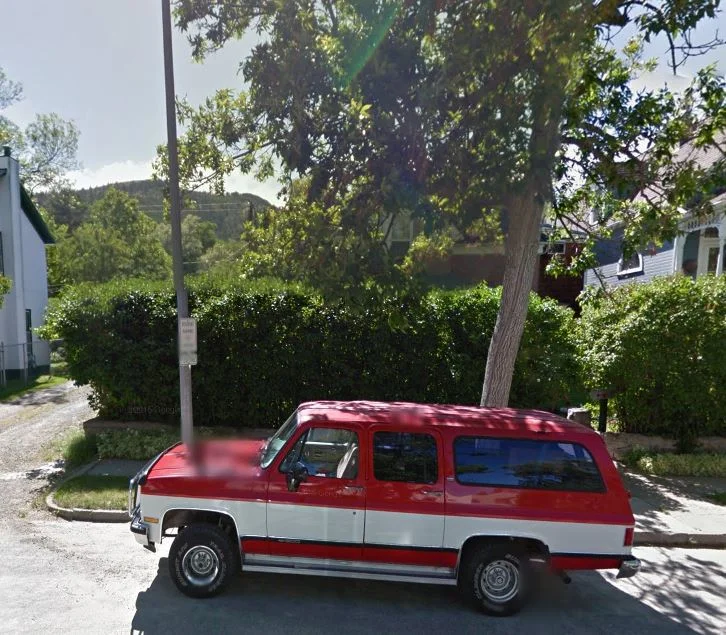
My little gold Super Beetle, handed down to me from my brother, was another foundation piece that broke my heart when I had to get rid of it. Now I have a weird attachment to our 1991 Suburban. There's no way for someone else to truly understand why we have attachments to certain things. Sometimes we don't really know ourselves.
I wrote an article about shoes being my wardrobe foundation; this is the same idea. When I am about to embark on a new adventure, whether that's applying for, or starting a new job, preparing for a speaking engagement, planning a trip, or any other activity that will push me out of my comfort zone, I have certain things I can count on to bring me back to center. Whether its cues like shoes or an outfit that make me feel really good, or a quiet moment with my supportive husband and kids, a glass of wine with a friend, or a good snuggle with my dog, having a foundation (like a mattress, or my thumb) reminds me that whatever I'm about to do, I have a place to go (or people to comfort me) afterward to find my balance again.
What are your foundations? Are you intentional about finding that center before you jump into something out of your comfort zone? Do you recognize which arbitrary objects you're most attached to, and may have foundational values associated with them?

It's Hard Work to Decompress
Why couldn't I clear my head? I closed my eyes, trying hard to think of nothingness, to listen intently to the sounds around me, to smell the air and nearby wild flowers.
Even in the most beautiful environment, decompressing doesn't always come quickly or easily.
We took our time getting out of town, knowing it would be light well into the evening and not wanting to get started on our hike while it was still over 80 degrees outside. I had never backpacked into the wilderness for overnight camping, though I had spent plenty of time hiking through the mountains. Gear is important for trekking into bear country, so we made sure we had a can of bear spray and a loud whistle for each of us, good shoes for hiking and crossing streams, a water pump so we wouldn't have to carry too much water, and the right food to sustain us.
It was about 5:30 in the evening when we left the car with our packs on our backs and started hiking into the Scapegoat Wilderness Area in Montana. It was a well-worn trail, lots of horses and hikers have explored the area, and many take the three mile hike in for a day trip to visit the famously beautiful Devil's Glen section of the Dearborn River. It was not too rigorous a hike for our first trip in with heavy packs, and though my pack looked almost as big as I am, it was only around 30 pounds.
It didn't seem like very long before we hit the three mile mark and saw a handful of tents and campers around fires in the meadow above the Devil's Glen. We decided to keep hiking and see if we could find a more secluded spot near the river. Another 3/4 of a mile and we headed down a less-worn path toward the river. Bob spotted a perfect campsite on the other side, so we crossed carefully, found a place to pitch the tent, and settled in for two nights.
The river was loud and full of life; as we watched the sunset, we saw a trout splashing in a large pool on the opposite side of the river, heard grasshoppers and birds, and the droning sound of insects all around. After a simple dinner of freeze-dried convenience with decent flavor, we shared a sip of bourbon from the flask and sat by the river to enjoy the view. My head was clear for the moment, taking in the spectacular pink and orange across the sky.
When we climbed into our little tent and put our heads down on make-shift pillows of clothes, I thought I'd fall right to sleep. The temperature was perfect, the air clean and fresh with a slight breeze through the tent, and I was tired from the day. But as my eyes were closing, I became super aware of the sounds of the night around me, remembering that I was in bear country. It took me hours to fall asleep, jolting awake after incorporating the sound of Bob's snore into a dream about a bear outside the tent. Eventually, I fell into a deep sleep and was disappointed to wake up to the early morning light coming into the tent, and my head full of busy-ness.
I thought that within a few hours of being in the wild mountains of Montana, my head would be clear of my every day activities -- but it wasn't. Despite spending hours wandering through the spectacular wilderness, my head was still stuck in overdrive. I woke as I always wake at home, with my head full of thoughts about what would come next, what I forgot to do at work, excitement for our next musical performance, upcoming travel plans, and thoughts of what our boys might be doing at that moment by themselves at the house.
Why couldn't I clear my head? I closed my eyes, trying hard to think of nothingness, to listen intently to the sounds around me, to smell the air and nearby wild flowers. It must have been more than 20 minutes that I tried to relax back into my sleeping bag, getting more and more frustrated with my inability to simply be there, enjoying the peaceful moment. I finally turned to Bob and suggested we get up, get the food bag from the tree, and get coffee and breakfast.
I've been here before; many years ago I was on my yoga pad at the end of a class, trying to get into the ending meditation provided by the instructor. I was filled with frustration. Every time I focused and dropped myself into the meditation, I'd find my mind wandering all over the place, flitting from one topic to the next. That was the moment, after about 10 years of trying, I realized I didn't like yoga.
That first morning in the woods, focusing on action helped; I was hungry and immediately set off to pump some water for our coffee. I never would have thought flies, especially the biting kind, would be a welcome distraction. But there I was, swiping at the flies landing on my legs and starting up the little burner for coffee, no thoughts buzzing in my head but the need for coffee and oatmeal.
We packed up for a day hike and headed upstream, bushwhacking through the dense, lush forest among wild roses, Indian Paintbrush, elk scat, mushrooms, and dead trees littering the ground. Stopping along the rushing river periodically for Bob to cast his nymph, hoping for a brown trout for dinner, I had the camera poised for my own catch for the weekend. It was mostly quiet, which, in bear country, isn't really a good thing, so I hummed and sang some of the songs we were working on for our next gig. My head wasn't clear, but I was relaxed.
By the time we hiked back out to the car after two nights, I was tired but not exhausted. I felt strong, healthy, and comfortable in my skin, even though I smelled like I hadn't bathed in three days. I unloaded my backpack into the car and opened the cooler we had stashed inside, pulling out my favorite local brew, Lewis and Clark Brewery's Prickly Pear Pale Ale. My head was finally clear.
Driving back through some of the most beautiful landscapes in the country, I turned on my phone to let our boys know we were on our way, and to suggest they clean up evidence of junk food binging. It beeped and beeped as the signal came on to retrieve missed calls and text messages. I wanted to ignore it, but the pull of connection was too strong. I read the messages. I really didn't miss anything. So I put the phone down and didn't pick it up again until we unloaded the car back at our house.
I had no intention of looking at my computer when I got home, and managed to leave it closed until late into the evening when I had to review a document for a client. She was expecting feedback the next day and I knew it just had to be done.
It took me three days to disconnect from my electronic devices and clear my head. That can't be a good thing. I made some decisions that evening, after I closed up the laptop.
- I will set hours of device use from now on: Unless I have a looming deadline, I will not open my laptop between 10pm and 8am.
- Disconnecting is important, so I will put my phone away when I am in a face-to-face conversation, no matter with whom or for how long.
- I will schedule disconnected, outdoor time more regularly and find tools to help me clear my head in a reasonable amount of time and with a reasonable amount of effort.
- As annoying as mundane chores can be, I find that doing laundry, cleaning the kitchen, and weeding the garden are activities that actually clear my head. I plan to stop fighting those activities and try to take them on with the intent to clear my head, as opposed to doing them with the sole intention of accomplishing the actual task.
A lot has been written about humanity's disconnect from nature as a result of our addiction to our electronic devices. That disconnect has wreaked havoc on our ability to safely spend time in nature and effectively connect with people around us. There are far too many recent stories of people being injured and killed in our national parks as a result of our naiveté around wild animals and dangerous areas in nature. If we don't disconnect from screens and reconnect with people, ourselves, and our natural environment, we will lose our ability to connect in any real way with our own humanity.
What will you do to change this trajectory in your life and the lives of your family and community? How will you adjust your patterns to encourage and build a solid connection with the people you love and with the world around you?