

Episode 98: Make a Choice to Experience Resilience & Growth Through Struggle
In our conversation, Oleg shared some important moments in his story, particularly of his first few months in his adopted family in the United States. What I love about the stories he shared was how he presented the other characters, the supporting roles in his stories. From the classmate on the soccer field who managed to understand Oleg’s body language to pass the ball to him, to his adoptive parents who placed small sticky notes on everything in the house, wall, window, door, table, fork, couch, to help him learn English, Oleg can look back at his transition with gratitude for those characters. He looks for those parts of his experience to share the beauty of overcoming odds.
Your Stories Create Your Identity. Cherish Them.

Oleg Lougheed
Awful, tragic things happen in life. When those things happen to you as a child, you get to a point in your young adulthood when you can choose to either be bitter about them and resent them, or to learn from them and grow into your resilience and character.
Oleg Lougheed made the choice, after spending a lot of time asking “why me?” to not only learn from those traumatic childhood experiences, but to share them with others to help them see their own potential to overcome, grow, and thrive, despite their circumstances.
In our conversation, Oleg shared some important moments in his story, particularly of his first few months in his adopted family in the United States. What I love about the stories he shared was how he presented the other characters, the supporting roles in his stories. From the classmate on the soccer field who managed to understand Oleg’s body language to pass the ball to him, to his adoptive parents who placed small sticky notes on everything in the house, wall, window, door, table, fork, couch, to help him learn English, Oleg can look back at his transition with gratitude for those characters. He looks for those parts of his experience to share the beauty of overcoming odds.
What will you choose to remember of your stories that will help build your resilience, your hope, and your ability to positively influence others?
Oleg Lougheed’s start in life was inauspicious. At 9 years old, he relinquished his parents' rights and entered the Russian orphanage. At 12 years old, he decided to be adopted into a new family, in a new country, halfway across the world, to start a new life. At 24 years old, he began his journey of helping others live the life they have always dreamed of, despite their hardships and misfortunes by allowing them to recognize the uniqueness and worth within their own story.
Connect with Oleg on LinkedIn, and be sure to follow him on Instagram, Facebook, and on his website.
Episode 97: Your Identity is Created by the Stories You Share
Family Narratives Can Impact Your Identity - For Better or For Worse
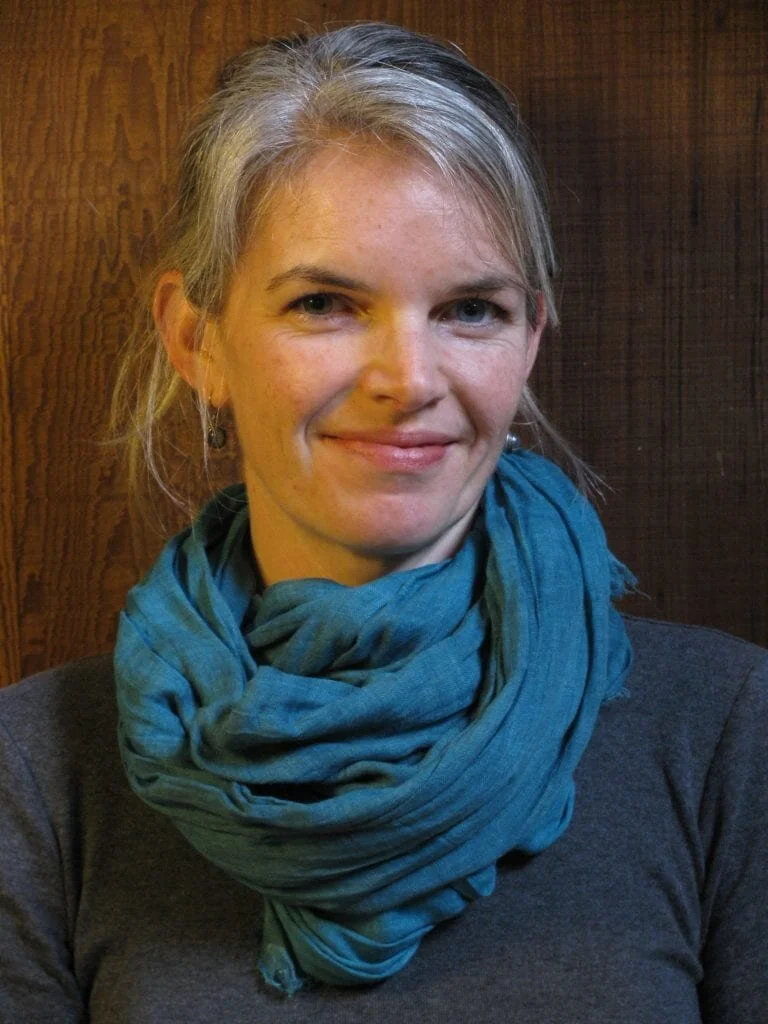
Dr. Kate McLean
Dr. Kate McLean was raised by a man who loved to share stories. Her father is a master storyteller, entertaining family and friends for hours with his sense of humor and insights. It’s not surprising that Kate found herself compelled by the narratives she heard in her first research position, focused on attachment theory in human development and psychology. She was so touched by the trust of people sharing their most intimate memories and experiences, that she knew her area of focus would revolve around the impact of telling those stories on the people sharing them and on the people hearing them.
Some of her colleagues focus their research on early childhood narrative, Kate’s area of interest revolves more around the transformative years between young adulthood and adulthood, roughly 17 - 22 years old.
She finds that the stories parents and caregivers share about their children in front of them, can have positive and negative effects in terms of their relationship, and how the young adult moves through those transformative years.
If the stories a parent or caregiver share about the young adult’s childhood don’t fit how that young adult sees themselves and how they are transforming into adulthood, conflict develops between them, and the transformation can become stilted.
On the other hand, if the narrative continues to resonate with the young adult, it may help them move forward with confidence in their identity as they move into adulthood.
Our conversation took some twists and turns, one thing that struck me was our mutual respect and admiration for those who share their stories with us. When someone chooses to trust you with their most intimate memories, we must respect that story and the person sharing it.
Learn more about Dr. McLean’s work, and check out her book, The Co-Authored Self.
Kate C. McLean, Professor of Psychology at Western Washington University, was trained in Developmental and Personality Psychology at the University of California, Santa Cruz (Ph.D., 2004). Her research focuses on adolescent and emerging adult identity development. She is on the governing council for the Society for the Study of Emerging Adulthood, and is an Associate Editor for the Journal Personality and Social Psychology: PPID. She teaches courses in Developmental and Personality Psychology, as well as research methods. She currently serves as the Director for the Center for Cross-Cultural Research at WWU.
Episode 95: Are You a Good Ambassador for Your People?
If you’ve ever worked in a large corporation or for a public sector agency, you have seen some pretty ridiculous policies that feel either far too broad to apply to every employee, or far too specific.
The reason these unnecessary policies exist is that many managers and leaders struggle with conflict, and it’s much easier for them to replace good management with bad policy.
You can have an impact on this by being a good ambassador for your people.
An email arrived in my Inbox when I worked in a small agency for the state government.

View from a government office, Helena, Montana
As of August 1, personal cell phone use is prohibited during working hours, except for emergencies.
The talk around the office about the policy centered on the ridiculousness of it, few people took it seriously, and others were simply insulted.
Here’s the story I imagined was behind the creation of that policy:
Boss: I’m so tired of seeing Dan sitting at his desk and staring at his phone. He never meets deadlines, and I think it’s because he’s constantly distracted with texting and playing games on his phone. I’ll bet he spends hours on Facebook and Instagram. I know what I’ll do! I’ll create a policy that people can no longer use their personal cell phones at work. That way he will have to put that stupid thing away and get his work done!
Dan: I’m so bored. I’ve gone to my boss multiple times to ask for more interesting projects to work on, and I’ve given him a list of ideas, but the only tasks he gives me require resources I don’t have, and input from so many others that I there’s no way I can meet his deadlines.
Does this scenario sound familiar to you?
There are so many ways this situation could be resolved. Every one of them requires actually talking to each other, and working to speak each other’s language.
Instead of creating a broad policy that impacts every single employee, just to address the behavior of one, or a small number of employees, consider this: Talk to them.
Ask them what they need to do their job well, and let them know you’re concerned about the time they’re spending on their phone. Document the conversation and make sure to follow up with an email with bullet points to confirm what was agreed to in the discussion.
The employee also has a role to fill here to, of course, which includes recognizing when they are not representing themselves or other employees well. If Dan was aware that his activities on his personal cell phone would impact ALL of his colleagues, he might have behaved differently.
The way you behave, no matter where you are, is a reflection on all the different people you may represent, a public employee, a woman, a young adult (Millennial), a father. You are an ambassador for your people everywhere you go, based on your outward identity.
Here’s another scenario:
A local government hears from a variety of visitors and residents that their town is known as dog friendly, but that it’s also known for irresponsible pet owners – they don’t pick up after their dogs at the dog park, on the trail system, or in town on other people’s properties and sidewalks.

Toblerone on Mt. Helena Summit, Helena, Montana
The elected officials come up with a solution that involves more enforcement of the policies that exists, higher fines for those who are caught not cleaning up after their dogs, and other penalties. This will not solve the problem for a variety of reasons, including the fact that it’s never going to be a police priority to cite a dog owner for not picking up after their dog (and it shouldn’t be), and it’s difficult to catch people in the act. Plus, without some entertaining, engaging education around the why behind the changes, people won’t see the point.
But what if dog owners decided to be great ambassadors for their people - other dog owners? If we knew our behavior was contributing to a negative impression of our town, and was the reason for an increase in fines, and may have impact on our public safety budget, would we change that behavior?
As I hiked down the mountain behind my house with my friend, who is not a dog-owner, we saw a filled poop-bag next to the trail. I could tell my friend was tempted to judge the person who left it there, her expression said what her words didn’t.
I’ve done that before, I’ve left the dog poop bag near the trail on my way up so I don’t have to carry it for the entire hike, and then come back down this way to pick it up on my way home. I have to admit, though, that sometimes I forget, and come back down via a different path. That’s why (and I bent to pick up the other dog-owner’s poop bag), sometimes I call myself the Dog Poop Fairy, and pick these up when I see them.
There. Did you hear that? I explained why people leave the bags, admitted that I’m sometimes at fault, and then demonstrated what a good ambassador for dog owners look like. It wasn’t hard.
Even if no one sees your dog poop on public or private property, you still represent all dog owners when you don’t pick that shit up.
Are you a good ambassador for the people you represent at any given time? It’s not easy, and it’s not fair that people generalize so quickly based on first and physical impressions, but that’s the way it is. If people know me to be a dog owner, I represent all dog owners with my behavior. If people know me to be Jewish, a woman, a public sector employee, then I represent all of those people and my behavior has an impact on all of those people.
And on the flip side of this:
When was the last time you generalized a judgment based on an experience with a single person in a specific situation? Did you notice yourself passing a judgment on all dog-owners, on all Millennials, on all New Yorkers or Parisians based on very limited experience with people who fit that description?
My friend Amber Johnson offered some guidelines at the beginning of the Women’s Leadership Network annual conference a few days ago, and the one that really struck me was this:
Don’t freeze someone in time.
Amber asked the audience of around 150 women in the room whether they had ever said or done something they wish they could undo. She asked if they ever said something stupid and rash. Everyone in the room raised their hands, of course.
And then she explained that we often freeze someone in time – making a judgment about them based on one thing they said or did, and allowing that judgment to impact their relationship with the person. She suggested that when we heard something in the room we weren’t sure of, to ask clarifying questions before jumping to conclusions about the person.
Addressing these challenges requires we look at them from both points of view: Am I a good ambassador for my people? Am I making judgments of a person or on a whole community of people based on limited experience?
This week, think about all the communities of people you represent. Try being aware of your behavior in terms of how you’re representing those people and yourself. And try to acknowledge your own snap judgments based on limited experiences with certain people.
I certainly don’t like to be lumped in with a description of “all Americans are” one thing or another. And when I hear people say anything, good or bad, about an entire community of people: all Americans, all Parisians, all Californians, I think about the diversity of this incredible world, and how unlikely it is that any community could possibly be ALL one thing or ALL another.
Episode 94: Using Personality Assessments as Tools for Self-Reflection & Self-Improvement
Joy Gabriel was an awkward kid. She struggled to understand social context and constructs, and had a hard time building relationships with other kids. Her time with adults was usually okay, and as an only child, she benefited from the focus of her parents on her development, academically and in relationships.
If They’re Accurate, Assessments Can Help You See Where You’re Getting in Your Own Way

Joy Gabriel Olson
Joy Gabriel was an awkward kid. She struggled to understand social context and constructs, and had a hard time building relationships with other kids. Her time with adults was usually okay, and as an only child, she benefited from the focus of her parents on her development, academically and in relationships.
Because she has always been cerebral, she spent a lot of time by herself, nose in a book, and gazing out windows and at artwork as she processed whatever she happened to be reading, philosophy, scientific theories, and at one point, anything Anime.
Though she has always seemed pretty comfortable in her skin, at least to outsiders, she often wondered whether there was something wrong with her. To address her worries, Joy had a way of taking on the characteristics of characters in her books and favorite movies and tv shows that she admired and respected, in our conversation she called them the “influencers I was imitating.”
As she worked through her late teens and early 20s, trying on different jobs, identities, and relationships, she discovered the Enneagram. Joy is one of those intensely self-reflective, curious people who loves to find and apply tools for more self-discovery and to use to help others, and the Enneagram was a game-changer for her. After participating in the training and becoming a trainer herself in that assessment, she realized her calling was to be a coach, and that she wanted to dig into another assessment to add to her toolkit. Now she’s fully certified in DiSC as well.
Our conversation was full of great insights about how the Enneagram, DiSC, and Strengthsfinder assessments provide interesting ways to present the complexities of personality, and methods to apply the results to improve communication and relationships.
Now, as a life coach, she’s putting her gifts to use, focusing her insightful applications of assessments to help “the imploders, the self-sabotagers, and the people-pleasers out there. Whatever you do in life, I want it to be your call— not someone else’s!”
Connect with Joy on LinkedIn, and check out her website, Read Your Own Mind, and Fighting Fair blog to learn more.
Episode 93: Your Life's Trajectory Can Shift with One Reaction
Aaron Orendorff can look back at the time in his life when he took a complete, 180 degree turn, and know that though the incident that preceded it was beyond his control, his response to it wasn’t. He reacted to that incident with enthusiastic self-sabotage, and his career as he knew it at that point ended in a dramatic explosion.
It’s Not the Size of Your Network That Matters, It’s the Quality

Aaron Orendorff - image from an article on AutoPilot
Aaron Orendorff can look back at the time in his life when he took a complete, 180 degree turn, and know that though the incident that preceded it was beyond his control, his response to it wasn’t. He reacted to that incident with enthusiastic self-sabotage, and his career as he knew it at that point ended in a dramatic explosion.
A delicious Reuben sandwich at Elephants on Corbett, Portland, Oregon (Josh in the background)
What he knows now, that he couldn’t possibly have known then, was that his writing had already caught the attention of a person who would later become a mentor and supporter in his career pivot.
I had the pleasure of interviewing Aaron while I was visiting Portland, Oregon. We met at Elephants on Corbett, a lovely delicatessen in an older neighborhood filled with arts and crafts style homes built in the 30s and 40s. We sat in the upstairs dining room and started to record this episode. In the background, you’ll hear the sounds of a lively clientele of children and adults, enjoying delicious food.
I always look forward to hosting guests on this podcast, and I can rarely guess at the direction our conversation will take. This discussion took a few twists and turns around career pivots, a meaningful network, and the amazing satisfaction he finds when working with people he thinks are much smarter than he is. It came back in an organic, circular fashion to meaningful pivot points in our lives and careers, and the people who show up when we need them the most.
If you’re as intrigued by this guy as I was, I suggest you connect with him on LinkedIn, and visit his website to learn more about his uncanny ability to translate complex technical jargon into meaningful language almost anyone can understand.
After our recording, I decided to stick around when Aaron had to rush off to a meeting, and I’m so glad I did. If you get to Portland, Oregon, you might just want to stop by one of the Elephants Delicatessen locations!
Episode 92: Active Listening: The Power of Unlocking the Stories of Others
I love my work. Every client, every group brings new challenges and learning to me. I had an incredible opportunity to work with dependents of National Guardsmen who had been, or were currently deployed. The woman who hired me described the students as resilient, curious, and full of compassion. And when I met them that day, I completely agreed with her assessment. I’ve never worked with a group quite like these teenagers. They were welcoming, warm, and very bright. Every one of them had something to contribute to each conversation I facilitated, when I left, I had more hope than ever for the future of our communities.
Build Trust, Connect, and Deepen Your Relationships
I love my work. Every client, every group brings new challenges and learning to me. I had an incredible opportunity to work with dependents of National Guardsmen who had been, or were currently deployed. The woman who hired me described the students as resilient, curious, and full of compassion. And when I met them that day, I completely agreed with her assessment. I’ve never worked with a group quite like these teenagers. They were welcoming, warm, and very bright. Every one of them had something to contribute to each conversation I facilitated, when I left, I had more hope than ever for the future of our communities.
When we started the workshop, I talked about personal brand, being an ambassador for your people – no matter who you represented at any given time, to any audience. We discussed how we can share specific stories about our experiences in order to demonstrate the qualities we want to demonstrate to an audience, whether that’s a friend, family member, in an interview, or any other situation.
It was the last hour of our time together, and time to focus on listening, rather than sharing.
We were sitting in a large circle on white folding chairs, 12 teenagers between 13 and 17 years old, talking about storytelling and active listening.
I had described some of the techniques I use for active listening, like repeating words back to people to make sure I understand them, leaning forward, and making sure my body language is open and approachable, but I knew a demonstration would be more effective for the group.
Turning my chair to face the boy sitting to my right, a shy athlete with his arms crossed over his chest, I started to ask him questions. I leaned forward slightly, my hands relaxed on my lap. I was fully present, and as I started the conversation, my full attention was on him, the others just faded away for me.
“I know you love sports, and that you’ve had some great moments playing baseball and football. What else do you do?”
“Not much. Hang out with friends, I guess.”
“Do you have a dog?”
“Yes.”
“What’s your dog’s name?”
“Henry.”

Australian Shepherd/Lab Mix: Aussiedor
“Henry! What a great name for a dog. What is his breed?”
“He’s an Australian Shephard/lab mix.”
“I bet he’s really sweet. How do you spend time with him? Walks? Snuggles?”
“We walk together almost every day.” He smiled subtly, just the edges of his lips turning upward.
“I’ll bet you really love Henry and he loves you! Did you get him as a puppy, or did you adopt him?”
“We got him when he was only 8 weeks old.”
“Oh, how sweet. Was he super snuggly with you back then?”
“Yes.”
“Do you miss his snuggly puppy days?”
He smiled sweetly this time, an obvious grin at the memory of Henry as a puppy. That’s when his hands dropped into his lap, relaxed.
“I love puppies, even though they’re a lot of work. Did you train Henry to do any tricks?
“Yes, he’s really smart. One time I taught him to...”
He went on, sharing a story of how he trained his dog to do a trick. We wrapped up the conversation, and I turned my chair to face the rest of the group.
“Anyone notice what happened there?”
Almost immediately, and almost in unison, the teens said:
“Yes! He put his hands down from crossing them across his chest! He dropped his hands into his lap.”
I couldn’t have planned a better demonstration of the power of active listening, and that audience immediately understood that power when they saw the shift in their friend’s body language. They had spent a lot of time with him but hadn’t heard the story of how he trained his dog to do a trick.
If we want to truly connect with a person, we have to help them feel safe. One of the best ways to do that is to open our body language and ask questions to draw out stories.
Episode 91: When You Find Your Purpose, Your Story Shifts
Stories About a Purpose-Driven Life
Central Park, September 22, 2019
Marcia Polas came into my life when we were both in extremely uncomfortable situations. I was in a job with a difficult boss with lots of opportunities for growth, and she was navigating a relationship gone wrong while deciding where she wanted to go from her home in Denver, Colorado to explore the next iteration of her business. She ended up in New York City, and I shifted to a job that was a much better fit, but not before we spent many hours in deep, sad, enlightening conversations - with plenty of tears.
In one of those conversations, Marcia shared a valuable tool for difficult conversations, one that I have used and shared at least 100 times since then. I was about to walk into a meeting with my boss and her boss, and I was expecting the worst. I knew it would be ugly, and as I walked and talked to Marcia a few minutes before the meeting, she said:
Pretend there’s a camera recording the entire conversation. Think about watching the video in a few years, and consider how you would want to see yourself at that time.
I sat in the meeting and considered my facial expressions, my body language, and every response to her verbal attacks to be sure I could describe myself later as having handled the situation with grace, dignity, and compassion. It completely shifted the meeting in my favor, and I walked away satisfied and relieved.
Visiting NYC this month, I had an opportunity to sit with Marcia in the courtyard of the fabulous Lincoln Center and chat.
We talked about how we met, the beautiful friendship we developed at a distance, and the power of living with purpose.
Marcia has incredible instinct when it comes to body mechanics. She started as a Pilates practitioner and has grown her knowledge and practice into all aspects of body work. Her mantra is “It shouldn’t hurt to do your job,” and she works in high burnout industries like bartending, theatre & dance. Marcia can see immediately where your body is out of alignment, and what is likely causing pain.
She is rewarded in her work when her clients realize they don’t have to live with pain, that they have some responsibility to make adjustments to remove pain from their daily lives, and that they can be happier and more satisfied without having to leave a job they love.
What a beautiful world we can create when we serve with purpose!
Connect with Marcia on LinkedIn and learn more by visiting her website.
From her website:
I discovered Pilates in Denver, Colorado, in 1999. I was hooked from my first class. Eight months and a serious car accident later, my physical therapist used Pilates to rehabilitate my back and neck. I was better but still had chronic pain. Two marketing jobs and two cities later, I walked into Pendleton Pilates in Cincinnati, Ohio. After six months of serious Pilates, I no longer had back pain and began Pendleton’s intense four-month teacher training program. My goal was simple, to become a better Pilates student. The result was finding my calling in life.
I taught at Pendleton for the next year as a “hobby” — and in 2004, left my 14-year marketing and communications career, to pursue my passion and teach Pilates full-time. After building a successful Pilates program within a country club, I opened the first incarnation of polaspilates in Columbus, Ohio. With the help of a loyal and dedicated group of clients, the studio succeeded and I learned much about running a small business, Pilates and myself.