


Lift Up Others, Learn, Grow
It was a day full of inspiration, one of those that just sticks with you. What seemed like small moments throughout the day keep coming back to me, much deeper and larger in application in real life.
The Helena Women's Leadership Network had their annual conference on Friday, October 7th. There were just over 100 women in a large room with a small stage and podium up front. To one side of the stage was a comfortably arranged sitting area, complete with a soft, plush leather couch and a side table. The sitting area was set up for speakers for each session to relax and support each other before standing in front of that incredible audience. That's just one of the many small details that made the day special.
My presentation on body language was scheduled in the first part of the day. I sat on the couch feeling more than a little giddy and very nervous. I was taking a big risk in my plan for my presentation, using props that could be fantastic at best, embarrassing at worst. It doesn't matter how many times I present to an audience, no matter how many times I sing for a crowd, my nerves exacerbate my essential tremors and I find my hands shaking. If I'm feeling that anxious, despite my years of experience, I realized as I sat next to the other women getting ready to take the stage, that they may be feeling even more of that rush of adrenaline. So I calmed myself, taking deep breaths, and focused my energy on providing comforting, peaceful energy for the women around me.
It's amazing how that focused energy and goal to help others changes things.
There were intentional themes for the event, the organizers selected the additional speakers based on their complementary themes with the keynote, Bonnie Milletto, and her messages of inspiration, service to others, and trust and belief in ourselves.
As much as I saw, heard, and embraced those themes across all presentations, there was another, more subtle one that I noticed and felt deeply. It was vulnerability.
Every woman who took the stage, no matter how practiced, how experienced, how successful, every one of us mentioned being nervous. Each woman had her own way of sharing that theme, one said that she hadn't eaten that morning, "which is why I didn't throw up." How's that for vulnerable?
Why is this important? Why is vulnerability such an essential part of who we are, no matter where we are in life? Because it demonstrates our humanity. Vulnerability is not about weakness. Vulnerability is about choosing to step out of our comfort zone and put ourselves into a place of unpredictability, it's about taking risks. Brené Brown has made a successful career of studying this concept and helping millions of people understand the value of vulnerability. She has made this part of our vocabulary in the professional world, and people are finally figuring out that demonstrating our humanity is actually a good thing.
Over the past few years I've had the opportunity to meet in person and online some absolutely incredible people. I saw Rickie Lee Jones in a small venue, sat right up front and interacted with her. One of my heroes, Whitney Johnson, author of Disrupt Yourself, published my writing as a guest on her blog twice in the past few years. And I spent time on the phone with Karthik Rajan, one of the LinkedIn writers I've admired (and, let's face it, put on a pedestal) for years. Here's the message I want to share with people: We are all flawed. We are all beautifully flawed human beings. No one is superior to another. Every one of us has something to learn from each person with whom we have the opportunity to interact. Every one of us has the ability, the responsibility to lead others by example in considerate, compassionate behavior.
Here's your challenge: Talk to people. Trust yourself, believe you have something to offer to every single person you meet. Never underestimate your value and your ability to serve others. Your words and actions are powerful, choose to use them with consideration, kindness, and compassion.
Thanks to the women who participated in the event, the day was full of inspiration and each participant brought the necessary energy to make it happen. A special thanks the board of the Women's Leadership Network for making this outstanding event happen.
Share Your Vision, Build Your Business
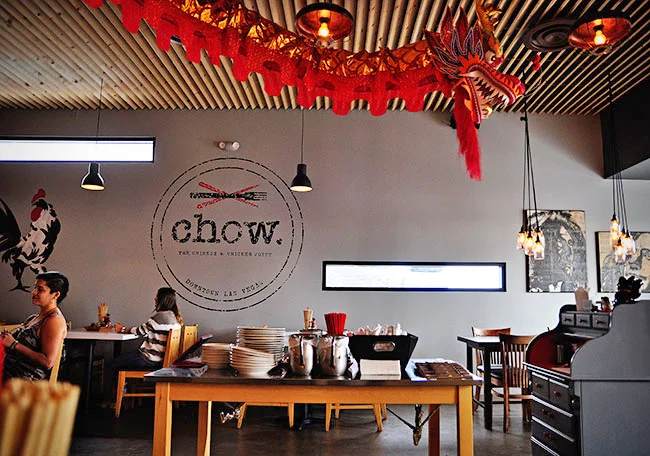
She stood outside her restaurant, unassuming, obviously an artist, with her cool hat and hip vest. I didn't know who she was; she introduced herself as Natalie, the owner of Chow in downtown Las Vegas.
She stood outside her restaurant, unassuming, obviously an artist, with her cool hat and hip vest. I didn't know who she was; she introduced herself as Natalie, the owner of Chow in downtown Las Vegas.
We visited for a few minutes, she asked about Montana and about music. And then I asked about her story and her restaurants. This is a remarkable woman. I had no idea, as I stood on the sidewalk with her, that I was hearing the story of a woman who has hit rock bottom and come back to achieve and succeed not only in her career, but in inspiring others.
The staff are shared between her two downtown Las Vegas restaurants, Chow and Eat, providing quality training and opportunities for all of them. And it shows. That evening in Chow, the restaurant was closed to the public for a private party. The group rented music equipment for the evening, microphones, amplifiers, speakers, etc., and planned to have a jam session while they ate. When the truck with the equipment arrived, staff immediately jumped to help and ask what they could do for their guests.
Chow's staff were accommodating, kind, and warmly professional all evening, and the food was delicious. Chef Nat stayed for a while, sitting in the back observing the party, and sometimes visiting with staff and guests. When the party was ending, staff immediately jumped in to help put the equipment back into boxes and store everything near the door for pickup the next morning.
It was a late night for those of us playing music and visiting the bars afterward, so when we woke the next morning, my first thought was to try Chef Nat's other restaurant, Eat. I was not disappointed. As we walked into the restaurant, Jessica, the hostess from the evening before greeted us not only with a smile, but with recognition as guests from that evening. Kevin, the adorable young man who made sure I had everything I needed at Chow was there at Eat the next day to serve again. You would never know they had been up late the night before, hosting, serving, and accommodating a rowdy group of engineers/musicians. Even Chef Nat was sitting at a table with customers, chatting away with a smile on her face.
We had one more day in Las Vegas; guess where we ate breakfast again that next day? Yes, Eat, and we were pleasantly served by Robert, the same kind, excellent staff who served us breakfast the previous day.
I've spent enough time in the restaurant/hospitality/customer service industries to know what I'm observing in any service environment, and this was unique. Her employees, though wonderful at their jobs, weren't there just for work. They were there, serving and caring for customers for Chef Nat and her vision.
A while ago I wrote a post called Hire People Who Love Your Product. When a person loves your product, they become advocates and brand ambassadors for it. But if they also share your vision and understand it, they become part of something much bigger than a job or a product. That's what Chef Nat is doing in downtown Las Vegas. This woman is building more than fabulous little restaurants. She is building communities. She is building hope, opportunity, and resilience.
*Cover Photo by Heidi Roth: http://www.foodnwhine.com/blog/2015/12/17/chicken-and-chinese-at-chow-las-vegas

Welcome to the Real World
"Have fun, welcome to the real world!" As if your life as you know it, the here and now, isn't somehow the REAL WORLD?
Our older son is getting ready to graduate from high school. It has not been an easy road for him. We spent a lot of time and money over the years at office supply stores, trying to find tools to help him stay organized and on top of things. Nothing really worked, and as a result, his grades were never stellar. To add to his level of stress over the past few years, our family has experienced a lot of grief, the loss of both of his grandfathers, his step-grandfather, and a very close family friend, all within 3 years. After our most recent loss, a musician who spent a lot of time in our house, I asked how he was feeling:
"I'm ok, mom. I guess I'm just sort of numb at this point."
When people talk about his graduation and the beginning of his "real world" experience, I bristle.
I remember when I was graduating from high school and people said: "Have fun, welcome to the real world!" I also remember being in college and people dismissed my frustrations with comments like "just wait until you get into the REAL WORLD."
It was as if life as I knew it, those years of struggle and growth, somehow didn't qualify as the REAL WORLD.
I can't be the only one who remembers those tween and teen years like they were yesterday. It's not just memories of things that happened or things I did; I have vivid, painful and wonderful memories of how I felt. Those feelings were real. Those struggles were real, some of them more real and more impactful than many experiences since then. Those difficult times, those triumphs and perceived failures were very real to me and continue to shape who I am and who I want to be in the future.
Can you honestly say those years didn't somehow change you? That the personal discoveries and dysfunctional relationships, those physical changes didn't have an impact on who you are today?
The real world is whatever we are experiencing at any given time. I can appreciate that as a young child and teenager my worries were significantly different from the adults around me, but they weren't insignificant. I didn't have to go to a job I might not like for 40+ hours each week; I didn't have to buy my own groceries, toilet paper, and laundry detergent, and I didn't have to worry about rent or mortgage or savings.
My real world then was filled with mean girls, difficult relationships, being a mediocre student (at best), and all the drama that comes with the hormonal fluctuations of a teenager. I wouldn't go back -- there's absolutely no way I would go back to those years.
In different stages of life, I remember observing people older than me and wondering what I would be like at that point in my life. In other stages in my life, I observe people younger than I am, and remember so much of what I was like, what I thought, how I felt, how I behaved. It gives me perspective and helps to remind me to not judge others; I can't possibly know what they're going through, what shaped them.
Maybe if we recognize that each individual has stories that shape us, from toddlers to adults, and that each story is relevant at every point in our lives, we can develop a better sense of how to help each other.
What do you think? Do you remember what it was like to be a teenager and young adult? Did those years feel like real life to you?

Don't Lose Your Sparkle
I had the travel bug; I was even more independent. And I was afraid that after a while I'd regress and lose the gains I made when I was away. I knew I had changed, and I didn't want to give in and go back to that sense of entitlement, safety, and the desire for comfort at the cost of adventure, curiosity, and compassion.
*When something you read inspires you or makes you think, consider sharing it. Writers tend to be a little needy... when you comment and share their work, it encourages them to keep writing.
After nearly six months away studying abroad in Australia, and two weeks adventuring in New Zealand, I got off the plane in San Francisco. I planned to stay a couple of days with my brother before I returned home to Colorado to finish my sophomore year at Colorado State University in Fort Collins.
I was wearing a brightly colored sundress and sandals, with a straw hat in my hands. It was January. It was a cold ride in his jeep to my brother's place in Santa Cruz. When we arrived at his house, I walked straight into his room, my sandals slipped off my feet, and I collapsed on my stomach on his bed. Traveling back from New Zealand took two full days, though the calendar hadn't changed. I left on January 7th, traveled for nearly 48 hours, and arrived on January 7th.
Get your filthy feet off my bed! Go wash them right now!
I turned over, puzzled. I had been wearing shoes for the entire return trip, so when I looked down at my feet, leaning forward off the edge of the bed, I was a little surprised. They did look filthy, but they weren't. Both of the bottoms of my feet were dark brown, solid calluses. Gross. That's what your feet look like when you hitchhike barefoot through New Zealand for two weeks.
We had a nice couple of days together swapping study abroad stories. He had spent a year in France a couple of years before I left for my adventure. I was grateful to spend a few days with someone who had done something similar and understood what it was like to come back to the US after a trip like that. Even though I was living in an English-speaking country, the culture shock was pretty intense.
Those first few months back were really hard. Re-immersing myself into the Colorado culture should have been easier. The language was (mostly) the same, many foods were similar, and many of my friends were there when I returned. So why was re-entry such a challenge?
My cousin recently returned from two years as a Peace Corps volunteer in Cambodia. As I think about her re-entry, I'm reminded of some of the emotions and difficulty I had coming back from Australia. It's not the same; she was gone for two full years, in a country without indoor plumbing (generally), completely different foods & culture, and a difficult language barrier. I'm guessing, though, that most people returning from overseas after a few months or more have a hard time, regardless of where they spent that time.
When I was in Australia and New Zealand, I shifted from being independent to being fiercely independent. As a woman, particularly a small woman, people assume I need help with things like luggage, reaching things from high shelves, and car maintenance. As an adult I take advantage of offers of help; back then, especially after my study abroad experience, I found myself bristling, indignant, and somewhat defensive with any offer of assistance. Through gritted teeth:
"I can do it myself."
Looking back, I see things much more clearly. Isn't that always the way? I realize now that part of my difficulty came from fear. In my time away, I had changed. I had grown up in a different way from my friends who didn't leave. I had the travel bug; I was even more independent. And I was afraid that after a while I'd regress and lose the gains I made when I was away. I knew I had changed, and I didn't want to give in and go back to that sense of entitlement, safety, and the desire for comfort at the cost of adventure, curiosity, and compassion. Those are the characteristics I observed around me when I returned to my cozy, spoiled life.
I was afraid that I would lose my sparkle.
It would have been easy to fall back into the routines of my life before living abroad. My family and friends were there to fall back on; life is easier when we allow ourselves to regress to where people expect us to be.
But I didn't. That fear motivated me to keep moving forward. Those observations of the people around me were enough to keep me grounded and motivated to live my life with integrity & consistent growth. Those observations continue to motivate me to be curious and spontaneous. For some people, comfort = happiness. That equation just doesn't fit me.
After my study abroad experience, every day I worked toward something bigger, something that felt like the right next step. Even a small adjustment to each day improved my motivation and kept me from stagnating in my old routine. I changed my walking route to classes each day, sat up front in every class and made sure my instructors knew who I was, set a goal to meet at least 3 new people each week, and kept my eyes open for opportunities -- especially the ones I thought might be out of reach. (That's my internship story, coming in the next couple of weeks.)
I'm so proud of my cousin; she's independent, kind, smart, curious, and adventurous. I know she'll struggle with re-entry, we all do. I also know she'll come out of this part of her life even more motivated to help our communities around the globe. She'll find ways to make her mark in improving the lives of the people around her. She most certainly will not lose her sparkle.
When you get really excited about a possibility, about the world around you, do you let the people around you talk you out of your ideas and dreams? When you return from a great conference, where you were full of energy, do you let the people you come back to pull you back into the groove, losing that momentum?
Have you lost your sparkle lately? It's never too late to find it again. Surround yourself with people who believe in you. Surround yourself with people, when they hear what you dream of doing, say "how can I help?"
THANK YOU FOR READING, COMMENTING ON, AND SHARING MY POSTS!
Please sign up here for email notifications of new posts:

When You Don't Know Where to Start
I crouched in front of her, worried: “What’s wrong? Are you ok?” She looked up, so sad, big brown eyes filled with anxiety: “I…(sob)… don’t (sob)… know (sob)… where to… start… (sob).”
Paralyzed By A Decision
It was early in the afternoon when I arrived at my sister’s apartment to help her move from Sacramento to a place in San Francisco. Our mother was holding my 18 month old son; we had flown in from Montana less than an hour before and headed straight out to help my sister.
We walked in to find her sitting on the floor near the kitchen, knees pulled up to her chest, head down, crying. I crouched in front of her, worried: “What’s wrong? Are you ok?” She looked up, so sad, big brown eyes filled with anxiety: “I…(sob)… don’t (sob)… know (sob)… where to… start… (sob).” I sat down in front of her, so relieved it wasn’t something worse. Then I stood up and offered her my hands to pull her from the floor.
I picked up the nearest box and put it into her hands. “Here. Take this. Go into the bathroom, pull everything out from under the sink, and put it all into this box.” She looked at me, a little puzzled, then turned around and did what I said. That was it. She was fine after that. She was more than fine after that. She was efficient and capable and we had the entire apartment packed in just a few hours.
There are those times when the next step is completely overwhelming. I’ve been there; paralyzed with a decision to make. What’s next? The only thing to do is take a small step forward – or perhaps take a side-step, depending on the obstacle in front of you. The important thing is to move, to shift, to make something happen, even if it’s a tiny movement.
My cousin called just before she graduated from college to ask for advice. Partway through her question she started to cry, paralyzed by the decision she had to make. Just as with my sister, I put one small action in front of her.
It’s easy to get caught up in a moment and briefly forget all that you know. For my sister, she needed a little push to remind her that she needed to take this one step at a time. For my cousin, she needed the reminder that whatever decision she made at that moment could be un-made if she needed to change things. When I’m faced with a major decision, I remind myself that everything can change in an instant and that a decision I make right now is unlikely to derail a future part of my life. If I need to quantify a decision, I will use this handy tool.
Of course there are exceptions
– people make impulsive decisions that can have huge, long-term impacts –
sex, driving while on drugs or alcohol, sky diving.
When faced with a major decision I find it comforting to look back at other decisions I saw as life-changing at the time I was making them. Looking back helps put current concerns into perspective. There are methods to quantify a qualitative decision by scoring your priorities, but in the end, it's still your decision to make.
The next time you’re faced with a decision and you feel paralyzed in the moment, remember that whatever decision you make is the right one for that moment. Just take it one step at a time.
We should all start to live before we get too old. Fear is stupid. So are regrets.” ― Marilyn Monroe
What decisions have you made that you decided to un-make? How did that work out for you?
Thank you for reading, commenting on, and sharing my posts!
Sign up to receive notification when I publish new posts:
We All Need a Foundation to Step Out of Our Comfort Zone
It's a mattress! It's not practical to keep a mattress when I've managed to give away and throw away the majority of my "stuff" so we can travel, untethered.
I can't let go of it, even though I know I should.
"What do you mean, you know you should?"
It's a mattress! It's not practical to keep a mattress when I've managed to give away and throw away the majority of my "stuff" so we can travel, untethered.
It's not about the mattress, though. It's about the values you've attached to it, right?
She was talking about the mattress she bought after leaving her abusive husband, sleeping in her car for 6 months, and had finally moved into an apartment by herself. That mattress represented the first real thing she owned, free and clear, since leaving him -- and all of her things -- behind. Now she's in the midst of disrupting her life, again, is remarried to a wonderful, adventurous guy, and is downsizing to live as minimally as possible so they can travel all over the world.
Don't get rid of it. You have a storage area that can hold it for you for a while. Keep it until you don't feel like you need it any more. We all need something to help us feel grounded when we're about to take a leap out of our comfort zone.
Healthy toddlers are known to wander away from their parents, though usually they will turn to see them, to make sure they can still see them, before they get too far. If you read anything by my friend Sara Jacobovici, you'll read that in infant and child development, we need a close bond with someone (or something) in order to become independent. It's a paradox for sure, but not too surprising. Read child development articles and they will describe how thumb-suckers are statistically more likely to be more confident teenagers because they've had the ability to self-sooth. I believe in thumb-sucking - no one can take away the thing that can bring you comfort!
I had a good, solid, healthy childhood for the most part. My parents were loving and we always had a roof over our heads and plenty of food to eat. We have a warm, huggy, sometimes overwhelmingly loving extended family of aunts, uncles, cousins, and friends who became family wherever we lived. And we moved a lot in my youth. I went to four different elementary schools. No wonder I sucked my thumb well into 1st grade. No matter where we lived, or the adventures and trouble I got into in my late teens and early 20's, I always had my family as my foundation.
I got a cat when I was 20 because I felt the impulsive need to spite a landlord. Needless to say, I wasn't thinking long term. He wasn't the sweetest cat, though he was devoted to me. Clawed was huge and created a lot of complications for me. Having a cat limited the apartments I could rent, limited my travel plans & spontaneity, and there were times that he had food and I went without.
When my parents were divorcing and they sold the only house we lived in for more than 4 years, Clawed was my foundation. Wherever I adventured, like moving from Fort Collins, Colorado to Washington DC by myself, he was with me. He was the one consistent thing in my life for more than 9 years, and I was devastated when he died, even though I had a wonderful husband and new baby at that time.
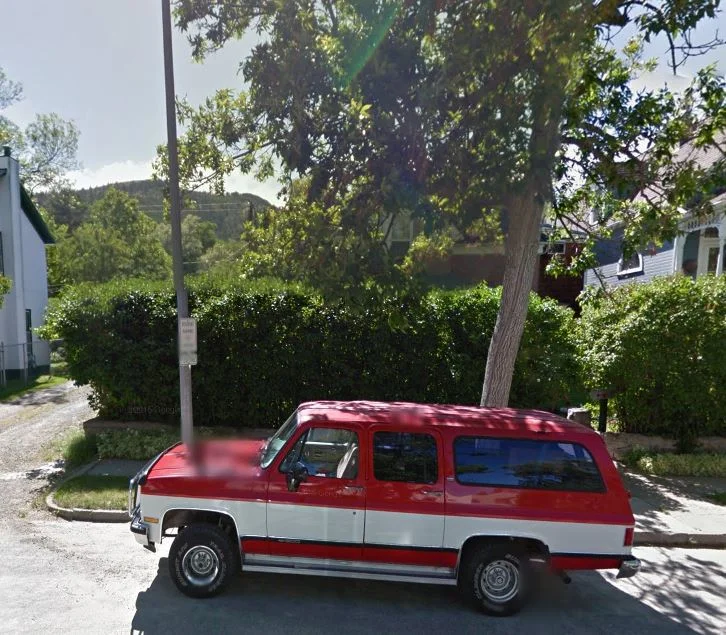
My little gold Super Beetle, handed down to me from my brother, was another foundation piece that broke my heart when I had to get rid of it. Now I have a weird attachment to our 1991 Suburban. There's no way for someone else to truly understand why we have attachments to certain things. Sometimes we don't really know ourselves.
I wrote an article about shoes being my wardrobe foundation; this is the same idea. When I am about to embark on a new adventure, whether that's applying for, or starting a new job, preparing for a speaking engagement, planning a trip, or any other activity that will push me out of my comfort zone, I have certain things I can count on to bring me back to center. Whether its cues like shoes or an outfit that make me feel really good, or a quiet moment with my supportive husband and kids, a glass of wine with a friend, or a good snuggle with my dog, having a foundation (like a mattress, or my thumb) reminds me that whatever I'm about to do, I have a place to go (or people to comfort me) afterward to find my balance again.
What are your foundations? Are you intentional about finding that center before you jump into something out of your comfort zone? Do you recognize which arbitrary objects you're most attached to, and may have foundational values associated with them?

It's Hard Work to Decompress
Why couldn't I clear my head? I closed my eyes, trying hard to think of nothingness, to listen intently to the sounds around me, to smell the air and nearby wild flowers.
Even in the most beautiful environment, decompressing doesn't always come quickly or easily.
We took our time getting out of town, knowing it would be light well into the evening and not wanting to get started on our hike while it was still over 80 degrees outside. I had never backpacked into the wilderness for overnight camping, though I had spent plenty of time hiking through the mountains. Gear is important for trekking into bear country, so we made sure we had a can of bear spray and a loud whistle for each of us, good shoes for hiking and crossing streams, a water pump so we wouldn't have to carry too much water, and the right food to sustain us.
It was about 5:30 in the evening when we left the car with our packs on our backs and started hiking into the Scapegoat Wilderness Area in Montana. It was a well-worn trail, lots of horses and hikers have explored the area, and many take the three mile hike in for a day trip to visit the famously beautiful Devil's Glen section of the Dearborn River. It was not too rigorous a hike for our first trip in with heavy packs, and though my pack looked almost as big as I am, it was only around 30 pounds.
It didn't seem like very long before we hit the three mile mark and saw a handful of tents and campers around fires in the meadow above the Devil's Glen. We decided to keep hiking and see if we could find a more secluded spot near the river. Another 3/4 of a mile and we headed down a less-worn path toward the river. Bob spotted a perfect campsite on the other side, so we crossed carefully, found a place to pitch the tent, and settled in for two nights.
The river was loud and full of life; as we watched the sunset, we saw a trout splashing in a large pool on the opposite side of the river, heard grasshoppers and birds, and the droning sound of insects all around. After a simple dinner of freeze-dried convenience with decent flavor, we shared a sip of bourbon from the flask and sat by the river to enjoy the view. My head was clear for the moment, taking in the spectacular pink and orange across the sky.
When we climbed into our little tent and put our heads down on make-shift pillows of clothes, I thought I'd fall right to sleep. The temperature was perfect, the air clean and fresh with a slight breeze through the tent, and I was tired from the day. But as my eyes were closing, I became super aware of the sounds of the night around me, remembering that I was in bear country. It took me hours to fall asleep, jolting awake after incorporating the sound of Bob's snore into a dream about a bear outside the tent. Eventually, I fell into a deep sleep and was disappointed to wake up to the early morning light coming into the tent, and my head full of busy-ness.
I thought that within a few hours of being in the wild mountains of Montana, my head would be clear of my every day activities -- but it wasn't. Despite spending hours wandering through the spectacular wilderness, my head was still stuck in overdrive. I woke as I always wake at home, with my head full of thoughts about what would come next, what I forgot to do at work, excitement for our next musical performance, upcoming travel plans, and thoughts of what our boys might be doing at that moment by themselves at the house.
Why couldn't I clear my head? I closed my eyes, trying hard to think of nothingness, to listen intently to the sounds around me, to smell the air and nearby wild flowers. It must have been more than 20 minutes that I tried to relax back into my sleeping bag, getting more and more frustrated with my inability to simply be there, enjoying the peaceful moment. I finally turned to Bob and suggested we get up, get the food bag from the tree, and get coffee and breakfast.
I've been here before; many years ago I was on my yoga pad at the end of a class, trying to get into the ending meditation provided by the instructor. I was filled with frustration. Every time I focused and dropped myself into the meditation, I'd find my mind wandering all over the place, flitting from one topic to the next. That was the moment, after about 10 years of trying, I realized I didn't like yoga.
That first morning in the woods, focusing on action helped; I was hungry and immediately set off to pump some water for our coffee. I never would have thought flies, especially the biting kind, would be a welcome distraction. But there I was, swiping at the flies landing on my legs and starting up the little burner for coffee, no thoughts buzzing in my head but the need for coffee and oatmeal.
We packed up for a day hike and headed upstream, bushwhacking through the dense, lush forest among wild roses, Indian Paintbrush, elk scat, mushrooms, and dead trees littering the ground. Stopping along the rushing river periodically for Bob to cast his nymph, hoping for a brown trout for dinner, I had the camera poised for my own catch for the weekend. It was mostly quiet, which, in bear country, isn't really a good thing, so I hummed and sang some of the songs we were working on for our next gig. My head wasn't clear, but I was relaxed.
By the time we hiked back out to the car after two nights, I was tired but not exhausted. I felt strong, healthy, and comfortable in my skin, even though I smelled like I hadn't bathed in three days. I unloaded my backpack into the car and opened the cooler we had stashed inside, pulling out my favorite local brew, Lewis and Clark Brewery's Prickly Pear Pale Ale. My head was finally clear.
Driving back through some of the most beautiful landscapes in the country, I turned on my phone to let our boys know we were on our way, and to suggest they clean up evidence of junk food binging. It beeped and beeped as the signal came on to retrieve missed calls and text messages. I wanted to ignore it, but the pull of connection was too strong. I read the messages. I really didn't miss anything. So I put the phone down and didn't pick it up again until we unloaded the car back at our house.
I had no intention of looking at my computer when I got home, and managed to leave it closed until late into the evening when I had to review a document for a client. She was expecting feedback the next day and I knew it just had to be done.
It took me three days to disconnect from my electronic devices and clear my head. That can't be a good thing. I made some decisions that evening, after I closed up the laptop.
- I will set hours of device use from now on: Unless I have a looming deadline, I will not open my laptop between 10pm and 8am.
- Disconnecting is important, so I will put my phone away when I am in a face-to-face conversation, no matter with whom or for how long.
- I will schedule disconnected, outdoor time more regularly and find tools to help me clear my head in a reasonable amount of time and with a reasonable amount of effort.
- As annoying as mundane chores can be, I find that doing laundry, cleaning the kitchen, and weeding the garden are activities that actually clear my head. I plan to stop fighting those activities and try to take them on with the intent to clear my head, as opposed to doing them with the sole intention of accomplishing the actual task.
A lot has been written about humanity's disconnect from nature as a result of our addiction to our electronic devices. That disconnect has wreaked havoc on our ability to safely spend time in nature and effectively connect with people around us. There are far too many recent stories of people being injured and killed in our national parks as a result of our naiveté around wild animals and dangerous areas in nature. If we don't disconnect from screens and reconnect with people, ourselves, and our natural environment, we will lose our ability to connect in any real way with our own humanity.
What will you do to change this trajectory in your life and the lives of your family and community? How will you adjust your patterns to encourage and build a solid connection with the people you love and with the world around you?