

Episode 79: Some of Your Stories are Totally False
"Just be happy! It's a beautiful day!"
Those words spoken by a family member were completely lost on a teenaged Courtney Ackerman facing depression and anxiety. Not only were they lost, they caused some damage to the relationship.
Depression wasn't just an illness for Courtney, it was also a source of curiosity.
Cognitive Distortions' Role in Your Internal Messages
"Just be happy! It's a beautiful day!"
Those words spoken by a family member were completely lost on a teenaged Courtney Ackerman facing depression and anxiety. Not only were they lost, they caused some damage to the relationship.
Depression wasn't just an illness for Courtney, it was also a source of curiosity.
Not many people going through something like this make the connection between what they're going through, and an opportunity for learning and growth, especially at the time of the struggle. That's part of what makes Courtney unique, among her other talents and varied interests.
Our conversation spanned decades, from that first experience with depression, to her recent “ah ha” moments in her career.
We spoke a lot about 2 of the 11-15 known cognitive distortions, Over Generalization, and Black & White Thinking. When we over generalize, we decide that one thing that happened is meaningful across our entire experience of life. For instance, Courtney was an A student all through elementary and middle school, and then failed a calculus exam. She decided in that moment that she just wasn’t very smart. That’s over generalizing - seeing her one experience in failing an exam and deciding she wasn’t smart, no matter how much evidence there was to the contrary.
With black & white thinking, which can lead to over generalizing, we cannot see a gray area in something specific, like when we decide a person is either good or evil, based on one incident. It’s an either/or way of thinking that, no matter how much evidence we have that there’s something in between, we cannot acknowledge that middle ground.
Connect with Courtney on LinkedIn, listen to her episode on the outstanding podcast “Getting Unstuck”, read one of her articles on cognitive distortions, and order her books on the Simon & Schuster website.
Episode 78: When You're on the Inside Looking Out
Jordan Gross was one of those kids in school who always seemed to have it together. He was an athlete, an academic achiever, played an instrument, and was a boy people wanted to be around. He had plenty of friends, and though he knew he was fortunate in his upbringing and genetics, he always had a feeling there was something else that he was missing.
Stories That Remind Us It's All About Perspective
Jordan Gross was one of those kids in school who always seemed to have it together. He was an athlete, an academic achiever, played an instrument, and was a boy people wanted to be around. He had plenty of friends, and though he knew he was fortunate in his upbringing and genetics, he always had a feeling there was something else that he was missing.
He stayed the course in terms of what was expected of him as he finished high school and moved through college. He even got a great corporate job right our of college and was doing exactly what his family and friends saw for his future. And then he woke up. At 24, he realized he wasn’t living his life - he was living someone’s expectations of his life.
Our conversation reminded me of an earlier episode with Christine Homolko, from the opposite perspective. Christine thought she never really fit in, was always an outsider, and Jordan always fit in, but felt like an outsider. There’s a reality here many of us seem to forget, and it’s not just that the grass is always greener on the other side of the fence. The reality is that none of us really “fit in”, we all have our internal stories limiting and motivating us, and we are all on our own journey. The only difference, really, is the company we keep along that journey.
Connect with Jordan on LinkedIn, follow him on Twitter, visit his website, and take a look at his book, Getting Comfy.
Episode 77: You Can Find Joy and Satisfaction in Whatever You Do
During our conversation, I mentioned a post Thom published a few years ago about needles from one of his knitting machines that got lost in the cracks of the hardwood floor beneath them.
Take Time to See the Value of What You Do, and the Impact You Can Have - Wherever You Sit
I met Thom Boehm on LinkedIn shortly after he published his first blog on that platform. I was immediately intrigued by his writing; direct, thoughtful, insightful, and relevant.
During our conversation, I mentioned a post Thom published a few years ago about needles from one of his knitting machines that got lost in the cracks of the hardwood floor beneath them. We spoke about how Lost in the Cracks was an insightful metaphor for people and things that seem to disappear because we don’t see an immediate use or purpose for them, but when we take time to look in those cracks in life, we find great purpose for those people and things that have been lost.

Knitting machines at Stanfield’s.
What caught my attention from the beginning is Thom’s genuine ability to find joy and value in whatever he is doing. He understands his motivation and needs with clarity few people seem to possess. He knows himself well enough to know that his work environment is as important - if not MORE important - than the work he is doing.
Thom’s description of his workplace is filled with a true passion for the building itself, the hardwood floors, the windows, even the ceiling beams. He speaks of the knitting machines he maintains with reverence, giving them personality and character, almost like a cherished family pet.
If more of us were present, grateful, and inspired by the details around us, perhaps our world would simply be a more kind and joyful place.
Episode 76: It's Harder Than You Think. Be Kind.
I had performed the National Anthem at baseball games a few times that summer as a duet with my close friend, and as a trio with that friend and my sister. Each time we performed together we heard rave reviews. As we walked away from home plate toward the fence and the bleachers, our home team would come up out of the dugout to high five us.
Sometimes It Takes Cruelty to Awaken Us
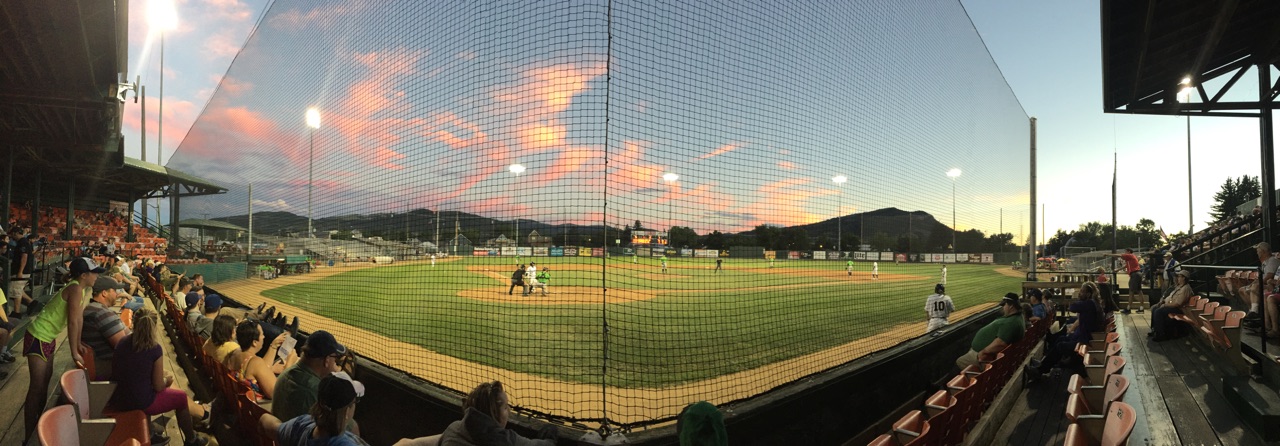

I had performed the National Anthem at baseball games a few times that summer as a duet with my close friend, and as a trio with that friend and my sister. Each time we performed together we heard rave reviews. As we walked away from home plate toward the fence and the bleachers, our home team would come up out of the dugout to high five us.
When I was asked to perform the anthem by myself in mid-summer, I decided to challenge myself and go for it, even though it was scary to me. I practiced and practiced in the shower, in the car, and as I made dinner. I had been a professional vocalist for a couple of years, getting paid to perform in a few bands at small to medium sized venues, so I didn’t think it would be too different from those experiences.
Sure I was nervous, but not too nervous. After all, I was a professional musician!

Heading to home plate…
That afternoon a wildfire had kicked up just north and west of our town, and the smoke was beginning to filter into the city and the valley east of the fire. By 6:45pm, when I arrived at the ballpark to sing at 7, with the first pitch scheduled for 7:05, the sky was an odd gray and yellowish color. I totally underestimated what that might do to my voice.
I walked confidently - all by myself - to home plate, as I had done with my friend and my sister a few times before, and adjusted the microphone to my mouth. I could feel my knees shaking, but took a few deep breaths to calm my nerves.
The last time I had performed the anthem with my friend at that ballpark, we had agreed that there wasn’t a huge hurry to begin. She said: “We start when we’re ready.” And we did. We took just a moment to look at each other, breathe deeply, and establish our starting note.
I did the same thing that evening, taking a moment to breathe and prepare myself.
…And the rocket's red glare
The bombs bursting in air
Gave proof through the night
That our flag was still there
Oh say does that Star Spangled banner yet wave?
As I lifted my head, pressed up slightly onto my toes to hit that high note:
O’er the land of the free (this is the high note)
And the home of the brave
my voice faltered and cracked. The smoke had done its damage. I hit the note, yes, but not well.
And the home of the brave.
I nailed that ending, but no one heard that part. They were still focused on that damaged note - free.
Walking back past the dugout, not a single ball player came out to high five me. Not a single one.
I made my way through the gate toward the bleachers and my son, who was 8 at the time, said:
Mom, I thought you were great.
Thanks, Max, but I know that high note didn’t quite work.
He looked down, scuffed the toe of his shoe against the ground, and said:
Yeah. I know.
He looked sheepishly up toward some women in the bleachers:
I heard them laugh and say stuff.
My face flushed. I was embarrassed for myself, but angry for him.
What did you think of that?
It made me angry. I know it’s hard to sing that song.
I answered:
That’s right, Max. And if you hear something like that again, no matter who is performing, I would encourage you to say something like: “That’s rude. Could you do that? Could you sing the National Anthem all by yourself into a microphone on home plate to a stadium full of people?”
He smiled and told me he would do that next time.
The ballpark manager came up to me a moment later and mentioned he didn’t have a singer for the next evening’s game, and asked if I’d come back tomorrow. Everything in me said NO WAY... But I said yes. Max was standing next to me, and I knew if I said no, he’d see me giving up. I asked the manager: “You did just hear me, right? You heard me not quite hit that note?”
Yes, but the rest of the version was lovely, and I know you’ll be fine tomorrow.
So I did. I went back the next evening to redeem myself - for me, and for Max. And I nailed it.
It took me a while to recover from that experience, and to fully process my feelings about it. But at some point, as I remember blushing after hearing what Max said, the feeling of embarrassment and anger, I was transported to a moment just about a year before that, when I might have made someone feel that way.
I wasn’t snickering, I didn’t actually say anything to my friend next to me, but I do remember making faces with her as another woman was singing in front of us. I told myself she didn’t see us; I told myself she didn’t know what those expressions were about, but as I thought about my experience at the ballpark, I knew I was that woman in my recent past and resolved never to be there again.
What an awful realization.
Now, quite a few years later, I had an opportunity to shift this dynamic.
We were sitting in the bleachers of a stadium, watching our younger son graduate from high school, and the valedictorians took the stage to speak.
The first one began to speak and I could hear her voice trembling. Her tongue was tied a few times, and a few words got mixed up and didn’t make a lot of sense. There were at least 1,000 people in the audience, plus the 360+ graduates, the high school band, and all faculty and administrators.
From behind me, I heard:
Ugh… this does NOT give me much hope for the class of 2019.
I felt my face flush with embarrassment for the young woman on the stage, all alone with that microphone and over a thousand people watching and listening to her. I turned around:
Excuse me - there are at least a thousand people here watching and listening to this young woman on the stage with a microphone. I’m a professional speaker and this would make ME nervous. Could you do that without being nervous?
I turned back around, expecting our older son to be completely embarrassed by his mother’s comment to a total stranger., but he wasn’t. He smiled at me with encouragement and pride.
I didn’t notice the reaction of the people behind me, I just continued to look forward and listen to the speeches, and shouted with the rest of my family as our son’s name was called and he walked across the stage, a fresh, new high school graduate.
Have you been the one making faces, snickering, or whispering with friends while another human was performing or speaking? Do you ever think about whether you could be the one with the microphone, and if you could do better?
Life is difficult enough without the peanut gallery taking us down when we put ourselves out there, taking a risk and demonstrating vulnerability.
Maybe it’s time for all of us to grow up a little and choose to be supporting and encouraging instead.
Don’t you like yourself more when you encourage and support people?
Who would YOU rather spend time with, the person who snickers and makes fun of people, or the one who claps, smiles, and encourages people?
Episode 75: Does Anyone Really "Fit in"? How Stories Help You Find Your Community
Born in France to an American father and a German mother, Christine Homolko spent most of her childhood being shy and introverted. When her father decided to move back to the United States, she and her sister chose to move with him to a town just outside of Boston. She started her senior year of high school in a completely new environment, and realized she had an opportunity to reinvent herself in a place where no-one knew her or her history.
Fitting In Is Not the Same as Feeling Connected
Born in France to an American father and a German mother, Christine Homolko spent most of her childhood being shy and introverted. When her father decided to move back to the United States, she and her sister chose to move with him to a town just outside of Boston. She started her senior year of high school in a completely new environment, and realized she had an opportunity to reinvent herself in a place where no-one knew her or her history.
She decided that what she wanted was to step up and step out, and be a person who was brave and curious. She took that opportunity seriously, and pushed herself out of her shell.
It’s not surprising that she never felt like she really “fit in,” especially because most of the students in her class had grown up together from early childhood, kindergarten, 1st grade, etc.
That feeling of not fitting in continues to stick with her; she’s finding ways to create a community where she may not “fit in,” but she certainly finds belonging and support.

Sarah’s crest, created by Christine Homolko
Christine is an organizer by nature, and she’s using her skills in her current job and finding great success leading a communications team at the University of Luxembourg’s Centre for Security, Reliability and Trust. Her passion is art, and her illustrations are perfect demonstrations of the combination of her business experience and her love for drawing and sharing complex concepts through her art. She absolutely finds herself in flow when she’s creating art; she also finds a real sense of purpose when she helps other people break out of their shell through her coaching, whether they’re stuck in a career they don’t like or need help overcoming life’s challenges.
Connect with Christine on LinkedIn to learn more about her talents and to follow her work, and visit her website to learn more about her extraordinary talents.
During our conversation, I mentioned a TedX that had great impact on me. Here’s the video:
Episode 74: Analogies to Create a Visual Representation of an Emotional Experience
"Sometimes I feel like I'm in my car on the highway, stuck behind a big truck. I look up at the end car on the car carrier and pray it doesn't fall off the trailer onto my head."
Those words are the gift she gave me.
It took a few days, but then I realized how her analogy applied to my situation: For months I had been driving my car along the highway, stuck behind a big truck. Because I have a tendency toward being impulsive (don't laugh), I had been driving very close to the back of the truck. I had been so incredibly frustrated being stuck there, so I kept swerving out to check for an opportunity to pass the truck, only to find a blind curve or a line of vehicles coming toward me, so I had to swerve back behind the truck, more and more angry and impatient.
Analogies Can Be Personal Stories Wrapped Up in Something More Relatable to Others
Stories connect us. They help us relate to each other and deepen our understanding of experiences in our lives. Analogies can give us an entirely different perspective, and help us create a more visual representation of emotional experiences.
I wrote the following analogy to help me put things in perspective when I was having a hard time in a job that was not only a bad fit for me and my skills, it was a job that I allowed to sink into my confidence and health. Each time I re-read it, I am reminded to think about where I am, where I want to be, and how I want to get there.
Analogies can be silly or serious, and sometimes a little of both. If you can make an analogy both, you will connect with your audience, bringing out common expressions of hope and frustration in a highly visual, imaginative way.
When I was at the end of my patience with my job, I reached out to a few mentors for help. I asked one friend to visit with me and provide ideas and guidance; I hoped for concrete advice. What I got was not at all what I had envisioned and as I walked out of her office I thought it had been a waste of my lunch break.
Lucky for me, the year had been one of tremendous growth, personally and professionally, so instead of leaving my thoughts there, I realized there had to be a reason I went seeking her guidance. I knew there must have been something in the conversation I could use and apply to my recent experiences. And when I gave myself time to process the words she used, I realized she gave me the beginning of an analogy I could apply, re-apply, and continue to reinvent to serve different situations.
She said: "Sometimes I feel like I'm in my car on the highway, stuck behind a big truck. I look up at the end car on the car carrier and pray it doesn't fall off the trailer onto my head."
It took a few days, but then I realized how her analogy applied to my situation: For months I had been driving my car along the highway, stuck behind a big truck. Because I have a tendency toward being impulsive (don't laugh), I had been driving very close to the back of the truck. I had been so incredibly frustrated being stuck there, so I kept swerving out to check for an opportunity to pass the truck, only to find a blind curve or a line of vehicles coming toward me, so I had to swerve back behind the truck, more and more angry and impatient.
Not only was I angry and frustrated and feeling all the muscles and tendons in my neck get more painful and stiff, I was making everyone else in the car uncomfortable. I was driving so close to the truck that I couldn’t see anything I was passing outside the car, the beautiful landscapes I was driving through were lost to me. All I could see was the dust and debris the truck was kicking up into my windshield, and I was breathing the fumes coming out the back. I missed the music playing on my radio and the conversations going on in the backseat, conversations that were precious and unlikely to happen again.
I was driving so close that the inexperienced (and mean) truck driver was driving even more erratically, making significant and dangerous errors because he was watching my car come so close.
I had choices to make. I could keep swerving to check whether I had an opportunity to pass, not really caring whether the opportunity took me toward a positive destination, or I could sit back in my seat and get a little space between me and the back of the truck. I could keep being frustrated and sometimes angry at that damn truck in front of me, or I could make some space between us so I could see opportunities from a distance and gauge whether they might be right for me and my passengers. I could choose to see the truck much more clearly by giving it room, so I could learn more about it and be able to avoid trouble, and maybe even help if necessary.
I wasn’t in denial, I knew the truck would cloud my view here and there, kicking up big gusts and clouds of snow and rain, and that I wouldn’t always be able to keep from getting frustrated. But with the space I was creating between me and the truck, I could at least try to enjoy the music, the view, the passengers in my car.
Eventually, that truck was going to get off the highway, or I was going to find a good opportunity to pass. I couldn’t get off the highway at the next exit because there were people in the car that were relying on me to keep on truckin', so to speak. And as one of my dearest friends said "you have great company in the car!"
My sister would say that I have always lived my life knowing that it is not about the destination, but about the journey... So here I am, driving my car and (usually) making better choices, enjoying the view, including some interesting and sometimes dangerous and frustrating weather. I'll keep on driving behind the truck until I find the right opportunity for me and my passengers, I'll continue to be grateful for the comfort of my friends and family traveling with me, and I'll most definitely sit back and enjoy the music.
What's your truck right now? Have there been bigger trucks in your way? How will you handle the next slow-moving truck you're stuck behind?
Episode 73: Transitions as Opportunities for Self-Discovery
Resilience Can Look Like Minor Home Repairs and Great Parties on a Budget
It turns out that Tiffany Ann is actually quite handy, can make impressive home improvements on a limited budget, and can put on a fun birthday party for a bunch of kids for just $25.

Mount Helena, Helena, Montana
She may not have known these things about herself if she hadn’t experienced a painful divorce. With three children and no job, Tiffany Ann learned not only that she could depend on herself for minor home repairs, she learned that she was resilient, and found ways to share what she learned with others in similar situations.
Dreams Recycled came to her, well, in a dream.
Listen to this episode to find out more about Tiffany Ann, her business, and how her dream came to life.