
Your Stories Don’t Define You
How You Tell Them Will
A podcast to unlock your stories and uncover meaningful insights.
Episode 155: Some of the Most Precious Gifts Come from Great Sacrifice
She was miserable in those first few months of her senior year of high school, studying abroad in the United States, thousands of miles from her home and family in Brazil. It’s not because she didn’t fit in, or she wasn’t making friends. What made her miserable was that she was working so hard in academics and sports, and not meeting her own expectations of achievement.
Our Stories Honor Those Sacrifices When We Push Ourselves Out of Our Comfort Zones

Marcela Niemeyer has always been an achiever, driven to be the best at whatever she sets her mind to do. In some families, that can create conflict, particularly when a parent doesn’t have the same drive, and cannot understand why a child would put so much pressure on herself to meet and exceed her goals.
But Marcela’s father understood her. He knew that if she gave up on something, it would haunt her for many years, that she would face regrets and those “what if” questions for decades.
She was miserable in those first few months of her senior year of high school, studying abroad in the United States, thousands of miles from her home and family in Brazil. It’s not because she didn’t fit in, or she wasn’t making friends. What made her miserable was that she was working so hard in academics and sports, and not meeting her own expectations of achievement.
Marcela was starting from scratch when she decided on track & field, her sport at home was swimming. Her placement in the group was the lowest of the athletes, and she wasn’t used to starting at the bottom.
Academics were a struggle too, and for the first time, she saw low grades that crushed her confidence. She called her father: “I want to come home.”
He told her she couldn’t come home. He was adamant that she stay and work through the challenges. He absolutely refused to let her give up, despite her desperate tears over the phone.
As I heard this story, I was moved to tears. I’m a parent, and I know the sacrifice her father made to say those words, to turn away from his child and tell her no, she must continue to struggle. There isn’t much worse for a parent than to witness that pain and not be able to - or to know better than to - fix it for your child.
She’s driven, and her father knew she’d figure out what to do next to make life bearable. Marcela worked hard to improve, finishing the year at the top of her team, and graduated with her class, her mother and father traveled from Brazil to watch her cross the stage and receive her diploma.
Her whole life follows that course, trying things others might be too afraid to attempt, full of curiosity about herself and the world around her, and in a constant state of learning and growing. She’s a force of life.
Enjoy learning more about Marcela Niemeyer, you’ll love her stories, her tenaciousness, and her love for life and people.
—-
Marcela Niemeyer has decades of experience in a variety of HR roles, and is currently on the lookout for her next adventure. Connect with her on LinkedIn to learn more about her adventurous spirit and her gift for bringing people together, finding the diamond in the rough, no matter where she sits.
—-
About Sarah:
In my work with coaching clients, I guide people to improve their communication using storytelling as the foundation of our work together. What I’ve realized over years of coaching and podcasting is that the majority of people don’t realize the impact of the stories they share - on their internal messages, and on the people they’re sharing them with.
My work with leaders and people who aspire to be leaders follows a similar path to the interviews on my podcast, uncovering pivotal moments in their lives and learning how to share them to connect more authentically with others, to make their presentations and speaking more engaging, to reveal patterns that have kept them stuck or moved them forward, and to improve their relationships at work and at home.
The audiobook, Your Stories Don’t Define You, How You Tell Them Will is now available!
Included with your purchase are two bonus tracks, songs recorded by Sarah's band, Spare Change, in her living room in Montana.
Episode 128: Innovation Storytelling to Build Community and Business
As an innovation storyteller, Susan gets to the purpose of innovation, to serve people, and creates the story that makes that connection for the stakeholders who must understand it.
Susan was highly influenced by the original cultural anthropologist, Bronislaw Malinowski. He believed that to truly understand a culture and all of its complexities, you had to LIVE in that culture. Not just observe it, but be in it, breathing it, eating, sleeping, and arguing in that culture, to truly understand it.
Susan Lindner Knows the Persuasive Power of Stories
I was introduced to Susan Lindner by our mutual friend Joe Kwon. He was sure we must meet, given our mutual love for the power of storytelling, and our passion for connection. He is the "Connection Counselor" after all!

Joe was right. Susan is an extraordinary woman. Her experiences span the globe, and she is one of those people who finds lessons in everything, and applies every experience to personal growth.
As an innovation storyteller, Susan gets to the purpose of innovation, to serve people, and creates the story that makes that connection for the stakeholders who must understand it.
Susan was highly influenced by the original cultural anthropologist, Bronislaw Malinowski. He believed that to truly understand a culture and all of its complexities, you had to LIVE in that culture. Not just observe it, but be in it, breathing it, eating, sleeping, and arguing in that culture, to truly understand it.
As always, the conversation took some great twists and turns, coming back to the reason for this podcast: It's all about our stories. Not the epic "I almost died" stories, but the ones we see in our daily lives, small details that combine to create our identities.
Introduce yourself to Susan via LinkedIn, visit her terrific website, and be sure to watch for her book, coming out in fall, 2020.
It Can Take Decades to Process an Experience
It Takes a Long Time to Realize How Some Stories Impact Our Lives
Ronan had been dating his (then) girlfriend for six months and hadn’t shared a huge story from his past. Not because he didn’t want to, or was keeping anything from her; he simply didn’t see the relevance.
It Takes a Long Time to Realize How Some Stories Impact Our Lives
Ronan had been dating his (then) girlfriend for six months and hadn’t shared a huge story from his past. Not because he didn’t want to, or was keeping anything from her; he simply didn’t see the relevance.

Then she saw an image of him on a safety training video for the cruise line she was working for, and called him to say: “Hey - in the safety training video I was watching today, there was a guy who looked just like you on a sinking ship, helping passengers!”
It took Ronan decades to dig back into that experience, and when he did, he realized how much it taught him, and how much it influenced his life. He had decided to leave a successful career and business behind, and spend some time figuring out what he was really good at, and what he wanted to spend his days doing. That’s when the memory of his experience in a sinking cruise ship came back into his head.
We humans have such an amazing way of remembering things, and our memories are so dependent on our frame of mind, not only at the time of the experience, but also when we choose to tell the story. At the time, and for years afterward, Ronan’s memory of that event was limited to the story of the event itself, and he rarely shared it. Again - not because he didn’t want to, or wanted to hide it in any way; he didn’t share it because he just didn’t see the relevance, and he didn’t want that story from his youth to define him.
What stories from your past will suddenly make an appearance again in your life? What do you think triggers memories of long-forgotten episodes of joy, trauma, and grief?
Hearing other people share their stories always triggers your own memories of similar experiences, giving you an opportunity to connect with the person, and also allowing you to look back at that time in your life, and choose to process it in the context of your experiences following it. How did it impact who you are today? How do you apply that experience to current interactions?
Dig into those questions, and you’ll have more material for writing, speaking, and connecting with those around you.
Ronan Leonard teaches niche business owners and subject matter experts how to leverage their IP into additional revenue models and increase their industry profile all through the innovative concept of virtual Masterminds.
He lives in Melbourne, Victoria, Australia, where he helps small business owners connect with people and resources that they can share their wins and challenges with, as well as to find complementary expertise to improve their bottom lines.
Connect with Ronan on LinkedIn, and visit his website for more information.
Stories of Outdoor Adventures Color Our Lives with Gratitude
Returning From an Adventure with No Toilet Paper Makes You Grateful for the Little Things

Kevin Strauss wasn't born into a family that was outdoorsy. He didn't grow up in a place where it was common to hike for miles, or to go camping in the wilderness over the summer. But at some point in his life, he realized he wanted to reconnect with nature, to explore his adventurous nature and stretch out of his comfort zone. He did something he never thought he'd do, and that experience set him up for a future full of extreme outdoor adventures.

When we think about our lives and how we live each day, we have three concentric circles of our activities and behaviors. The innermost, smallest circle is our comfort zone, and most of us stay in there in the majority of our daily activities. The next circle is about double the size of the comfort zone, and that's our stretch zone. The majority of us spend about 5 percent of our time there on a daily basis. And then there's the huge, outermost circle - our "oh shit" zone. That's the place we avoid as much as possible, totally out of our control and beyond our imagination of our own capacity and drive.
When we take a leap like Kevin did, we stretch that comfort zone out a bit, but more importantly, we stretch our stretch zone out dramatically. What we thought we'd never do, suddenly becomes an option, a possibility.
Being in nature, really out there, beyond easy access to an escape route, we realize a) how little control we really have, and b) how little, in terms of "stuff" we need to survive. Being out there with no toilet, no toilet paper, and no access to prepared food leaves us with a complete understanding of exactly what is a necessity, and what is simply luxury.

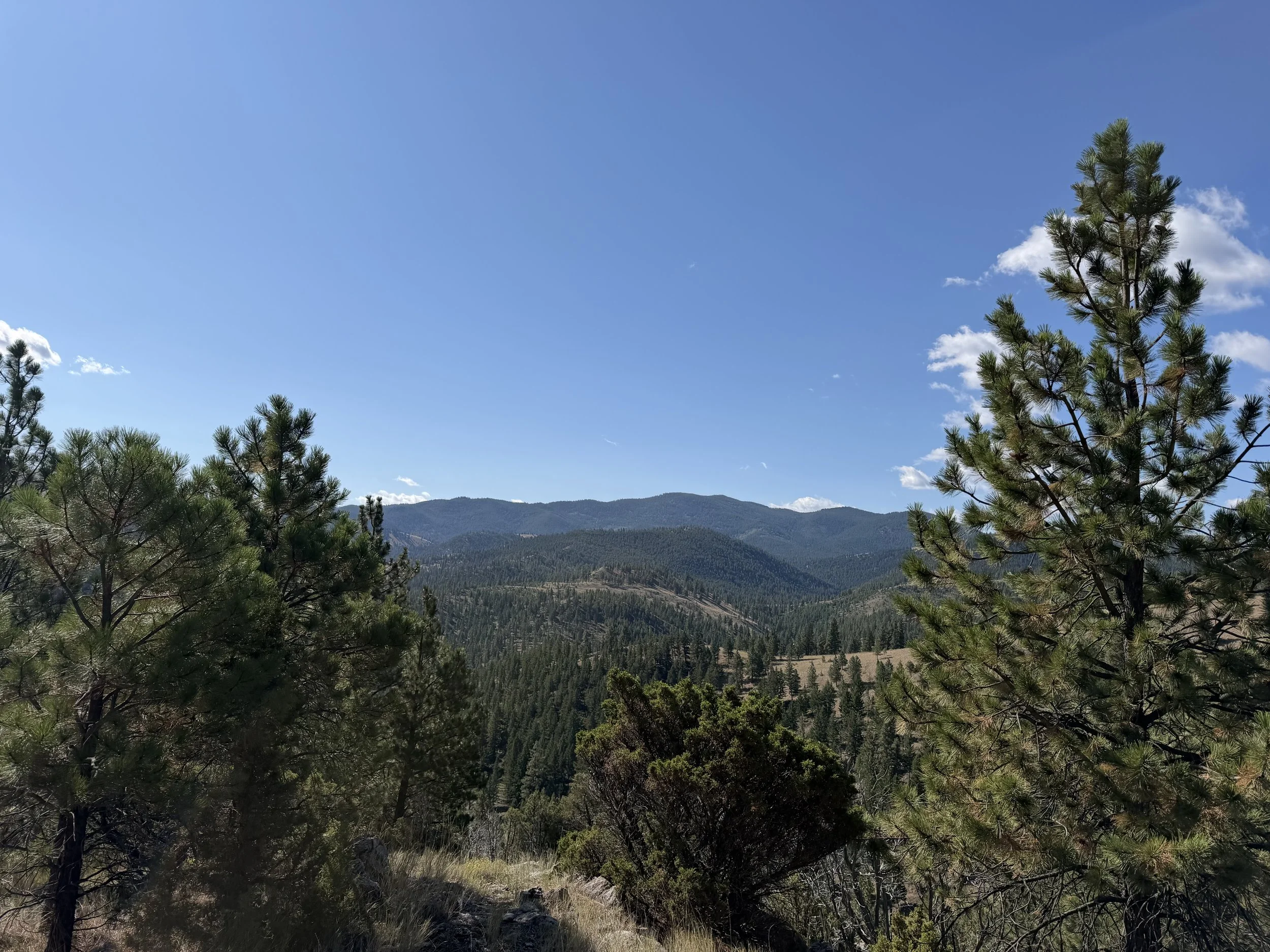
Mount Helena City Park, Helena, Montana
That's when we can connect deeply with ourselves and the world around us. The best part of this kind of adventure is the return to "real" life, when we get to apply the lessons we learn on our adventures. We realize that gratitude changes our lives, improves our relationship with ourselves and others, and helps push us to try new things and set our priorities.
As promised in the podcast, here are a few resources for you, just in case you are inspired to step out of your comfort zone in an outdoor adventure:
Local REI and MeetUps often have trips for beginners, as well as classes
Backpacker.com is a great magazine to get you started and thinking about trips and gear
Backpackinglight.com has a plethora of articles, webinars, podcasts, etc.
Cottage shops for gear often have great articles and resources on their websites, as well as “real life” experiences. Gossamer Gear, Six Moon Designs, ULA, Mountain Laurel Designs, Zpacks. You won’t find this gear at REI or other major sporting goods stores, but you’ll learn about real gear that works.
And here's the other promised link to Kevin's blog post about toilet paper.
---
Kevin Strauss is a 17-year, injury-free Ironman Triathlete and Coach. If you have any question or need help with your endurance events, including backpacking, or if you want to get started and run your first 5K and do it right, visit his website. Learn more about Kevin and his products, Family eJournal and Corporate eJournal, and connect with him on LinkedIn.
Connect Deeply Through Travel and Adventure
What traveling teaches us is how to be resourceful, and that we have a choice in how we react to obstacles and challenges. When we're traveling, we're really at the mercy of the people around us, the weather, and all kinds of things over which we have no control. But what we can control is our choice to see it as part of the adventure, and to make the best of whatever we're faced with.
Our Experiences with Others Create Shared Stories from Different Perspectives

The irony is that so many of our shared stories aren't about the beauty and perfect experiences we've had, they're usually about the things that went wrong. Not always, of course. There are those magical moments we share with others, like the one Julia Shamis describes in this episode, those moments when everything is right and beautiful, and we share a vivid memory of something truly fantastic.
I've found the majority of the stories we share are the ones were something went wrong, we struggled, were generally uncomfortable or in pain, and we found a way out to live and explore another day.
That's what travel is all about, right? The adventure of getting there, via road trip hazards, flight delays and cancelations, train schedule issues, and then the adventure itself that always presents itself with something that goes not quite right.
The beauty of travel and exploration is what we learn about ourselves, how we choose to expose ourselves and our children to the world around us, and the humility and gratitude with which we experience that world.
That's what this episode is all about. Julia has had some amazing adventures and definitely knows how to share a good story. The theme we originally planned to discuss was simply travel and family travel, and how that impacts our priorities and relationships. But very quickly in our conversation I realized it wasn't just about travel, it was about taking risks and exploring the world around us, and what that does for us and our personal growth.
What traveling teaches us is how to be resourceful, and that we have a choice in how we react to obstacles and challenges. When we're traveling, we're really at the mercy of the people around us, the weather, and all kinds of things over which we have no control. But what we can control is our choice to see it as part of the adventure, and to make the best of whatever we're faced with. Because, as I mentioned before, these are the parts of your story that you're more likely to tell over and over again, laughing about it, learning from it, and embellishing it as you share it through the years.
Julia Shamis is a career coach and avid traveler. You can connect with her on LinkedIn to learn more, and be sure to listen to this great podcast episode to learn what she does, how she does it, and why she's so good at it.
We All Need a Foundation to Step Out of Our Comfort Zone
It's a mattress! It's not practical to keep a mattress when I've managed to give away and throw away the majority of my "stuff" so we can travel, untethered.
I can't let go of it, even though I know I should.
"What do you mean, you know you should?"
It's a mattress! It's not practical to keep a mattress when I've managed to give away and throw away the majority of my "stuff" so we can travel, untethered.
It's not about the mattress, though. It's about the values you've attached to it, right?
She was talking about the mattress she bought after leaving her abusive husband, sleeping in her car for 6 months, and had finally moved into an apartment by herself. That mattress represented the first real thing she owned, free and clear, since leaving him -- and all of her things -- behind. Now she's in the midst of disrupting her life, again, is remarried to a wonderful, adventurous guy, and is downsizing to live as minimally as possible so they can travel all over the world.
Don't get rid of it. You have a storage area that can hold it for you for a while. Keep it until you don't feel like you need it any more. We all need something to help us feel grounded when we're about to take a leap out of our comfort zone.
Healthy toddlers are known to wander away from their parents, though usually they will turn to see them, to make sure they can still see them, before they get too far. If you read anything by my friend Sara Jacobovici, you'll read that in infant and child development, we need a close bond with someone (or something) in order to become independent. It's a paradox for sure, but not too surprising. Read child development articles and they will describe how thumb-suckers are statistically more likely to be more confident teenagers because they've had the ability to self-sooth. I believe in thumb-sucking - no one can take away the thing that can bring you comfort!
I had a good, solid, healthy childhood for the most part. My parents were loving and we always had a roof over our heads and plenty of food to eat. We have a warm, huggy, sometimes overwhelmingly loving extended family of aunts, uncles, cousins, and friends who became family wherever we lived. And we moved a lot in my youth. I went to four different elementary schools. No wonder I sucked my thumb well into 1st grade. No matter where we lived, or the adventures and trouble I got into in my late teens and early 20's, I always had my family as my foundation.
I got a cat when I was 20 because I felt the impulsive need to spite a landlord. Needless to say, I wasn't thinking long term. He wasn't the sweetest cat, though he was devoted to me. Clawed was huge and created a lot of complications for me. Having a cat limited the apartments I could rent, limited my travel plans & spontaneity, and there were times that he had food and I went without.
When my parents were divorcing and they sold the only house we lived in for more than 4 years, Clawed was my foundation. Wherever I adventured, like moving from Fort Collins, Colorado to Washington DC by myself, he was with me. He was the one consistent thing in my life for more than 9 years, and I was devastated when he died, even though I had a wonderful husband and new baby at that time.
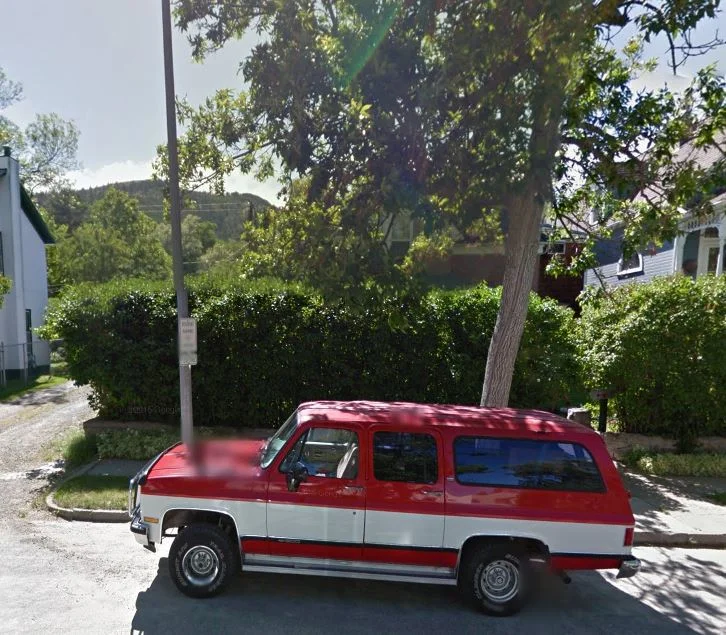
My little gold Super Beetle, handed down to me from my brother, was another foundation piece that broke my heart when I had to get rid of it. Now I have a weird attachment to our 1991 Suburban. There's no way for someone else to truly understand why we have attachments to certain things. Sometimes we don't really know ourselves.
I wrote an article about shoes being my wardrobe foundation; this is the same idea. When I am about to embark on a new adventure, whether that's applying for, or starting a new job, preparing for a speaking engagement, planning a trip, or any other activity that will push me out of my comfort zone, I have certain things I can count on to bring me back to center. Whether its cues like shoes or an outfit that make me feel really good, or a quiet moment with my supportive husband and kids, a glass of wine with a friend, or a good snuggle with my dog, having a foundation (like a mattress, or my thumb) reminds me that whatever I'm about to do, I have a place to go (or people to comfort me) afterward to find my balance again.
What are your foundations? Are you intentional about finding that center before you jump into something out of your comfort zone? Do you recognize which arbitrary objects you're most attached to, and may have foundational values associated with them?