Your Stories Don’t Define You
How You Tell Them Will
A podcast to unlock your stories and uncover meaningful insights.
Episode 175: Is Your Team Missing Something? To Find Out, You Must Know What You Have vs. What You Don't
As a Communication & Inclusion Trainer, Alissa guides people in addressing awkward situations, helping them quickly adjust to things out of their control.
In a recent training, when she had to demonstrate that kind of adaptability because of technical glitches, she realized what a gift it ended up becoming for her and for the participants.
Diversity Isn't Enough, We Must Value and Celebrate Differences to Maximize the Extraordinary Benefits of a Diverse Team
As a Communication & Inclusion Trainer, Alissa guides people in addressing awkward situations, helping them quickly adjust to things out of their control.
In a recent training, when she had to demonstrate that kind of adaptability because of technical glitches, she realized what a gift it ended up becoming for her and for the participants.
By having to shift gears quickly and abandon her slides - her plan - she connected more deeply with the audience. They couldn't help but see how she navigated the technical challenge, move through it and adapt, and end up with an even better product in the end.
When she acknowledged the challenge, Alissa demonstrated a level of vulnerability that had a positive impact on her audience, likely far bigger than if everything had gone as planned.
During our conversation, we talked about the situation as an opportunity, a gift, even though in the moment we rarely can see it in that light. But our reality is that lots of lessons happen that way.
We also covered a lot of ground about Strengths, where we've seen our own strengths as talents vs. obstacles, and how we've guided our clients toward valuable self-reflection about where their strengths might also be getting in their way.
Connect with Alissa on LinkedIn, grab a copy of her book, How to Listen and How to Be Heard: Inclusive Conversations at Work, and check out her website, Everything's Not Okay and That's Okay.
ABOUT SARAH:

Elkins Consulting logo with image of Sarah Elkins and book cover
"Uncovering the right stories for the right audiences so executives, leaders, public speakers, and job seekers can clearly and actively demonstrate their character, values, and vision."
In my work with coaching clients, I guide people to improve their communication using storytelling as the foundation of our work together. What I’ve realized over years of coaching and podcasting is that the majority of people don’t realize the impact of the stories they share - on their internal messages, and on the people they’re sharing them with.
My work with leaders and people who aspire to be leaders follows a similar path to the interviews on my podcast, uncovering pivotal moments in their lives and learning how to share them to connect more authentically with others, to make their presentations and speaking more engaging, to reveal patterns that have kept them stuck or moved them forward, and to improve their relationships at work and at home.

Audiobook promotional image
The audiobook, Your Stories Don’t Define You, How You Tell Them Will is now available!
Included with your purchase are two bonus tracks, songs recorded by Sarah's band, Spare Change, in her living room in Montana.
Episode 169: Do You Have a Diverse Personal Board of Directors?
Humans are biased. We're designed to identify people who are different from us, people we have things in common with, and people who pose a threat to our safety - emotional & physical.
It's easier for our brain to make a decision about a person when we allow our bias to control it. But how many times have you misjudged someone you met, for better or for worse? When we rely on our bias to make decisions about a person's potential as a friend, foe, or neutral, we seriously limit the potential of the relationship.
Personal Growth is Dependent on Your Direct Circle of Influence
Adrienne Kimball and Karen Cohen met when Karen was interviewing for a job where Adrienne worked. At first glance, Adrienne assumed the two would have little in common, but midway through the conversation, her opinion shifted.

Adrienne Kimball podcast cover art
Humans are biased. We're designed to identify people who are different from us, people we have things in common with, and people who pose a threat to our safety - emotional & physical.
It's easier for our brain to make a decision about a person when we allow our bias to control it. But how many times have you misjudged someone you met, for better or for worse? When we rely on our bias to make decisions about a person's potential as a friend, foe, or neutral, we seriously limit the potential of the relationship.
In this episode, Adrienne and Karen talk about what it's like to work together, a black woman and a white woman, and the expectations they have for each other and their relationship.
You might be surprised that this is even a thing, that people are talking about something that should be so basic, so common, so - not something we need to talk about. But you're wrong. We have to have these conversations in order to grow, and to address the issues of our time: racism, white supremacy, hate.
What I love about this conversation and these two women is their commitment to having a solid relationship based on respect and love. They offer gentle corrections when needed simply because the health of their relationship depends on it.
Our conversation describes why it's critical for personal and professional growth - and for our community health - to look closely and honestly at our networks, at our closest relationships. Are they diverse? Are there people who think differently from you? Are there people who come from completely different backgrounds, different socio-economic and educational upbringing? Do they look significantly different from you and your family, maybe even speak a different native language?
Take a hard look, friends, be real about this. And then take the slow road toward diversifying your network and circle of friends. Ask people you trust about others you should follow and connect with.
There are plenty of resources out there to find the voices of BIPOC (black, Indigenous and people of color) and of LGBTQ professionals, writers, and artists. Find people whose messages resonate with you and simply following them on your favorite platforms to learn more.
Open your eyes and heart to a world of possibilities, build a diverse personal board of directors.
---
Adrienne Kimball is the Chief Talent Officer at Rubicon Programs in northern California. She's a keynotes speaker, culture champion, equity evangelist and mentor.
Karen Elkins Cohen is the Director of Human Resources at Rubicon Programs.
These two women are fantastic facilitators of discussions on the topics of diversity, inclusion, equity, and building a culture of equity and inclusion. They hosted a session at the No Longer Virtual Summit in Atlanta in 2019 that was engaging and thought-provoking, a session people continue to talk about, two years later.
---
ABOUT SARAH:
"Uncovering the right stories for the right audiences so executives, leaders, public speakers, and job seekers can clearly and actively demonstrate their character, values, and vision."
In my work with coaching clients, I guide people to improve their communication using storytelling as the foundation of our work together. What I’ve realized over years of coaching and podcasting is that the majority of people don’t realize the impact of the stories they share - on their internal messages, and on the people they’re sharing them with.
My work with leaders and people who aspire to be leaders follows a similar path to the interviews on my podcast, uncovering pivotal moments in their lives and learning how to share them to connect more authentically with others, to make their presentations and speaking more engaging, to reveal patterns that have kept them stuck or moved them forward, and to improve their relationships at work and at home.
The audiobook, Your Stories Don’t Define You, How You Tell Them Will is now available!
Included with your purchase are two bonus tracks, songs recorded by Sarah's band, Spare Change, in her living room in Montana.
Episode 164: Why I Added #Pronouns to My LinkedIn Profile Name
I added the pronouns (she, her) to my profile name on LinkedIn a couple of weeks ago, and left a comment on a friend's post shortly afterward.
That was the first time my name came up with the pronouns, and someone I love promptly responded with "lose the pronouns" in his response to my comment.
I was annoyed, why would he care what my title says? It felt insulting, critical, like a condescending comment you'd expect from your older brother when you were teenagers. I was being judged.
A Story of Being Intentional About Signals

Quote from podcast episode 164
I added the pronouns (she, her) to my profile name on LinkedIn a couple of weeks ago, and left a comment on a friend's post shortly afterward.
That was the first time my name came up with the pronouns, and someone I love promptly responded with "lose the pronouns" in his response to my comment.
I was annoyed, why would he care what my title says? It felt insulting, critical, like a condescending comment you'd expect from your older brother when you were teenagers. I was being judged.
Sometimes those things that trigger us are important cues for room for self-reflection and personal growth, right? This was one of those triggers.
Now I have nothing but appreciation for that snide remark.
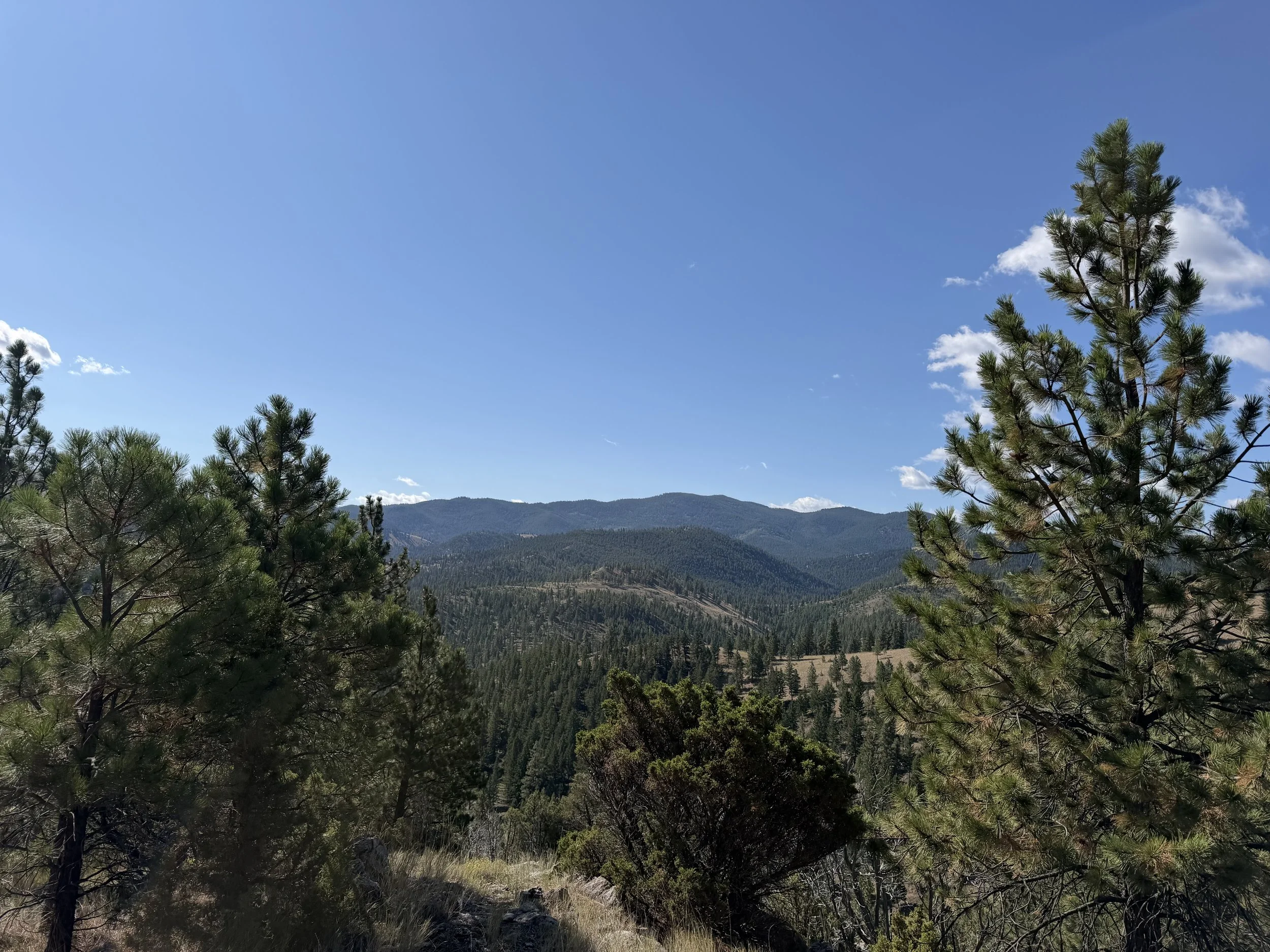
Mt Helena, Helena, Montana February 2021
As I took my walk on the mountain behind my house later that day, I thought more about his comment. It was really bothering me and I couldn’t pinpoint why I was feeling triggered and defensive.
Then it dawned on me, it was the same feeling I had as a teenager and young adult when my brother or sister would give me a hard time about something I said or did. It was the feeling of self-consciousness about not actually thinking through what I said or did, though they could have presented it more gently, there was merit to the criticism. That never feels good.
In this case, I was feeling self-conscious because I hadn't truly considered why I added the pronouns. So there was some merit to my friend’s critical comment. I realized how important it was for me to have clarity around the action of adding pronouns. Otherwise, it’s meaningless. My friends and connections know how much the word intention fills my world… I had done something without fully considering the intention behind it.
The evening before I added pronouns I participated in a webinar "The 5 Languages of Appreciation at Work" hosted by my dear friend Amy Ashworth (who nailed it, by the way.)
In the beginning of the webinar, one participant said that in other small, interactive webinars he attended, guests introduced themselves and added their pronouns to their name. That made sense to me, so I changed my name in Zoom to include my pronouns. I added them in LinkedIn at the same time, to be consistent.
The lightbulb went on in my brain as my heart rate went up, climbing a steep part of the mountain. (That's generally where I find my most meaningful ideas and inspirations.)
I had a vivid memory from just over five years ago: I was looking through my LinkedIn connections and realized the majority of them looked like me. Then I took a hard look at my connections on Facebook and locally, right here in my close community. Again, I was struck by the homogeny of what I was seeing.
Startled and disappointed, I began the work of intentionally broadening my network across political, ethnic, religious, gender identity, sexual preference, and all other communities that have significantly different life experiences from mine. Through a combination of curiosity and intention, I started to build a community that was far more diverse, not for the sake of diversity, but for the sake of inclusion, personal growth, and yes, love. I love people, even the ones I don’t like very much. And when I became aware of my limited circle of friends and acquaintances, I felt like a fraud. It seemed hypocritical for me to share my thoughts about love, justice, community, and communication, given my limited exposure to people who think and look and have experiences that are significantly different from mine.
In these past 5 years, my world has expanded and my feelings of connection have deepened. It hasn't always been easy, especially given the polarization of communities over the past 4 years. I've had to listen carefully, consider how my world view and experiences have created my biases and filters, and have experienced gentle and not-so-gentle correction for stepping in it with people I care deeply about.
Our micro-aggressions run deep, that's why they can be so hard for us to see, and why it hurts when someone points it out.
I’ve continued to practice my own gentle corrections when I’ve experienced bias, whether as a woman, a Jew, a mother, an American, and one time – as a Jewish woman living in Montana.
(My go-to demonstration of a micro-aggression is when a bartender said to me a few years ago: "You look really good for 40!" after asking to see my ID. I gently corrected him. "No need to qualify that compliment. Just tell me I look good.")
So why did I suddenly add pronouns?
I hadn't added pronouns before because I have a feminine name, and believe it's obvious that I identify as a woman. It didn’t seem necessary.
When our older son was the only Jewish kid in his class in kindergarten, and the teacher offered to let him put a birds nest on the top of his Christmas Tree calendar instead of a star. That way he could call it a Winter Tree instead.

When I added pronouns it wasn't for me. It isn't about me.
It’s about normalizing something for those who feel marginalized by having to point it out.
That was it. My "ah ha" moment on the mountain.
Adding pronouns was a simple and effective indication to my network that my world is broadening. Because what we share about ourselves, images, words, stories, and yes, pronouns, are all signals for the people around us.
I’m indicating that my love and care for people isn't despite their differences, but because of them.
Our differences aren't something to be tolerated, they're something to explore, to value, and to celebrate.

Sarah and chocolate lab, Toby, snow, Mt Helena, Helena, Montana
ABOUT SARAH:
In my work with coaching clients, I guide people to improve their communication using storytelling as the foundation of our work together. What I’ve realized over years of coaching and podcasting is that the majority of people don’t realize the impact of the stories they share - on their internal messages, and on the people they’re sharing them with.
My work with leaders and people who aspire to be leaders follows a similar path to the interviews on my podcast, uncovering pivotal moments in their lives and learning how to share them to connect more authentically with others, to make their presentations and speaking more engaging, to reveal patterns that have kept them stuck or moved them forward, and to improve their relationships at work and at home.
The audiobook, Your Stories Don’t Define You, How You Tell Them Will is now available!
Included with your purchase are two bonus tracks, songs recorded by Sarah's band, Spare Change, in her living room in Montana.
Episode 138: One Family Story Can Shift Our Identity
Being Jewish was always part of his identity, but it didn't seem particularly meaningful until that moment. He and his sisters started to ask questions, and learned more about the incident and the events that took place afterward. It was those stories that shifted Alan's perspective about hate, about racism, and about bigotry of every kind.
Stories of Family History Can Shift How We See Ourselves, and How We Show Up in the World
Well into his adulthood, Alan Samuel Cohen heard a family story that shifted his sense of self, his identity.
While sitting together at a family dinner with his adult siblings and aging aunts, one of those older women mentioned a specific violent incident that occurred before the family moved to America. She spoke of it clinically, historically, without anger or emotion, though it involved a violent murder that her father, Alan's grandfather, had witnessed.

Being Jewish was always part of his identity, but it didn't seem particularly meaningful until that moment. He and his sisters started to ask questions, and learned more about the incident and the events that took place afterward. It was those stories that shifted Alan's perspective about hate, about racism, and about bigotry of every kind.
In this episode of Your Stories Don't Define You, Alan and I discussed the story, how it affected him, and how he's showing up differently now, when it comes to racism and hate.
---
From his website: "For over three decades Alan Cohen has worked with business leaders as an executive coach, senior marketing professional, and human resources consultant. As a sought-after speaker, author, leadership instructor and executive coach, he has helped and inspired senior-level executives and teams to become more connected to their lives and business goals, resulting in greater performance and highly improved business results."
Connect with Alan on LinkedIn, and be sure to order his recently published book.
—-
Sarah Elkins delights in guiding individuals and teams to improve communication, using storytelling as the foundation of her work. She is a Gallup certified Strengths coach and uses that tool to coach her clients to improve their communication in all relationships, and to find more satisfaction at work and at home.
Her book, Your Stories Don't Define You, How You Tell Them Will is available on bookshop.org (supporting independent booksellers), and on Amazon. The audiobook will be available in fall 2020.