Your Stories Don’t Define You
How You Tell Them Will
A podcast to unlock your stories and uncover meaningful insights.
Avoiding the After Conference Hangover
Create Memorable Stories and Relationships to Keep Your Momentum and Inspiration

No Longer Virtual, Denver 2018
I was so excited to start working on some of the ideas I had, and to apply what I had learned, I actually arrived early to work the morning I returned from the conference. That's a big deal for me; I love to sleep and rarely choose to get up any earlier than I have to. But that morning was different. That week would be different. My JOB would be different. I was on fire.
The conference had been full of great topics, from sales to leadership, from marketing to financial analysis. The keynote session and the breakout session hosted by the keynote speaker were my favorites. The topics were marketing, and he drilled down in the breakout session to help us work through some his strategies to apply them to our specific goals. He reminded me why I loved that class when I was going through my undergraduate business program. His excitement for the planning process, implementation, and follow up analysis was contagious; I couldn't wait to get back to work and start my own projects!
That Monday, I sat down at my desk and penciled in time on my busy calendar to work on a formal marketing plan. When I started that job just four months before, I dove right in and didn’t give myself any opportunity to think through a strategy to market the hotel. It’s as if I had forgotten all of what I had learned in school.
I thought that giving myself a set amount of time, maybe 30 minutes each day would get me to where I wanted to be. I started first thing that morning by looking at available online templates for a marketing plan that would fit the needs of the hotel, and selected a simple but solid format to download. My boss walked in as I was saving it; he was surprised to see me already settled into my day, earlier than usual. In an uneasy, suspicious, fake-happy tone, he asked me:
“What are you so happily working on first thing this morning?”
"You know that break-out session I went to at the conference last week? The one on marketing plans and implementation? I'm working on a marketing plan for us, to formalize some of what I've been doing, to make it easier to budget and measure the success of what we're doing here. We can’t possibly analyze whether what we’re spending money on in advertisement is working unless we find a way to measure it, right? I've been so busy since I started my job here, trying to make sales and get people in the door, I completely forgot how important this tool can be!"
He had no idea what I was talking about, and erupted at me: “Why do we need a marketing plan? You should be pounding the pavement. Didn't we have this conversation, that you need to spend less time onsite and more time selling?”
In less than ten seconds, my boss had me nearly deflated. I didn't give up, though, because I knew I was on the right track. Every time I had 15 minutes alone in the office, I worked on that marketing plan. I knew I needed the document to help me stay on track and see the results of my efforts at that job. In my optimistic mind, when I presented the finished product to my boss, he'd appreciate it -- he'd realized why we needed it.
I'll save the results of that work for another blog post; let's just say it wasn't pretty.
I tried to keep my enthusiasm that week and the next. Interactions with staff included some discussion of things I learned and ideas I wanted to share; some were motivated to work on them. Most just nodded and smiled, assuming the ideas would go away and they could get back to their routines without having to work too hard.
Within two weeks, I may as well have not gone to that conference at all. I had an after-conference hangover.
I had been all excited, full of motivation and ambition for my job when I returned from the conference, but because my boss didn’t understand the “why” behind my project ideas, my colleagues hadn’t been to the conference and hadn’t experienced the camaraderie and enthusiasm of the other participants and the speakers, and because I had zero support at work for implementation of new ideas, all of that excitement and motivation just *poof* disappeared.
What a waste of time, money, and, well, ME.
Granted, my boss wasn’t great at his job and it wasn’t a good work environment in general, but aren’t there things I could have done to prevent the deflation of my enthusiasm, if I knew in advance it was likely to happen?
I am a big believer in attending face-to-face conferences and events, especially when you’re particular about the types of events you attend. There is nothing like that face-to-face learning and interaction with others in your industry or simply with people who have similar motivation and ambition - regardless of industry.
Every event is an opportunity to improve yourself, and not just to gain skills for your current job, so how do we make the most of these conferences? And, more importantly, how do we keep our enthusiasm when we’re faced with little to no support and encouragement when we go home and back to our routines?
I have a few strategies that I’ve used in recent years and have found them to be effective when I’m consistent with them:
First - During a conference, I don’t try to meet as many people as possible - I try to meet a handful of people and get to know them well. Believe it or not, I am actually kind of shy, so this isn’t as easy as it sounds!
I make sure to attend meals and sit at tables with people I don’t know. There are a few good stories I know I can share to make people laugh, especially when I’m in a big city outside of Montana. People are always curious about Montana, so that’s a great topic to start with. And then I simply ask people questions like:
Where do you live?
Did you grow up there?
Do you have pets, kids?
Did you get any good nuggets in the morning sessions you attended, anything you’re thinking of working through when you get home?
Being a bit shy doesn’t mean I don’t like to talk to people, it just means it’s not easy for me to walk into a roomful of strangers and start talking to them. The one thing that always works for me is curiosity. When I’m genuinely curious about people, they feel it and respond to that curiosity.
When I’m asking questions, I’m looking right at the person answering, making sure I catch their name, and if they have a name tag on, looking at the written letters and then at his or her face, and creating a mental image of the name with the face. That helps me remember names and some details about the conversation.
Asking those questions is a great way to know whether this person is enthusiastic and motivated by what they do. Those are the people I make special efforts to connect more deeply with.
When I attended the Government Social Media Conference in Dallas, I met dozens of really motivated, ambitious people that I liked a lot. I connected deeply with about 6 of them. More than a year later, I’m still in touch with 4 of those people and we connect periodically to catch up. Those four people continue to motivate me!
On our last day, four of us checked out of the hotel and shared a ride to a Vietnamese restaurant across town, and three of us shared a ride to the airport after that. The experience of sharing the ride, sharing food, and then enjoying a cocktail together at the airport made the connections even more sticky, more real.
Why do I pick just a handful of people to get to know well?
Because these are the people who help me avoid that after-conference hangover, that’s the other half of my strategy - to keep in contact with that handful of people.
When I return from a conference, I go straight to my calendar and schedule follow up calls with the people I connected with. I also schedule time each week to work on whatever really excited me at the conference, even if those were not directly related to my current job.
It was when I was planning the first No Longer Virtual conference in Atlanta in 2017 that this concept, the After Conference Hangover, really took shape in my mind. After many years of attending conferences and planning events, I had a lot of ideas about what I didn’t want for No Longer Virtual, and one major component was to include strategies throughout the conference to help participants avoid that after-conference hangover. That included making sure that everyone in the room had contact information for each other, and specific communication plans following the event.
Because participation is limited to 50 people, every person had the opportunity to meet the facilitators and other participants, to truly connect with each person. Think about the value of that roomful of advocates for you, your career, and your business, when you keep in contact following an event. Not only was there learning and motivation from the event itself; the relationships that were built in those 48 hours created a sustainable energy well beyond the last session.
The next time you’re investing time and money to attend a conference, think about how you’ll be able to sustain that motivation and inspiration after you get home.
If you’re intrigued by my description of No Longer Virtual events, visit my website, elkinsconsulting.com for more information.
Connect Deeply Through Travel and Adventure
What traveling teaches us is how to be resourceful, and that we have a choice in how we react to obstacles and challenges. When we're traveling, we're really at the mercy of the people around us, the weather, and all kinds of things over which we have no control. But what we can control is our choice to see it as part of the adventure, and to make the best of whatever we're faced with.
Our Experiences with Others Create Shared Stories from Different Perspectives

The irony is that so many of our shared stories aren't about the beauty and perfect experiences we've had, they're usually about the things that went wrong. Not always, of course. There are those magical moments we share with others, like the one Julia Shamis describes in this episode, those moments when everything is right and beautiful, and we share a vivid memory of something truly fantastic.
I've found the majority of the stories we share are the ones were something went wrong, we struggled, were generally uncomfortable or in pain, and we found a way out to live and explore another day.
That's what travel is all about, right? The adventure of getting there, via road trip hazards, flight delays and cancelations, train schedule issues, and then the adventure itself that always presents itself with something that goes not quite right.
The beauty of travel and exploration is what we learn about ourselves, how we choose to expose ourselves and our children to the world around us, and the humility and gratitude with which we experience that world.
That's what this episode is all about. Julia has had some amazing adventures and definitely knows how to share a good story. The theme we originally planned to discuss was simply travel and family travel, and how that impacts our priorities and relationships. But very quickly in our conversation I realized it wasn't just about travel, it was about taking risks and exploring the world around us, and what that does for us and our personal growth.
What traveling teaches us is how to be resourceful, and that we have a choice in how we react to obstacles and challenges. When we're traveling, we're really at the mercy of the people around us, the weather, and all kinds of things over which we have no control. But what we can control is our choice to see it as part of the adventure, and to make the best of whatever we're faced with. Because, as I mentioned before, these are the parts of your story that you're more likely to tell over and over again, laughing about it, learning from it, and embellishing it as you share it through the years.
Julia Shamis is a career coach and avid traveler. You can connect with her on LinkedIn to learn more, and be sure to listen to this great podcast episode to learn what she does, how she does it, and why she's so good at it.
We Can Choose How Our Stories Define Us
She could easily have given up all of her power, her love, her compassion. As a matter of fact, she tried to when she was 25. As she woke in the hospital after a suicide attempt, her dad (she was finally adopted by a loving family), who was not a particularly affectionate person, but who demonstrated love in other ways, was there, patting her hand. The look on his face said it all: He was disappointed, hurt, heartbroken at Ashley's choice to leave him and this world.
We Can Choose to Use Our Most Painful Experiences to Help Others
We all know a few people who cannot seem to get a break. These are the friends we have who were in tough childhood situations, moved from home to home, and had abusive teen and young adult years, and then seem to have tragedy after tragedy in their lives well into adulthood.
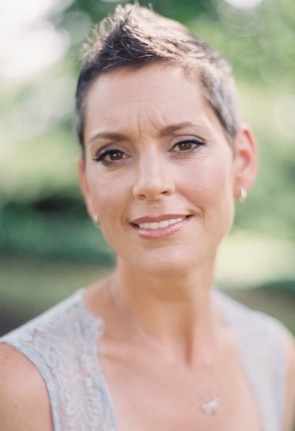
Some of them are angry and bitter, some are simply resigned to their fate, and then others become more and more resilient, making choices to grow and help others in a variety of ways.
That's Ashley Horner. She could easily have given up all of her power, her love, her compassion. As a matter of fact, she tried to when she was 25. As she woke in the hospital after a suicide attempt, her dad (she was finally adopted by a loving family), who was not a particularly affectionate person, but who demonstrated love in other ways, was there, patting her hand. The look on his face said it all: He was disappointed, hurt, heartbroken at Ashley's choice to leave him and this world.
It was his hand on hers that awakened her desire to live and thrive, and her motivation to make the changes necessary.
Years later, following more tragedy in her life, she decided to help others in a few different ways. First, she started a recruitment agencywith a focus on, and ambitious goal of helping veterans and members of the LGBTQ community. Next came Anchored Souls, to serve those who also suffered abuse and sexual assault, and then the recent creation of Anchored Kidz, an organization to help grandparents, extended family, and those children being raised by that family find resources and support as they navigate the sudden or unexpected custody of those children.
When we choose to use our most painful, damaging stories to motivate us to grow, thrive, and help others, we leave a legacy we can not possibly measure.
If you write on topics related to suicide, there are great resources available to make sure you are doing more good than harm. As a relatively uninformed professional on this topic, I use this website, ReportingSuicide.Org as a resource.
National Suicide Prevention Lifeline - Call 1–800–273–8255
Available 24 hours everyday.
You Never Know Which of Your Stories Will Inspire You
When Gail shared the story of her mother’s advocacy work for victims of domestic violence with Rebecca, they agreed immediately that their business had to have another side to it, a side that would benefit that same population of their community.
Some Stories Become More Meaningful with Time
Gail and Rebecca met when they worked together at a recruitment firm, and as they worked together, realized they were inspired by some of the same things about that industry: The advocacy for clients, the feeling they got when they had a placement they knew would change lives, and the knowledge that when they did something really well, it made a big difference in their communities.
They came from completely different backgrounds, and they are completely different people, which is probably why they are not only compatible, but they are also great complements to each other.
When Gail shared the story of her mother’s advocacy work for victims of domestic violence with Rebecca, they agreed immediately that their business had to have another side to it, a side that would benefit that same population of their community. And when they make big business decisions, including choices about scaling their business and growing in other communities, both sides of their business would benefit from those decisions.
Visit their website, and explore NextOpp’s work with victims of domestic violence, and be sure to connect with Gail and Rebecca on LinkedIn to learn more.
Being Born to do Something Doesn't Mean it's Easy
The Story of Your Passion is Also a Story of Overcoming Fear

He was six when he heard Fats Domino's Blueberry Hill*, got those telltale chills up his spine, and knew he was born to play guitar and sing. He was nine when that passion was tested, and it took him five years to recover.
Sometimes our passion for something must be tested so we know, absolutely, that this is exactly what we want. When Duke Robillard stood on a stage to sing for the first time in front of a large audience, the spotlight on him, his nine-year-old confidence and character were simply not prepared for what he saw. His mother told him later - he doesn't remember this at all - that he sang, yes, and was crying at the same time.
I can imagine that little boy in his bowtie and fancy, Sunday shoes standing there, terrified and yet completely committed to doing what he set out to do. It took him a long time to recover from that stage fright. Duke wouldn't sing for an audience again for five years, and even as a professional musician with Roomful of Blues, he fought the urge to walk away from the stage, full of anxiety and fear.
But when you know innately what you were born to do, at no matter what age you figure it out, you're tested over and over again. And every time you stand up to that fear, every time you make the choice to put yourself back on that path, you not only strengthen your commitment to your life's work, you give the gift of what you were born to do to the people around you.
Thank goodness Duke got past that stage fright to create and perform incredible music for the past 50+ years. Here's one of my favorites from Roomful of Blues' first album:
Duke and I met in 1997, though my husband introduced me to his music a couple of years before that. A friend gave us tickets to see him as a wedding gift; it was a small venue in Washington DC. Bob and I were standing right up front near the stage for Duke's set, and I was completely sold on this guy's talent. As we waited for the next act to come on stage, I went to grab us a couple of drinks. On my way back, I saw Duke's bass player, Marty Ballou, standing near the stage and introduced myself. We hit it off; not only was I seriously impressed with the incredible soul with which he played the bass (he made a 3/4 bass look small), he is also a warm, affectionate, and kind person. (He was inducted into the Rhode Island Music Hall of Fame in 2015.)
The next band got started, and we were getting squished by the audience. We decided to head to the back of the bar, and maybe leave since we had come to see Duke, and not the other guy on the stage. As I led the way through the crowd, I could see Marty waving at me - he was a head taller than anyone else in the room. He gave me a big hug, and I introduced him to Bob. We met Duke a few minutes later, and couldn't believe how down to Earth he was. Marty and I exchanged numbers, and every time the band would be within a couple of hours' drive of Washington DC, Marty would call me and ask how many he should put on the guest list. We followed them around the region for two years, and then moved to Montana. I kept in touch with Marty, and once in a while I'd email Duke just to check in.
To this day I cannot believe our luck in connecting with these musicians. (Duke was inducted into the Rhode Island Music Hall of Fame in 2014.)
Naturally, we refer to a variety of music throughout our conversation on this podcast. This first reference was part of a story when my sister and I saw him in Baltimore. I introduced the two of them and my sister said: "Huh. You're not ugly at all! Actually, you're very handsome!"
I couldn't breathe for a moment, and knew I had turned beet red. That's when my sister looked at me and realized what she had said. Completely embarrassed and trying to recover, she said: "Sarah made me a mix CD and your song, I May Be Ugly But I Sure Know How to Cook was my favorite song on the mix... so, um, that's why I said that..."
Thank goodness he's such a good sport, charming, and has a sense of humor. We all burst out laughing as he walked away to start his set. Did I mention I just love this guy?
From Duke's recent album, a refreshing collection of swing music with some of my favorite female vocalists, here's Squeeze Me with Madeleine Peyroux:
And just to show off a bit, here's Duke in a jam session with the amazing Stevie Ray Vaughan:
In the podcast, I mention Ed Sheeran's version of the song The Parting Glass, and here's the one I listen to:
And, just for kicks, here's the other version I mention in the podcast, by the Wailin' Jennys:
I hope you enjoy this episode, and that you do some of your own digging into this extraordinary musician's work. Of course, I highly recommend his most recent album, Duke and His Dames of Rhythm.
If this podcast speaks to you, please leave a comment and let's start a conversation about the challenges we face, even when we absolutely have no doubt that we're doing what we were born to do.
*Blueberry Hill was recorded by Glenn Miller's big band. Jack Rabid, an infamous NYC drummer and punk rock DJ, recently told us the story that Fats Domino was inspired by Glenn Miller's version of the tune. It's likely that Glenn Miller was inspired by Gene Autry's version in the movie The Singing Hill. So there you have it - the beat goes on... so to speak.