


When You Don't Know Where to Start
I crouched in front of her, worried: “What’s wrong? Are you ok?” She looked up, so sad, big brown eyes filled with anxiety: “I…(sob)… don’t (sob)… know (sob)… where to… start… (sob).”
Paralyzed By A Decision
It was early in the afternoon when I arrived at my sister’s apartment to help her move from Sacramento to a place in San Francisco. Our mother was holding my 18 month old son; we had flown in from Montana less than an hour before and headed straight out to help my sister.
We walked in to find her sitting on the floor near the kitchen, knees pulled up to her chest, head down, crying. I crouched in front of her, worried: “What’s wrong? Are you ok?” She looked up, so sad, big brown eyes filled with anxiety: “I…(sob)… don’t (sob)… know (sob)… where to… start… (sob).” I sat down in front of her, so relieved it wasn’t something worse. Then I stood up and offered her my hands to pull her from the floor.
I picked up the nearest box and put it into her hands. “Here. Take this. Go into the bathroom, pull everything out from under the sink, and put it all into this box.” She looked at me, a little puzzled, then turned around and did what I said. That was it. She was fine after that. She was more than fine after that. She was efficient and capable and we had the entire apartment packed in just a few hours.
There are those times when the next step is completely overwhelming. I’ve been there; paralyzed with a decision to make. What’s next? The only thing to do is take a small step forward – or perhaps take a side-step, depending on the obstacle in front of you. The important thing is to move, to shift, to make something happen, even if it’s a tiny movement.
My cousin called just before she graduated from college to ask for advice. Partway through her question she started to cry, paralyzed by the decision she had to make. Just as with my sister, I put one small action in front of her.
It’s easy to get caught up in a moment and briefly forget all that you know. For my sister, she needed a little push to remind her that she needed to take this one step at a time. For my cousin, she needed the reminder that whatever decision she made at that moment could be un-made if she needed to change things. When I’m faced with a major decision, I remind myself that everything can change in an instant and that a decision I make right now is unlikely to derail a future part of my life. If I need to quantify a decision, I will use this handy tool.
Of course there are exceptions
– people make impulsive decisions that can have huge, long-term impacts –
sex, driving while on drugs or alcohol, sky diving.
When faced with a major decision I find it comforting to look back at other decisions I saw as life-changing at the time I was making them. Looking back helps put current concerns into perspective. There are methods to quantify a qualitative decision by scoring your priorities, but in the end, it's still your decision to make.
The next time you’re faced with a decision and you feel paralyzed in the moment, remember that whatever decision you make is the right one for that moment. Just take it one step at a time.
We should all start to live before we get too old. Fear is stupid. So are regrets.” ― Marilyn Monroe
What decisions have you made that you decided to un-make? How did that work out for you?
Thank you for reading, commenting on, and sharing my posts!
Sign up to receive notification when I publish new posts:
We All Need a Foundation to Step Out of Our Comfort Zone
It's a mattress! It's not practical to keep a mattress when I've managed to give away and throw away the majority of my "stuff" so we can travel, untethered.
I can't let go of it, even though I know I should.
"What do you mean, you know you should?"
It's a mattress! It's not practical to keep a mattress when I've managed to give away and throw away the majority of my "stuff" so we can travel, untethered.
It's not about the mattress, though. It's about the values you've attached to it, right?
She was talking about the mattress she bought after leaving her abusive husband, sleeping in her car for 6 months, and had finally moved into an apartment by herself. That mattress represented the first real thing she owned, free and clear, since leaving him -- and all of her things -- behind. Now she's in the midst of disrupting her life, again, is remarried to a wonderful, adventurous guy, and is downsizing to live as minimally as possible so they can travel all over the world.
Don't get rid of it. You have a storage area that can hold it for you for a while. Keep it until you don't feel like you need it any more. We all need something to help us feel grounded when we're about to take a leap out of our comfort zone.
Healthy toddlers are known to wander away from their parents, though usually they will turn to see them, to make sure they can still see them, before they get too far. If you read anything by my friend Sara Jacobovici, you'll read that in infant and child development, we need a close bond with someone (or something) in order to become independent. It's a paradox for sure, but not too surprising. Read child development articles and they will describe how thumb-suckers are statistically more likely to be more confident teenagers because they've had the ability to self-sooth. I believe in thumb-sucking - no one can take away the thing that can bring you comfort!
I had a good, solid, healthy childhood for the most part. My parents were loving and we always had a roof over our heads and plenty of food to eat. We have a warm, huggy, sometimes overwhelmingly loving extended family of aunts, uncles, cousins, and friends who became family wherever we lived. And we moved a lot in my youth. I went to four different elementary schools. No wonder I sucked my thumb well into 1st grade. No matter where we lived, or the adventures and trouble I got into in my late teens and early 20's, I always had my family as my foundation.
I got a cat when I was 20 because I felt the impulsive need to spite a landlord. Needless to say, I wasn't thinking long term. He wasn't the sweetest cat, though he was devoted to me. Clawed was huge and created a lot of complications for me. Having a cat limited the apartments I could rent, limited my travel plans & spontaneity, and there were times that he had food and I went without.
When my parents were divorcing and they sold the only house we lived in for more than 4 years, Clawed was my foundation. Wherever I adventured, like moving from Fort Collins, Colorado to Washington DC by myself, he was with me. He was the one consistent thing in my life for more than 9 years, and I was devastated when he died, even though I had a wonderful husband and new baby at that time.
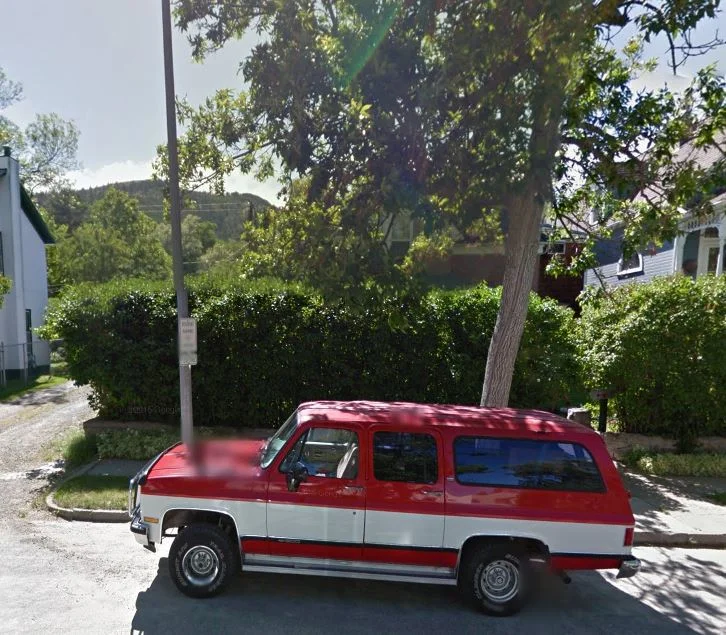
My little gold Super Beetle, handed down to me from my brother, was another foundation piece that broke my heart when I had to get rid of it. Now I have a weird attachment to our 1991 Suburban. There's no way for someone else to truly understand why we have attachments to certain things. Sometimes we don't really know ourselves.
I wrote an article about shoes being my wardrobe foundation; this is the same idea. When I am about to embark on a new adventure, whether that's applying for, or starting a new job, preparing for a speaking engagement, planning a trip, or any other activity that will push me out of my comfort zone, I have certain things I can count on to bring me back to center. Whether its cues like shoes or an outfit that make me feel really good, or a quiet moment with my supportive husband and kids, a glass of wine with a friend, or a good snuggle with my dog, having a foundation (like a mattress, or my thumb) reminds me that whatever I'm about to do, I have a place to go (or people to comfort me) afterward to find my balance again.
What are your foundations? Are you intentional about finding that center before you jump into something out of your comfort zone? Do you recognize which arbitrary objects you're most attached to, and may have foundational values associated with them?

It's Hard Work to Decompress
Why couldn't I clear my head? I closed my eyes, trying hard to think of nothingness, to listen intently to the sounds around me, to smell the air and nearby wild flowers.
Even in the most beautiful environment, decompressing doesn't always come quickly or easily.
We took our time getting out of town, knowing it would be light well into the evening and not wanting to get started on our hike while it was still over 80 degrees outside. I had never backpacked into the wilderness for overnight camping, though I had spent plenty of time hiking through the mountains. Gear is important for trekking into bear country, so we made sure we had a can of bear spray and a loud whistle for each of us, good shoes for hiking and crossing streams, a water pump so we wouldn't have to carry too much water, and the right food to sustain us.
It was about 5:30 in the evening when we left the car with our packs on our backs and started hiking into the Scapegoat Wilderness Area in Montana. It was a well-worn trail, lots of horses and hikers have explored the area, and many take the three mile hike in for a day trip to visit the famously beautiful Devil's Glen section of the Dearborn River. It was not too rigorous a hike for our first trip in with heavy packs, and though my pack looked almost as big as I am, it was only around 30 pounds.
It didn't seem like very long before we hit the three mile mark and saw a handful of tents and campers around fires in the meadow above the Devil's Glen. We decided to keep hiking and see if we could find a more secluded spot near the river. Another 3/4 of a mile and we headed down a less-worn path toward the river. Bob spotted a perfect campsite on the other side, so we crossed carefully, found a place to pitch the tent, and settled in for two nights.
The river was loud and full of life; as we watched the sunset, we saw a trout splashing in a large pool on the opposite side of the river, heard grasshoppers and birds, and the droning sound of insects all around. After a simple dinner of freeze-dried convenience with decent flavor, we shared a sip of bourbon from the flask and sat by the river to enjoy the view. My head was clear for the moment, taking in the spectacular pink and orange across the sky.
When we climbed into our little tent and put our heads down on make-shift pillows of clothes, I thought I'd fall right to sleep. The temperature was perfect, the air clean and fresh with a slight breeze through the tent, and I was tired from the day. But as my eyes were closing, I became super aware of the sounds of the night around me, remembering that I was in bear country. It took me hours to fall asleep, jolting awake after incorporating the sound of Bob's snore into a dream about a bear outside the tent. Eventually, I fell into a deep sleep and was disappointed to wake up to the early morning light coming into the tent, and my head full of busy-ness.
I thought that within a few hours of being in the wild mountains of Montana, my head would be clear of my every day activities -- but it wasn't. Despite spending hours wandering through the spectacular wilderness, my head was still stuck in overdrive. I woke as I always wake at home, with my head full of thoughts about what would come next, what I forgot to do at work, excitement for our next musical performance, upcoming travel plans, and thoughts of what our boys might be doing at that moment by themselves at the house.
Why couldn't I clear my head? I closed my eyes, trying hard to think of nothingness, to listen intently to the sounds around me, to smell the air and nearby wild flowers. It must have been more than 20 minutes that I tried to relax back into my sleeping bag, getting more and more frustrated with my inability to simply be there, enjoying the peaceful moment. I finally turned to Bob and suggested we get up, get the food bag from the tree, and get coffee and breakfast.
I've been here before; many years ago I was on my yoga pad at the end of a class, trying to get into the ending meditation provided by the instructor. I was filled with frustration. Every time I focused and dropped myself into the meditation, I'd find my mind wandering all over the place, flitting from one topic to the next. That was the moment, after about 10 years of trying, I realized I didn't like yoga.
That first morning in the woods, focusing on action helped; I was hungry and immediately set off to pump some water for our coffee. I never would have thought flies, especially the biting kind, would be a welcome distraction. But there I was, swiping at the flies landing on my legs and starting up the little burner for coffee, no thoughts buzzing in my head but the need for coffee and oatmeal.
We packed up for a day hike and headed upstream, bushwhacking through the dense, lush forest among wild roses, Indian Paintbrush, elk scat, mushrooms, and dead trees littering the ground. Stopping along the rushing river periodically for Bob to cast his nymph, hoping for a brown trout for dinner, I had the camera poised for my own catch for the weekend. It was mostly quiet, which, in bear country, isn't really a good thing, so I hummed and sang some of the songs we were working on for our next gig. My head wasn't clear, but I was relaxed.
By the time we hiked back out to the car after two nights, I was tired but not exhausted. I felt strong, healthy, and comfortable in my skin, even though I smelled like I hadn't bathed in three days. I unloaded my backpack into the car and opened the cooler we had stashed inside, pulling out my favorite local brew, Lewis and Clark Brewery's Prickly Pear Pale Ale. My head was finally clear.
Driving back through some of the most beautiful landscapes in the country, I turned on my phone to let our boys know we were on our way, and to suggest they clean up evidence of junk food binging. It beeped and beeped as the signal came on to retrieve missed calls and text messages. I wanted to ignore it, but the pull of connection was too strong. I read the messages. I really didn't miss anything. So I put the phone down and didn't pick it up again until we unloaded the car back at our house.
I had no intention of looking at my computer when I got home, and managed to leave it closed until late into the evening when I had to review a document for a client. She was expecting feedback the next day and I knew it just had to be done.
It took me three days to disconnect from my electronic devices and clear my head. That can't be a good thing. I made some decisions that evening, after I closed up the laptop.
- I will set hours of device use from now on: Unless I have a looming deadline, I will not open my laptop between 10pm and 8am.
- Disconnecting is important, so I will put my phone away when I am in a face-to-face conversation, no matter with whom or for how long.
- I will schedule disconnected, outdoor time more regularly and find tools to help me clear my head in a reasonable amount of time and with a reasonable amount of effort.
- As annoying as mundane chores can be, I find that doing laundry, cleaning the kitchen, and weeding the garden are activities that actually clear my head. I plan to stop fighting those activities and try to take them on with the intent to clear my head, as opposed to doing them with the sole intention of accomplishing the actual task.
A lot has been written about humanity's disconnect from nature as a result of our addiction to our electronic devices. That disconnect has wreaked havoc on our ability to safely spend time in nature and effectively connect with people around us. There are far too many recent stories of people being injured and killed in our national parks as a result of our naiveté around wild animals and dangerous areas in nature. If we don't disconnect from screens and reconnect with people, ourselves, and our natural environment, we will lose our ability to connect in any real way with our own humanity.
What will you do to change this trajectory in your life and the lives of your family and community? How will you adjust your patterns to encourage and build a solid connection with the people you love and with the world around you?

Make Every Encounter an Opportunity
Her face brightened. Our boys have that effect on people; there is something about a kind, polite, genuine kid that makes people feel good.
As I finished my purchase at our local grocery store, the clerk smiled at me and we wished each other a good day. Our younger son, now taller than I am, chimed in. He looked straight at her (sometimes grumpy) face and said with genuine kindness: "Have a good afternoon!"
Her face brightened. Our boys have that effect on people; there is something about a kind, polite, genuine kid that makes people feel good.
When I was a brand new mother, a friend told me about an interaction with her four year old son. When she disciplined him with a time-out, he told her "you're mean, mommy." Her response has stayed with me for many years:
I'm mean sometimes because I never want you to be the kid no one wants to be around.
That statement is part of why our boys are polite and people enjoy them. As parents, we encouraged kindness and respectful behavior, and also set boundaries with them that made sense -- and followed through with consequences.
I'd like to take the credit for that, but I think it has more to do with their nature and many role models. Because of their observations of the behavior of their father, their grandparents, aunt & uncles, close neighbors and adult friends, and yes, me, they understand that each person must be valued. Even people who are mean, who behave badly, must be treated respectfully. That doesn't mean they are respected; those are two different things.
When our younger son and I walked out of the grocery store, the expression on the clerk's face stayed with me for a while. I was smiling, off in my head, when our son asked me: "Why are you smiling like that?"
It took me a moment to realize I was smiling "like that" and to put my thoughts into words. He knows me -- so he waited. I asked him:
is it fake to act pleasant when you don't feel pleasant?
And then I said:
My friend and I recently had a conversation about the difference between being fake, acting like you're happy when you're really not, and being kind to people despite not being happy at every moment.
Did you see how that woman lit up when you smiled and told her to have a good afternoon? She glowed. What you said, and the way you said it with genuine kindness, changed the flow of her day. If you were having a bad day but still made an effort to do what you did with her, is that being fake? Or is it being kind? For her, that momentary interaction was the difference between slogging through the afternoon, and feeling a small burst of warmth and satisfaction.
You often have that effect on people, Max. They can't help but smile when you're around. I hope you understand that, and that you continue to choose -- that you are intentional -- to be kind toward others. There is something about you that makes people want to be their best selves when you're around. You're magical!
Our conversation turned to something else, and for the moment I was distracted from that introspection.
In the shower the next morning, our conversation came back to me.
We have many opportunities in our days to make that tiny bit of difference in each interaction. We have a choice to say "thank you" to the person in front of us, to wave and smile at the driver who lets us merge into traffic. We have a choice when we hold the door for someone coming in behind us to smile with genuine kindness and care. Why wouldn't we make that effort with every single person in our day? It takes less energy to smile at someone than it does to be angry, or to actively ignore a person.
Being kind doesn't mean letting people treat you like a doormat, sometimes you have to choose confrontation. Being unkind won't change things, so keeping in mind the result you want from the confrontation really helps in keeping emotion out of a conflict. I recently told someone "you're not nice to me." I didn't add any emotion to the comment, just a matter-of-fact observation to explain why I avoided interaction with her. I often use a strategy I wrote about, imagining that if I was recording it, how I would want to see myself years after the confrontation.
Think for a moment about the people you want to be around, the people you enjoy spending time with. I'm a lot pickier these days about where I choose to spend my energy and time, and I choose people who are positive, the ones who are curious, and who choose to learn, grow, and be kind. This doesn't mean we are always happy, real life is often not happy.
We all have choices to make, every day, and I choose kindness. What will you choose?
Send me a message, I love to hear from readers.

Perception Is Weird
Since then I've been observing the gap between how we are perceived, even by those we believe are closest to us, versus how we perceive ourselves.
I was awkward in high school. I had friends in all of the different cliques but never felt like I belonged anywhere. Totally self-conscious, low self-esteem, the only place I felt real was in my choir classes. That's why I'm often surprised when I hear how my peers perceived me back then -- because it's completely different from how I perceived myself.
In my second year of college, a friend's apartment neighbor was a guy who went to the same high school I attended. One evening my friend asked her neighbor what I was like in high school.
She was one of those girls that could have been popular but just didn't care.
When my friend repeated this back to me, I was stunned. And really disappointed. Of course I wanted to be popular! That's not at all how I knew myself just a few years earlier. I couldn't imagine how he came to that conclusion.
Since then I've been observing the gap between how we are perceived, even by those we believe are closest to us, versus how we perceive ourselves. At this point in my life, I'm very intentional in how I put myself out to the world, so I think that gap is smaller, but there is still a wide gap.
When I hear it said that people don't change, I cringe. I'm so different from who I was in my teens, early twenties, and even 5 years ago! The obstacles, challenges, joys and successes we experience can change us dramatically. A few years ago I was honored to be a guest blogger on Whitney Johnsons's blog; I wrote about how I found my voice when I was 40. People definitely change.
My mother and I were standing in my kitchen a few years ago, making beef jerky. She said:
If you had told me 15 years ago that I'd be standing here in your kitchen, in Montana, helping you make beef jerky, I never would have believed it.
I responded: "If I told myself 10 years ago that I'd be singing in a rock band in gogo boots and vintage mini dresses, I would never have believed it!"
"I'd believe it." Was her answer. That's a big gap in perception.
In a recently published post I described myself in college as being barefoot most of the time. People who knew me then weren't surprised at all, but those who have only known me in the past 20 years were very surprised to read that article. Here's one comment:
Thank you for the belly laugh as I visualized you traipsing around Colorado sans shoes.
And another:
I used the HaHa icon because I never pictured you barefoot . . . not that I've known you long enough for that anyway. Barefoot? Wow.
And one more:
Great article, Sarah. A barefoot past? You have always been a strong, unique individual.
This set of comments had me considering perception again, and why that gap exists. When we think we know someone, we are often surprised when they step out of the context in which we think we know them. Why do we sometimes underestimate people we know, while we put those we don't have a personal connection with on a pedestal?
It has been about 8 years that I've been singing professionally in this small town; there are still people who have known me for nearly the 17 years we've lived here who have not seen me perform.
One of those people heard me sing at a big event with more than 700 guests. She came over to me afterward, gushing. It was wonderful! A few days later, I ran into her at a shop downtown and as she introduced me to the woman next to her, she said:
This is my friend Sarah, she sings with a band and she's actually really good!
Actually? Why did she say "actually?" I knew she didn't mean to be insulting, so I smiled and thanked her. But the word stuck with me. Why "actually?" Is it because she never knew me to be a singer and her expectations of my singing were low? She knew I sang but had never heard me, so maybe that was it? But why would her expectations be low? What did she know of me that would color her perception that way? What was I putting out there that might give her a different impression?
Yes, all of these are sort of silly questions to consider, but they help me think more deeply about the whole idea of perception and the impact it has on us. Do I see myself differently from how my friend sees me? Definitely. Living in a small town, this gap in perception can impact a career; because so many people here know me in the context of my job history, my music, and my children, it can be tricky -- and impossible -- to earn support when I want to do something significantly different.
When I finished reading an incredible novel, The 13th Clock, I was blown away. I leaned back in my reading chair and thought: "Wow! My BROTHER wrote that book!" It's not that it was surprising that my brother would write a fantastic book, but it definitely caught me in unfamiliar territory in seeing him in a different context.
Why is it that when we know (or think we know) someone well, we are often surprised when they are successful, or when they do something extraordinary? Do you find that people who think they know you underestimate you in some contexts? I'm intensely curious about this gap, and though I'm sure we can't come to any conclusions, I'd love to hear your thoughts on the topic.

Taking Yourself Too Seriously? Choose a Cue to Keep it Real.
I looked back up and took a few more steps. I thought: "Oh no, I wouldn't have done that." Looking back down at my feet confirmed my initial observation: I was wearing two different colored shoes. One was black, the other was navy.
It was my first day of my first real job out of college. My paid internship in Washington DC had ended and I spent the summer playing with my sister and roommate, waiting tables and hosting at a couple of restaurants.
When my sister moved back home to Colorado, my roommate convinced me to join a temp agency. Shortly after my first placement, the company offered me a job. My appointment with Lori in the HR department was scheduled at 8am on a Monday morning.
It was December, and it was still dark when I woke up, eager to go to my meeting, fill out paperwork, and start my job with the Meetings Department at the American Chemical Society. I dressed in the dark and popped my head into my roommate's bathroom to say goodbye, she said "good luck, Sarah!"
It was still dim outside as I made my way from the apartment to Union Station to catch the train. I sat for the few stops to the Farragut North station and held my little briefcase, a graduation gift from my dad, on the tops of my feet. In my eagerness and anxiety, the long escalator ride to the surface seemed even longer than usual. As I stepped off the escalator, out from under the awning and onto the sidewalk, I glanced down at my feet.
Oh dear.
I looked back up and took a few more steps. I thought, "Oh no, I wouldn't have done that."
Looking back down at my feet confirmed my initial observation: I was wearing two different colored shoes. One was black, the other was navy. They were identical pumps -- except for the color, which, now in full sunlight, was obvious.
Walking into the first office building on my left, I marched with confidence toward the tall counter as the man at the desk behind the counter looked up.
May I please use your phone?
No ma'am. This is not a public phone.
Please? It's kind of an emergency. I'm going to be late for my first day of a new job and I need to call and let them know! Please? (Insert brightest, sweetest, Colorado-hick-in-the-big-city smile I can muster.)
Oh, ok, I guess.
Good morning, Lori. I'm on my way over now, only a few blocks away, but I have to run home so I'm going to be late. Why? Well... I just noticed... I'm wearing two different colored shoes. ... No, I know I can't come to work like that. ... Yes, just about 30 minutes. ... Yes, I'll be there. Thank you.
I hung up the phone and the man at the counter stood to pull the phone back down to the desk so he could peer down at my feet and grin.
Smiling back and thanking him, I ran back to the Metro station. I found myself grinning, feeling very silly, and trying to cover my shoes with my briefcase when I sat down on the train. I managed to get home, change a shoe, drive back to the office, pay an outrageous price to park the car near the building, and get to the HR office in 30 minutes.
When I told my roommate the story over dinner, we couldn't stop laughing. Our stomachs were sore from the deep belly laughs that night. She reminded me of a few other little details I managed to mess up over the previous few months and came up with a term for those, "Sarah-isms."
Those small details add up in similar ways to what I described in an earlier post about finding multiple Band-Aids on my hands. The difference here is that these little details are silly, not dangerous. Stories like these are great reminders that we are human, we are fallible, and that while it's important to take our jobs and responsibilities seriously, we should never -- ever -- take ourselves too seriously. After all, we are all human, no matter how high the pedestal on which we may stand or be placed.
Just a few years after the two-different-shoes incident, I was in Vancouver, Canada, for work. My colleagues and I took an afternoon to rent a car and drive up to Whistler to explore. It's a beautiful ski resort not far from the city; it reminded me a lot of Vail, Colorado. We were there in the spring and the hills were covered in beautiful green grass and wild flowers. A small boutique store back then, Joe Boxer happened to be open that day. Joe Boxer was the brand that got big and famous, thanks to Forrest Gump and his yellow smiley face. At the time, it was a higher-end brand (now you can find it at KMart) and all the rage. I picked out a watch with a brown leather band and smiley faces in place of the numbers on the face. For my husband, I picked a fancy silver one with the smiley face imprinted in the face of the watch. You could only tell when you looked closely at it.
Wearing that watch as a DC professional, as a consultant implementing a major software program in agencies like the Federal Reserve, World Bank, and NSA, kept me grounded. When I found I was taking myself too seriously, all I had to do was look down at my watch. A smile would begin from my wrist and work its way up to my face, guaranteed. DC has far too many people who take themselves far too seriously. They didn't need one more.
Do you have cues to help remind you not to take yourself too seriously? Share them in comments here!
Post script: Almost every day after that, when I took the Metro and passed the office building, the man at the counter waited by the door to smile, wave, and say hello to me. It's nice to know my little mishap positively changed the flow of the day for someone else for a while. When we take ourselves too seriously, we miss opportunities to connect with others, opportunities to improve our communities simply by connecting in a positive way with the people around us.

It's the Shoes. Trust Me.
I was in high school when I stopped wearing shoes. There was probably a reason, as far as reason goes when you're in high school, but I can't imagine any reason beyond pushing my mother's buttons.
~ Picture courtesy of Eliza Wiley
I was in high school when I stopped wearing shoes. There was probably a reason, as far as reason goes when you're in high school, but I can't imagine any reason beyond pushing my mother's buttons.
My feet were tough and thick with calluses from the moment the snow melted in Colorado until the first frost hit. I would carry my shoes, just in case I needed them to be allowed into a store or restaurant. From my sophomore year of high school until I graduated from Colorado State University in Fort Collins, I was known for my bare feet. As an exchange student my sophomore year, I even hitchhiked by myself through New Zealand with bare feet. I'm pretty sure I was the only business major with bare feet and cut-off jeans. When I was walking through Moby Gym with my father, getting ready to graduate, we ran into a few of my professors and I was happy to introduce them to my dad.
Oh my! We were just placing bets on whether Sarah would wear shoes to cross the graduation stage.
When I think back on that interchange, I like to remember my dad smiling good naturedly, and not totally embarrassed, but I really don't recall his reaction. I smiled and lifted my graduation robe enough to show some pretty pumps. It was December, I was definitely wearing shoes.
I moved to Washington DC for a paid internship immediately following graduation. My father drove with me across the country in my little Chevette with my cat on the floor under the passenger seat. Of course I wore shoes every day to my job with the US International Trade Commission; as soon as the weather warmed a bit, you could find me wandering on weekends through the District, shoes in hand. I think back on that time and I'm totally disgusted. Really, Sarah? Barefoot in Washington DC? It didn't take long for me to change my ways. Not only is it gross to walk barefoot on the streets and sidewalks in a big city, it gets very, very hot.
Shoes were simply a function of getting dressed back then. I had my basic pumps in black and navy for work, and my casual sandals and tennis shoes for weekends, and that was about it. I absentmindedly put on two different colored shoes on my first day of work at a new job... but that story is all it's own.
Shoes didn't become anything important -- or even more than a passing thought - until I took my first job in sales.
As the director of sales at a downtown boutique hotel, I had the opportunity to dress up and be a little creative in my style. In my time working with clients and staff at the hotel, I noticed a distinct difference in how I was being perceived and treated when I wore shoes with a heel height of two inches or more. Observation has always been a strength of mine, and I took notes about the phenomena for a few weeks; it wasn't a serious scientific study, but the conclusions were obvious to me.
Shoes come with attitude for some of us. When I was struggling with a difficult boss, my dear friend sent me a package with this note in it:
Wear these bright yellow sandals and bring your own sunshine to work this week! - Let the haters hate!
They were three inch platform strappy yellow sandals and yes, I did wear them to work. My attitude was decidedly improved that day. Sometimes a little cue to catch my eye can work wonders on my internal dialogue. It's like a little spark of distraction; a reminder of who I am, and that while I cannot control someone else's behavior, I won't let it define me and my behavior.
Someone recently shared an article describing financial advantages of being tall; there are other studies to show that tall women are generally more successful in business. (I like to point out that I am one of the most comfortable people on any airplane, a distinct advantage when traveling.)
Though my titles haven't included the word "sales" since then, I've continued my observations about the differences when I'm a little bit taller, in how I believe I am perceived based on the treatment I receive by others.
I've come to some conclusions that have helped me over the past few years and I'm hopeful that those observations and strategies will help others. Here's one that I've shared a lot recently and have heard some great reviews following experiences by those who've tried it:
When you are planning your wardrobe for an event, meeting, or other important date, start with your shoes. Your shoes are the foundation of your wardrobe. Find shoes that make you feel good about the way you walk, the way you stand, the way you carry yourself. Invest in shoes that are comfortable AND that offer an indication of your style. Build your outfit around your shoes.
Try this strategy soon, and please comment and let me know your thoughts after you do your own experiment!
I know it sounds like a small detail, and it IS a small detail in the scheme of things. Like many other small details, like the grip of your handshake, the wrinkles around your eyes when you smile, and holding a door open for someone behind you, this one matters.
Sharing stories is a great way to communicate. Listen to my recent podcast to learn more about me and the work I do to help people communicate through storytelling.
Comments on this post:
Thank you for the belly laugh as I visualized you traipsing around Colorado sans shoes. Probably made you a more grounded person, though! Putting one's best foot forward is always a confidence booster. As women, we have many ways to add flair and customize our own sense of style and personality to others. For me, it is probably my passion to wear an heirloom or uncommon-type necklace to put my best self out in the world each and every day.
Sarah- Fantastic article thank you for sharing. I agree 100'% it's the shoes, I can not leave my house without a fierce pair of stilettos that make me feel like I could take over the world and people always remember me by the shoes