

EPISODE 100: Community is the Key to Your Emotional Health and Personal Development
For this 100th episode, I couldn’t think of a more appropriate theme than Community. It’s my community that make me who I am today. It’s my community - that I built with intention - that bring me satisfaction, challenge, and joy. It’s my community that helped me be the person I aspire to be, and to raise our children to be independent, kind, compassionate adults.
Special Episode: Stories of Building Community and Our Identity
Music was our matchmaker. (Stay tuned to the end to hear the entire song from the regular intro and conclusion music!)

Twila and I met because our husbands were looking for other musicians to jam with. One of them answered the other one’s Craig’s List ad, they played together a couple of times, and then I invited them over for dinner and music. We never considered not making music together after that night. Our voices together created something entirely different than our voices separately. The complexity of our vocal tone and harmonies continue to make the hairs rise on our necks, and on the necks of our audiences. I call her my Soul Sister.
Today’s 100th episode of Your Stories Don’t Define You, How You Tell Them Will is sponsored by Uchi. Scroll down for more information about this new communication improvement app!
For this 100th episode, I couldn’t think of a more appropriate theme than Community. It’s my community that make me who I am today. It’s my community - that I built with intention - that bring me satisfaction, challenge, and joy. It’s my community that helped me be the person I aspire to be, and to raise our children to be independent, kind, compassionate adults.
The audio contributions from Heather Younger, Lynda Spiegel, Joe Kwon, and Neil Hughes were overwhelming! I am so grateful to you, friends, you make it all worthwhile. Truly.

Sarah and Neil at NLVDenver2018
“Special thanks to Neil Hughes for his critical role in bringing these 100 episodes to life. It simply wouldn’t be possible without him.”
I started to build my LinkedIn community about 10 years ago, slowly at first, finding my footing as a blog writer and contributor to the platform via comments and sharing valuable, relevant content.
The first people I connected with deeply were Heather Younger, Neil Hughes, John White, Dustin McKissen, Susan Rooks, Chris Spurvey, Lynda Spiegel, Karthik Rajan, and Larry Boyer. All of whom have transformed their lives since then, publishing books, starting speaking careers, building businesses, and more. These were the people putting out great content that I was learning from, engaging with, and sharing, which was the reason for the substantial growth of my LinkedIn network: People started to follow me because they trusted me to share relevant content, and to connect them with wicked-smart, insightful professionals.

Melissa Hughes and Zach Messler at NLVDenver2018
Those people are the reason for the existence of the No Longer Virtual events. I realized that bringing them together, face-to-face, would offer even more opportunities to deepen my learning from them, and our relationships. We’re heading into our fourth year, No Longer Virtual will descend on Chicago on March 12 & 13, 2020.
That first event in Atlanta in 2017 brought me face-to-face with many of my favorite LinkedIn voices, including Melissa Hughes, Zach Messler, and Amy Blaschka, who continue to be huge inspirations and support for me. Our relationships began virtually, and now I cannot imagine my life without them - or the others I mentioned - in it. They are my community.
For this episode, I wanted to explore what community means to people, and to share what my community means to me.

One of many music nights at our house - our community!
So I hit the record button in the kitchen at Twila’s house, while sitting with her, her daughter, Joy (featured in Episode 94), and our younger son, Max (featured in an April 2018 episode), and drinking coffee and eating delicious, fresh-from-the-oven banana bread.

Joy Gabiel, Life Coach
Two of us moved around a lot as kids (Joy and me), and two stayed in the same house and small communities all through their childhood (Max and Twila). That dynamic made for really interesting insights and discussion about what community means, it’s impact on us, and why it’s so important to be intentional about building a diverse community of supporters, challengers, and truth-tellers.
Joy’s perspective is significantly different from the others in the room. As an only child and a more solitary soul, community is critical for her emotional health in a completely different way from those of us who are generally more social creatures. She explained that as a Challenger (Enneagram reference), she isn’t a naturally trusting person, so her comfort zone is being solitary. But with that solitary life, she risks spending far too much time in her own head, which can cause what she called “disintegration”.

Max, Freshman at University of Montana
Max’s perspective leaned toward mine, that a healthy, supportive community becomes the foundation for curiosity and exploration of other communities and environments. He said that his foundational community, the peer group he has stayed close with since preschool and kindergarten, continues to help him feel secure in his exploration outside of that comfort zone.
I hope you enjoy listening to this 100th episode as much as I enjoyed recording it.

2011, Sarah and Twila at one of our many dinner parties with our community

Rocket to Uranus performance at the Silver Dollar Saloon, Butte, with guest vocalist Twila Olson
Today’s 100th episode of Your Stories Don’t Define You, How You Tell Them Will is sponsored by Uchi.
Uchi is proud to sponsor this milestone 100th episode about Community because uchi, in Japanese, means “in-group” or “inner circle”. The folks at Uchi believe people are yearning to feel closer to others. Not to everyone, but to the people who matter most to them.
Uchi is a free app, available for download on the App Store and Google Play, that helps make conversations easier.
It’s like those cards games where you sit around a table and share answers to questions, but this is online so you can do it anywhere, at any time and with anyone around the world. Community is about people and their relationships to each other. Uchi’s mission is to help people connect authentically with those who matter most to them in order to have more meaningful relationships.
As an official sponsor of the 100th episode of the Your Stories Don’t Define You, How You Tell Them Will podcast, Uchi is contributing to Elkins Consulting’s, No Longer Virtual 2020 conference scholarship fund.
Episode 99: Motivation Can Be as Simple As Asking Questions
I’ve been asked how I stay motivated, how I keep myself moving forward, and I’ve always had a hard time answering that question. I just go, sometimes to my detriment. In the StrengthsFinder assessment, I can easily see it’s about my top two talents, Strategic and Activator.
Curiosity is the Key

I’ve often been asked how I stay motivated, how I keep myself moving forward, and I’ve always had a hard time answering that question. I just go, sometimes to my detriment. In the StrengthsFinder assessment, I can easily see it’s about my top two talents, Strategic and Activator.
But as I was hiking on the mountain behind my house yesterday, I realized I don’t just GO.
I was breathing hard as I made that first ascent, following my big dog up to the first high point on the mountain, and found it frustrating, really. I take that path multiple times a week, and it is still hard for me, a challenge to keep my pace as my heart pounds and my hips ache. I pushed on up the mountain, thinking that if I didn’t want to go past that first high point, I could take another path down, making a much shorter loop than the one I had originally intended as I left the house.
But I got to that high point, looked out at the small city below me, and pressed on toward the next high point.

Sarah and Toblerone at the summit of Mt. Helena
Again, as my breathing got harder and my legs and hips started to feel the fatigue of the ascent, I told myself I could take the next loop back down and go to my nice, warm house for a cup of hot tea. I also reminded myself that once I started back down the mountain, it wasn’t going to be so much work, and my heart rate would slow. Knowing that, I looked up the path to see a familiar curve, and chose to keep moving up the mountain, eventually getting to the summit.
That mountain is so familiar to me, I generally know what’s around each curve, but I find myself endlessly curious, despite that familiarity. Curious to see what might be around that curve, curious to test myself, my persistence, my fitness level, just curious.
That’s it, I realized, a big part of my motivation is that simple. It’s curiosity.
There are days, blustery and cold, or far too hot and dry, that I get to a high point on the mountain and take the shorter, easier route to go back down, rather than explore, or choose to get to the summit. Those are the days I consider my state of mind and my physical limitations, and my motivation falters. If I didn’t have those days, I wouldn’t be able to relate to my coaching clients. Everyone has those days.
Curiosity is what motivates me, and curiosity can be cultivated. My strengths are my strengths, but curiosity is part of my character, just like resilience and persistence.
What will happen next?
What is my challenge this time?
What will I learn, who will I meet, will I fail or succeed?
What will my impact be, how will this positively effect someone else?
Curiosity about the future, curiosity about myself and my abilities. Now I know how to answer that question about what keeps me motivated on my journey of self-employment, and life in general.
How can you cultivate curiosity?
Ask yourself a question every morning: What beauty will today bring?
Ask yourself a question every time you hesitate to work on a project or face a difficult conversation with someone: What will happen next, when this is complete? What positive impact can I have in this conversation?
Those questions will eventually become part of your daily routine, and will become instinct, creating opportunities for deeper observation and motivation.
If curiosity isn’t what drives you, what makes you move forward with intention, what does? Is it setting and achieving goals? Is it the work itself? Are you motivated by the relationships you build with your time and energy?
Finding out what motivates you is the key to finding satisfaction in your life and relationships. Because when you discover that simple detail about yourself, you can use it with intention to move forward and build the life you want.
This story was originally published on the BizCatalyst 360 multimedia platform.
Come back next week for our 100th episode!

Episode 98: Make a Choice to Experience Resilience & Growth Through Struggle
In our conversation, Oleg shared some important moments in his story, particularly of his first few months in his adopted family in the United States. What I love about the stories he shared was how he presented the other characters, the supporting roles in his stories. From the classmate on the soccer field who managed to understand Oleg’s body language to pass the ball to him, to his adoptive parents who placed small sticky notes on everything in the house, wall, window, door, table, fork, couch, to help him learn English, Oleg can look back at his transition with gratitude for those characters. He looks for those parts of his experience to share the beauty of overcoming odds.
Your Stories Create Your Identity. Cherish Them.

Oleg Lougheed
Awful, tragic things happen in life. When those things happen to you as a child, you get to a point in your young adulthood when you can choose to either be bitter about them and resent them, or to learn from them and grow into your resilience and character.
Oleg Lougheed made the choice, after spending a lot of time asking “why me?” to not only learn from those traumatic childhood experiences, but to share them with others to help them see their own potential to overcome, grow, and thrive, despite their circumstances.
In our conversation, Oleg shared some important moments in his story, particularly of his first few months in his adopted family in the United States. What I love about the stories he shared was how he presented the other characters, the supporting roles in his stories. From the classmate on the soccer field who managed to understand Oleg’s body language to pass the ball to him, to his adoptive parents who placed small sticky notes on everything in the house, wall, window, door, table, fork, couch, to help him learn English, Oleg can look back at his transition with gratitude for those characters. He looks for those parts of his experience to share the beauty of overcoming odds.
What will you choose to remember of your stories that will help build your resilience, your hope, and your ability to positively influence others?
Oleg Lougheed’s start in life was inauspicious. At 9 years old, he relinquished his parents' rights and entered the Russian orphanage. At 12 years old, he decided to be adopted into a new family, in a new country, halfway across the world, to start a new life. At 24 years old, he began his journey of helping others live the life they have always dreamed of, despite their hardships and misfortunes by allowing them to recognize the uniqueness and worth within their own story.
Connect with Oleg on LinkedIn, and be sure to follow him on Instagram, Facebook, and on his website.
Episode 97: Your Identity is Created by the Stories You Share
Family Narratives Can Impact Your Identity - For Better or For Worse
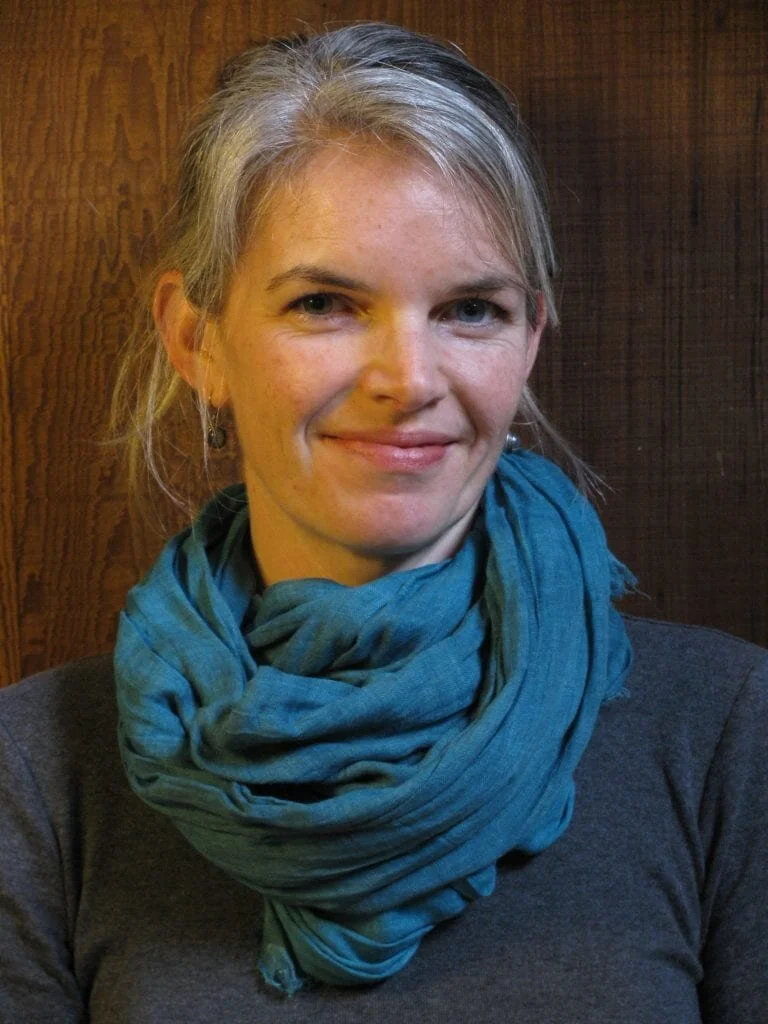
Dr. Kate McLean
Dr. Kate McLean was raised by a man who loved to share stories. Her father is a master storyteller, entertaining family and friends for hours with his sense of humor and insights. It’s not surprising that Kate found herself compelled by the narratives she heard in her first research position, focused on attachment theory in human development and psychology. She was so touched by the trust of people sharing their most intimate memories and experiences, that she knew her area of focus would revolve around the impact of telling those stories on the people sharing them and on the people hearing them.
Some of her colleagues focus their research on early childhood narrative, Kate’s area of interest revolves more around the transformative years between young adulthood and adulthood, roughly 17 - 22 years old.
She finds that the stories parents and caregivers share about their children in front of them, can have positive and negative effects in terms of their relationship, and how the young adult moves through those transformative years.
If the stories a parent or caregiver share about the young adult’s childhood don’t fit how that young adult sees themselves and how they are transforming into adulthood, conflict develops between them, and the transformation can become stilted.
On the other hand, if the narrative continues to resonate with the young adult, it may help them move forward with confidence in their identity as they move into adulthood.
Our conversation took some twists and turns, one thing that struck me was our mutual respect and admiration for those who share their stories with us. When someone chooses to trust you with their most intimate memories, we must respect that story and the person sharing it.
Learn more about Dr. McLean’s work, and check out her book, The Co-Authored Self.
Kate C. McLean, Professor of Psychology at Western Washington University, was trained in Developmental and Personality Psychology at the University of California, Santa Cruz (Ph.D., 2004). Her research focuses on adolescent and emerging adult identity development. She is on the governing council for the Society for the Study of Emerging Adulthood, and is an Associate Editor for the Journal Personality and Social Psychology: PPID. She teaches courses in Developmental and Personality Psychology, as well as research methods. She currently serves as the Director for the Center for Cross-Cultural Research at WWU.
Episode 96: Public Relations is About Relationships
Jennifer McGinley had a dream to be an anchor on The Today Show. She got pretty close to where she wanted to be, and even had mentors to help her on her way. But something shifted, as they always do, and she has found her calling in public relations.
Jennifer celebrated two years of self-employment with her business, JLM Strategic Communications, in mid-October, and I wanted to hear some of her pivot points in those two years to learn more about her work and her inspiration.
Stories You Share Must Match Your Client and Career Goals
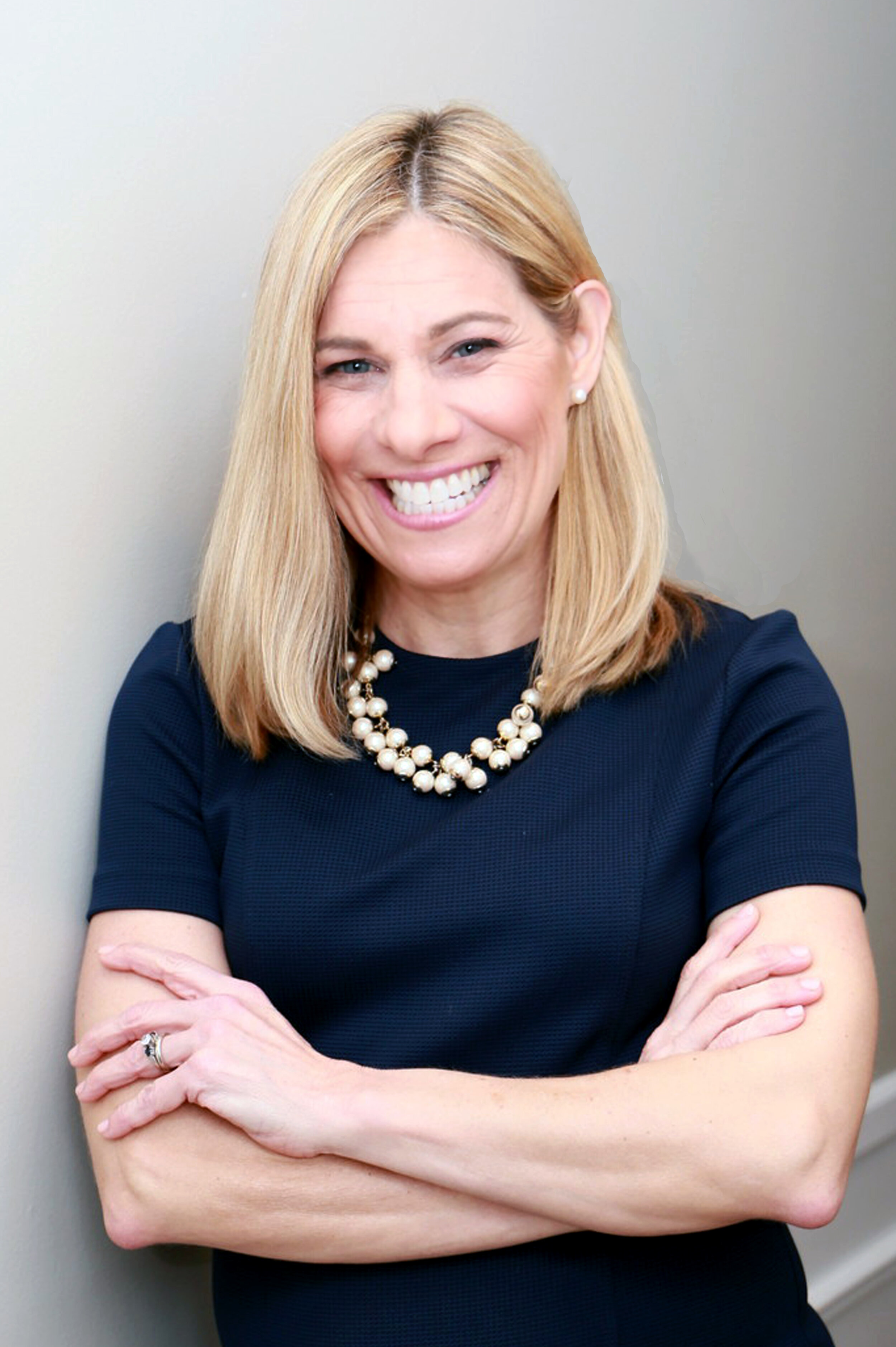
Jennifer McGinley, JLM Strategic Communications
Jennifer McGinley had a dream to be an anchor on The Today Show. She got pretty close to where she wanted to be, and even had mentors to help her on her way. But something shifted, as they always do, and she has found her calling in public relations.
Jennifer celebrated two years of self-employment with her business, JLM Strategic Communications, in mid-October, and I wanted to hear some of her pivot points in those two years to learn more about her work and her inspiration.
She has some great stories about how she got to where she is, and I loved her description of finding her value not in direct PR experience, but in all of her combined experience in a variety of roles that make her truly shine in her work.
One thing that stood out during our conversation was talking about people who under-share and over-share in their communications, particularly online. We agree that the most important part of sharing personal stories is knowing the audience you want to connect with, and being intentional about how and what personal stories to share, no matter where you share them. Which brings us to our other agreement: You can no longer separate your personal and professional lives, so it’s best to be intentional about how you want to be perceived - in every situation.
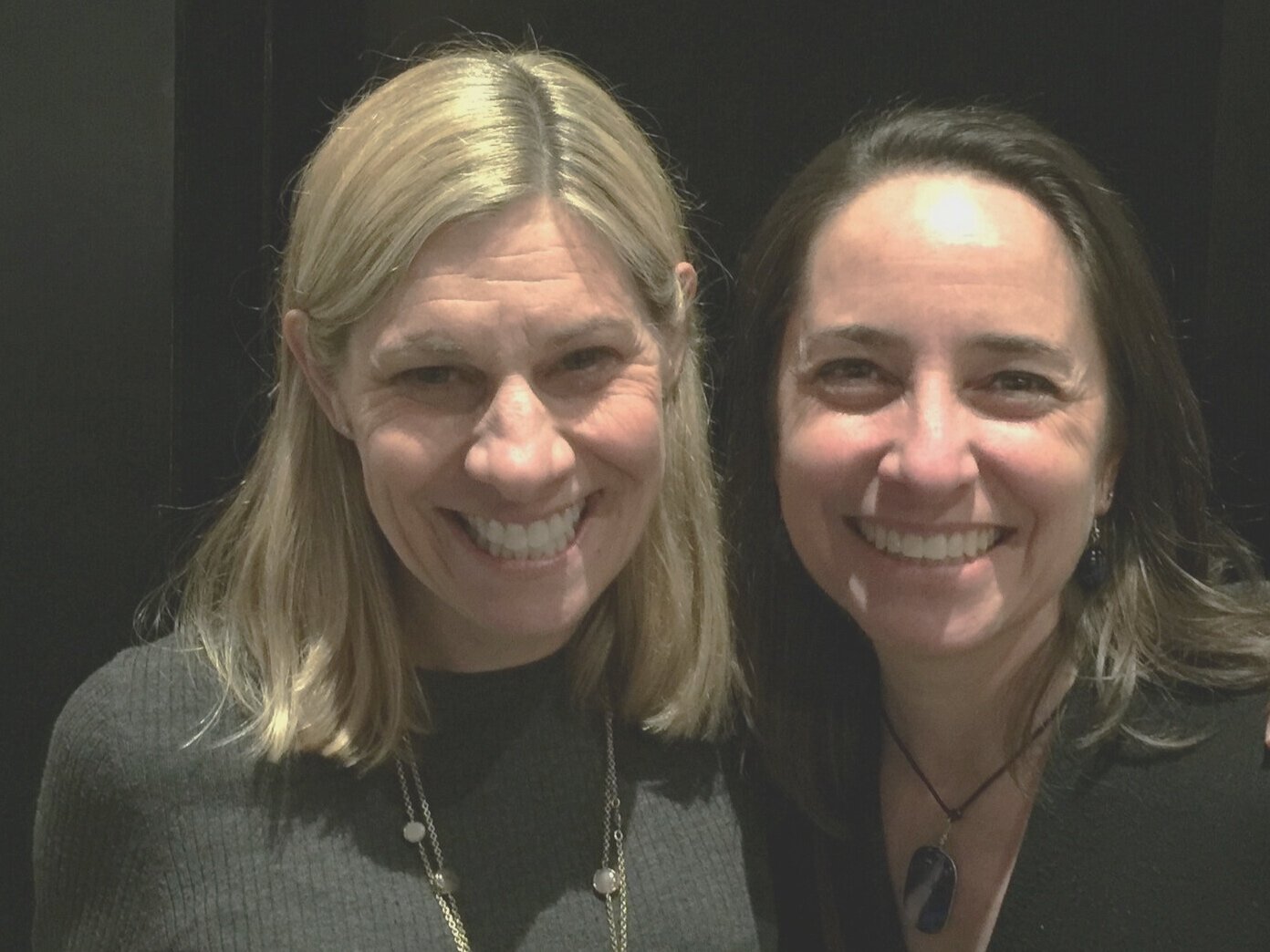
Jennifer and Sarah at #nlvdenver2018
Connect with Jennifer on LinkedIn, and be sure to follow her on Twitter, Facebook, and Instagram for great PR tips and strategies. If you want to meet her in person, she’ll be hosting a speed session at the upcoming No Longer Virtual event in Chicago on March 21, 22, 2020.
Jennifer McGinley is the CEO of JLM Strategic Communications, founded in October 2017 and based in Hunt Valley, Maryland. Her company specializes in Media Relations, Community Outreach and Reputation Management.
As a public relations professional for over 25 years, Jennifer has built a reputation based on integrity, professionalism, attention to details and consistency. Prior to founding her company, Jennifer worked in the healthcare in the Philadelphia area before moving to Baltimore where she worked at the University of Maryland School of Medicine and the School of Pharmacy in public affairs, development and alumni relations.
Jennifer is passionate about non-profits, small business, education, health care, mental health, fitness, nutrition, the arts, STEM and those who are changing their community for the better. Jennifer helps high level professionals and organizations amplify their brand and increase connections, visibility and credibility through strategic public relations campaigns. Listening is Jennifer’s superpower. She always tells her clients to just #BEYOU.
Episode 95: Are You a Good Ambassador for Your People?
If you’ve ever worked in a large corporation or for a public sector agency, you have seen some pretty ridiculous policies that feel either far too broad to apply to every employee, or far too specific.
The reason these unnecessary policies exist is that many managers and leaders struggle with conflict, and it’s much easier for them to replace good management with bad policy.
You can have an impact on this by being a good ambassador for your people.
An email arrived in my Inbox when I worked in a small agency for the state government.

View from a government office, Helena, Montana
As of August 1, personal cell phone use is prohibited during working hours, except for emergencies.
The talk around the office about the policy centered on the ridiculousness of it, few people took it seriously, and others were simply insulted.
Here’s the story I imagined was behind the creation of that policy:
Boss: I’m so tired of seeing Dan sitting at his desk and staring at his phone. He never meets deadlines, and I think it’s because he’s constantly distracted with texting and playing games on his phone. I’ll bet he spends hours on Facebook and Instagram. I know what I’ll do! I’ll create a policy that people can no longer use their personal cell phones at work. That way he will have to put that stupid thing away and get his work done!
Dan: I’m so bored. I’ve gone to my boss multiple times to ask for more interesting projects to work on, and I’ve given him a list of ideas, but the only tasks he gives me require resources I don’t have, and input from so many others that I there’s no way I can meet his deadlines.
Does this scenario sound familiar to you?
There are so many ways this situation could be resolved. Every one of them requires actually talking to each other, and working to speak each other’s language.
Instead of creating a broad policy that impacts every single employee, just to address the behavior of one, or a small number of employees, consider this: Talk to them.
Ask them what they need to do their job well, and let them know you’re concerned about the time they’re spending on their phone. Document the conversation and make sure to follow up with an email with bullet points to confirm what was agreed to in the discussion.
The employee also has a role to fill here to, of course, which includes recognizing when they are not representing themselves or other employees well. If Dan was aware that his activities on his personal cell phone would impact ALL of his colleagues, he might have behaved differently.
The way you behave, no matter where you are, is a reflection on all the different people you may represent, a public employee, a woman, a young adult (Millennial), a father. You are an ambassador for your people everywhere you go, based on your outward identity.
Here’s another scenario:
A local government hears from a variety of visitors and residents that their town is known as dog friendly, but that it’s also known for irresponsible pet owners – they don’t pick up after their dogs at the dog park, on the trail system, or in town on other people’s properties and sidewalks.

Toblerone on Mt. Helena Summit, Helena, Montana
The elected officials come up with a solution that involves more enforcement of the policies that exists, higher fines for those who are caught not cleaning up after their dogs, and other penalties. This will not solve the problem for a variety of reasons, including the fact that it’s never going to be a police priority to cite a dog owner for not picking up after their dog (and it shouldn’t be), and it’s difficult to catch people in the act. Plus, without some entertaining, engaging education around the why behind the changes, people won’t see the point.
But what if dog owners decided to be great ambassadors for their people - other dog owners? If we knew our behavior was contributing to a negative impression of our town, and was the reason for an increase in fines, and may have impact on our public safety budget, would we change that behavior?
As I hiked down the mountain behind my house with my friend, who is not a dog-owner, we saw a filled poop-bag next to the trail. I could tell my friend was tempted to judge the person who left it there, her expression said what her words didn’t.
I’ve done that before, I’ve left the dog poop bag near the trail on my way up so I don’t have to carry it for the entire hike, and then come back down this way to pick it up on my way home. I have to admit, though, that sometimes I forget, and come back down via a different path. That’s why (and I bent to pick up the other dog-owner’s poop bag), sometimes I call myself the Dog Poop Fairy, and pick these up when I see them.
There. Did you hear that? I explained why people leave the bags, admitted that I’m sometimes at fault, and then demonstrated what a good ambassador for dog owners look like. It wasn’t hard.
Even if no one sees your dog poop on public or private property, you still represent all dog owners when you don’t pick that shit up.
Are you a good ambassador for the people you represent at any given time? It’s not easy, and it’s not fair that people generalize so quickly based on first and physical impressions, but that’s the way it is. If people know me to be a dog owner, I represent all dog owners with my behavior. If people know me to be Jewish, a woman, a public sector employee, then I represent all of those people and my behavior has an impact on all of those people.
And on the flip side of this:
When was the last time you generalized a judgment based on an experience with a single person in a specific situation? Did you notice yourself passing a judgment on all dog-owners, on all Millennials, on all New Yorkers or Parisians based on very limited experience with people who fit that description?
My friend Amber Johnson offered some guidelines at the beginning of the Women’s Leadership Network annual conference a few days ago, and the one that really struck me was this:
Don’t freeze someone in time.
Amber asked the audience of around 150 women in the room whether they had ever said or done something they wish they could undo. She asked if they ever said something stupid and rash. Everyone in the room raised their hands, of course.
And then she explained that we often freeze someone in time – making a judgment about them based on one thing they said or did, and allowing that judgment to impact their relationship with the person. She suggested that when we heard something in the room we weren’t sure of, to ask clarifying questions before jumping to conclusions about the person.
Addressing these challenges requires we look at them from both points of view: Am I a good ambassador for my people? Am I making judgments of a person or on a whole community of people based on limited experience?
This week, think about all the communities of people you represent. Try being aware of your behavior in terms of how you’re representing those people and yourself. And try to acknowledge your own snap judgments based on limited experiences with certain people.
I certainly don’t like to be lumped in with a description of “all Americans are” one thing or another. And when I hear people say anything, good or bad, about an entire community of people: all Americans, all Parisians, all Californians, I think about the diversity of this incredible world, and how unlikely it is that any community could possibly be ALL one thing or ALL another.
Episode 94: Using Personality Assessments as Tools for Self-Reflection & Self-Improvement
Joy Gabriel was an awkward kid. She struggled to understand social context and constructs, and had a hard time building relationships with other kids. Her time with adults was usually okay, and as an only child, she benefited from the focus of her parents on her development, academically and in relationships.
If They’re Accurate, Assessments Can Help You See Where You’re Getting in Your Own Way

Joy Gabriel Olson
Joy Gabriel was an awkward kid. She struggled to understand social context and constructs, and had a hard time building relationships with other kids. Her time with adults was usually okay, and as an only child, she benefited from the focus of her parents on her development, academically and in relationships.
Because she has always been cerebral, she spent a lot of time by herself, nose in a book, and gazing out windows and at artwork as she processed whatever she happened to be reading, philosophy, scientific theories, and at one point, anything Anime.
Though she has always seemed pretty comfortable in her skin, at least to outsiders, she often wondered whether there was something wrong with her. To address her worries, Joy had a way of taking on the characteristics of characters in her books and favorite movies and tv shows that she admired and respected, in our conversation she called them the “influencers I was imitating.”
As she worked through her late teens and early 20s, trying on different jobs, identities, and relationships, she discovered the Enneagram. Joy is one of those intensely self-reflective, curious people who loves to find and apply tools for more self-discovery and to use to help others, and the Enneagram was a game-changer for her. After participating in the training and becoming a trainer herself in that assessment, she realized her calling was to be a coach, and that she wanted to dig into another assessment to add to her toolkit. Now she’s fully certified in DiSC as well.
Our conversation was full of great insights about how the Enneagram, DiSC, and Strengthsfinder assessments provide interesting ways to present the complexities of personality, and methods to apply the results to improve communication and relationships.
Now, as a life coach, she’s putting her gifts to use, focusing her insightful applications of assessments to help “the imploders, the self-sabotagers, and the people-pleasers out there. Whatever you do in life, I want it to be your call— not someone else’s!”
Connect with Joy on LinkedIn, and check out her website, Read Your Own Mind, and Fighting Fair blog to learn more.