

Your Stories Don’t Define You
How You Tell Them Will
A podcast to unlock your stories and uncover meaningful insights.
380 Breaking Cycles
We are hardwired to remember the stories that are far more painful and life altering, than the happier stories we lived. Perhaps it is our survival instincts or it is just easier to remember the bad, regardless it is important to sit back and truly think about how we frame our narratives using these experiences and decide for ourselves that this story is one we want to change.
In todays episode, Sarah Elkins and Erin Weninger discuss the cycles both of them have lived as women, business owners, and parents, and the difficulty that came with acknowledging and changing the destructive patterns in our lives
380 Breaking Cycles

We are hardwired to remember the stories that are far more painful and life altering, than the happier stories we lived. Perhaps it is our survival instincts or it is just easier to remember the bad, regardless it is important to sit back and truly think about how we frame our narratives using these experiences and decide for ourselves that this story is one we want to change.
In todays episode, Sarah Elkins and Erin Weninger discuss the cycles both of them have lived as women, business owners, and parents, and the difficulty that came with acknowledging and changing the destructive patterns in our lives
Highlights
You can do what is best for you, you only need to find the courage to reach out.
Everyone’s narrative is different, but you need to know personally when that narrative is false and harmful to you.
What lengths will you go to in order to defend your narrative? Is it really a narrative worth defending?
Be adult enough to acknowledge when you fail, apologize, work towards being better, and take accountability. It’s not the end of the world to admit when you are in the wrong.
Quotes
“I really needed that second falling out with my mom to have that feeling of; “Wow she really will go to extreme extents for self preservation at the expense of anybody else she might care about and love.”.”
“It doesn’t have to be an atom bomb to me just because I accept fault.”
Dear Listeners it is now your turn,
You’ve already been asked a few questions. Think about how you’re modeling the behavior you want to see in the people around you. If you’re a parent, what are your relationship issues with your parents that may be contributing to relationship challenges with your children? Are you taking time to look at those patterns and maybe be honest with your kids about what you’re experiencing as a parent. And last but not least, I would love to hear your thoughts on Erin’s story, and how and why she should share it. If you believe that her words can be inspiring to others, I would love to hear from you.
And, as always, thank you for listening.
About Erin

About Sarah
"Uncovering the right stories for the right audiences so executives, leaders, public speakers, and job seekers can clearly and actively demonstrate their character, values, and vision."
In my work with coaching clients, I guide people to improve their communication using storytelling as the foundation of our work together. What I’ve realized over years of coaching and podcasting is that the majority of people don’t realize the impact of the stories they share - on their internal messages, and on the people they’re sharing them with.
My work with leaders and people who aspire to be leaders follows a similar path to the interviews on my podcast, uncovering pivotal moments in their lives and learning how to share them to connect more authentically with others, to make their presentations and speaking more engaging, to reveal patterns that have kept them stuck or moved them forward, and to improve their relationships at work and at home.
The audiobook, Your Stories Don’t Define You, How You Tell Them Will is now available!
Included with your purchase are two bonus tracks, songs recorded by Sarah's band, Spare Change, in her living room in Montana.
Be sure to check out the Storytelling For Professionals Course as well to make sure you nail that next interview!
Episode 97: Your Identity is Created by the Stories You Share
Family Narratives Can Impact Your Identity - For Better or For Worse
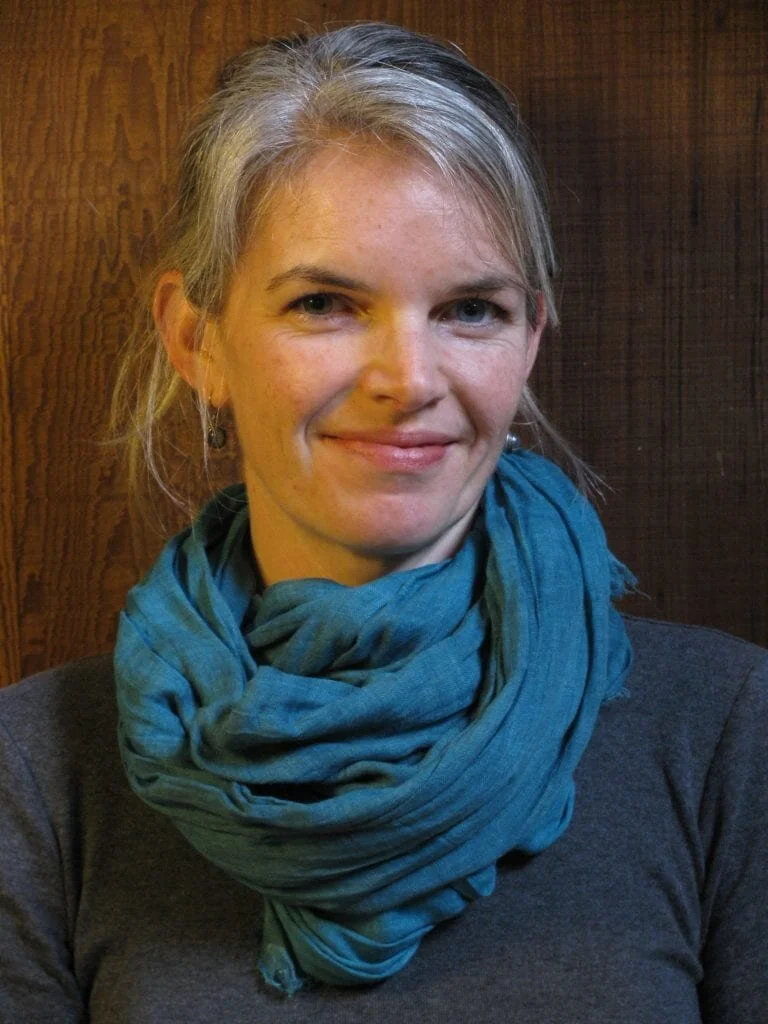
Dr. Kate McLean
Dr. Kate McLean was raised by a man who loved to share stories. Her father is a master storyteller, entertaining family and friends for hours with his sense of humor and insights. It’s not surprising that Kate found herself compelled by the narratives she heard in her first research position, focused on attachment theory in human development and psychology. She was so touched by the trust of people sharing their most intimate memories and experiences, that she knew her area of focus would revolve around the impact of telling those stories on the people sharing them and on the people hearing them.
Some of her colleagues focus their research on early childhood narrative, Kate’s area of interest revolves more around the transformative years between young adulthood and adulthood, roughly 17 - 22 years old.
She finds that the stories parents and caregivers share about their children in front of them, can have positive and negative effects in terms of their relationship, and how the young adult moves through those transformative years.
If the stories a parent or caregiver share about the young adult’s childhood don’t fit how that young adult sees themselves and how they are transforming into adulthood, conflict develops between them, and the transformation can become stilted.
On the other hand, if the narrative continues to resonate with the young adult, it may help them move forward with confidence in their identity as they move into adulthood.
Our conversation took some twists and turns, one thing that struck me was our mutual respect and admiration for those who share their stories with us. When someone chooses to trust you with their most intimate memories, we must respect that story and the person sharing it.
Learn more about Dr. McLean’s work, and check out her book, The Co-Authored Self.
Kate C. McLean, Professor of Psychology at Western Washington University, was trained in Developmental and Personality Psychology at the University of California, Santa Cruz (Ph.D., 2004). Her research focuses on adolescent and emerging adult identity development. She is on the governing council for the Society for the Study of Emerging Adulthood, and is an Associate Editor for the Journal Personality and Social Psychology: PPID. She teaches courses in Developmental and Personality Psychology, as well as research methods. She currently serves as the Director for the Center for Cross-Cultural Research at WWU.