
Your Stories Don’t Define You
How You Tell Them Will
A podcast to unlock your stories and uncover meaningful insights.
433 Taking Steps To Take Better Care Of Yourself
In today’s episode, Sarah Elkins discusses the importance of taking your time to enjoy the world, to enjoy being you, to take time to make sure You, Dear Listener, are healthy in mind, body, emotion, and spirit.
433 Taking Steps To Take Better Care Of Yourself
In today’s episode, Sarah Elkins discusses the importance of taking your time to enjoy the world, to enjoy being you, to take time to make sure You, Dear Listener, are healthy in mind, body, emotion, and spirit.
Highlights
Encouraging healthy self reflection to lessen loneliness and division.
Acknowledging when you need help or a break is key to not only your own wellbeing but to the wellbeing of those you care for.
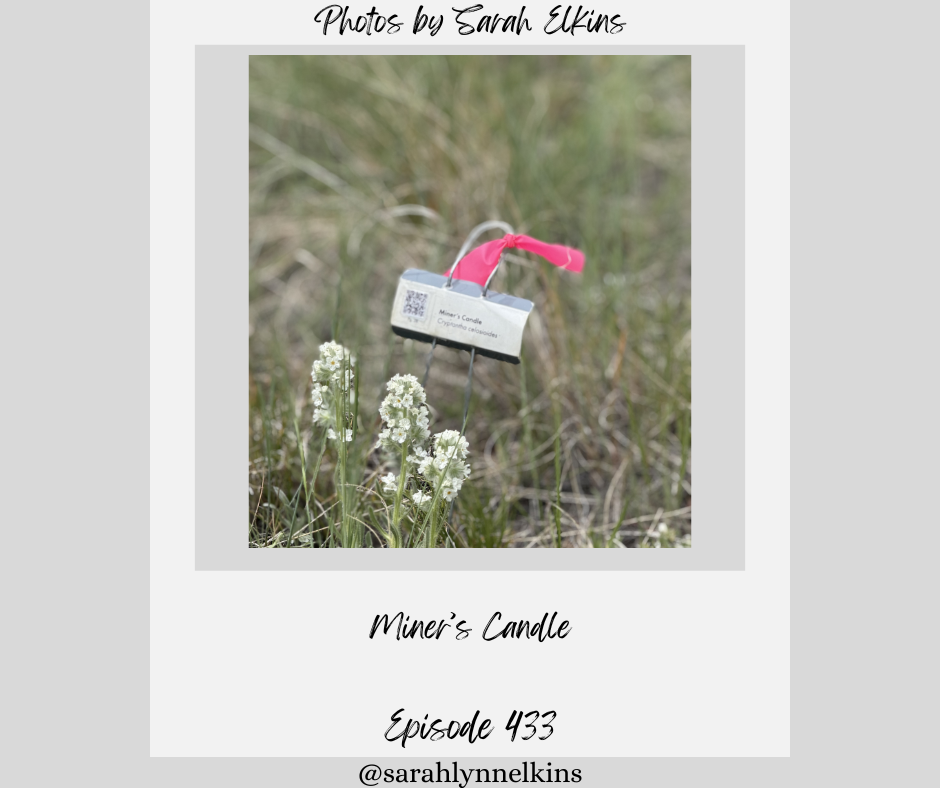
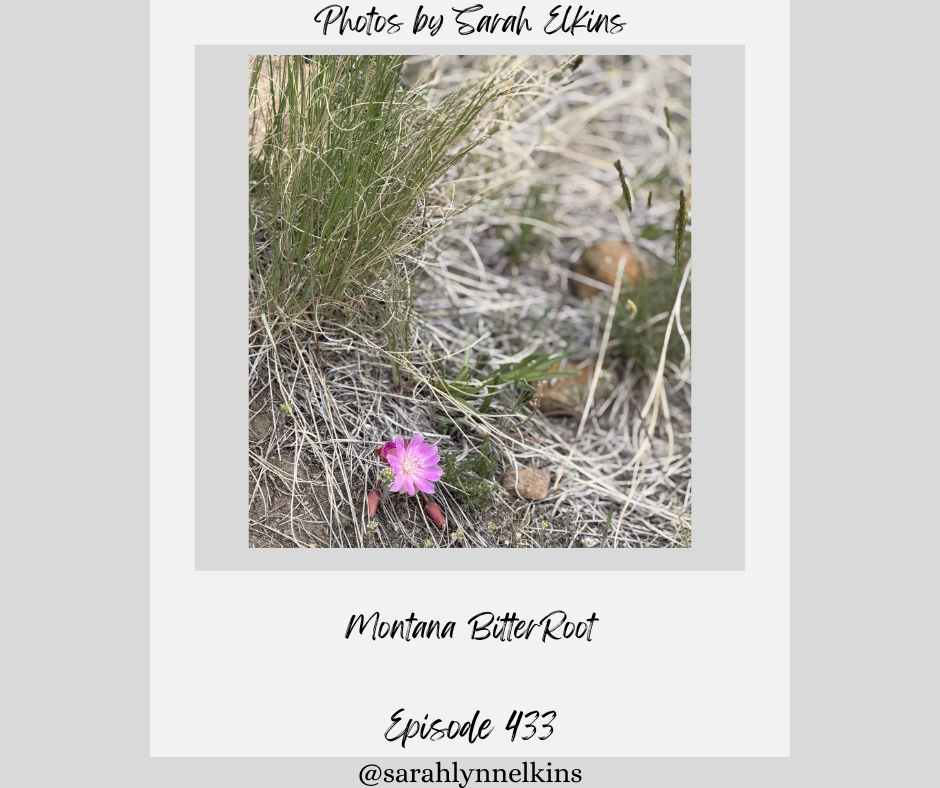
Stop and smell the flowers. Life isn’t a race. Take your time and enjoy the world you have helped to cultivate and get the gift of living in.
How our labels change as time moves, but so long as we know the shape of our souls we will be okay.
Quotes
“This is what hustle looks like. Losing track of ‘why’ I’m doing something. Focusing too much on doing something without stopping to ensure that what I’m doing fits my values, my needs, and how I want to live my life daily.”
“What makes things interesting and joyful to me, is knowing that a single label can’t define me. I’m complicated, and so are you.”
“Will you take time right now or very soon to define success for yourself, without attaching money or income to that definition.”
Mentioned in this episode
Dear Listeners it is now your turn,
Will you take time right now or very soon to define success for yourself, without attaching money or income to that definition?
What is one thing you’ll do today, tomorrow, and the next day to reach toward that definition of success, and the labels you choose for yourself, and demonstrate through your work?
And how will you feed your own needs, your physical, emotional, and spiritual health so that you have the energy and enthusiasm and capacity to live your definition of success?
And, as always, thank you for listening.
About Sarah
Sarah is a Montana based workplace communication trainer, TEDx speaker, DisruptHR speaker, public speaking coach, professional storyteller, musician, and podcast host. Her workshops and coaching packages with teams and their leaders are known to address and reduce miscommunication – the most common cause of tension and stress in the workplace. Using the team’s results from the StrengthsFinder assessment, she guides teams in learning to speak each other’s “language”, learning to value each other’s strengths and connecting with each other through enhanced self-reflection and effective listening.
Sarah’s nearly 20 years working in government agencies inspired her to complete her MBA and to achieve her StrengthsFinder certification to improve work environments for others, guiding teams toward increased satisfaction, productivity, and happiness.
Visit her website to purchase her book, Your Stories Don't Define You in paperback or audiobook.
432: The Power of Kindness featuring Joe Emery
In today’s episode Sarah Elkins and Joe Emery discuss the importance of dispelling misconceptions, serving our communities, and elevating voices of kindness and positivity.
432 The Power of Kindness featuring Joe Emery
In today’s episode Sarah Elkins and Joe Emery discuss the importance of dispelling misconceptions, serving our communities, and elevating voices of kindness and positivity.
Highlights
The beauty of visiting places we’ve only seen in pictures or film.
Misconceptions about places and people and learning the truth to be able to see the world for the better.
Emotional storytelling and the importance of making people see the humanity behind the story.
The importance of being kind, patient, and empathetic in a world that is becoming more jaded.
Remember that there is a human on the other side of the screen that doesn’t deserve to be treated poorly because you don’t like a post.
Quotes
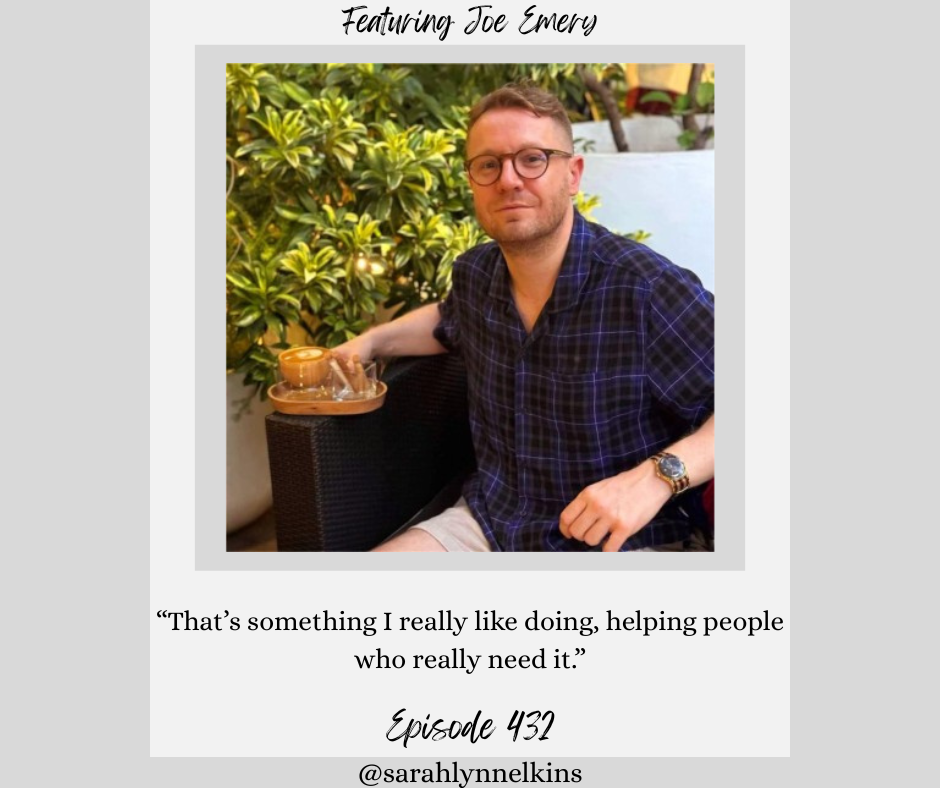
“That’s something I really like doing, helping people who really need it.”
“We all see things everyday that we’re not interested in, and it’s amazing how many people stop to take time out of their day to comment.”
Dear Listeners it is now your turn,
What is it that drove you to be a fan of something? What is your obsession? Have you ever thought about where that could lead you or how it has contributed to where you are now? I think about a lot of the things in my childhood that made me want to meet people or to learn something or to read more and I’m curious what that is for you. And the other thing I want to know is what are you doing when it comes to seeing the one comment that is mean or one boss that treated you badly, are you still holding on to that or are you starting to see it for exactly what it is, that those people who are cruel have their own reason for being that and when you give them the greater voice over the people who are kind you’re giving them this power and you’re taking away and reducing the power of people who are doing good in the world.
And, as always, thank you for listening.
About Joe
About Sarah
Sarah is a Montana based workplace communication trainer, TEDx speaker, DisruptHR speaker, public speaking coach, professional storyteller, musician, and podcast host. Her workshops and coaching packages with teams and their leaders are known to address and reduce miscommunication – the most common cause of tension and stress in the workplace. Using the team’s results from the StrengthsFinder assessment, she guides teams in learning to speak each other’s “language”, learning to value each other’s strengths and connecting with each other through enhanced self-reflection and effective listening.
Sarah’s nearly 20 years working in government agencies inspired her to complete her MBA and to achieve her StrengthsFinder certification to improve work environments for others, guiding teams toward increased satisfaction, productivity, and happiness.
Visit her website to purchase her book, Your Stories Don't Define You in paperback or audiobook.
431 The Art of Aging - Featuring Diane Place
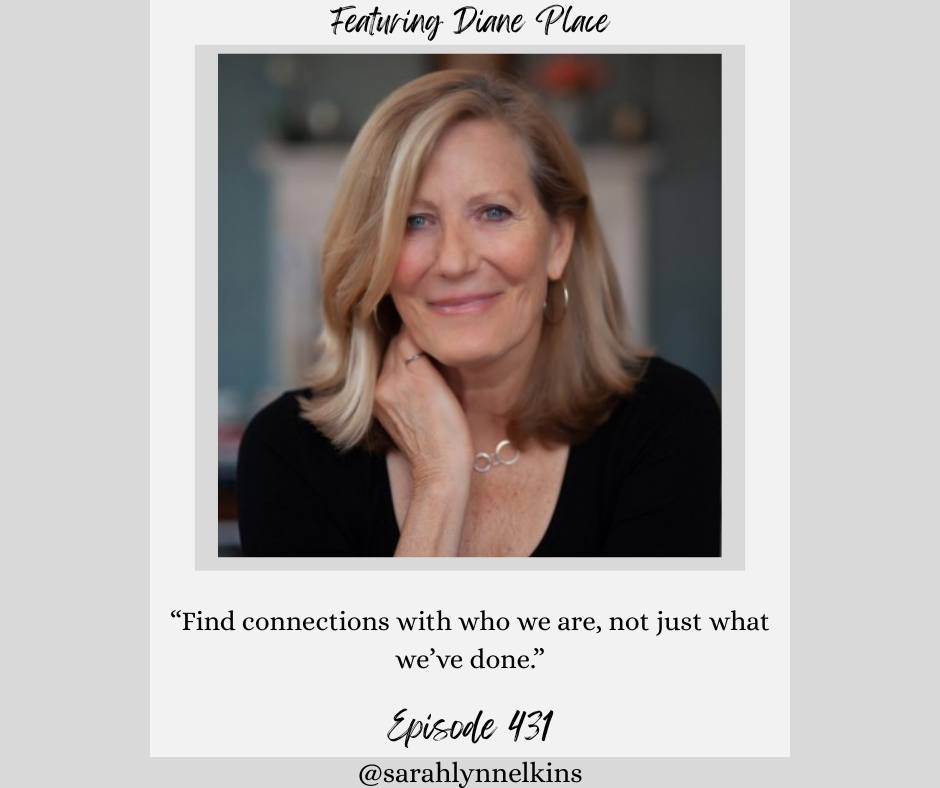
In today’s episode Sarah Elkins and Diane Place discuss the art and beauty in aging and how it allows us to collect amazing stories, learn new things about ourselves, and how we can use these experiences to help others.
431 The Art of Aging - Featuring Diane Place
In today’s episode Sarah Elkins and Diane Place discuss the art and beauty in aging and how it allows us to collect amazing stories, learn new things about ourselves, and how we can use these experiences to help others.
Highlights
Aha moments and how trusting yourself will most often take you to better places in life.
Bringing in other story tellers to enlighten yourself with intergenerational, interracial, and interhuman connections.
Reframing aging and how we perceive aging, in that it is never too late to do anything and you don’t need to step back just because of a number.
The stories we tell ourselves and the stories told around us shape our perceptions, and we need to take active steps to make sure that it is positive and healthy instead of cutting ourselves and others down.
Quotes
“I’ve had “ah ha” moments in my life that led me to make crazy decisions. Some of them didn’t go so well… most of them did because I trusted my heart.”
“Find connections with who we are, not just what we’ve done.”
“We need to seek the new stories if we have some of those old stories. We need to ditch them. We need to erase them, and reinvent them.”
Dear Listeners, now it’s your turn:
What part of this conversation made you realize something about your own aging and maybe your internal messages that are affecting who you are and that you’re modeling and sharing with younger people. If you’re one of the younger listeners, under 50, what part of this conversation made you eager to hear the stories of people around you that you’ve only ever known skin deep? I would love to hear what resonated with you in this conversation.
And, as always, thank you for listening.
About Diane
After 66 years on this planet, I am grateful to have aligned my passions, talents and heart-driven desires in all parts of my life.
After dancing on the edges of my passions throughout my career and my life, the coincidence of three “lightning strike” experiences in 2018 - a cancer diagnosis, shutting down a business venture, empty nesting as I turned 60, compelled me to focus on what I truly wanted to do with my "one wild & precious life."
Fostering connection, learning peoples' stories and creatively inspiring others have always been a personal passion. With Third Act Quest, and our community, the 333 Collective, and my newest program AHA! Third Act Stories — this passion is now front and center. I am working to reframe aging by connecting and inspiring women for their life’s most exciting and meaningful chapter — their “third act.”
My 40-year professional career includes: a decade in Boston with an international ad agency; ten years with America Online (AOL-Time Warner) in the early days of the internet as Senior Vice President; and three entrepreneurial ventures; a cause-marketing firm, Dunbar, Hunter & Associates (bridging corporations and nonprofits around aids, homelessness, domestic violence and breast cancer), WonderBlink Photography, and The Global Design Post.
My favorite quote:
“Tell me, what is it that you plan to do with your one wild and precious life?” - Mary Oliver
Be sure to check out Diane’s LinkedIn, and her website Third Act Quest. Plus, check out the Third Act Quest community here, and her YouTube Channel for even more great content.
About Sarah
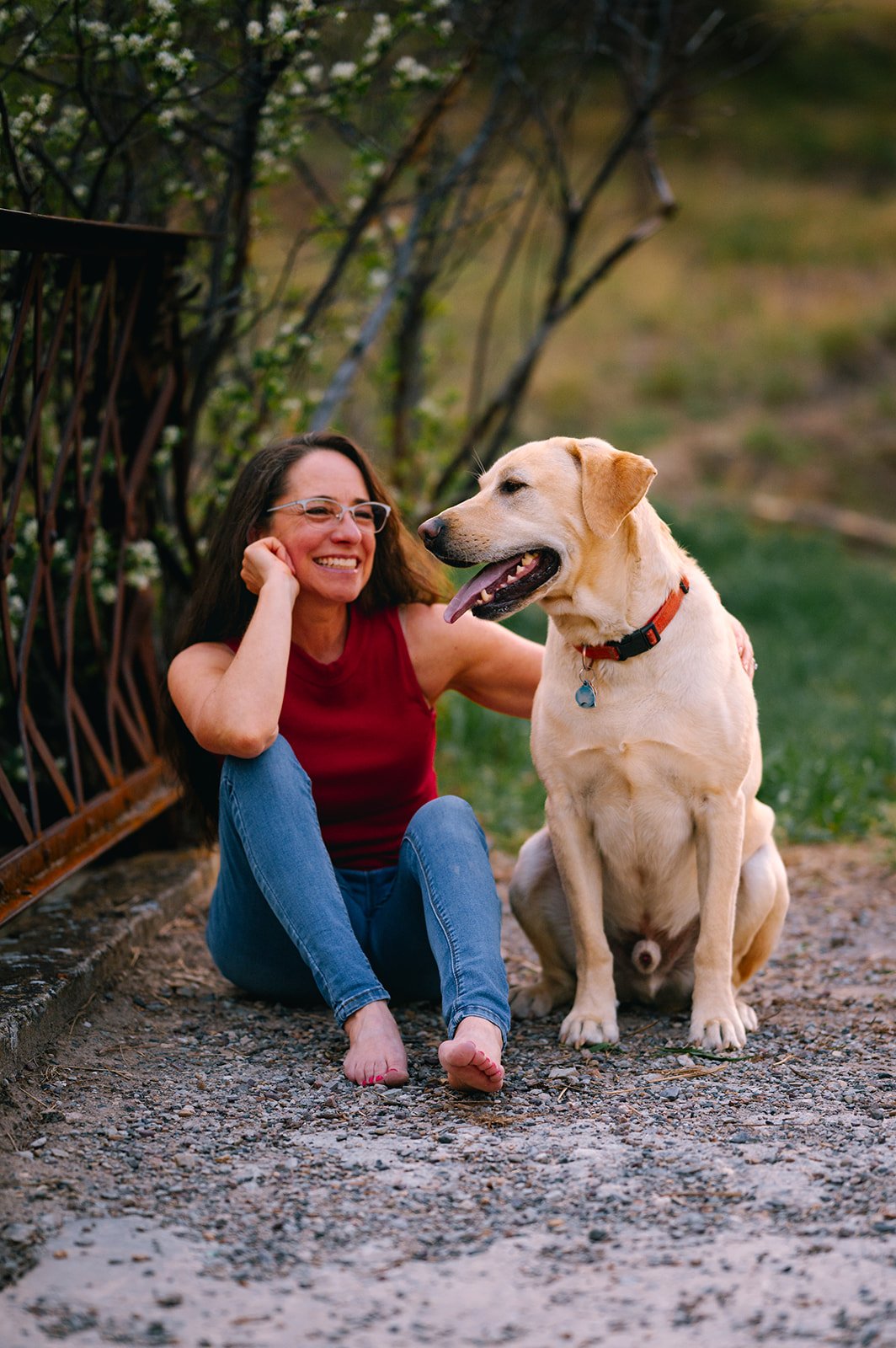
Sarah is a Montana based workplace communication trainer, TEDx speaker, DisruptHR speaker, public speaking coach, professional storyteller, musician, and podcast host. Her workshops and coaching packages with teams and their leaders are known to address and reduce miscommunication – the most common cause of tension and stress in the workplace. Using the team’s results from the StrengthsFinder assessment, she guides teams in learning to speak each other’s “language”, learning to value each other’s strengths and connecting with each other through enhanced self-reflection and effective listening.
Sarah’s nearly 20 years working in government agencies inspired her to complete her MBA and to achieve her StrengthsFinder certification to improve work environments for others, guiding teams toward increased satisfaction, productivity, and happiness.
Visit her website to purchase her book, Your Stories Don't Define You in paperback or audiobook.
430: Every Emotion Comes from Needs, Met and Unmet - featuring Morgane Borzée
"... we talk about feelings, but... At the end, every feeling has an underlying need. If it's a pleasant feeling, it's a met need. If it's an unpleasant feeling, it's an unmet need. And needs drive our behavior."
This conversation with Morgane Borzée filled in so many gaps in my understanding of what I've heard referred to as trauma-informed coaching, teaching, and counseling.
I thought I understood the connection between emotional intelligence and behavior, but I was missing a key component:
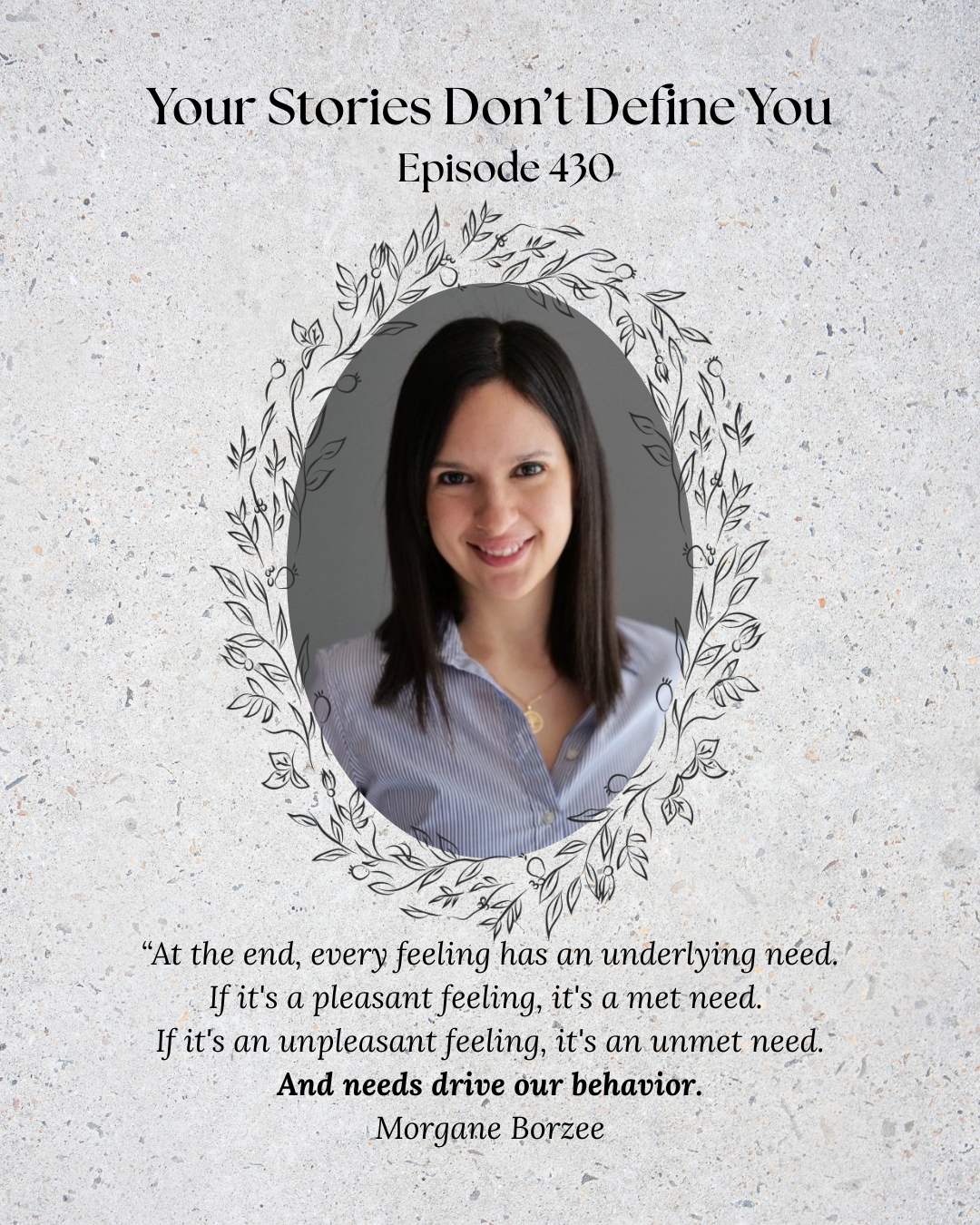
"... we talk about feelings, but... At the end, every feeling has an underlying need. If it's a pleasant feeling, it's a met need. If it's an unpleasant feeling, it's an unmet need. And needs drive our behavior."
This conversation with Morgane Borzée filled in so many gaps in my understanding of what I've heard referred to as trauma-informed coaching, teaching, and counseling.
If you're anything like me, you associated the word trauma with something dramatic, like abuse or neglect, death, major accidents, war, natural disasters, etc. Many of us don't feel comfortable using the word trauma to describe experiences in our lives that don't seem to compare with what we know others have experienced.
But trauma in childhood can be something as innocuous as an underlying current of the repression of anger, financial stress and anxiety, sibling rivalry. And each person experiences it differently. Ask your siblings or cousins about growing up and they'll remember completely different episodes as traumatic - or not.
Morgane suffered from severe anxiety as a young adult, and was referred to a therapist that she didn't realize was a trauma specialist. She thought she might be in the wrong place until she heard from the therapist that her anxiety might be coming from repression of anger. And she might be repressing anger because that's how she responded to her fear of the anger she saw expressed in her childhood home, among her family.
"... for years, I was shortcutting anger with anxiety. So whenever a situation would make me angry, I didn't feel angry, I felt anxious."
Her experience with the therapist not only gave her the tools she needed to start truly addressing the anxiety at that deeper level. It gave her the inspiration she then used to create an incredible platform to make what she was learning more accessible and approachable for others.
She took what she learned in academic, research-based, deeply intellectual settings, and translated into everyday language and characters that the rest of us can apply, learn from, and make real change in our lives and those of the people we influence.
Highlights
The word trauma feels big, feels significant, and it is, but it's also relative. Each person experiences it differently.
Needs met and unmet are what drive our emotions and behavior.
Listeners, now it's your turn. During our call, I started writing notes about my own needs and how they affect my behavior when they're not met: My need for respect and how that might show up in emotional responses and anger.
What are yours?
A need for basic food staples in your house? If somebody gets upset when you run out of peanut butter or eggs, it may be a need in terms of food security that wasn't. What is a pattern of conflict or frustration that you've experienced yourself or experienced with somebody else that might be related to this issue? When your needs are met, you have a particular emotional response, and when they're not met, you have another emotional response. I'm curious to hear what came up for you, what patterns you've uncovered, and maybe what you're going to do about it.
From Morgane:
I’m the founder of Equanima. I created it after years of struggling with anxiety and realizing how powerful emotional intelligence can be when you actually understand what’s happening inside you.
As a designer, I saw a gap between complex psychological concepts and what people can realistically use in daily life. Equanima exists to bridge that gap by turning emotional intelligence into clear, practical, and visual tools that help people understand their patterns, regulate under pressure, and live more aligned lives.
Visit my website to learn more, and be sure to connect and/or follow me on LinkedIn and Instagram.
About Sarah
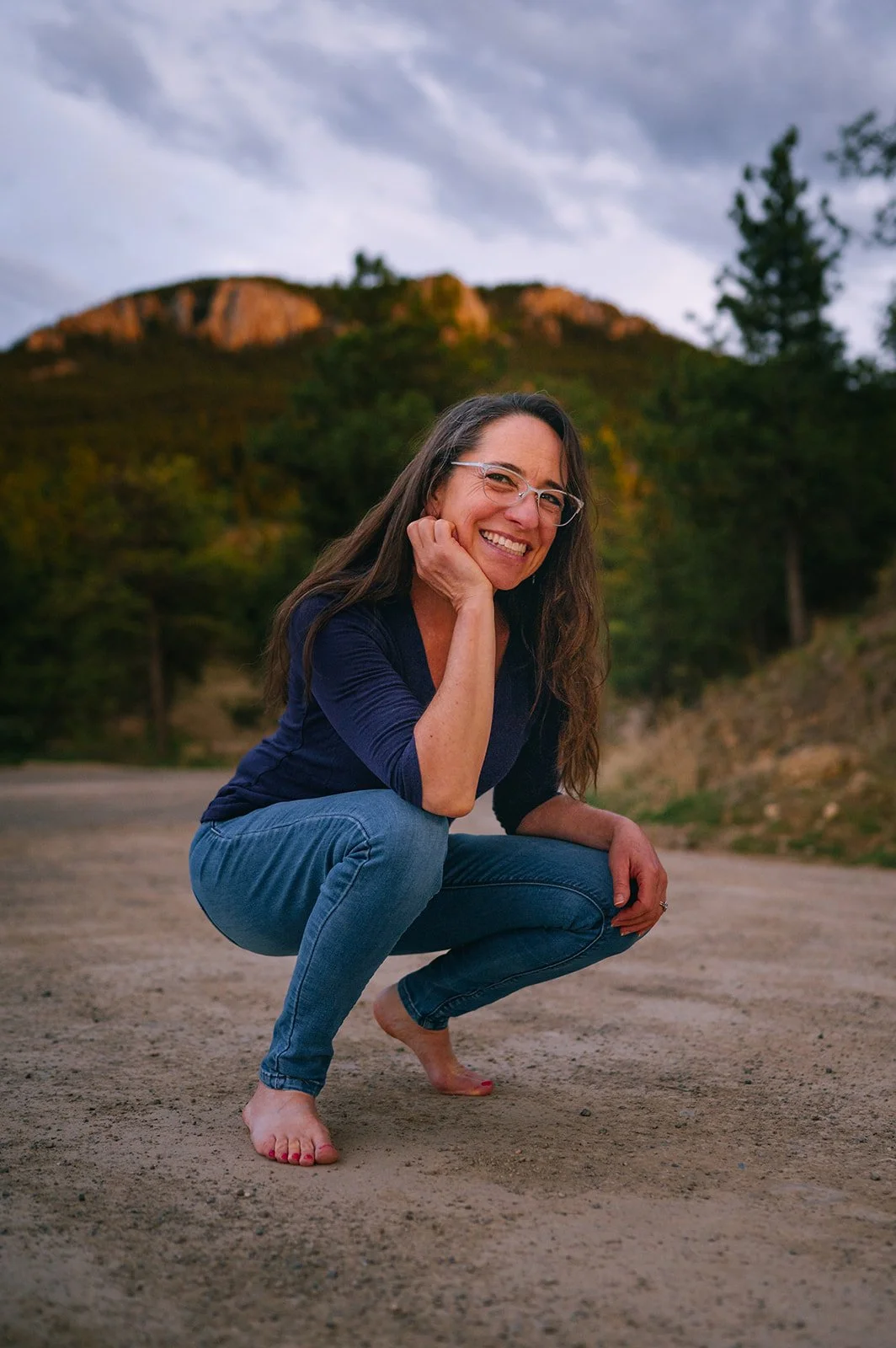
Sarah is a Montana based workplace communication trainer, TEDx speaker, DisruptHR speaker, public speaking coach, professional storyteller, musician, and podcast host. Her workshops and coaching packages with teams and their leaders are known to address and reduce miscommunication – the most common cause of tension and stress in the workplace. Using the team’s results from the StrengthsFinder assessment, she guides teams in learning to speak each other’s “language”, learning to value each other’s strengths and connecting with each other through enhanced self-reflection and effective listening.
Sarah’s nearly 20 years working in government agencies inspired her to complete her MBA and to achieve her StrengthsFinder certification to improve work environments for others, guiding teams toward increased satisfaction, productivity, and happiness.
Visit her website to purchase her book, Your Stories Don't Define You in paperback or audiobook.
429 Lynn Harris - Comedy, Creativity, and Community
In today’s episode Sarah Elkins and Lynn Harris discuss the importance of comedy and creativity in the heart and soul of a community and how overcoming the doubts and assumptions of others can not only strengthen yourself but as well as the people around you.
429 Lynn Harris - Comedy, Creativity, and Community
In today’s episode Sarah Elkins and Lynn Harris discuss the importance of comedy and creativity in the heart and soul of a community and how overcoming the doubts and assumptions of others can not only strengthen yourself but as well as the people around you.
Highlights
How we defy the expectations and assumptions of others.
If we can’t talk about a problem we can’t even begin to fix it.
The power of community and contributing to it and encouraging others to contribute.
Quotes
“As with all industries and all context; Girls would have to work twice as hard to get half the applause and half the credit.”
“That’s something we’ve learned about community, is that it’s not just us. It’s -especially a creative community of any kind- there’s skill building you can kind of do on your own, and some cases not all, but then what do you do with those skills? Making stuff in other words. So we really encourage our members to actually make things and actually do the thing and do the thing together.”
Dear Listeners it is now your turn,
What I love about this conversation is that accessibility to humor, and we all need this probably now more than ever in our lifetime. We need to find humor, we need to laugh together, and it is one thing that can connect us very similar to music and story. And I can tell you that in just a recent experience where I was talking to somebody on the opposite side of the political spectrum to me, I was reading a book by John Scalzi; When The Moon Hits Your Eye, and I asked him if I could read out loud that had made me laugh so hard I was almost crying, and it was one way that I connected with this person next to me. So I’m asking you listeners, what will you do to find humor today?
And, as always, thank you for listening.
About Lynn
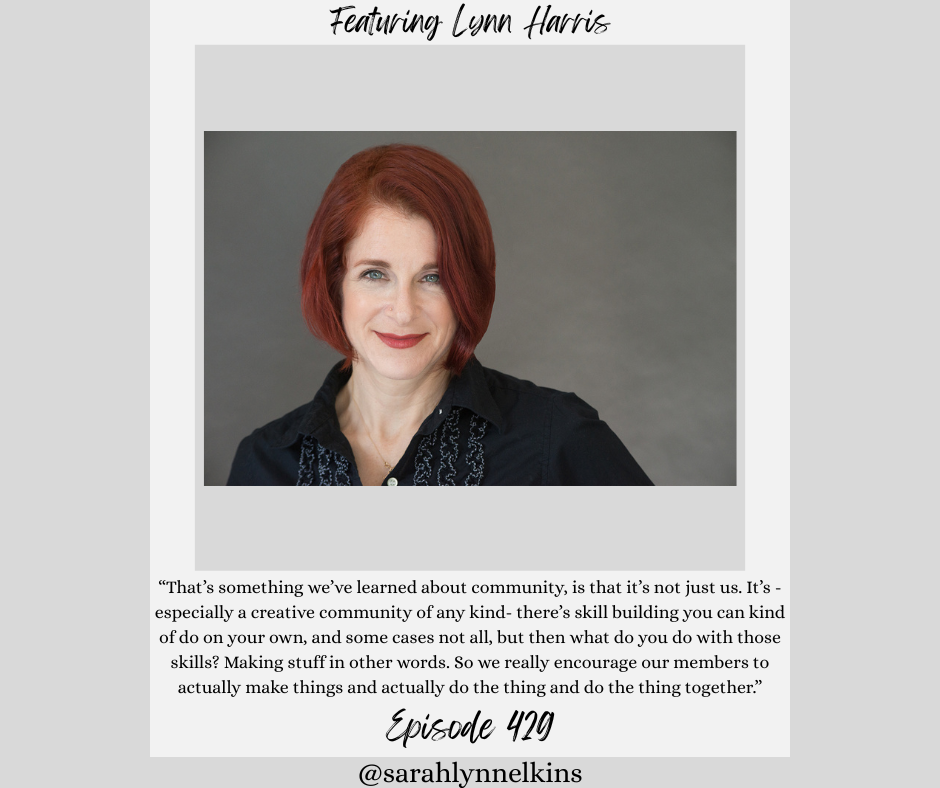
Lynn Harris is a culture-shifting producer, award-winning journalist, and author/co-author of six books. Her comedy and campaigns for social justice and gender equity have changed laws and conversations from Capitol Hill to NASCAR. She is founder and CEO of GOLD Comedy—the comedy school, professional network, and content studio where women and non-binary creators grow their comedy careers, build powerful communities, and make funny stuff. Harris co-created Breakup Girl (acquired by Oxygen), one of the first multiplatform internet success stories, and co-hosted, with Ginna Green, The Forward’s A Bintel Brief: The Podcast. Lynn served as the first VP of communications at global human rights group Breakthrough, where her blend of humor and advocacy powered some of the team’s most effective U.S. campaigns. She has also worked as a Tonya Harding lookalike, which is a long story.
GOLD Comedy is the online comedy school, professional network, and content studio where women, non-binary creators, and other “others" build their comedy careers, join a powerful community, and make funny stuff that gets seen on all kinds of stages and screens. Unlimited classes, community, shows, and more, all online. Join from anywhere, anytime!
Be sure to check out Lynn’s Facebook, her personal Instagram as well as Gold Comedy’s Instagram, and LinkedIn! As well as Gold Comedy and Gold Comedy Club!
About Sarah
Sarah is a Montana based workplace communication trainer, TEDx speaker, DisruptHR speaker, public speaking coach, professional storyteller, musician, and podcast host. Her workshops and coaching packages with teams and their leaders are known to address and reduce miscommunication – the most common cause of tension and stress in the workplace. Using the team’s results from the StrengthsFinder assessment, she guides teams in learning to speak each other’s “language”, learning to value each other’s strengths and connecting with each other through enhanced self-reflection and effective listening.
Sarah’s nearly 20 years working in government agencies inspired her to complete her MBA and to achieve her StrengthsFinder certification to improve work environments for others, guiding teams toward increased satisfaction, productivity, and happiness.
Visit her website to purchase her book, Your Stories Don't Define You in paperback or audiobook.
428 Building Bridges Through Kindness and Compassion
In being human we are able to connect more authentically with people not just in the workplace but in everyday life, by allowing them to see us for who we truly are and what we are capable of.
In today’s episode Sarah Elkins and Neal Foard discuss the importance of compassion and connection.
428 Building Bridges Through Kindness and Compassion
In being human we are able to connect more authentically with people not just in the workplace but in everyday life, by allowing them to see us for who we truly are and what we are capable of.
In today’s episode Sarah Elkins and Neal Foard discuss the importance of compassion and connection.
Highlights
Being present and aware of your actions on others and the world around you.
Building trust and genuine connection that lasts lifetimes as opposed to a quick and easy contract.
The importance of working in a diverse environment.
Quotes
“What I have been taught again and again is to try as much as possible to really wait for their personality to emerge, to wait for the real person to emerge. Don’t hurry it along and don’t make any judgments.”
“Knowing as much as you can about somebody's personhood as opposed to their professional attributes is a marvelous thing to communicate well. Any time you can speak from personal experience and people can get a sense of what your experience was, it will help them react to you in a human way.”
Dear Listeners it is now your turn,
I am really curious about what you will do with what you picked up from this conversation maybe it’ll be from the very beginning of this conversation when you realize that a really good test for the people you want to spend time with is watching how they interact with other people. People that can’t serve them, people that can’t help them, people that can’t do something for them. Maybe it’s somebody on the autism spectrum, maybe it’s someone who acts or behaves differently than you do, maybe it’s a server at a restaurant, or someone in retail. How we treat each other is a really good indication of if you want to spend time with them.
And, as always, thank you for listening.
About Neal
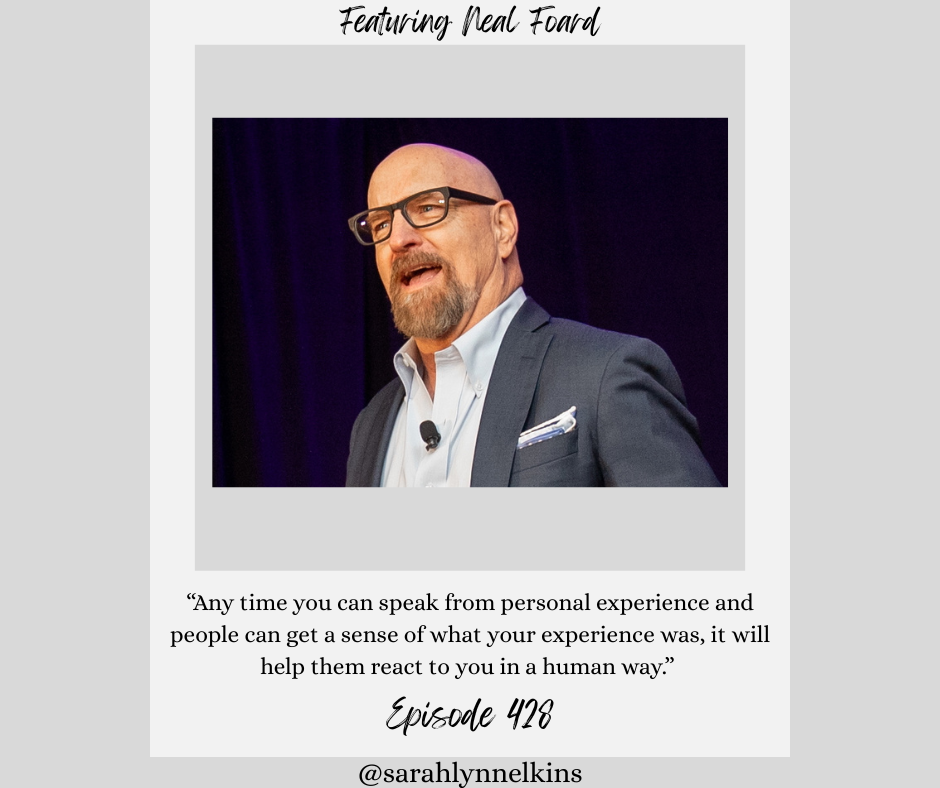
Neal Foard is a master storyteller and branding expert who spent 25 years shaping award-winning ad campaigns for global icons like Budweiser, Lexus, and Sony. For his international work on Toyota, he was listed among the top ten most decorated creative directors in the world. As Worldwide Director of Creative Learning for advertising giant Saatchi & Saatchi, Neal authored a program to teach professionals to sell their work more effectively. Today, he consults with Fortune 500 companies, universities, and governments on the art of persuasive messaging. A sought-after speaker with multiple appearances on the TEDx stage, Neal is known to millions for his viral videos celebrating everyday human kindness.
Be sure to check out Neal’s LinkedIn and Instagram! As well as Supercharge Your Leadership Skillset and The Restaurant of Mistaken Orders!
About Sarah
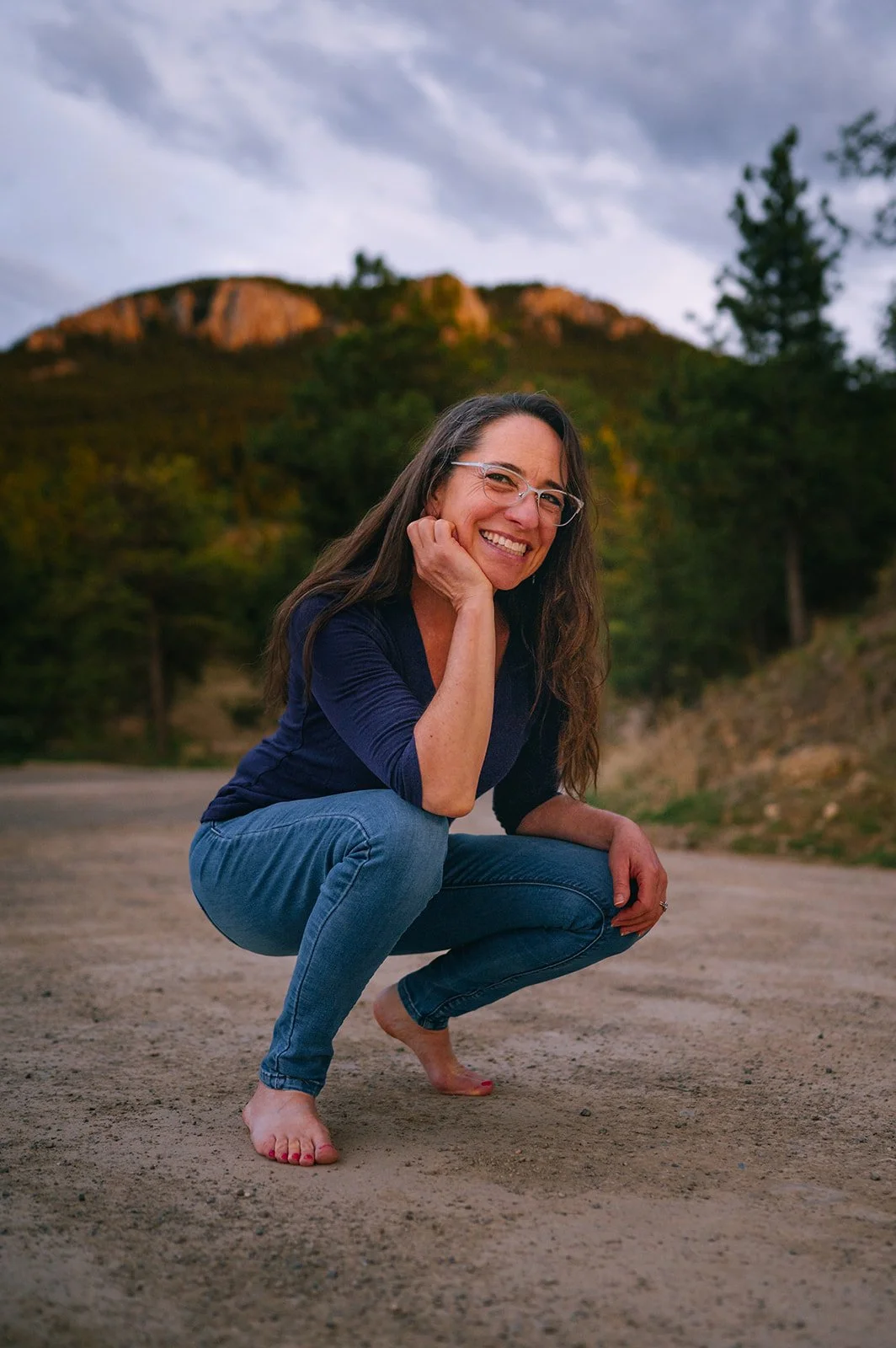
Sarah is a Montana based workplace communication trainer, TEDx speaker, DisruptHR speaker, public speaking coach, professional storyteller, musician, and podcast host. Her workshops and coaching packages with teams and their leaders are known to address and reduce miscommunication – the most common cause of tension and stress in the workplace. Using the team’s results from the StrengthsFinder assessment, she guides teams in learning to speak each other’s “language”, learning to value each other’s strengths and connecting with each other through enhanced self-reflection and effective listening.
Sarah’s nearly 20 years working in government agencies inspired her to complete her MBA and to achieve her StrengthsFinder certification to improve work environments for others, guiding teams toward increased satisfaction, productivity, and happiness.
Visit her website to purchase her book, Your Stories Don't Define You in paperback or audiobook.
427: Eat Your Feelings - A Cooking Show Demonstrating True Connection, Featuring Sam Nathews
427: Eat Your Feelings - A Cooking Show Demonstrating True Connection, Featuring Sam Nathews
Technically, this is a sequel to episode 423 featuring Cory Brown. Sam Nathews is the cohost for their YouTube cooking show, Eat Your Feelings.
Highlights from the show:
Sam initially wasn't sure about cohosting the show with Cory! He can be shy about performing or entertaining people he just met. It didn't take long to realize how grateful he was that Cory was persistant in starting the project and about Sam joining the show.
Sam shared how the show helped him process his grief over losing his mother, and how being able to talk openly about his emotions has been healing for him. He emphasized the importance of normalizing vulnerability, especially for men.
The Eat Your Feelings show's format of transitioning between lighthearted cooking and deeper emotional discussions resonates with Sam because he sees it as reflective of the ups and downs of real life.
Sam has been touched by the feedback from viewers (and the show's crew!) who say the show has helped them feel less alone in their own struggles and given them permission to be open about their feelings.
Sam hopes the show can continue to provide a model for men to be vulnerable and support each other, especially in smaller, rural communities where that may not come as naturally. He sees it as an important service the show provides.
Quotes:
"...especially when you're in the midst of raw, sudden, super traumatic grief, a lot of the feelings and thoughts that come up can make you feel like this is not normal."
"...we've all cried together. We've all laughed together, we've all burnt the skin off the roof of our mouth together, and it's really, it's just been a really fulfilling thing because of the relationships that we've gotten out of that and the personal growth I've seen ... with the crew on the show..."
"...the tagline of our show is 'everybody's got to eat and everybody's got sh*t to go through."
"...I think the feedback that I've gotten ...is 'thank you guys for talking about this stuff and just showing that it's okay for two guys to talk about hard things and what you're feeling and making it normal that it's okay to feel these things.'"
---
About Sam:
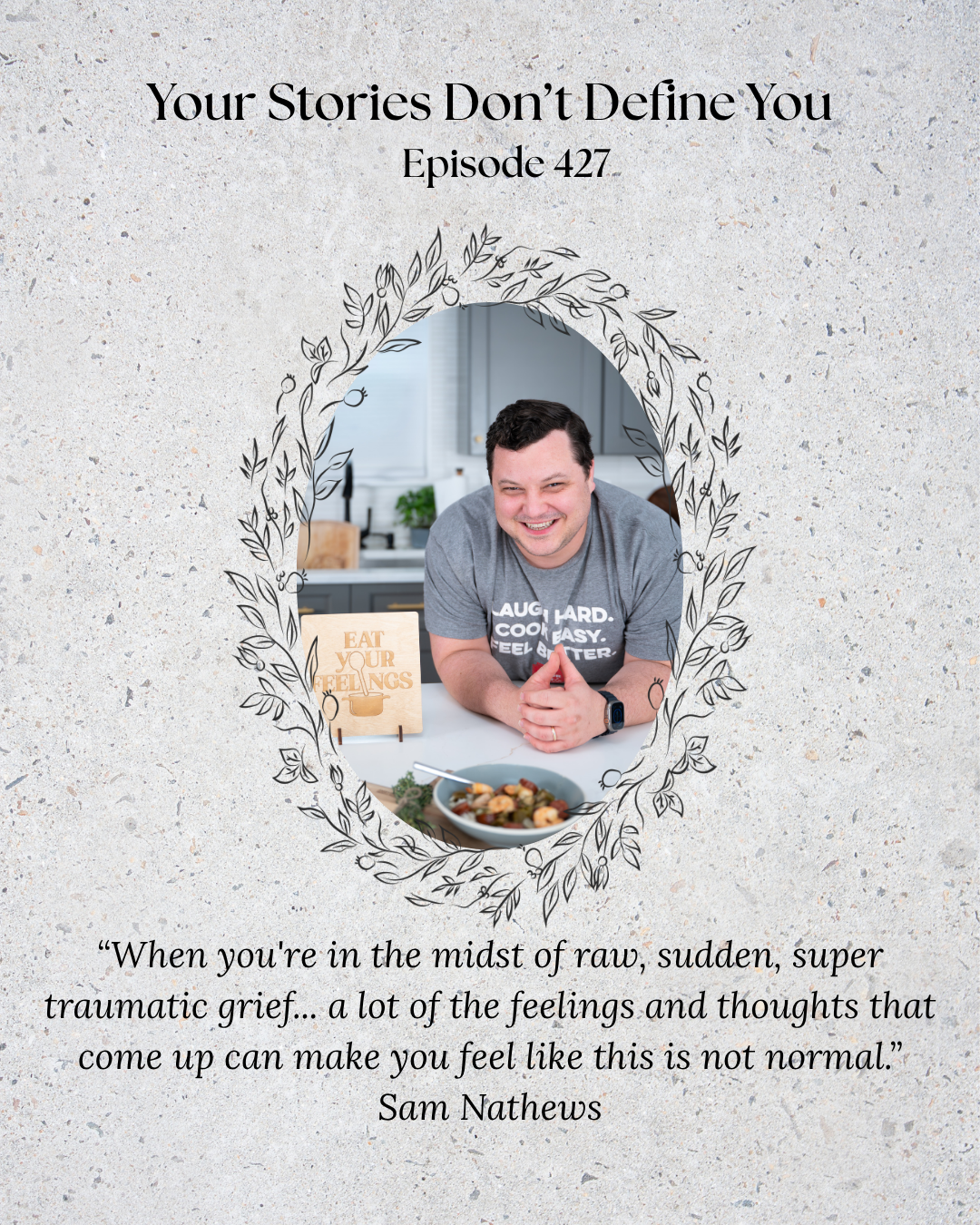
Sam Nathews is a brand strategist and storyteller, and the co-creator of Eat Your Feelings, a conversation series that blends food, humor, and emotional honesty. With a background in building brands and campaigns, Sam is interested in what happens when we drop polish and talk about the stuff we’re usually taught to hide. He lives in Virginia with his wife, son, and golden retriever and believes some of the best conversations happen in the kitchen.
Be sure to check out Sam's Facebook, Instagram, and LinkedIn. As well as Eat Your Feelings on Youtube and Instagram.
---
About Sarah
Sarah is a Montana based workplace communication trainer, TEDx speaker, DisruptHR speaker, public speaking coach, professional storyteller, musician, and podcast host. Her workshops and coaching packages with teams and their leaders are known to address and reduce miscommunication – the most common cause of tension and stress in the workplace. Using the team’s results from the StrengthsFinder assessment, she guides teams in learning to speak each other’s “language”, learning to value each other’s strengths and connecting with each other through enhanced self-reflection and effective listening.
Sarah’s nearly 20 years working in government agencies inspired her to complete her MBA and to achieve her StrengthsFinder certification to improve work environments for others, guiding teams toward increased satisfaction, productivity, and happiness.
Visit her website to purchase her book, Your Stories Don't Define You in paperback or audiobook.