


Episode 109: The Microwave Generation
It was somewhere in the late 1970s when my father came home with a microwave oven. Definitely one of the first on our block and huge, my father proudly showed it to my mom as the "next great invention."
Distraction May Not Be the Opposite of Focus - Why Boredom is a Good Thing
It was somewhere in the late 1970s when my father came home with a microwave oven. Definitely one of the first on our block and huge, my father proudly showed it to my mom as the "next great invention."
We had no idea what to do with it, though the booklet had recipes, and settings to defrost meats and soften butter. I remember using it regularly to heat up our frozen vegetables, peas, corn, green beans. I also remember experimenting with the defrost feature, and failing miserably, cooking to death a beautiful steak or a pound of ground beef to devastating effects -- precious commodities because money was tight. We made scrambled eggs a few times, but cleaning the crusty containers was a hassle so we didn't do that very often.
When my parents splurged on a baby sitter for a date night, I remember the excitement of getting to pick out special frozen dinners at the store, made especially for heating in the microwave. Full of salt and fat, they were such a luxury for me and my siblings. Ick. We would walk through the frozen food aisle, gazing longingly at the variety of Swanson's and Banquet options, knowing we had to avoid any in foil containers, which was most of them.
When we would find a few "Now in Microwaveable Containers!", we would excitedly pull them from the reach-in freezer and read the directions on the back of the package. While I was perfectly happy to pick one that read "hot and ready to eat in 18 minutes", my younger sister would compromise on her selection to get one that took less time, maybe 15 or 16 minutes.
A few years later, as the microwave generation started to take off and find its way through the frozen food aisle, I remember looking at the back of the package and returning it to the freezer if it said anything more than 12 minutes. Those 6 minutes meant hot food even faster! It was also a signal, now that I can see it from a few decades into the future, that our tolerance for waiting for anything had dropped dramatically, in a very short amount of time.

Solitaire is my go-to distraction.
We don't use the microwave for TV dinners or other prepared food in our household now, except for the occasional Hot Pocket snuck into the house by one of our boys, but we do use it (very carefully) to defrost meats & fish, to warm up leftovers and frozen peas, and to soften butter and boil water. When we upgraded our old microwave a couple of years ago, I was pleasantly surprised to find the technology had improved so much that I could now boil water in under 3 minutes.
Oh dear.
This is why I call my generation the microwave generation. Every time we improve our technology and make things move faster, we decrease our tolerance and patience for waiting. You do NOT want to see me at Sea World or LEGOLAND these days.
What about you? Have you noticed a decrease in your tolerance for waiting -- for everything? What do you attribute that to? Do you find it more and more difficult to settle in and wait for things?
I noticed a while ago that people, myself included, avoid boredom by picking up their devices, phone, laptop, tablet, when they’re waiting for anything. My go-to is whatever version of Solitair is handy, or maybe scrolling through Facebook, checking my email, etc.
Outside of Lewistown, Montana - 7+ hour road trip can lead to major boredom!
What we’re doing, though, is limiting our opportunities to be mindful, to exploring our thoughts and letting our minds wander and explore. Why is that important?
I recently read an article by Jamie Ducharme on the Time website about boredom and its relationship to creativity and innovation. The author suggested that one of the critical factors in our lack of creativity is the fact that we have so much distraction available to us, that we’re rarely bored.
“If you’re waiting for brilliance to strike, try getting bored first. That’s the takeaway of a study published recently in the journal Academy of Management Discoveries, which found that boredom can spark individual productivity and creativity.” (Link to the article.)
The author suggested that we allow ourselves to sit with boredom when we experience it, to choose not to pick up our phone while waiting at a railroad crossing – or while we’re on the toilet. He suggested that when we allow ourselves to be bored for a little while, our brains start to wake up again, to start that slow whirring of idea creation, to begin to take a detour from our regular patterns of thought and explore different perspectives – it gives our brains the space to be creative again.
Distraction isn’t necessarily the opposite of focus, and mindfulness isn’t actually about focus, specifically. Mindfulness is about allowing your thoughts to shift, while coming back periodically to the moment, to paying attention to your physical body, and changing your relationship with those thoughts that cross your mind.
My friend Shelley Brown talks about mindfulness in a truly applied, accessible way. She suggests that when we stop to consider where our thoughts come from, to take a few moments to think about the thought from the perspective of someone on the outside looking in, we can see the reality behind the thoughts, which may be totally based in fear, unrealistic in their assumptions, and damaging to our relationships with ourselves and others. Perhaps if we give ourselves opportunities to be bored, we can also take a little time between a frustrating experience or conversation – and how we choose to respond to it.
There is that moment, after all, between stimulus and response, where we can choose how we see that stimulus. When something happens, like waking up to six inches of snow and single digit temperatures in April, we can choose how we respond to it. I can choose to see it as negative, positive, or neutral. My first reaction is usually: “No! I’m so sick of winter!” But if I take a moment to consider how I want to respond, I realize that the weather isn’t good or bad – it just IS, and I have no control over it.
I think it’s important to allow ourselves a negative response sometimes, at least for a few minutes, but after taking some time to be mindful of our emotions, we do have a choice.
The next time you’re waiting in line for your Starbucks pumpkin spiced latte, waiting for the download of the latest operating system update, or waiting for the water to boil in the microwave to make tea, try not to open the game or email or social media app on your phone. Instead, let your mind wander. Let thoughts come and go, like clouds shifting overhead. Maybe, just maybe, you’ll have an “ah ha” moment, a brilliant idea, a realization about how to solve a major problem you’ve been grappling with.
Use your short attention span to practice mindfulness – rather than finding distraction while you’re waiting, try being bored for a few minutes. Yes, really. It may be just the thing to help you find what you’re looking for.
Episode 108: Real Change Requires the Right "Gear", Creating the Right Environment, and Celebrating Small Wins
I’ve been thinking a lot about motivation, habit, and successful, sustainable changes in both. On The Hidden Brain, an NPR radio show, I heard a researcher talking about the fact that successfully developing strong habits like everyday workouts and healthy eating isn’t a result of better self-control or motivation, it comes from developing the habits themselves.
It’s Not Self-Control that Makes Change Stick, It’s Developing Habits

Quarry Trail, Mt. Helena, Montana - January 2020
I’ve been thinking a lot about motivation, habit, and successful, sustainable changes in both. On The Hidden Brain, an NPR radio show, I heard a researcher talking about the fact that successfully developing strong habits like everyday workouts and healthy eating isn’t a result of better self-control or motivation, it comes from developing the habits themselves.
As a person who developed a habit of nearly-daily hiking year-round on the mountain behind near my home, I started to wonder how it happened. I’ve never considered myself particularly outdoorsy. I was born in Washington DC, a city not known for healthy habits and a natural environment, and lived in LA for my early formative years. We moved to Colorado Springs when I was in junior high school, and I started to explore the Garden of the Gods, a beautiful natural park with HUGE red rocks when I got a car and driver’s license.
On any warm afternoon after school my junior and senior years, particularly after stressful days, I could be found bouldering on those rocks by myself, barefoot.
And as an adult, when I moved from Washington DC to Montana, I was determined to spend more time outside with our infant son. We moved in April, and all summer long the baby would be in a backpack on my back, hiking in the hills nearby, or fly fishing the streams just over the mountain from our little town. – But I still didn’t consider myself “outdoorsy”, probably because the women I connected with over the years were far MORE outdoorsy and hard core than I was. Those women would backpack into wilderness areas by themselves or in small groups for a few days at a time, carrying 30-40 pound packs and cooking on a campfire. And they were outdoorsy year-round, where I considered myself a “fair-weather” hiker and angler, only exploring the trails and rivers when I didn’t have to bundle up and wear warm gloves.
That version of hiking worked for me until recently. You see, we adopted a big chocolate lab mix a couple of years ago, and he is very different from our previous dogs: He won’t “do his thing” on a tether or leash in our yard or driveway – he requires a walk of a minimum of about 4 blocks.
We adopted him in March, and the weather had started to improve by then, so taking him on daily walks up the mountain nearby wasn’t too much of a chore. As a matter of fact, it became a welcome part of the mid-morning after I left my full time job to be self-employed that July. I found myself returning to my home office with more energy and inspiration, even if I left the house feeling obligated for the walk.
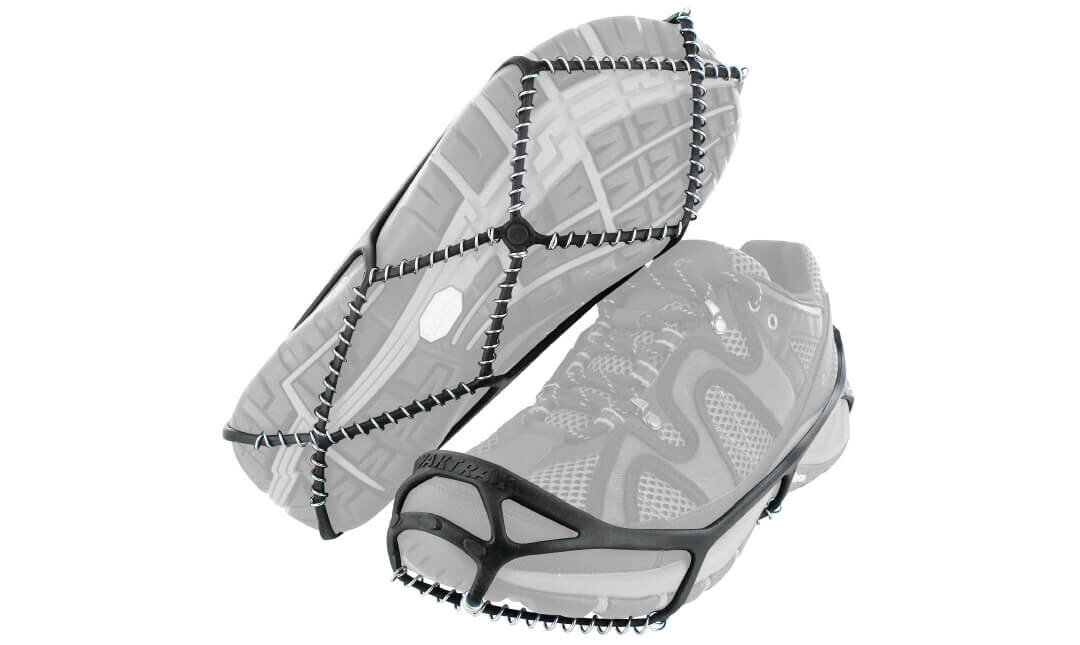
Yak Tracks
And then it got cold. REALLY COLD. And icy. And sometimes blowing snow. And the dog STILL required his long, daily walks. I don’t enjoy our walks in the neighborhood on the sidewalks nearly as much as I enjoy getting onto the mountain only two blocks away, so I purchased Yak Tracks, rubber & wire attachments for my shoes that would help with traction on ice and packed snow. In early winter those worked pretty well, but when the ice on the trails started to get thicker and more slippery, the lightweight Tracks just weren’t effective enough for me to feel safe walking up the mountain.
I found myself avoiding my walks, asking one of our boys or my husband to take the dog to the park nearby to throw the frisbee instead – which was an alternative that worked to get the dog to do his thing.
It took me a few weeks of those intermittent walks to realize I missed doing it more regularly. I’d dive into my work, lose track of time through distractions, and suddenly it was the afternoon and I felt all used up. Little motivation and almost no inspiration. I needed that time in nature to recharge and get out of my head.

As you can imagine, we have a great selection of outdoors stores here in Montana, and two are within walking distance of our house, so I walked into one that I love, and walked out with heavy-duty ice grippers – spikes that attach to my hiking boots that are super-effective at improving traction on ice. (If you visit my blog, you’ll be treated to pictures and even a video of how these things work.)
They sat in their box for months because I was intimidated by them. I didn’t even open the box until the beginning of the following winter. I’d put on the less effective ones for periodic walks, and was able to get back into my routine soon after – because it was spring and I didn’t have to worry about slipping anymore.
Winter arrived early last year, our first significant snowfall was in late September, which is highly unusual where I live. It warmed up a bit, snow melted, and then WHAM – we were hit with another significant snowfall. Those storms combined to create seriously slippery conditions on my mountain trails.

Summit, Mt. Helena, Montana - January 2020
I was determined to try out the heavy-duty spikes, took them out of the box, and put them on my hiking boots. With my trusty dog, Toblerone beside me on his leash, we walked up the two blocks of the alley to the trail and started our ascent.
“What the heck was I afraid of?! These are AWESOME!”
When we got back to the house I hung those spikes up on a hook next to the back door where I would see them every morning as I made coffee. And every day I’d smile, knowing I had the gear to make my hike more pleasant – even under the worst conditions. It could be blowing snow and in single digit temperatures and I would bundle up in multiple layers, a warm hat and gloves, and my awesome spikes.
I’d get to the top of a hill, and even to the summit a couple of times each week, look around at the fantastic views, smile, and feel like a total badass. This was a feeling worth repeating. Often.
Here’s what I’ve realized about developing sustainable, emotional and physical habits:
You have to have the right gear,
you have to create the right environment, and
you have to take every opportunity to celebrate small wins.

My hiking “gear” to keep me accountable - Toblerone “Toby”
By “gear”, I’m not just talking about physical gear like those spikes I described. I mean you have to surround yourself with the things and people you need to be successful. If you want to eat a more healthy diet, make sure you have the food in your home, and tools you need to make habits stick. If you want to get physically more fit, make sure you invest in the gear you need, don’t go cheap on this – comfortable workout clothes, good shoes, easy to use equipment or a great gym to do that. AND for your “people” gear, make sure you’re surrounding yourself with other people who want to be healthy, people who can be your accountability partners, supporters, and encouragers.
When I say create the right environment I mean this: If you buy a fancy Pelaton and put it in your basement or an unused guestroom – out of sight – you’re unlikely to create a habit around that gear. I had to put those spikes in a place I’d see them every day in order to inspire me to put them on. If you sit in an office that doesn’t inspire you, you’re not in an environment to create and sustain good, productive work habits. If you surround yourself with people who do not inspire you, who create an environment that’s tense and bitter, you’re highly unlikely to make sustainable change.
And last, when you reach a high point – lose 5 pounds, make the choice NOT to buy the potato chips when you’re at the grocery store, get to the top of the hill, or the summit – no matter how many times each week you DO THOSE THINGS, celebrate yourself. Take a moment to congratulate yourself on your good choice. Take that moment to be grateful for yourself and your hard work to make that memory strong and sticky, to keep you company for the next challenge.
Join me and an extraordinary group of professionals at the 2020, 4th annual No Longer Virtual conference on March 12 & 13th in Chicago. When I say “find your tribe”, this group is what I’m talking about. The common characteristics of people who attend are curiosity, compassion, and an entrepreneurial mindset.

The agenda is full of relevant, engaging sessions, and you’ll be surrounded by some of the most wicked-smart, generous, creative, supportive professionals around. Limited to 50 participants, you’ll have the opportunity to truly connect and build strong relationships. And the best part? You’ll avoid the “after-conference hangover” by remaining in close contact with your network after the event.
Here’s a peek at the agenda:
• Supercharge your LinkedIn experience, hosted by Shelly Elsliger & Zach Messler
• Turning ideas into action by clarifying your why, prioritizing, action planning & increasing accountability, hosted by Kris Macc & Craig Thomason
• Non-sales workshop to engage your audience and grow your revenue, hosted by Hannah Bratterud and Arlene Mendoza
• Achieving win-win relationships to improve your outcomes, with a field trip to the Art Institute of Chicago, hosted by Chris Spurvey & Megan Miller
• Nurturing your emotional health to improve outcomes, hosted by Renee Smith & Kevin Strauss
DISCOUNT CODE:
Since early registration ended, here’s a $100 discount offer from the full price NLVFRIEND, and if you make arrangements with me to register two or more guests, I’ll offer a discount code for $125 off each of your registrations.
There are 13 spots left as of January 12, 2020!
I hope to see you at #nlvchicago2020, investing in yourself, taking the steps necessary to take action toward your dreams, and building and nurturing your network that can help you get there.
Episode 107: Strategies to Take Action to Avoid Future Regrets
4 Simple Strategies to Take Action
1.) Find Your Tribe – surround yourself with people who support and encourage you. Find a group of friends and peers that are doing things you want to be doing, people who will give you the hard truth about your dream and offer to help find solutions to obstacles. Make sure these are people you trust, and that you actually listen to their suggestions! You are unlikely to find support in people who have never done what you want to do, or who live with a low-risk, low-reward mentality, people who make fear-based decisions.
If You Don’t Do SOMETHING, Nothing Will Change
My dream is to create a sewing business around a design I created.
That’s terrific, Nancy, tell me about that!
I’ve always loved to sew, and I’ve created a pattern that can be easily replicated and scaled to different sizes and materials. It’s such a cool design, and I have never seen anything quite like it. It’s functional, and every person I’ve given one to as a gift, or who has seen it has loved it and wanted more.
Very cool! What are doing now to make this dream happen?
What do you mean?
I mean, in the evenings, on weekends, and when you can get breaks during your workday, what are you DOING?
Oh. Well by the time I get home from work, I’m emotionally and intellectually spent, so I don’t have the energy or even the creativity to sew. And with my mom’s health problems, and helping out with my grandkids, I just don’t have time to work on my own things.
Hmmm. Do you have space set up so that if and when you have a little time, you can jump right into creative mode and layout your next project - or start to sew?
No. My sewing room is filled with boxes and stuff from when I moved last year.
Our conversation continued along those lines, an excuse for every suggestion I made:
Maybe start by setting aside 15 minutes when you get home from work to put your sewing room in order?
Schedule 15 minutes 3x each week to organize your fabrics and start planning projects?
Think about setting a small goal, like sewing 3 of your design to take pictures and start a portfolio?
She had a reason she couldn’t do those things – for every suggestion.
So I asked her:
Will we have this same conversation a year from now, 5 years from now? Will you regret not doing something to change this?
If you don’t take action right now – today – you will not see any changes in your life. Guaranteed. You’re unhappy, but unwilling to change anything, so you will continue to be unhappy and dissatisfied. How do you think that impacts your relationship with your kids, grandkids, and coworkers? Do you think they don’t know you’re unhappy, do you think you’re hiding it?
That’s when she walked away from me - I felt like I had failed my friend. She walked away with her shoulders slumped, deflated. My heart broke, thinking I had gone too far, hurt her feelings and maybe made things worse.
I gave it a few hours, and then sent her a text message saying: “I hope I didn’t go too far. It just makes me sad to see you so unhappy because you are such a generous and compassionate person. You deserve happiness.”
She didn’t respond to my message. When we saw each other over the next few months she’d smile at me and we would exchange small talk, but I could tell she was uncomfortable. A few months later I gave my notice, said my goodbyes, and moved on to another career path, following a dream.
A year after that I was in the building again and ran into my friend. Her face absolutely glowed as she bee-lined toward me and gave me a huge hug. I hadn’t seen her like that – ever – and asked what was going on.
I have been thinking about calling you, Sarah, but I couldn’t find the right time, and I felt weird about it, even though I wanted to tell you that I’ve been sewing again and have sold a few of my designs! My ideas are flowing and I’m feeling creative again, it feels SO GOOD.
I asked her: “What changed? What was the inspiration that motivated you to do it?”
Remember when you asked me if I would regret not doing something about this dream a year from now? You asked if we were going to continue to have this same conversation year after year? It took me a few weeks to recover from that conversation. I felt like a loser. But then I remembered one of your suggestions, to schedule small chunks of time to make a physical, comfortable space for my sewing, to organize my sewing room to make it more inviting. And that’s what I did. It took MONTHS. But then, about a week after I finished, I walked into that room and was absolutely inspired to start a project.
I planned to spend 15 minutes on it, but walked out 1.5 hours later with a completed project and felt amazing. It was like a veil had lifted and my creativity returned.
Wow! I’m so happy to hear that! Has anything changed at work?
Yes! That’s the thing, I am finding my job a little more satisfying. Nothing here has changed. I still deal with the obnoxious attitude from you-know-who, and continue to have more work dumped on me than I can handle, but I look at it differently now that I’m making time for myself and having fun exploring my creative side again.
We hugged goodbye, promised to keep in touch, and I left the building as if I was walking on air.
We can talk about things we want to do, dreams we have, ideas we want to initiate and implement, but until we take a step that’s all those things are – dreams and ideas.
The only way we see change in our lives is if we initiate it or something happens to us. I would much rather be the one to initiate it most of the time, how about you?
4 Simple Strategies to Take Action
1.) Find Your Tribe – surround yourself with people who support and encourage you. Find a group of friends and peers that are doing things you want to be doing, people who will give you the hard truth about your dream and offer to help find solutions to obstacles. Make sure these are people you trust, and that you actually listen to their suggestions! You are unlikely to find support in people who have never done what you want to do, or who live with a low-risk, low-reward mentality, people who make fear-based decisions.
2.) Schedule Baby Steps – use the calendar on your phone or desk/refrigerator calendar to schedule short appointments for yourself, maybe 15 minute intervals to work on your dream in some way. If you spend 15 minutes every day being outcome-oriented toward your goal, you will see major changes in all aspects of your life. What do I mean by outcome-oriented? Think about something you can complete in that time, like organizing a pile of papers on your desk, scheduling calls or coffee dates with people who can help you, and who you feel like you can help (accountability partners, for instance), or writing up a blog post.
3.) Say Yes – when opportunities present themselves, show up. Step out of your comfort zone.
4.) Change Your Environment – Periodically changing your environment keeps your brain limber, more aware, and creative. That means weekend road trips, walks, taking different routes to work, time in nature, traveling, and exploring alternative hobbies.
If you’re tired of the same conversation, year after year, and realize you will most definitely regret NOT doing something, NOT taking action toward a dream or goal, do something about it TODAY.
Join me and an extraordinary group of professionals at the 2020, 4th annual No Longer Virtual conference on March 12 & 13th in Chicago. When I say “find your tribe”, this group is what I’m talking about. The common characteristics of people who attend are curiosity, compassion, and an entrepreneurial mindset.
The agenda is full of relevant, engaging sessions, and you’ll be surrounded by some of the most wicked-smart, generous, creative, supportive professionals around. Limited to 50 participants, you’ll have the opportunity to truly connect and build strong relationships. And the best part? You’ll avoid the “after-conference hangover” by remaining in close contact with your network after the event.
Here’s a peek at the agenda:
Supercharge your LinkedIn experience, hosted by Shelly Elsliger & Zach Messler
Turning ideas into action by clarifying your why, prioritizing, action planning & increasing accountability, hosted by Kris Macc & Craig Thomason
Non-sales workshop to engage your audience and grow your revenue, hosted by Hannah Bratterud and Arlene Mendoza
Achieving win-win relationships to improve your outcomes, with a field trip to the Art Institute of Chicago, hosted by Chris Spurvey & Megan Miller
Nurturing your emotional health to improve outcomes, hosted by Renee Smith & Kevin Strauss
DISCOUNT CODE:
Since early registration ended, here’s a $100 discount offer from the full price NLVFRIEND, and if you make arrangements with me to register two or more guests, I’ll offer a discount code for $125 off each of your registrations.
There are 13 spots left as of January 12, 2020!
I hope to see you at #nlvchicago2020, investing in yourself, taking the steps necessary to take action toward your dreams, and building and nurturing your network that can help you get there.
106: Resilience and Persistence are Two Different Things - We Need Both to Thrive
Russ Johns’ life changed dramatically after falling three stories to shatter his wrist and break his arm. He was a professional musician - a drummer - but that was no longer an option after two years of surgeries and physical therapy. He was lucky to have any use of his arm… he was lucky to be alive.
Stories of Loss and Grief, Coupled with Gratitude and Inspiration
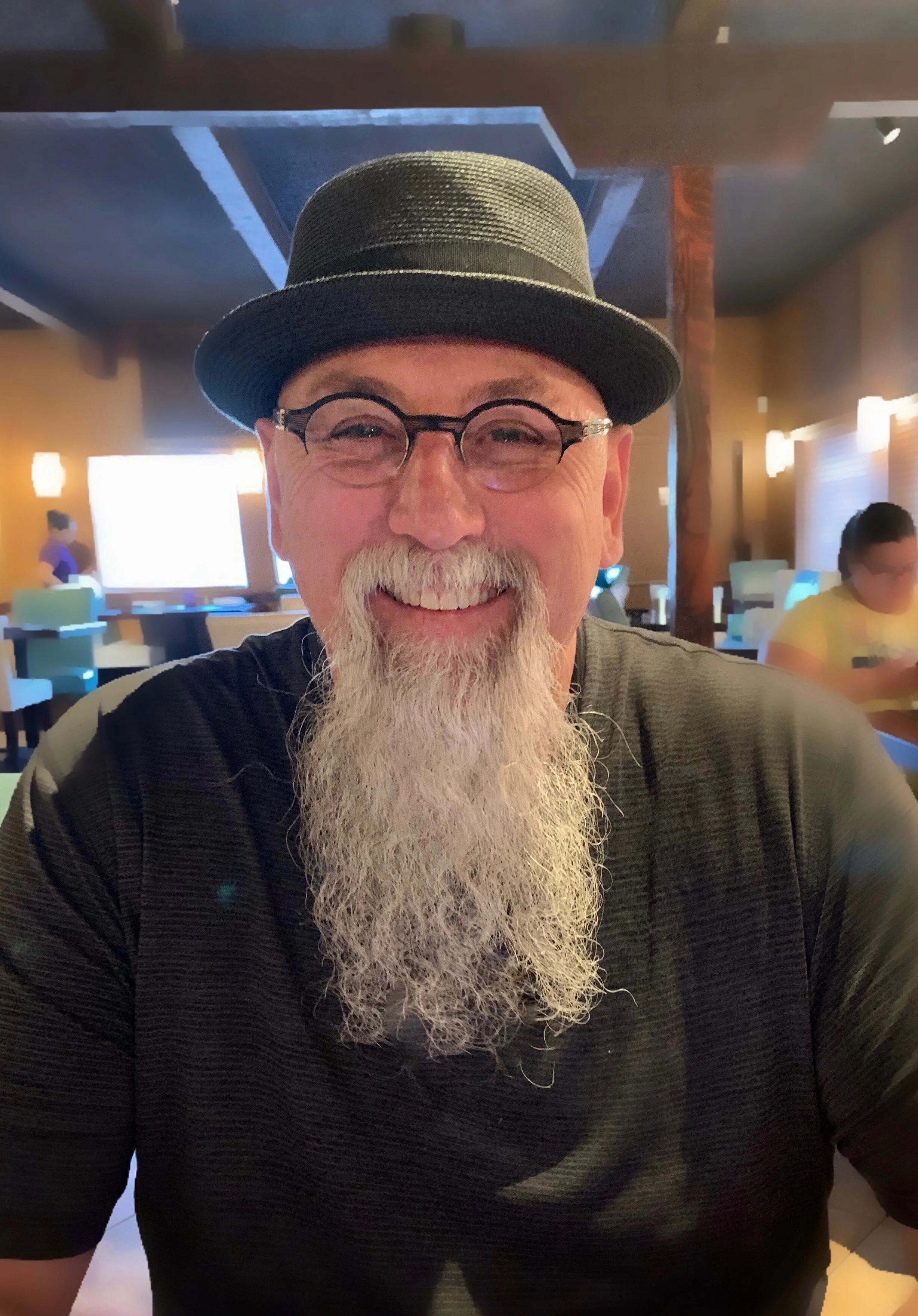
Russ Johns’ life changed dramatically after falling three stories to shatter his wrist and break his arm. He was a professional musician - a drummer - but that was no longer an option after two years of surgeries and physical therapy. He was lucky to have any use of his arm… he was lucky to be alive.
There’s just something about Russ’s energy that caught my attention, and I realized during our call that it is his curiosity and openness to listening and sharing stories, coupled with his sense of gratitude and wonder at life and living.
He shared some very personal history with me during our conversation, and I was especially grateful for the grace with which he shared the story about his son’s suicide, a story he shared on stage at a The Moth Story Hour event.
Russ demonstrates the title of this podcast so beautifully, I hope you enjoy listening as much as I enjoyed recording this episode.
The National Suicide Prevention Lifeline 1-800-273-TALK (8255)
A free, 24/7 confidential service that can provide people in suicidal crisis or emotional distress, or those around them, with support, information, and local resources.
Crisis Text Line
741-741
This free text-message service provides 24/7 support to those in crisis. Text 741-741 to connect with a trained crisis counselor right away.
Episode 105: What Works in Distributed Teams: Stories of Growth & Learning
John O’Duinn, pronounced John Oh.Dinn, is an engineer, and he sees almost everything in his life as a system. That means that with every problem he experiences or obstacle he needs to address, he sees it not as a stand-alone issue, but as part of something bigger. He understands how to dig into a problem by seeing it from a larger perspective, that a solution must address the overall health of a system, not just one small part of it.
Our Human Workplace Requires Clear Communication Systems

John O’Duinn, author of Distributed Teams
John O’Duinn (pronounced Oh.Dinn) is an engineer, and he sees everything in life as a system. That means that with every problem he experiences or obstacle he needs to address, he sees it not as a stand-alone issue, but as part of something bigger. He understands how to dig into a problem by seeing it from a larger perspective, that a solution must address the overall health of a system, not just one small part of it.
This unique way of seeing things makes him really good at problem-solving, and made him exactly the right person to write about remote workers, what makes remote work appealing and beneficial, and how to make remote working effective. His book, Distributed Teams, dives deeply into the benefits of remote teams, and then gives step-by-step guidelines to make remote working a successful endeavor.
There is so much to consider when hiring people, building a business, and setting up for an intentional culture, and one of those decisions must be whether to require people to work in a specific physical office location. It’s not easy to create a culture of communication in terms of clear processes and rules, but it’s critical as a company grows beyond 4-6 people, whether you’re sharing an office or whether your team is distributed.
My biggest take-away from the book is the dramatic improvement in the diversity of workplaces when remote working is an option and well-planned and executed. There were so many interesting parts to this conversation with John, and I came away from it with a huge appreciation for that aspect of his book and our discussion. There is plenty of evidence to support the value of diverse workplaces in terms of innovation, productivity, problem-solving and the resulting bottom-line improvement. This conversation, plus John’s book, make an excellent case for increasing the opportunities for people to work remotely, on distributed teams.
He referred to a study funded by the World Bank on urban mobility, which took place in Buenos Aires. Here’s the piece that we discussed:
If women are indeed constrained to smaller commutes, it also means they have access to fewer employment opportunities – with inevitable consequences on their wage rates and related labor market outcomes.
To read the full article, click here.
Connect with John on LinkedIn, and I highly recommend you check out his book, Distributed Teams, whether you’re a remote worker, work from home, or simply want to improve your team’s communication and processes. John referred to a book by Michael Lopp, Managing Humans, which can be found here.
Episode 104: Truly Effective Leadership Begins with Self-Reflection
Rajkumari Neogy loved her job, but couldn’t shake the feeling of being excluded. As a leader in the organization, it was difficult to pinpoint where that feeling of dissatisfaction and exclusion was coming from because she had a great boss and an engaged team, but something just wasn’t right.
Leadership Development Requires Stories of Self-Reflection
Rajkumari Neogy loved her job, but couldn’t shake the feeling of being excluded. As a leader in the organization, it was difficult to pinpoint where that feeling of dissatisfaction and exclusion was coming from because she had a great boss and an engaged team, but something just wasn’t right.
So many of us feel disconnected from the communities we’re expected to feel close to, the community at work, at church or synagogue, even with our own families. Many of us feel like we’re out here on our own, like we simply don’t belong to any one community, like we just don’t fit in anywhere.
When Rajkumari left her job, her ultimate goal was to learn more about why those feelings were so persistent, to study the neurobiology behind those feelings of disconnection and exclusion, even when there was no evidence to support those feelings.
During our conversation about resilience and the impact of genetics on trauma, Rajkumari mentioned two scientists well-regarded in the field of epigenetics, Rachel Yehuda and Moshe Szyf.
From an interview with Dr. Yehuda: “Rachel Yehuda is a pioneer in understanding how the effects of stress and trauma can transmit biologically, beyond cataclysmic events, to the next generation.”(1)
Also mentioned was a book by Sarah Peyton, Your Resonant Self, which you can find here.
Our conversation spanned from that feeling of exclusion and where it comes from, to the strategies we can use to address trauma in our bodies and minds. Rajkumari is committed to self-reflection to continue to grow and improve as a coach, to and bring others along for that journey.
(1) https://onbeing.org/programs/rachel-yehuda-how-trauma-and-resilience-cross-generations-nov2017/
Episode 103: Good Career Advice Might Not Be What You Think
When Eddie Wilders graduated from high school, all he knew was that he wanted to go to college. He didn’t know which college, or what programs he would be interested in, but he knew he wanted to be the first in his family to get a degree and do something different.
Career Guidance Stories, Reviews, and Regrets
When Eddie Wilders graduated from high school, all he knew was that he wanted to go to college. He didn’t know which college, or what programs he would be interested in, but he knew he wanted to be the first in his family to get a degree and do something different.
Eddie’s guidance counselor in high school was anything but, friendly and open, there for support, but did little to actually guide and help her students with important decisions.
He didn’t have any more success with that kind of guidance in college. When he was about to graduate with his Communications degree, rather than giving him some concrete ideas for jobs to apply for, his counselor said: “You can do just about anything with that degree!” And left it at that.
Eddie and I met in the comments section of a post on LinkedIn, asking about career advice. I responded to his comment on the post that I received plenty of decent career advice, but looking back now, none of it applied to me. All the advice I received was general, not specific to my tendency toward passionately learning something for a while, and then getting bored, self-sabotaging, and then switching jobs.
His questions and concerns were geared toward how he could guide his young daughters, since he didn’t receive useful guidance, and I immediately reached out to ask him about his experience and to record it for this episode.
Our conversation spanned from dressing appropriately for the job you want and for the environment you find yourself standing, to taking a trial and error approach in career decisions from early on. Eddie didn’t feel like he had the luxury of the trial and error system because all he knew was the experiences of his parents: Find a good job, get really good at it, and stick with it because it’s a good job and it pays.
Looking back now, he knows he wants his daughters to feel confident in trying different professional environments until they find one that feels right.
It’s always a pleasure to speak with someone with an important message, and Eddie shares one I’m sure most people can relate to, getting stuck in something because of the expectations and experiences of others.
Connect with Eddie on LinkedIn, and let him know what resonated with you about this episode!