446 Pivot Point: There’s a Time and a Place for an Epic Story
Summertime is hard on podcasters!
We lose a lot of our listeners this time of year and it can be difficult to be motivated to keep putting out quality content when we know people aren’t as likely to listen.
This summer I’ve been focused on brief, less than 20-minute episodes that keep a person’s attention while still offering insights and entertainment.
What you’ve been hearing, and will continue to hear in each episode, is a brief story of a pivotal moment in a person’s life, and then a thread pulled to generate insights about it. I have two goals for you:
One – to uncover your related story for you to add to your collection to practice and have ready when the opportunity presents itself.
And two – to demonstrate storytelling in a practical, approachable way. Acknowledging that small, meaningful moments make great stories.
You've probably heard me say: "Your stories don't have to be epic. They have to be meaningful." But there is a time and a place for an epic story. They can be life-defining, entertaining, and a great way to gather people together.
And it's the days, months, and years of related stories generated from the experience that offer far deeper insights and lessons than the experience itself.
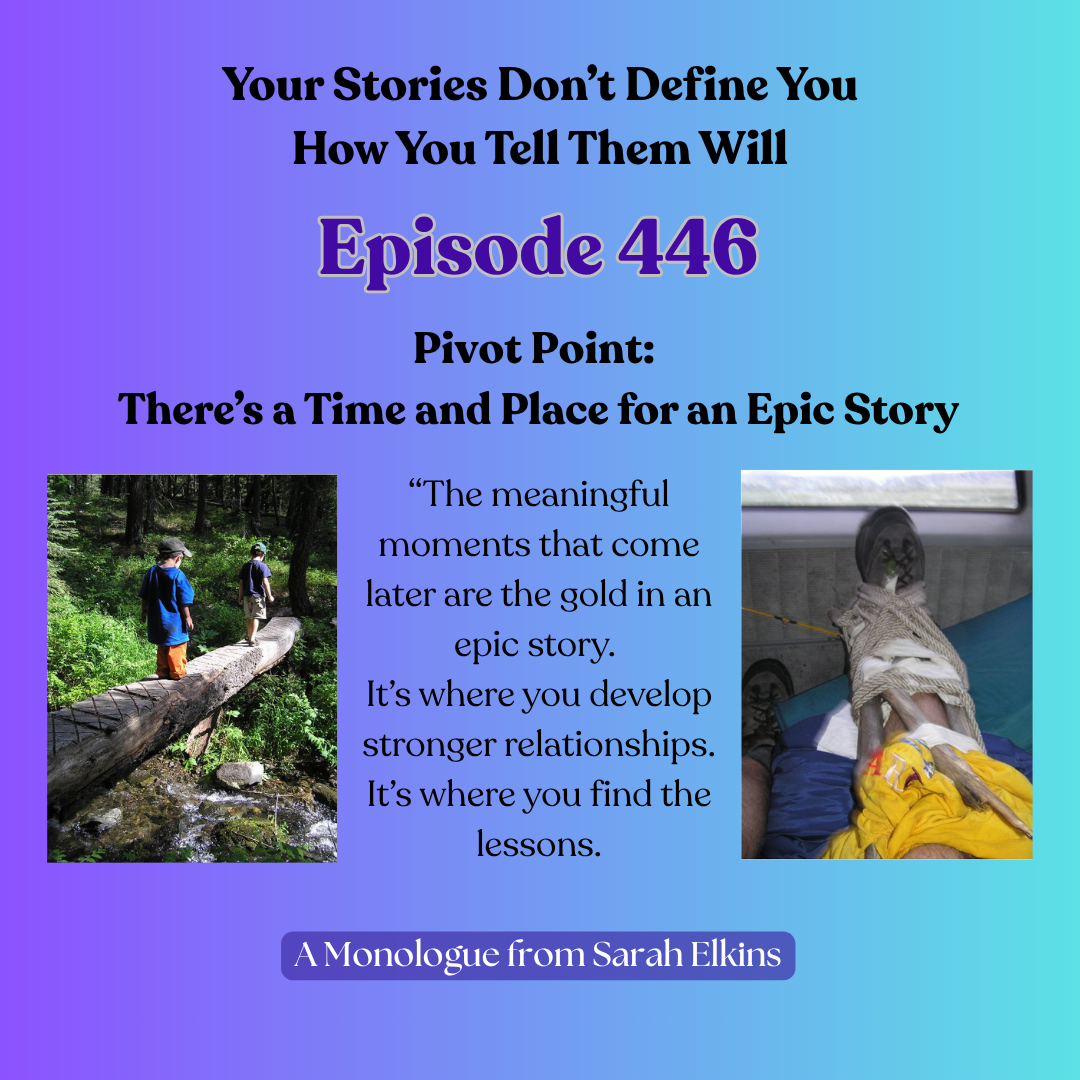
In today’s episode you’ll hear one of my epic stories, when, 20+ years ago, my husband broke his leg about 2 miles from a trailhead in a remote wilderness area. I had to find a way to get my husband off the side of a mountain, along with our 4 and 6-year-old boys and a puppy.
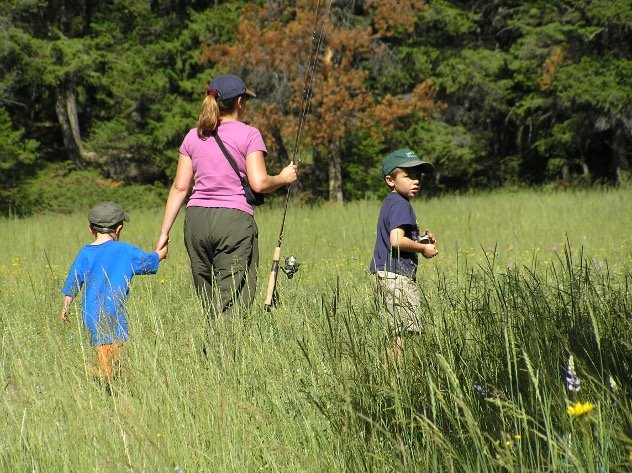
Hike to Crow Creek Lake 2005
Over the next few weeks, I'll share some of the meaningful moments that were generated by the epic event. These are the gold of the story - the lessons learned, the deep friendships, and the self-realizations that happen when you're truly put to the test. This is where we learn grit, resilience, and the importance of being able to receive.
After you’ve heard my story, listeners, it’ll be your turn:
Were you reminded of an epic event in your life?
Can you recall the related stories from that event, the meaningful moments generated by it?
What lessons can you take away? Can you share those stories without sharing details of the epic event itself?
As always, thanks for listening to Your Stories Don’t Define You, How You Tell Them Will. Are you curious to learn about working with me? Visit my website to schedule time to chat and sign up for periodic updates about my work, and connect with me on Instagram, LinkedIn, and Facebook for content about Strengthsfinder, storytelling, and public speaking.
After more than 430 episodes of this podcast, I was recently inspired to change the format of the show.
The new format for my show aligns with what I’m learning about narrative identity (how the stories we tell about ourselves internally and externally influence our identity) and demonstrates what I’ve been teaching for years: Sharing a story to reveal who you are and what matters to you.
My hope is that future episodes will offer more clarity about great storytelling and how to find and explore pivotal moments to demonstrate who we are.
About Sarah:
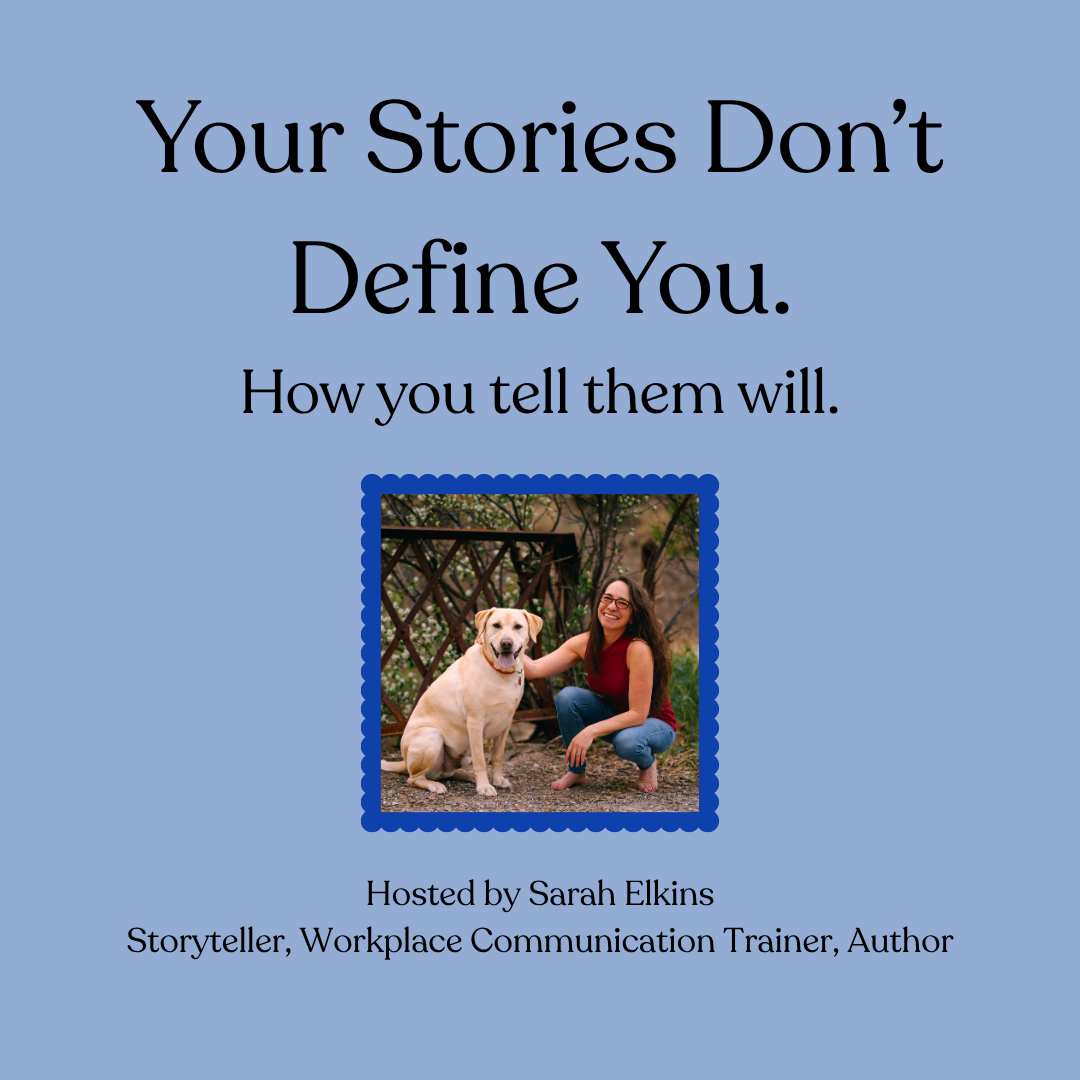
Sarah is a Montana based workplace communication trainer, TEDx speaker, DisruptHR speaker, public speaking coach, professional storyteller, musician, and podcast host. Her workshops and coaching packages with teams and their leaders are known to address and reduce miscommunication – the most common cause of tension and stress in the workplace. Using the team’s results from the StrengthsFinder assessment, she guides teams in learning to speak each other’s “language”, learning to value each other’s strengths and connecting with each other through enhanced self-reflection and effective listening.
Sarah’s nearly 20 years working in government agencies inspired her to complete her MBA and to achieve her StrengthsFinder certification to improve work environments for others, guiding teams toward increased satisfaction, productivity, and happiness.
Visit her website to purchase her book, Your Stories Don't Define You in paperback or audiobook.