Your Stories Don’t Define You
How You Tell Them Will
A podcast to unlock your stories and uncover meaningful insights.
430: Every Emotion Comes from Needs, Met and Unmet - featuring Morgane Borzée
"... we talk about feelings, but... At the end, every feeling has an underlying need. If it's a pleasant feeling, it's a met need. If it's an unpleasant feeling, it's an unmet need. And needs drive our behavior."
This conversation with Morgane Borzée filled in so many gaps in my understanding of what I've heard referred to as trauma-informed coaching, teaching, and counseling.
I thought I understood the connection between emotional intelligence and behavior, but I was missing a key component:
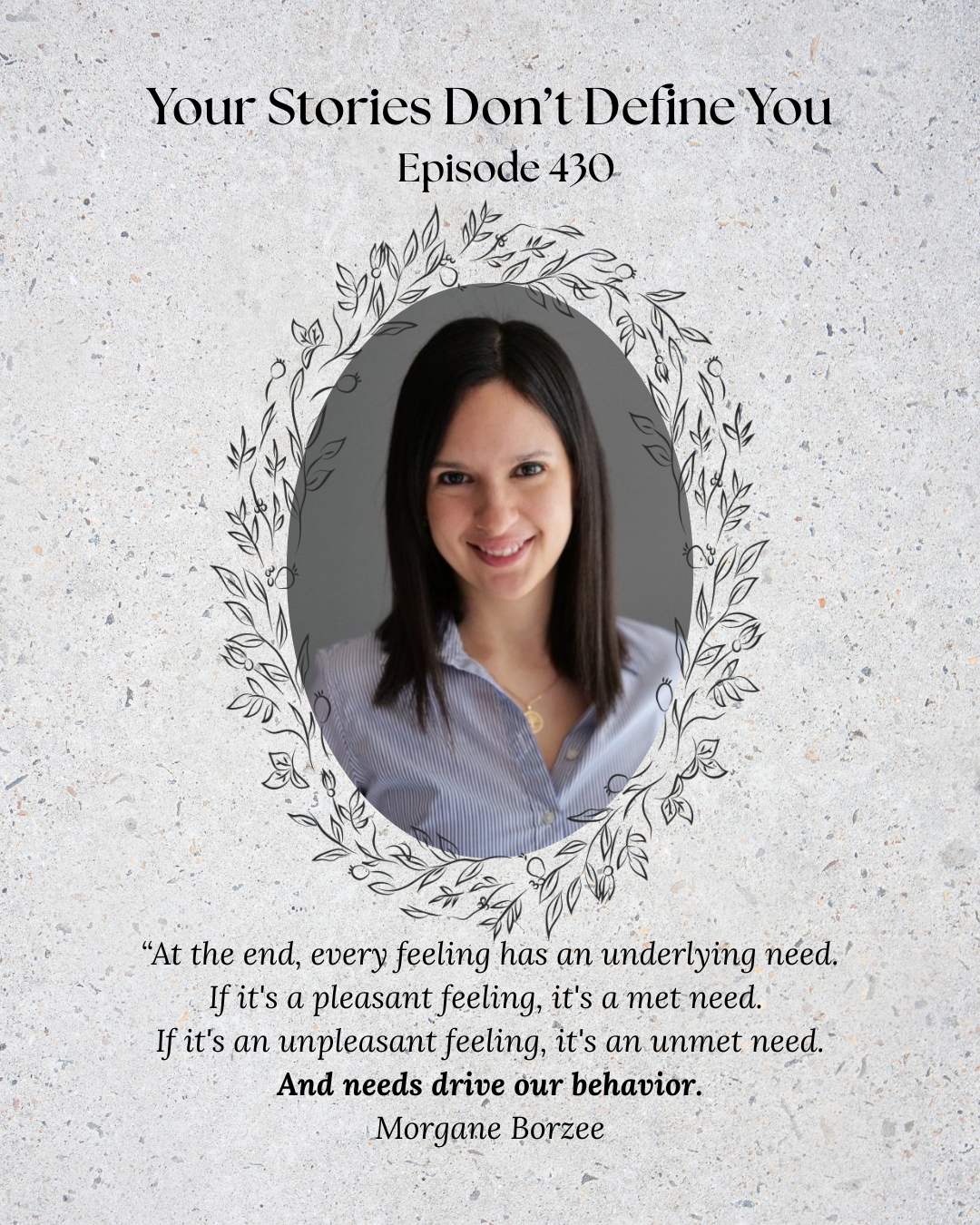
"... we talk about feelings, but... At the end, every feeling has an underlying need. If it's a pleasant feeling, it's a met need. If it's an unpleasant feeling, it's an unmet need. And needs drive our behavior."
This conversation with Morgane Borzée filled in so many gaps in my understanding of what I've heard referred to as trauma-informed coaching, teaching, and counseling.
If you're anything like me, you associated the word trauma with something dramatic, like abuse or neglect, death, major accidents, war, natural disasters, etc. Many of us don't feel comfortable using the word trauma to describe experiences in our lives that don't seem to compare with what we know others have experienced.
But trauma in childhood can be something as innocuous as an underlying current of the repression of anger, financial stress and anxiety, sibling rivalry. And each person experiences it differently. Ask your siblings or cousins about growing up and they'll remember completely different episodes as traumatic - or not.
Morgane suffered from severe anxiety as a young adult, and was referred to a therapist that she didn't realize was a trauma specialist. She thought she might be in the wrong place until she heard from the therapist that her anxiety might be coming from repression of anger. And she might be repressing anger because that's how she responded to her fear of the anger she saw expressed in her childhood home, among her family.
"... for years, I was shortcutting anger with anxiety. So whenever a situation would make me angry, I didn't feel angry, I felt anxious."
Her experience with the therapist not only gave her the tools she needed to start truly addressing the anxiety at that deeper level. It gave her the inspiration she then used to create an incredible platform to make what she was learning more accessible and approachable for others.
She took what she learned in academic, research-based, deeply intellectual settings, and translated into everyday language and characters that the rest of us can apply, learn from, and make real change in our lives and those of the people we influence.
Highlights
The word trauma feels big, feels significant, and it is, but it's also relative. Each person experiences it differently.
Needs met and unmet are what drive our emotions and behavior.
Listeners, now it's your turn. During our call, I started writing notes about my own needs and how they affect my behavior when they're not met: My need for respect and how that might show up in emotional responses and anger.
What are yours?
A need for basic food staples in your house? If somebody gets upset when you run out of peanut butter or eggs, it may be a need in terms of food security that wasn't. What is a pattern of conflict or frustration that you've experienced yourself or experienced with somebody else that might be related to this issue? When your needs are met, you have a particular emotional response, and when they're not met, you have another emotional response. I'm curious to hear what came up for you, what patterns you've uncovered, and maybe what you're going to do about it.
From Morgane:
I’m the founder of Equanima. I created it after years of struggling with anxiety and realizing how powerful emotional intelligence can be when you actually understand what’s happening inside you.
As a designer, I saw a gap between complex psychological concepts and what people can realistically use in daily life. Equanima exists to bridge that gap by turning emotional intelligence into clear, practical, and visual tools that help people understand their patterns, regulate under pressure, and live more aligned lives.
Visit my website to learn more, and be sure to connect and/or follow me on LinkedIn and Instagram.
About Sarah
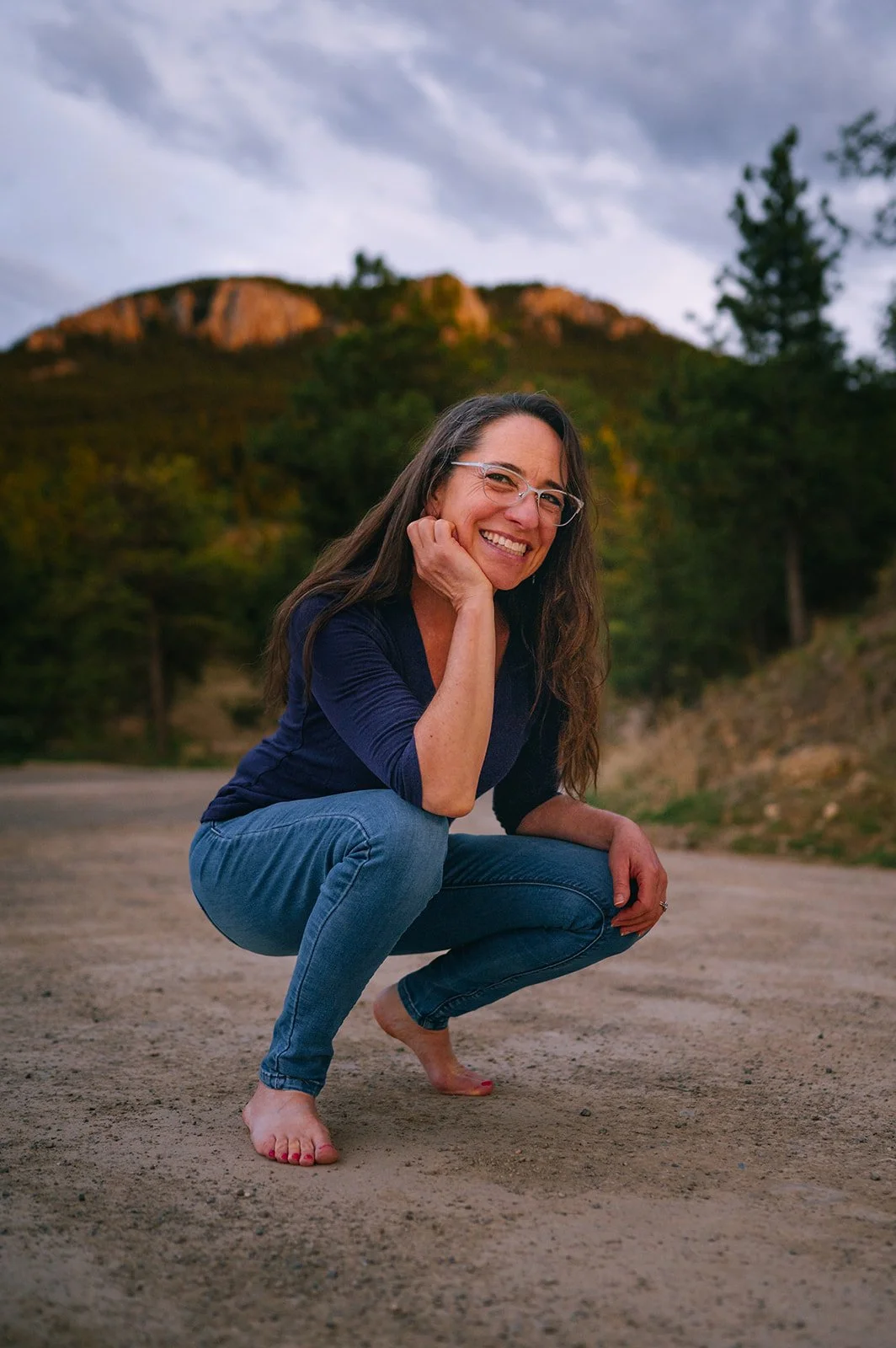
Sarah is a Montana based workplace communication trainer, TEDx speaker, DisruptHR speaker, public speaking coach, professional storyteller, musician, and podcast host. Her workshops and coaching packages with teams and their leaders are known to address and reduce miscommunication – the most common cause of tension and stress in the workplace. Using the team’s results from the StrengthsFinder assessment, she guides teams in learning to speak each other’s “language”, learning to value each other’s strengths and connecting with each other through enhanced self-reflection and effective listening.
Sarah’s nearly 20 years working in government agencies inspired her to complete her MBA and to achieve her StrengthsFinder certification to improve work environments for others, guiding teams toward increased satisfaction, productivity, and happiness.
Visit her website to purchase her book, Your Stories Don't Define You in paperback or audiobook.
Episode 153: Humans are Complicated! Stories of Life, Discovery, and Ambition
"People's lives are largely a product of the decisions they make."
The theme throughout this conversation is self-reflection. When we understand ourselves, and can reflect on how we're showing up to the people and environment around us, we can make decisions in alignment with our ideals, our ideal vision of who we want to be and how we want to be.
When You Are Driven to Know More, You Make it Happen
Curiosity. Intelligence. Compassion. Ambition.

These are the words that popped into my head the first time I met Kristin Sherry. We spoke about how she started with the development of her hugely successful YouMap book and program, and I knew I was in the company of someone incredibly thoughtful, who was inspired to truly guide people to find their best fit in life and career.
"People's lives are largely a product of the decisions they make."
The theme throughout this conversation is self-reflection. When we understand ourselves, and can reflect on how we're showing up to the people and environment around us, we can make decisions in alignment with our ideals, our ideal vision of who we want to be and how we want to be.
We spoke about assessment tools like CliftonStrengths (StrengthsFinder), DiSC, Enneagram, and Kristin's tool, YouMap, and how the results can help us identify the most natural, instinctive ways our brains work. Which, surprisingly enough, is complicated.
There isn't one all-inclusive, perfect tool to describe who we are, how we think, what motivates us, and what choices we make every day. Not only are we complicated beings with far too many neural connections made in our incredible brains, add to that complexity the fact that we are constantly changing, adjusting our views through experiences and stimulants.
I love the way Kristin thinks about these things, the way she sees people in a multi-dimensional way, not flat, and she uses her vision to guide people to make choices that will eventually bring them to their best environments and roles so they can contribute beauty and competence to their communities, no matter where they sit.
---

Learn more about Kristin by visiting her website, order her recently published children's book, You've Got Gifts! and be sure to preorder her new self-development book, Maximize 365: A year of actionable tips to transform your life.
---
About Sarah:
In my work with coaching clients, I guide people to improve their communication using storytelling as the foundation of our work together. What I’ve realized over years of coaching and podcasting is that the majority of people don’t realize the impact of the stories they share - on their internal messages, and on the people they’re sharing them with.
My work with leaders and people who aspire to be leaders follows a similar path to the interviews on my podcast, uncovering pivotal moments in their lives and learning how to share them to connect more authentically with others, to make their presentations and speaking more engaging, to reveal patterns that have kept them stuck or moved them forward, and to improve their relationships at work and at home.
The audiobook, Your Stories Don’t Define You, How You Tell Them Will is now available!
Included with your purchase are two bonus tracks, songs recorded by Sarah's band, Spare Change, in her living room in Montana.
Episode 148: Your Stories Don't Define You. How You Tell Them Will
This week’s episode of the podcast is a sneak peek of the audiobook, Your Stories Don’t Define You, How You Tell Them Will, to be released in mid-November. For a limited time, the ebook is just $0.99!
As a special bonus for listeners, the book will include two songs recorded by my band, Spare Change, in my living room in Montana. Keep an eye out for announcements through LinkedIn and via my Elkins Consulting Facebook & Instagram pages, or visit my website to learn more.
Sneak Peek of the Audiobook to be Released November 2020!
Hi, I’m Sarah Elkins, your host, and Chief Storymaker at Elkins Consulting.

In my work with coaching clients, I guide people to improve their communication using storytelling as the foundation of our work together. What I’ve realized over years of coaching and podcasting is that the majority of people don’t realize the impact of the stories they share - on their internal messages, and on the people they’re sharing them with.
My work with leaders and people who aspire to be leaders follows a similar path to the interviews on my podcast, uncovering pivotal moments in their lives and learning how to share them to connect more authentically with others, to make their presentations and speaking more engaging, to reveal patterns that have kept them stuck or moved them forward, and to improve their relationships at work and at home.
This week’s episode of the podcast is a sneak peek of the audiobook, Your Stories Don’t Define You, How You Tell Them Will, to be released in mid-November. For a limited time, the ebook is just $0.99!
As a special bonus for listeners, the book will include two songs recorded by my band, Spare Change, in my living room in Montana. Keep an eye out for announcements through LinkedIn and via my Elkins Consulting Facebook & Instagram pages, or visit my website to learn more.
Episode 133: Choosing Yourself is a Vast Improvement to Settling for Less
Adolescent years are hard on anyone, to add challenges like moving to a new town and school, particularly as someone who naturally stands out, and you have serious potential for confidence busting.
Karyn Beach Loves the Skin She's In

Adolescent years are hard on anyone, to add challenges like moving to a new town and school, particularly as someone who naturally stands out, and you have serious potential for confidence busting.
Karyn is a force, and by her stories you can tell she has always been that way. But for many years, she struggled with confidence, and ended up in relationships that were just not good for her - personally and professionally.
She decided to choose herself and realized being by herself was far more pleasant and satisfying than sharing space with someone who didn't value and respect her. In fact, she loves being in her own company. And that's part of what makes it so wonderful to be there with her.
---
Connect with Karyn on LinkedIn, check out her website, and be sure to catch her podcast, Fun. Feisty. Fabulous!
---
"The choice of Sarah Elkins (as our conference keynote) was inspired. Her emphasis that we need to think more carefully as advocates about how we are perceived, that we need to demonstrate our values authentically (and bravely) so as to build trust, was perhaps more important than all the specific storytelling tools discussed.”

Sarah is a storyteller, communication coach, author and professional musician. Her keynotes and workshops are entertaining and engaging, because she uses storytelling as the foundation of her work. Her podcast, Your Stories Don’t Define You, How You Tell Them Will was named in the top 50 in 2019 in the category of emotional intelligence on player.FM, and her book of the same title is now available on Bookshop.org, Amazon.com, and Barnes & Noble.
Episode 124: Your Stories Don't Define You. How You Tell Them Will.
Think about that title for a second. Your Stories Don’t Define You. Those things that happen in your life are not what define you, create your identity, and shape your relationships. It’s how you talk about those things that matters.
Think about that title for a second. Your Stories Don’t Define You. Those things that happen in your life are not what define you, create your identity, and shape your relationships. It’s how you talk about those things that matters.

When you tell people about the experiences in your life, you shape those experiences for yourself through subconscious internal messages. According to researchers at Eastern Washington University, the stories told about you, in front of you, begin to shape your identity before you have words. And the stories you tell about yourself, your personal narrative, are what build on that identity.
So how do we apply that knowledge as adults to improve our lives and relationships?
We pay attention to the stories we’re sharing. And we look back at the incidents and situations that shaped those stories.
My book, Your Stories Don’t Define You, How You Tell Them Will, is based on what I’ve learned by hosting more than 100 episodes of this podcast.
Most people cannot easily tell a story about pivotal moments that shaped who they are and how they think. The book is designed to help readers uncover those stories, find the meaning in them, and share them with the right audience at the right time, in order to strengthen relationships, address damaging internal messages, and inspire others through their personal stories.
The ebook is available for preorder online for $0.99 on Amazon.com and Barnes & Noble from now until May 31. I encourage you to purchase the ebook to get started, and then order the paperback from your local bookstore, or visit bookshop.org to support independent booksellers.
I finished writing this book in November 2019, just a few months prior to the COVID-19 pandemic, with absolutely no idea how 2020 would transform our global community. In a very short period of time, thousands lost their lives, millions lost their jobs and businesses, families were pulled apart and quarantined together, and the global economy realized how tightly connected we really are. As communities, we saw healthcare workers sainted, bullied, and celebrated when entire cities howled like wolves during shift changes to recognize them for the risks they were taking to care for our sick.
Meanwhile, many of us hunkered down to shelter-in-place, faced with daily uncertainty of our health, our jobs, school closures, and being barraged with moment-by-moment shifts in the news about the short and long-term impacts of this pandemic.
People have found ways to cope, of course, and there have been beautiful stories of families reconnecting and spending quality time together making meals, taking walks, and reading together.
“There is no doubt the learning, the richness and the expansion that comes from our stories is the place where Sarah Elkins’s legacy lives. By reading this book and taking hold of its principles, you become a part of that legacy, too. Use that power well.”
For me, a huge 50th birthday celebration was planned for April 18, 2020, complete with friends and family coming to Montana from all over the country. It didn’t happen, of course. What happened instead was a gorgeous hike with a friend – with appropriate social distancing, a virtual wine tasting, a brief paddle around in a nearby lake with a new kayak, a surprise Zoom birthday toast with friends and family from all over the world, some heartfelt, amazing video birthday messages, and a Facebook Live performance of a few songs by me and my husband, Bob.
When I had time to think about the events of the weekend, I found them truly inspiring. And while I was disappointed not to celebrate the way I intended, the stories we created together for this big birthday were probably more significant, more life-altering than if things had gone the way we planned. Instead of focusing on the disappointment, I lived each experience in the reality of the moment.
That’s what the book is about, finding out that the stories of the things that happen in our lives are significant, far more than the things that didn’t happen in our lives.

Some have called this time The Great Pause. One friend described his bike ride in a city north of London: “I could have ridden on either side of the street, it was so deserted. And the air. The air was crisp and fresh, I’ve never smelled it like this here.”
I have great empathy for the students and young adults whose lives were so disrupted in their final year of school, I cannot imagine the depth of disappointment in missing the major experiences they were expecting to have: Prom, graduation, parties, goodbyes, all of those “this is the last time…” moments. Those disappointments feel so big right now, and I can tell you they will pale in comparison to the adventures that await you.
Please take time now to begin collecting stories of this experience, to remember the details of incidents and situations that you can look back at, to see how pivotal they were in how you see yourself and how you see your future. Consider the tragic loss of life, and the courageous acts of our healthcare and service workers, and also the smaller acts that made a difference, like the many who took up the call to sew masks for themselves and others and neighbors delivering food to each other. Reflect on your stories of this time in the context of the stories of the people around you.
You’ve heard people ask each other: “Where were you on 9/11?” “Do you remember what you were doing when you heard the news about…?”
In the future, people will ask you those questions about your time during the COVID-19 pandemic. I hope as you think about your experiences during this time, that you begin to collect details of some specific moments, conversations, walks, time you spent with your kids, your partner, your fur babies, in the kitchen, or on video calls. Take time periodically to jot down notes, the way you’re feeling, your thoughts, and how you spend your precious days.
“People have lived through historically significant events and forces, like WW2 & the Great Depression, the 1918 flu epidemic, etc., and I find great comfort in this knowledge and understanding.” Martha Kohl
The Montana Historical Society has been collecting the stories of individual Montanans for decades, including letters written by and to individuals across the state from the time settlers began making their lives here. These letters, archived for future generations to read and learn from have offered a unique perspective for students, giving important context to the history they’re learning and reading about in school.
When our younger son was a freshman in high school, his drama class performed letters from that collection, written by and for Montanans from our territorial days up to around the time of the Gulf War. It was an incredible opportunity for them and for the audience, especially the Q&A session with the students following the performance. Many of them mentioned how much more meaningful the study of history was when they could touch and feel real people’s experiences like that. Martha, the program coordinator for that class, said: “They recognized themselves as actors in history, and that their behavior and choices matter.”
The Historical Society has shifted this brilliant collection to address our current situation by creating a survey asking people about their experiences in the time of this pandemic. The agency will archive the stories of everyday citizens, offering an extraordinary glimpse into the past for future generations, giving context to the world news and making it more relevant with specific stories and incidents.
This is the time, my friends, to consider the stories you will share in the future, because YOUR stories, the ones you make right now, are what will give our collective future meaning, and will give context to the suffering, joy, and transformation we will see as a result of those experiences.
Do not waste this opportunity. Because it’s not what happens to you that shapes your identity and your relationships. It’s how you talk about it.
The book is available for preorder NOW. on Amazon or Barnes & Noble. The ebook will be just $.99 until the book’s launch on May 31st. A portion of each book preordered will be donated to the Prickly Pear Land Trust, a Helena, Montana-based non-profit devoted to preserving open land and recreation opportunities for everyone. Why PPLT? Because the open lands in my neighborhood have provided endless inspiration for me and my writing, and I am so grateful, especially now, for the people who continue to create a collaborative structure to preserve those spaces.
Please visit Amazon.com, Barnes & Noble, to preorder the book before May 31st, or visit bookshop.org to purchase the book after May 31st.
Episode 101: Impulsive But Not Stupid
What is one thing you’ve been saying about yourself for decades? What are the stories you share that give you and your listeners the perceptions that match that thing you’ve been saying about yourself, confirming those characteristics in a positive or negative way?
Stories We Tell Have an Impact On Our Perceptions of Ourselves
“Just to make sure I understand this: If I sign the lease before the other two women in the house, I have the option of bringing a small pet. If I don’t choose to have one, I still have one of only two leases with that clause, which means if I don’t bring a small pet, that will be one fewer pet in the house. Is that right?”
“Yes, that’s right.”
“Excellent. How much is the deposit again?”
It was the end of the spring semester and I was signing a lease to share a four bedroom house with three other women starting fall semester at Colorado State University in Fort Collins. A few minutes later, I was on my way home to my parent’s house in Colorado Springs to spend the summer working and saving money for the next school year.
It was a fun summer working in a fancy restaurant, mostly lunch service, with a ridiculously fun crew, and the weeks flew by quickly. Just a few days before I was scheduled to move into the house in Fort Collins, I got a phone call from the landlord.
Her father bought the big house for her to live in and manage for the time she was going to be in school. As a student in the pre-veterinary program, they knew she’d be spending at least 4-6 years there and made a very wise investment by buying a house for her instead of renting. If I have any regrets in life, it’s not finding a way to buy a small house there while I was in school. Just a few years later, Fort Collins became a bedroom community for the Denver area, and still retains its lovely, small-town feel, and the property values have sky-rocketed there.
I answered her call to hear an abrupt, challenging tone:
“I’ve decided you can’t have a small pet in the house after all.”
“But that was in the lease I signed, Jessica.”
“I know, but I changed my mind.”
“Um… that’s not legal. Besides, what changed your mind?”
“I was only going to bring one of my cats from home in Albuquerque but I decided I want to bring both, and my dad said we couldn’t have more than two cats in the house.”
I’m not normally unreasonable, and I certainly wasn’t a particularly spiteful 20 year old, but her challenging, abrupt, aggressive tone really put me off. If she had just explained the situation and apologized for trying to change a legal document, I’m sure I would have been fine with it. But she wasn’t. And I was, well, 20, and pretty impulsive.
“What if I already got a kitten?”
“Can you take it back?” Again in a challenging and aggressive tone.
“What? Take it BACK? Are you serious? No! I can’t just TAKE IT BACK.”
“Okay then. We’ll just have to hide him when my dad comes to visit.”
Seconds after hanging up the phone I grabbed the newspaper off the kitchen table and combed the classifieds for free kittens. Two hours later I was driving home with my sister, with a kitten on my lap in my ’74 gold VW Super Beetle, stopping to pick up a cat box, cat litter, cat food, and a couple of toys for a kitten I couldn’t afford, didn’t really want, and hadn’t considered naming yet.
I can’t even imagine what my parents were thinking when I brought that kitten home. We were a dog family, through & through, and hadn’t had a cat since I was five years old. I didn’t even like cats.
But Clawed became an important part of my life, the only stable, reliable thing I experienced for at least six years, until I met my husband. He was all the things a cat can be: Mischievous, snuggly (on his terms), playful, and loving. And he was mine, completely mine. He tolerated other people, but I was HIS. I loved that cat for 9 years through multiple moves, the final one from Washington DC to Montana, where he died just a few months later. He brought me comfort in times of uncertainty, and gave me memories that have become legendary stories in my family. He was a beautiful accident to come out of a spiteful, impulsive decision.
I’ve been describing myself as impulsive for as long as I can remember, and most people who know me well would agree. And while I can be impulsive sometimes, I realize now when I look back, that most of the time my behavior was not as spontaneous as it appeared at the time.
It wasn’t until I started getting deeply into my StrengthsFinder results that I saw myself and those quick decisions as less impulsive and more strategic. As I mentioned in an earlier episode, my top strengths are Strategic and Activator, and it took me at least four months to see where strategic showed up in my daily life.
That’s one of the cool things about that particular assessment: It opens your eyes to the possibility that something you considered a weakness before can be shifted to be seen from a different perspective, even as a strength.

Summit looking south east, Mt. Helena, Helena, Montana
In that earlier episode, I mentioned that my strategic shows up in my hamster-brain thinking process as I’m getting ready to do something. The example I used was that in the seconds it took me to bundle up for a hike on the mountain behind my house, I had a plan for the route I would take that day, complete with an explanation for every part of my plan: I’d take a steep trail up to get my heart rate up and warm my core, I’d take the two-block route to the trail that would allow for the dog to poop where it could easily be picked up and disposed of, and I’d be sure not to take the steep trail back because my knees were a little achy.
It was that “ah ha” moment on the mountain that I could finally see that strategic showed up a LOT in my life, like when I am in the car, and before I even click my seatbelt on, I know exactly the route I will take to run errands, and the reasons for the route.
And in the time between that discovery and today, I’ve started to see how strategic was showing up in my past, impulsive-looking decisions.
Getting Clawed was absolutely impulsive, there’s no sugar-coating that decision, when my Activator went crazy and Strategic took a back seat.
But the time (seemingly out of nowhere) I asked my husband to marry me after 8 months dating wasn’t nearly as impulsive as it seemed. And the time, two days after we moved from Washington DC to Montana, I drove our 218,000 mile Honda Accord into the Subaru dealer parking lot with a failing transmission and drove out less than two hours later in a Subaru Outback Sport. And the time I walked through an 1890 Victorian home for a few minutes, called Bob to come look at it, and made an offer at 4:00 that afternoon. And the time I talked to Neil Hughes in late October about maybe starting a podcast, and launching it on December 26, 2017 with a handful of episodes in the hopper for a weekly publication. Was I thinking long term about any of those things? Absolutely not.

22 Anniversary, Bob and Sarah at the Missouri River, 2019
And yet, here I am, married for more than 22 years (and still like him an awful lot, but that’s another story), driving our third Subaru since purchasing that first one in 1999, all from the same awesome dealership, living in a charming, “project house” for nearly 20 years with loads of extraordinary memories of raising two wonderful boys, hosting guests, parties, and music in it, and here we are at episode 101 of that crazy idea of a weekly podcast I had nearly two years ago.
So. This is what Strategic-Activator looks like in me. None of those decisions were actually impulsive in the sense that they were exclusively spontaneous. Now – to someone with Deliberative or Intellection in their top strengths (like my husband), they certainly look that way, but that’s because a) they’re not in my head with me, where a ridiculously detailed but very fast internal dialog has happened before I take a step, and b) I haven’t taken them along for that ride.
Before asking my husband to marry me, my hamster brain had spent considerable effort (but not time, necessarily) thinking about things like: I haven’t ever wanted to spend this much time with one person, especially a guy, he treats me like I matter, like I’m smart and insightful, beautiful and sexy, reliable and practical (mostly), he brings me an espresso in bed every morning we’re together, which looks a lot like “love” and “cherish” to me, he’s kind, challenges me, is crazy-smart, warm, and tolerates my crazy – and my family’s crazy, with patience and is even mildly entertained by it. Those all felt like real things to me at the time, they still do, and asking him to marry me just felt right.
Buying that first Subaru wasn’t an instant decision either. And I had seen enough houses in the area we wanted to live, that I knew the deal-breakers for me. Of course, I didn’t REALLY understand what he meant when Bob said: “You know this is a project house, right?” But we haven’t ever regretted those decisions, nearly 20 years later. They were both good, reasonable decisions.
And when I took on that podcast project? I knew I had the support and resources to make it work long before I recorded the first episode. So no, it wasn’t even part of my imagination to consider I’d still be doing this, 101 episodes later. But then, at 20 years old, I thought the only thing I’d ever do for more than 20 years was breathe… and have a cat for a while.
I told a story at a live storytelling event a few years ago, explaining the thought process before getting my one and only tattoo at 44 years old. It’s called I’m Impulsive, Not Stupid.
I’ve been telling myself for most of my life that I’m impulsive, maybe somewhat smart, but definitely lucky for how most of those impulsive decisions turned out well. I told myself I simply trusted my instincts. And yet, as I become more intentional with my strengths, I’m able to see those decisions from a completely different perspective. It has shifted my confidence in a big way, and as a communication coach, has offered me incredible insights into others, particularly those with similar - and opposite - strengths from mine.
Being more aware of how my strengths work has also improved my communication with my husband, family, and close friends. When I’m working through an important decision, I now take those involved for the ride on that hamster wheel in my brain, so they can hear the reasoning behind where I’m leaning in that decision. And even more important, they can see the flaws and/or beauty of the reasoning to help me make those decisions more thoughtful and reliable.
If I surrounded myself only with people who thought like me, I’d miss out on making better decisions, and on recognizing and demonstrating that I value the strengths in the people around me, which is always good for relationships.
What is one thing you’ve been saying about yourself for decades? What are the stories you share that give you and your listeners the perceptions that match that thing you’ve been saying about yourself, confirming those characteristics in a positive or negative way?
Consider where those characteristics might not be what you’ve been telling yourself all these years, and maybe, just maybe you’ll see yourself in a more true, positive light.
EPISODE 100: Community is the Key to Your Emotional Health and Personal Development
For this 100th episode, I couldn’t think of a more appropriate theme than Community. It’s my community that make me who I am today. It’s my community - that I built with intention - that bring me satisfaction, challenge, and joy. It’s my community that helped me be the person I aspire to be, and to raise our children to be independent, kind, compassionate adults.
Special Episode: Stories of Building Community and Our Identity
Music was our matchmaker. (Stay tuned to the end to hear the entire song from the regular intro and conclusion music!)

Twila and I met because our husbands were looking for other musicians to jam with. One of them answered the other one’s Craig’s List ad, they played together a couple of times, and then I invited them over for dinner and music. We never considered not making music together after that night. Our voices together created something entirely different than our voices separately. The complexity of our vocal tone and harmonies continue to make the hairs rise on our necks, and on the necks of our audiences. I call her my Soul Sister.
Today’s 100th episode of Your Stories Don’t Define You, How You Tell Them Will is sponsored by Uchi. Scroll down for more information about this new communication improvement app!
For this 100th episode, I couldn’t think of a more appropriate theme than Community. It’s my community that make me who I am today. It’s my community - that I built with intention - that bring me satisfaction, challenge, and joy. It’s my community that helped me be the person I aspire to be, and to raise our children to be independent, kind, compassionate adults.
The audio contributions from Heather Younger, Lynda Spiegel, Joe Kwon, and Neil Hughes were overwhelming! I am so grateful to you, friends, you make it all worthwhile. Truly.

Sarah and Neil at NLVDenver2018
“Special thanks to Neil Hughes for his critical role in bringing these 100 episodes to life. It simply wouldn’t be possible without him.”
I started to build my LinkedIn community about 10 years ago, slowly at first, finding my footing as a blog writer and contributor to the platform via comments and sharing valuable, relevant content.
The first people I connected with deeply were Heather Younger, Neil Hughes, John White, Dustin McKissen, Susan Rooks, Chris Spurvey, Lynda Spiegel, Karthik Rajan, and Larry Boyer. All of whom have transformed their lives since then, publishing books, starting speaking careers, building businesses, and more. These were the people putting out great content that I was learning from, engaging with, and sharing, which was the reason for the substantial growth of my LinkedIn network: People started to follow me because they trusted me to share relevant content, and to connect them with wicked-smart, insightful professionals.

Melissa Hughes and Zach Messler at NLVDenver2018
Those people are the reason for the existence of the No Longer Virtual events. I realized that bringing them together, face-to-face, would offer even more opportunities to deepen my learning from them, and our relationships. We’re heading into our fourth year, No Longer Virtual will descend on Chicago on March 12 & 13, 2020.
That first event in Atlanta in 2017 brought me face-to-face with many of my favorite LinkedIn voices, including Melissa Hughes, Zach Messler, and Amy Blaschka, who continue to be huge inspirations and support for me. Our relationships began virtually, and now I cannot imagine my life without them - or the others I mentioned - in it. They are my community.
For this episode, I wanted to explore what community means to people, and to share what my community means to me.

One of many music nights at our house - our community!
So I hit the record button in the kitchen at Twila’s house, while sitting with her, her daughter, Joy (featured in Episode 94), and our younger son, Max (featured in an April 2018 episode), and drinking coffee and eating delicious, fresh-from-the-oven banana bread.

Joy Gabiel, Life Coach
Two of us moved around a lot as kids (Joy and me), and two stayed in the same house and small communities all through their childhood (Max and Twila). That dynamic made for really interesting insights and discussion about what community means, it’s impact on us, and why it’s so important to be intentional about building a diverse community of supporters, challengers, and truth-tellers.
Joy’s perspective is significantly different from the others in the room. As an only child and a more solitary soul, community is critical for her emotional health in a completely different way from those of us who are generally more social creatures. She explained that as a Challenger (Enneagram reference), she isn’t a naturally trusting person, so her comfort zone is being solitary. But with that solitary life, she risks spending far too much time in her own head, which can cause what she called “disintegration”.

Max, Freshman at University of Montana
Max’s perspective leaned toward mine, that a healthy, supportive community becomes the foundation for curiosity and exploration of other communities and environments. He said that his foundational community, the peer group he has stayed close with since preschool and kindergarten, continues to help him feel secure in his exploration outside of that comfort zone.
I hope you enjoy listening to this 100th episode as much as I enjoyed recording it.

2011, Sarah and Twila at one of our many dinner parties with our community

Rocket to Uranus performance at the Silver Dollar Saloon, Butte, with guest vocalist Twila Olson
Today’s 100th episode of Your Stories Don’t Define You, How You Tell Them Will is sponsored by Uchi.
Uchi is proud to sponsor this milestone 100th episode about Community because uchi, in Japanese, means “in-group” or “inner circle”. The folks at Uchi believe people are yearning to feel closer to others. Not to everyone, but to the people who matter most to them.
Uchi is a free app, available for download on the App Store and Google Play, that helps make conversations easier.
It’s like those cards games where you sit around a table and share answers to questions, but this is online so you can do it anywhere, at any time and with anyone around the world. Community is about people and their relationships to each other. Uchi’s mission is to help people connect authentically with those who matter most to them in order to have more meaningful relationships.
As an official sponsor of the 100th episode of the Your Stories Don’t Define You, How You Tell Them Will podcast, Uchi is contributing to Elkins Consulting’s, No Longer Virtual 2020 conference scholarship fund.