
Your Stories Don’t Define You
How You Tell Them Will
A podcast to unlock your stories and uncover meaningful insights.

Storytelling: It's All the Rage
Maybe the buzzword status of storytelling bothers me because, by making it its very own thing, we take the word out of the context of every other component of communication.
Why Using "Buzzwords" Bugs Me
I like to think I was one of the first to use it in my title. Maybe I was, maybe I wasn't; we all know storytelling has been around since, well, the beginning of human existence. For thousands of years, stories were how history, culture, and relationships have been shared and carried forward. They continue to serve multiple purposes, including teaching basic concepts, morality, ethics, religion, and more.
Prior to the age of general literacy, storytelling was the only way to share your community and family history. Stories passed down from generation to generation are what connect us, not only to our family and personal identity, but to the rest of the global community.
Given our human nature to share stories, it’s a bit surprising that suddenly, over the past 2+ years, storytelling has become a big buzzword. Storytelling for content marketing, storytelling for sales, storytelling for company culture, storytelling for interviews & résumés... as if there's some magical component of business and life that was recently discovered and will change everything!
Why does this bother me so much?
Maybe it’s because of my discovery a few years ago of my skill in helping people and organizations better understand and share their stories, both as a tool for general communication, and as a way to improve personal outcomes. There aren’t a lot of really skilled storytellers, and there are even fewer good teachers of storytelling.
Maybe the buzzword status of storytelling bothers me because, by making it its very own thing, we take the word out of the context of every other component of communication. Like the word engagement. Suddenly, over the past few years, engagement is a word that gets tossed around every industry: Education, manufacturing, travel, public sector agencies. As if, by using the word engagement, we can change the culture and dynamic of an environment without putting it into the context of profit, communication, management, leadership, marketing/sales, human resources, customer experience, etc.
All buzzwords do this, and it has always bugged me.
The same goes for storytelling. It doesn’t happen in a vacuum. To be a storyteller on any medium, you have to have a story to tell. As my friend Shlomi Ron, of Visual Storytelling Institute, says, you have to be a storyMAKER first. And then you must use the story in context, with an audience, in a way that moves people to do something or to feel something. That’s the beauty and complexity of communication; there are so many components, and storytelling is just one of them.
In business, telling your story has to fit into the culture and context of your organization. That means, prior to coming up with the language of your story, you need to do some digging. Remember the “why” behind your business; take into account your mission, vision, and overall goals. Think about the people involved, including employees, leadership, customers, and other stakeholders (the communities you impact), and figure out how your story will impact them.
And then consider which stories to tell, how to tell them them, and where they should be told.
Be intentional about your storytelling, make it real, not just another buzzword.
Here's what Ben Walker at Transcription Outsourcing had to say about No Longer Virtual 2017:
...the NLV conference was full of a bunch of "givers" and no "takers". I'm pretty sure that's why we all loved it so much, no one had an agenda, and no one tried to sell me anything. That's the first time I've been to a conference like that since I started going to conferences 15 years ago.
Save the Date: No Longer Virtual 2018 in Denver, February 22 and 23. Sign up to receive periodic updates, including early registration opening date... don't miss this opportunity!
There are great sponsorship opportunities for No Longer Virtual 2018, contact me for details.
Ready to work with me on your storytelling techniques? I'm taking on new coaching clients now! Get started with a three-session package.

Journaling? Seems Like Work to Me.
I'm always suggesting that people step out of their comfort zones, and I've had to practice what I preach a few times in recent weeks.
Twice in two weeks, jumping out of my comfort zone.
Inspired by this article by Benjamin Hardy, I picked up the beautiful journal my friend gave me as a birthday gift years ago, and packed it for an overnight away with the family.
I'm always suggesting that people step out of their comfort zones, and I've had to practice what I preach a few times in recent weeks.
Never a joiner, it was out of character for me to become a member of our local Women's Leadership Network a few years ago. This was a different kind of organization; little obligation of time and money, and good benefits in available workshops and referrals; it was an easy baby step into joining something, and the financial investment didn't feel like a big commitment.
After the successful annual conference of this group, I was impressed with the positive and encouraging energy of the women on the board and the members. So when the incoming President asked if I would consider serving as her Vice President, I didn't immediately turn her down. I offered to think about it. When I brought it up with my husband, who usually knows just what to say, his response was: "Well, Sarah, you're always telling people to take the leap and get out of their comfort zone. This seems like a good opportunity for you to do that."
I did. I know, it's only two weeks into my tenure, but so far I couldn't be happier with my decision. And that's really saying something because, in general, I'm terrified of commitment. That's why I've never joined an organization or served on a board. This year will be full of activity with this board, and I'm committed to helping our organization serve the women in our community.
As I launched myself into 2017, I started to panic about the commitments I've already made in just the first few months. My anxiety would wake me from a deep sleep, perspiration soaking the sheets with revelations in dreams of spiders and filthy bathrooms. I realized I needed tools to deal with what I saw as too many commitments and not enough time for myself. After all, I still have two teenagers in the house, a full time job, a nearly full time side-hustle, I perform regularly with two or three bands, and now I'm serving on the board of WLN Helena.
The first thing I did was buy my annual desktop calendar. Yes, the old school giant box calendar that I write on -- with a pen. It's posted on the side of our refrigerator for all school programs, doctors appointments, and any other scheduled event that impacts our family. When I sat down at the table with my brand new 2017 calendar, I carefully wrote every date committed so far. It suddenly became much easier to handle.
Then I read the article I referenced above by Benjamin Hardy. When I was in 7th grade, my English teacher made her students keep a journal for a semester. I don't remember enjoying it, but I can tell you that when I found it a few years ago, I was thrilled that I had completed that assignment. Hilarious. Dramatic, Boy crazy. Since then, the only journaling I've done, formally, was keeping a bit of a journal when I was pregnant the first time, and while I was studying abroad in Australia. I wasn't consistent, to say the least.
Journaling always seemed so rigid to me, like so much work. And goodness knows I have enough work to do without adding one. more. thing. That was until I read Benjamin's article; I realized that I was already journaling in my own style, and it is anything but rigid. When I am in meetings, at conferences, and even watching TV, I will grab a scrap of paper to write a phrase or a few sentences, a "to do" list, or a reminder to tell someone something. That scrap of paper is usually put into a notebook, purse, or pocket, and never referred to again.
Instead of trying to deal with my scraps of paper for inspiration when writing, I've decided to again step out of my comfort zone and keep a journal with me everywhere I go. I've filled four pages in three days, and find myself thinking about what I'll put into it next. I'm actually excited to try this out, to see if this tool will help make me more efficient and productive.
If you've ever considered journaling, don't hesitate. Pick up a notebook and start doodling, writing phrases, and even penciling in your 'to do' list. Journaling doesn't have to be rigid, there are no rules, and you never know when something you wrote down will inspire an important thought or discussion in the future. I'll let you know how this goes. After all, I'm not really committed.
There are still spots available at the inaugural No Longer Virtual Conference February 23 & 24 in Atlanta. Here’s Cheryl Snapp Conner’s article in Forbes mentioning NLV as an event not to miss in 2017.
Sarah Elkins is a professional coach and consultant, helping people and businesses improve their communication through the art of storytelling. She’s also the President of Elkins Consulting, the company making a splash with small, face-to-face, affordable interactive conferences called No Longer Virtual.

It's Part of the Adventure
Find the value in your obstacles and challenges, find little bits of joy and peace along the way, and remember that though you're on your own journey, others can provide good company.
Stranded in the Philadelphia Airport
I'm sorry, it's highly unlikely you'll get home to Montana today. All of your flights were canceled because of the snow storm.
I burst into tears. Highly unusual for me to cry at all, much less in public. And there I was, uncontrollable sobs escaping my lips.
No, I'm sorry for falling apart like this. I buried my father two days ago and just want to be home with my family. I know it's not your fault. What should I do? Do you have any ideas for me?
She suggested I get through security, and then walk from counter to counter to try to get on a flight -- any flight -- out of Philadelphia before the next storm hit, predicted in the next 12 hours.
I did what she suggested; for the next two hours I wandered through the airport, adding my name to the standby list on almost every flight heading west. She was right. I was not getting home to Montana that day.
After receiving an incredible gift from a stranger, I wiped my eyes, blew my nose, and started to make arrangements for the night and, hopefully, for getting home the next day. My husband did some research and found a deal on a beautiful downtown hotel room, making sure I'd have an easy way to get back to the airport early the next morning. I sent a message to my brother and sister, to let them know my situation, and to find out whether they were stranded, too. They weren't.
My sister called a friend who lived in the area to let him know I was there; he sent me a text: "Where should I pick you up so I can take you to dinner?"
My hero of the day took me to a dark, quiet Italian restaurant across the street from my hotel, and afterward we walked together through the oldest part of the city. When we returned to the hotel, he made sure I was set up with a ride to the airport the next morning, and then hugged me fiercely. "You've been through a lot, Sarah. Be gentle with yourself."
Sitting by the window on the 18th floor of the hotel, I looked out at the lights, thought of my father and enjoyed the quiet, peaceful night.
It took me a few minutes to realize how quiet it was in the room, and how much peace I found in those moments.
If I had made my flights, I'd be home by now, which would be nice. But if I was home at that moment, I wouldn't have had the quiet time to myself. If I was home at that moment, I wouldn't have had the opportunity for introspection and deep breathing. If I was home at that moment, I would have missed out on this amazing view, and time to put all of the events of the past year into some form that I could put into perspective and learn from before going back to my hectic life of work, home, and kids.
I've always been a pretty flexible traveler, taking obstacles and challenges in stride; this experience confirmed my belief that those delays and obstacles can be a great and important part of the adventure.
When you're traveling this season, and your plans get derailed and re-railed, and derailed again, remember this:
One way or another, you'll make it to your destination.
Find the value in your obstacles and challenges, find little bits of joy and peace along the way, and remember that though you're on your own journey, others can provide good company.
Be kind to yourself; be kind to others.
Do You Value Yourself? How Much?
What is your budget for inspiration, encouragement, and solid strategy for improvement? I want to know, because I want to help.
Do you value yourself? Do you value your professional and personal development? How much?
What is your budget for inspiration, encouragement, and solid strategy for improvement? I want to know, because I want to help.
"Hope is not a strategy."
Wiser words have rarely been spoken, and thanks to Trent Selbrede, those words are burned into my mind and have dramatically changed the way I write and think. Instead of writing hope, hopeful, or hopefully, I write intend, plan, and will.
"Fear is a liar."
This sentence is next in line in my current thought process, thanks to Trish Goff. When I find myself falling into my gerbil-like mind with circular thinking about what could go wrong, that is the sentence that I will into my consciousness.
If someone else had planned something like the No Longer Virtual conference, I would invest quite a lot to attend. As a matter of fact, I AM investing quite a lot to attend, and here's why:
The people facilitating these interactive sessions are some of the most competent, motivated, inspiring and inspired people I've had the pleasure to meet; I've only met one of them face-to-face. The people already registered are some of the smartest, most self-aware, kind, ambitious and motivated people I've met, and I've only met one of them face-to-face.
I know that to maximize my learning from these incredible people I must meet them face-to-face. It is worth the investment I'm making to have this experience because I know that -
what I put into it is exactly what I'll get out of it.
And I intend (not hope) to make this a life-changing experience.
I know that I need to continue to learn strategies to leverage my online network in my offline life. This agenda is full of topics I know will help me move my business and my life forward, and I know it will be worth the investment.
The question is, how much can you - should you - invest to avoid missing this opportunity?
Share Your Vision, Build Your Business
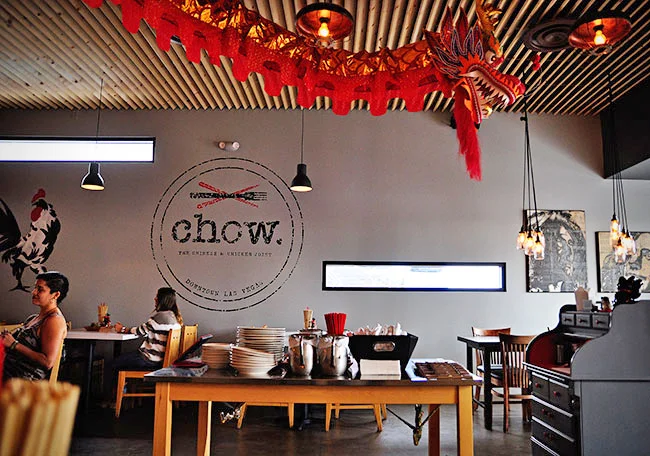
She stood outside her restaurant, unassuming, obviously an artist, with her cool hat and hip vest. I didn't know who she was; she introduced herself as Natalie, the owner of Chow in downtown Las Vegas.
She stood outside her restaurant, unassuming, obviously an artist, with her cool hat and hip vest. I didn't know who she was; she introduced herself as Natalie, the owner of Chow in downtown Las Vegas.
We visited for a few minutes, she asked about Montana and about music. And then I asked about her story and her restaurants. This is a remarkable woman. I had no idea, as I stood on the sidewalk with her, that I was hearing the story of a woman who has hit rock bottom and come back to achieve and succeed not only in her career, but in inspiring others.
The staff are shared between her two downtown Las Vegas restaurants, Chow and Eat, providing quality training and opportunities for all of them. And it shows. That evening in Chow, the restaurant was closed to the public for a private party. The group rented music equipment for the evening, microphones, amplifiers, speakers, etc., and planned to have a jam session while they ate. When the truck with the equipment arrived, staff immediately jumped to help and ask what they could do for their guests.
Chow's staff were accommodating, kind, and warmly professional all evening, and the food was delicious. Chef Nat stayed for a while, sitting in the back observing the party, and sometimes visiting with staff and guests. When the party was ending, staff immediately jumped in to help put the equipment back into boxes and store everything near the door for pickup the next morning.
It was a late night for those of us playing music and visiting the bars afterward, so when we woke the next morning, my first thought was to try Chef Nat's other restaurant, Eat. I was not disappointed. As we walked into the restaurant, Jessica, the hostess from the evening before greeted us not only with a smile, but with recognition as guests from that evening. Kevin, the adorable young man who made sure I had everything I needed at Chow was there at Eat the next day to serve again. You would never know they had been up late the night before, hosting, serving, and accommodating a rowdy group of engineers/musicians. Even Chef Nat was sitting at a table with customers, chatting away with a smile on her face.
We had one more day in Las Vegas; guess where we ate breakfast again that next day? Yes, Eat, and we were pleasantly served by Robert, the same kind, excellent staff who served us breakfast the previous day.
I've spent enough time in the restaurant/hospitality/customer service industries to know what I'm observing in any service environment, and this was unique. Her employees, though wonderful at their jobs, weren't there just for work. They were there, serving and caring for customers for Chef Nat and her vision.
A while ago I wrote a post called Hire People Who Love Your Product. When a person loves your product, they become advocates and brand ambassadors for it. But if they also share your vision and understand it, they become part of something much bigger than a job or a product. That's what Chef Nat is doing in downtown Las Vegas. This woman is building more than fabulous little restaurants. She is building communities. She is building hope, opportunity, and resilience.
*Cover Photo by Heidi Roth: http://www.foodnwhine.com/blog/2015/12/17/chicken-and-chinese-at-chow-las-vegas

Welcome to the Real World
"Have fun, welcome to the real world!" As if your life as you know it, the here and now, isn't somehow the REAL WORLD?
Our older son is getting ready to graduate from high school. It has not been an easy road for him. We spent a lot of time and money over the years at office supply stores, trying to find tools to help him stay organized and on top of things. Nothing really worked, and as a result, his grades were never stellar. To add to his level of stress over the past few years, our family has experienced a lot of grief, the loss of both of his grandfathers, his step-grandfather, and a very close family friend, all within 3 years. After our most recent loss, a musician who spent a lot of time in our house, I asked how he was feeling:
"I'm ok, mom. I guess I'm just sort of numb at this point."
When people talk about his graduation and the beginning of his "real world" experience, I bristle.
I remember when I was graduating from high school and people said: "Have fun, welcome to the real world!" I also remember being in college and people dismissed my frustrations with comments like "just wait until you get into the REAL WORLD."
It was as if life as I knew it, those years of struggle and growth, somehow didn't qualify as the REAL WORLD.
I can't be the only one who remembers those tween and teen years like they were yesterday. It's not just memories of things that happened or things I did; I have vivid, painful and wonderful memories of how I felt. Those feelings were real. Those struggles were real, some of them more real and more impactful than many experiences since then. Those difficult times, those triumphs and perceived failures were very real to me and continue to shape who I am and who I want to be in the future.
Can you honestly say those years didn't somehow change you? That the personal discoveries and dysfunctional relationships, those physical changes didn't have an impact on who you are today?
The real world is whatever we are experiencing at any given time. I can appreciate that as a young child and teenager my worries were significantly different from the adults around me, but they weren't insignificant. I didn't have to go to a job I might not like for 40+ hours each week; I didn't have to buy my own groceries, toilet paper, and laundry detergent, and I didn't have to worry about rent or mortgage or savings.
My real world then was filled with mean girls, difficult relationships, being a mediocre student (at best), and all the drama that comes with the hormonal fluctuations of a teenager. I wouldn't go back -- there's absolutely no way I would go back to those years.
In different stages of life, I remember observing people older than me and wondering what I would be like at that point in my life. In other stages in my life, I observe people younger than I am, and remember so much of what I was like, what I thought, how I felt, how I behaved. It gives me perspective and helps to remind me to not judge others; I can't possibly know what they're going through, what shaped them.
Maybe if we recognize that each individual has stories that shape us, from toddlers to adults, and that each story is relevant at every point in our lives, we can develop a better sense of how to help each other.
What do you think? Do you remember what it was like to be a teenager and young adult? Did those years feel like real life to you?

When You Don't Know Where to Start
I crouched in front of her, worried: “What’s wrong? Are you ok?” She looked up, so sad, big brown eyes filled with anxiety: “I…(sob)… don’t (sob)… know (sob)… where to… start… (sob).”
Paralyzed By A Decision
It was early in the afternoon when I arrived at my sister’s apartment to help her move from Sacramento to a place in San Francisco. Our mother was holding my 18 month old son; we had flown in from Montana less than an hour before and headed straight out to help my sister.
We walked in to find her sitting on the floor near the kitchen, knees pulled up to her chest, head down, crying. I crouched in front of her, worried: “What’s wrong? Are you ok?” She looked up, so sad, big brown eyes filled with anxiety: “I…(sob)… don’t (sob)… know (sob)… where to… start… (sob).” I sat down in front of her, so relieved it wasn’t something worse. Then I stood up and offered her my hands to pull her from the floor.
I picked up the nearest box and put it into her hands. “Here. Take this. Go into the bathroom, pull everything out from under the sink, and put it all into this box.” She looked at me, a little puzzled, then turned around and did what I said. That was it. She was fine after that. She was more than fine after that. She was efficient and capable and we had the entire apartment packed in just a few hours.
There are those times when the next step is completely overwhelming. I’ve been there; paralyzed with a decision to make. What’s next? The only thing to do is take a small step forward – or perhaps take a side-step, depending on the obstacle in front of you. The important thing is to move, to shift, to make something happen, even if it’s a tiny movement.
My cousin called just before she graduated from college to ask for advice. Partway through her question she started to cry, paralyzed by the decision she had to make. Just as with my sister, I put one small action in front of her.
It’s easy to get caught up in a moment and briefly forget all that you know. For my sister, she needed a little push to remind her that she needed to take this one step at a time. For my cousin, she needed the reminder that whatever decision she made at that moment could be un-made if she needed to change things. When I’m faced with a major decision, I remind myself that everything can change in an instant and that a decision I make right now is unlikely to derail a future part of my life. If I need to quantify a decision, I will use this handy tool.
Of course there are exceptions
– people make impulsive decisions that can have huge, long-term impacts –
sex, driving while on drugs or alcohol, sky diving.
When faced with a major decision I find it comforting to look back at other decisions I saw as life-changing at the time I was making them. Looking back helps put current concerns into perspective. There are methods to quantify a qualitative decision by scoring your priorities, but in the end, it's still your decision to make.
The next time you’re faced with a decision and you feel paralyzed in the moment, remember that whatever decision you make is the right one for that moment. Just take it one step at a time.
We should all start to live before we get too old. Fear is stupid. So are regrets.” ― Marilyn Monroe
What decisions have you made that you decided to un-make? How did that work out for you?
Thank you for reading, commenting on, and sharing my posts!
Sign up to receive notification when I publish new posts: