

Episode 107: Strategies to Take Action to Avoid Future Regrets
4 Simple Strategies to Take Action
1.) Find Your Tribe – surround yourself with people who support and encourage you. Find a group of friends and peers that are doing things you want to be doing, people who will give you the hard truth about your dream and offer to help find solutions to obstacles. Make sure these are people you trust, and that you actually listen to their suggestions! You are unlikely to find support in people who have never done what you want to do, or who live with a low-risk, low-reward mentality, people who make fear-based decisions.
If You Don’t Do SOMETHING, Nothing Will Change
My dream is to create a sewing business around a design I created.
That’s terrific, Nancy, tell me about that!
I’ve always loved to sew, and I’ve created a pattern that can be easily replicated and scaled to different sizes and materials. It’s such a cool design, and I have never seen anything quite like it. It’s functional, and every person I’ve given one to as a gift, or who has seen it has loved it and wanted more.
Very cool! What are doing now to make this dream happen?
What do you mean?
I mean, in the evenings, on weekends, and when you can get breaks during your workday, what are you DOING?
Oh. Well by the time I get home from work, I’m emotionally and intellectually spent, so I don’t have the energy or even the creativity to sew. And with my mom’s health problems, and helping out with my grandkids, I just don’t have time to work on my own things.
Hmmm. Do you have space set up so that if and when you have a little time, you can jump right into creative mode and layout your next project - or start to sew?
No. My sewing room is filled with boxes and stuff from when I moved last year.
Our conversation continued along those lines, an excuse for every suggestion I made:
Maybe start by setting aside 15 minutes when you get home from work to put your sewing room in order?
Schedule 15 minutes 3x each week to organize your fabrics and start planning projects?
Think about setting a small goal, like sewing 3 of your design to take pictures and start a portfolio?
She had a reason she couldn’t do those things – for every suggestion.
So I asked her:
Will we have this same conversation a year from now, 5 years from now? Will you regret not doing something to change this?
If you don’t take action right now – today – you will not see any changes in your life. Guaranteed. You’re unhappy, but unwilling to change anything, so you will continue to be unhappy and dissatisfied. How do you think that impacts your relationship with your kids, grandkids, and coworkers? Do you think they don’t know you’re unhappy, do you think you’re hiding it?
That’s when she walked away from me - I felt like I had failed my friend. She walked away with her shoulders slumped, deflated. My heart broke, thinking I had gone too far, hurt her feelings and maybe made things worse.
I gave it a few hours, and then sent her a text message saying: “I hope I didn’t go too far. It just makes me sad to see you so unhappy because you are such a generous and compassionate person. You deserve happiness.”
She didn’t respond to my message. When we saw each other over the next few months she’d smile at me and we would exchange small talk, but I could tell she was uncomfortable. A few months later I gave my notice, said my goodbyes, and moved on to another career path, following a dream.
A year after that I was in the building again and ran into my friend. Her face absolutely glowed as she bee-lined toward me and gave me a huge hug. I hadn’t seen her like that – ever – and asked what was going on.
I have been thinking about calling you, Sarah, but I couldn’t find the right time, and I felt weird about it, even though I wanted to tell you that I’ve been sewing again and have sold a few of my designs! My ideas are flowing and I’m feeling creative again, it feels SO GOOD.
I asked her: “What changed? What was the inspiration that motivated you to do it?”
Remember when you asked me if I would regret not doing something about this dream a year from now? You asked if we were going to continue to have this same conversation year after year? It took me a few weeks to recover from that conversation. I felt like a loser. But then I remembered one of your suggestions, to schedule small chunks of time to make a physical, comfortable space for my sewing, to organize my sewing room to make it more inviting. And that’s what I did. It took MONTHS. But then, about a week after I finished, I walked into that room and was absolutely inspired to start a project.
I planned to spend 15 minutes on it, but walked out 1.5 hours later with a completed project and felt amazing. It was like a veil had lifted and my creativity returned.
Wow! I’m so happy to hear that! Has anything changed at work?
Yes! That’s the thing, I am finding my job a little more satisfying. Nothing here has changed. I still deal with the obnoxious attitude from you-know-who, and continue to have more work dumped on me than I can handle, but I look at it differently now that I’m making time for myself and having fun exploring my creative side again.
We hugged goodbye, promised to keep in touch, and I left the building as if I was walking on air.
We can talk about things we want to do, dreams we have, ideas we want to initiate and implement, but until we take a step that’s all those things are – dreams and ideas.
The only way we see change in our lives is if we initiate it or something happens to us. I would much rather be the one to initiate it most of the time, how about you?
4 Simple Strategies to Take Action
1.) Find Your Tribe – surround yourself with people who support and encourage you. Find a group of friends and peers that are doing things you want to be doing, people who will give you the hard truth about your dream and offer to help find solutions to obstacles. Make sure these are people you trust, and that you actually listen to their suggestions! You are unlikely to find support in people who have never done what you want to do, or who live with a low-risk, low-reward mentality, people who make fear-based decisions.
2.) Schedule Baby Steps – use the calendar on your phone or desk/refrigerator calendar to schedule short appointments for yourself, maybe 15 minute intervals to work on your dream in some way. If you spend 15 minutes every day being outcome-oriented toward your goal, you will see major changes in all aspects of your life. What do I mean by outcome-oriented? Think about something you can complete in that time, like organizing a pile of papers on your desk, scheduling calls or coffee dates with people who can help you, and who you feel like you can help (accountability partners, for instance), or writing up a blog post.
3.) Say Yes – when opportunities present themselves, show up. Step out of your comfort zone.
4.) Change Your Environment – Periodically changing your environment keeps your brain limber, more aware, and creative. That means weekend road trips, walks, taking different routes to work, time in nature, traveling, and exploring alternative hobbies.
If you’re tired of the same conversation, year after year, and realize you will most definitely regret NOT doing something, NOT taking action toward a dream or goal, do something about it TODAY.
Join me and an extraordinary group of professionals at the 2020, 4th annual No Longer Virtual conference on March 12 & 13th in Chicago. When I say “find your tribe”, this group is what I’m talking about. The common characteristics of people who attend are curiosity, compassion, and an entrepreneurial mindset.
The agenda is full of relevant, engaging sessions, and you’ll be surrounded by some of the most wicked-smart, generous, creative, supportive professionals around. Limited to 50 participants, you’ll have the opportunity to truly connect and build strong relationships. And the best part? You’ll avoid the “after-conference hangover” by remaining in close contact with your network after the event.
Here’s a peek at the agenda:
Supercharge your LinkedIn experience, hosted by Shelly Elsliger & Zach Messler
Turning ideas into action by clarifying your why, prioritizing, action planning & increasing accountability, hosted by Kris Macc & Craig Thomason
Non-sales workshop to engage your audience and grow your revenue, hosted by Hannah Bratterud and Arlene Mendoza
Achieving win-win relationships to improve your outcomes, with a field trip to the Art Institute of Chicago, hosted by Chris Spurvey & Megan Miller
Nurturing your emotional health to improve outcomes, hosted by Renee Smith & Kevin Strauss
DISCOUNT CODE:
Since early registration ended, here’s a $100 discount offer from the full price NLVFRIEND, and if you make arrangements with me to register two or more guests, I’ll offer a discount code for $125 off each of your registrations.
There are 13 spots left as of January 12, 2020!
I hope to see you at #nlvchicago2020, investing in yourself, taking the steps necessary to take action toward your dreams, and building and nurturing your network that can help you get there.
106: Resilience and Persistence are Two Different Things - We Need Both to Thrive
Russ Johns’ life changed dramatically after falling three stories to shatter his wrist and break his arm. He was a professional musician - a drummer - but that was no longer an option after two years of surgeries and physical therapy. He was lucky to have any use of his arm… he was lucky to be alive.
Stories of Loss and Grief, Coupled with Gratitude and Inspiration
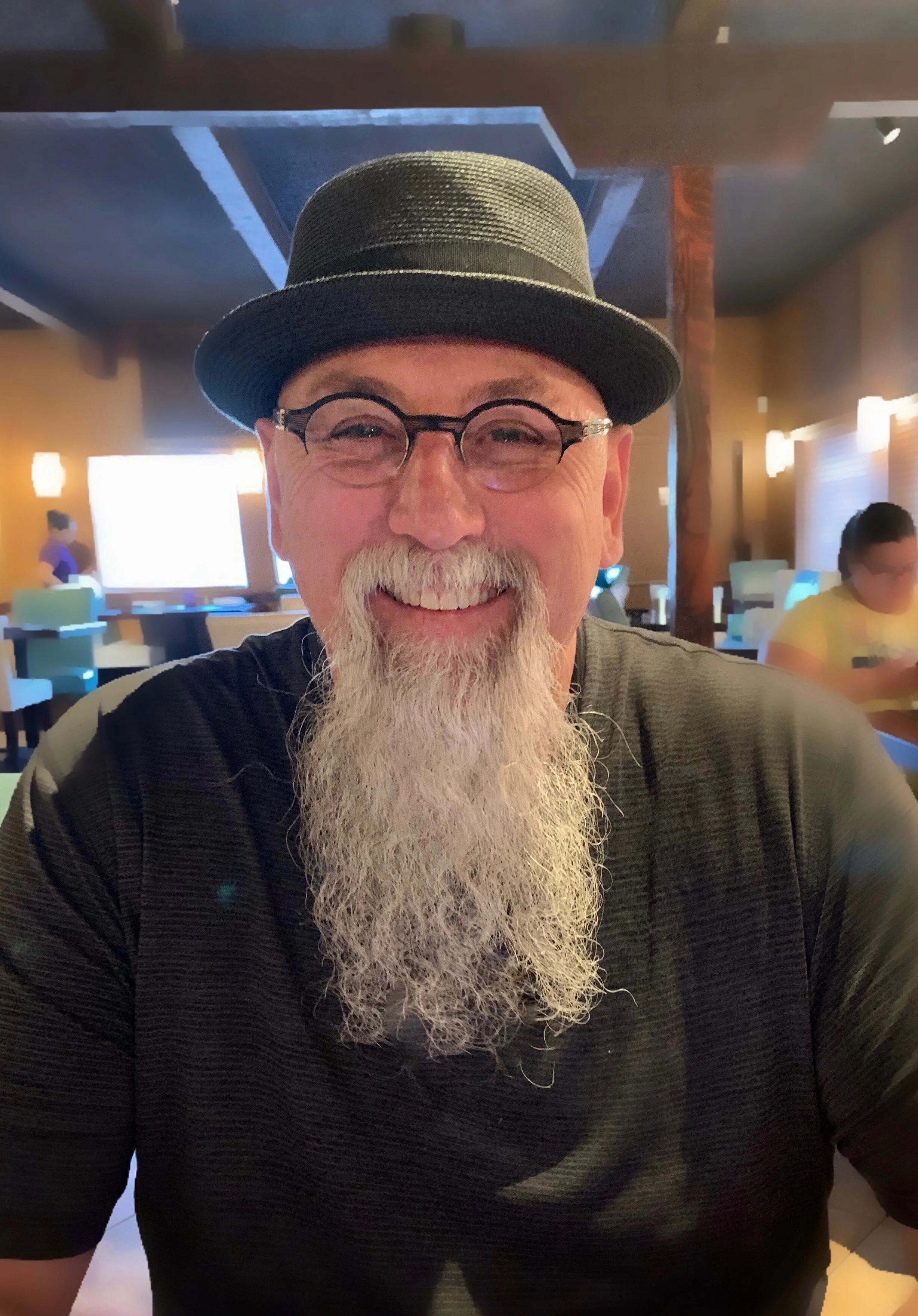
Russ Johns’ life changed dramatically after falling three stories to shatter his wrist and break his arm. He was a professional musician - a drummer - but that was no longer an option after two years of surgeries and physical therapy. He was lucky to have any use of his arm… he was lucky to be alive.
There’s just something about Russ’s energy that caught my attention, and I realized during our call that it is his curiosity and openness to listening and sharing stories, coupled with his sense of gratitude and wonder at life and living.
He shared some very personal history with me during our conversation, and I was especially grateful for the grace with which he shared the story about his son’s suicide, a story he shared on stage at a The Moth Story Hour event.
Russ demonstrates the title of this podcast so beautifully, I hope you enjoy listening as much as I enjoyed recording this episode.
The National Suicide Prevention Lifeline 1-800-273-TALK (8255)
A free, 24/7 confidential service that can provide people in suicidal crisis or emotional distress, or those around them, with support, information, and local resources.
Crisis Text Line
741-741
This free text-message service provides 24/7 support to those in crisis. Text 741-741 to connect with a trained crisis counselor right away.
Episode 105: What Works in Distributed Teams: Stories of Growth & Learning
John O’Duinn, pronounced John Oh.Dinn, is an engineer, and he sees almost everything in his life as a system. That means that with every problem he experiences or obstacle he needs to address, he sees it not as a stand-alone issue, but as part of something bigger. He understands how to dig into a problem by seeing it from a larger perspective, that a solution must address the overall health of a system, not just one small part of it.
Our Human Workplace Requires Clear Communication Systems

John O’Duinn, author of Distributed Teams
John O’Duinn (pronounced Oh.Dinn) is an engineer, and he sees everything in life as a system. That means that with every problem he experiences or obstacle he needs to address, he sees it not as a stand-alone issue, but as part of something bigger. He understands how to dig into a problem by seeing it from a larger perspective, that a solution must address the overall health of a system, not just one small part of it.
This unique way of seeing things makes him really good at problem-solving, and made him exactly the right person to write about remote workers, what makes remote work appealing and beneficial, and how to make remote working effective. His book, Distributed Teams, dives deeply into the benefits of remote teams, and then gives step-by-step guidelines to make remote working a successful endeavor.
There is so much to consider when hiring people, building a business, and setting up for an intentional culture, and one of those decisions must be whether to require people to work in a specific physical office location. It’s not easy to create a culture of communication in terms of clear processes and rules, but it’s critical as a company grows beyond 4-6 people, whether you’re sharing an office or whether your team is distributed.
My biggest take-away from the book is the dramatic improvement in the diversity of workplaces when remote working is an option and well-planned and executed. There were so many interesting parts to this conversation with John, and I came away from it with a huge appreciation for that aspect of his book and our discussion. There is plenty of evidence to support the value of diverse workplaces in terms of innovation, productivity, problem-solving and the resulting bottom-line improvement. This conversation, plus John’s book, make an excellent case for increasing the opportunities for people to work remotely, on distributed teams.
He referred to a study funded by the World Bank on urban mobility, which took place in Buenos Aires. Here’s the piece that we discussed:
If women are indeed constrained to smaller commutes, it also means they have access to fewer employment opportunities – with inevitable consequences on their wage rates and related labor market outcomes.
To read the full article, click here.
Connect with John on LinkedIn, and I highly recommend you check out his book, Distributed Teams, whether you’re a remote worker, work from home, or simply want to improve your team’s communication and processes. John referred to a book by Michael Lopp, Managing Humans, which can be found here.
Episode 104: Truly Effective Leadership Begins with Self-Reflection
Rajkumari Neogy loved her job, but couldn’t shake the feeling of being excluded. As a leader in the organization, it was difficult to pinpoint where that feeling of dissatisfaction and exclusion was coming from because she had a great boss and an engaged team, but something just wasn’t right.
Leadership Development Requires Stories of Self-Reflection
Rajkumari Neogy loved her job, but couldn’t shake the feeling of being excluded. As a leader in the organization, it was difficult to pinpoint where that feeling of dissatisfaction and exclusion was coming from because she had a great boss and an engaged team, but something just wasn’t right.
So many of us feel disconnected from the communities we’re expected to feel close to, the community at work, at church or synagogue, even with our own families. Many of us feel like we’re out here on our own, like we simply don’t belong to any one community, like we just don’t fit in anywhere.
When Rajkumari left her job, her ultimate goal was to learn more about why those feelings were so persistent, to study the neurobiology behind those feelings of disconnection and exclusion, even when there was no evidence to support those feelings.
During our conversation about resilience and the impact of genetics on trauma, Rajkumari mentioned two scientists well-regarded in the field of epigenetics, Rachel Yehuda and Moshe Szyf.
From an interview with Dr. Yehuda: “Rachel Yehuda is a pioneer in understanding how the effects of stress and trauma can transmit biologically, beyond cataclysmic events, to the next generation.”(1)
Also mentioned was a book by Sarah Peyton, Your Resonant Self, which you can find here.
Our conversation spanned from that feeling of exclusion and where it comes from, to the strategies we can use to address trauma in our bodies and minds. Rajkumari is committed to self-reflection to continue to grow and improve as a coach, to and bring others along for that journey.
(1) https://onbeing.org/programs/rachel-yehuda-how-trauma-and-resilience-cross-generations-nov2017/
Episode 103: Good Career Advice Might Not Be What You Think
When Eddie Wilders graduated from high school, all he knew was that he wanted to go to college. He didn’t know which college, or what programs he would be interested in, but he knew he wanted to be the first in his family to get a degree and do something different.
Career Guidance Stories, Reviews, and Regrets
When Eddie Wilders graduated from high school, all he knew was that he wanted to go to college. He didn’t know which college, or what programs he would be interested in, but he knew he wanted to be the first in his family to get a degree and do something different.
Eddie’s guidance counselor in high school was anything but, friendly and open, there for support, but did little to actually guide and help her students with important decisions.
He didn’t have any more success with that kind of guidance in college. When he was about to graduate with his Communications degree, rather than giving him some concrete ideas for jobs to apply for, his counselor said: “You can do just about anything with that degree!” And left it at that.
Eddie and I met in the comments section of a post on LinkedIn, asking about career advice. I responded to his comment on the post that I received plenty of decent career advice, but looking back now, none of it applied to me. All the advice I received was general, not specific to my tendency toward passionately learning something for a while, and then getting bored, self-sabotaging, and then switching jobs.
His questions and concerns were geared toward how he could guide his young daughters, since he didn’t receive useful guidance, and I immediately reached out to ask him about his experience and to record it for this episode.
Our conversation spanned from dressing appropriately for the job you want and for the environment you find yourself standing, to taking a trial and error approach in career decisions from early on. Eddie didn’t feel like he had the luxury of the trial and error system because all he knew was the experiences of his parents: Find a good job, get really good at it, and stick with it because it’s a good job and it pays.
Looking back now, he knows he wants his daughters to feel confident in trying different professional environments until they find one that feels right.
It’s always a pleasure to speak with someone with an important message, and Eddie shares one I’m sure most people can relate to, getting stuck in something because of the expectations and experiences of others.
Connect with Eddie on LinkedIn, and let him know what resonated with you about this episode!
Episode 102: Finding Soul-Shifting Moments
This episode’s theme is career transformation. My guest, Lorraine Flower, had a moment in her late 30s, when she was quickly and effectively moving up the corporate ladder, really on the upswing of her career, when she realized her soul wasn’t being fed.
Listen Closely to Your Heart When Your Story Shifts
This episode’s theme is career transformation. My guest, Lorraine Flower, had a moment in her late 30s, when she was quickly and effectively moving up the corporate ladder, really on the upswing of her career, when she realized her soul wasn’t being fed. She took what she called a sabbatical from her job, with the intention of spending time to learn what would feed her soul, and when she was offered an incredible opportunity with a different firm just a few months later, she came within a couple of days of starting – and then walked away from it.
Connect with Lorraine on LinkedIn, and visit her website to learn more about how she helps leaders remember to feed their souls by helping them identify and develop the soul of their companies.
Episode 101: Impulsive But Not Stupid
What is one thing you’ve been saying about yourself for decades? What are the stories you share that give you and your listeners the perceptions that match that thing you’ve been saying about yourself, confirming those characteristics in a positive or negative way?
Stories We Tell Have an Impact On Our Perceptions of Ourselves
“Just to make sure I understand this: If I sign the lease before the other two women in the house, I have the option of bringing a small pet. If I don’t choose to have one, I still have one of only two leases with that clause, which means if I don’t bring a small pet, that will be one fewer pet in the house. Is that right?”
“Yes, that’s right.”
“Excellent. How much is the deposit again?”
It was the end of the spring semester and I was signing a lease to share a four bedroom house with three other women starting fall semester at Colorado State University in Fort Collins. A few minutes later, I was on my way home to my parent’s house in Colorado Springs to spend the summer working and saving money for the next school year.
It was a fun summer working in a fancy restaurant, mostly lunch service, with a ridiculously fun crew, and the weeks flew by quickly. Just a few days before I was scheduled to move into the house in Fort Collins, I got a phone call from the landlord.
Her father bought the big house for her to live in and manage for the time she was going to be in school. As a student in the pre-veterinary program, they knew she’d be spending at least 4-6 years there and made a very wise investment by buying a house for her instead of renting. If I have any regrets in life, it’s not finding a way to buy a small house there while I was in school. Just a few years later, Fort Collins became a bedroom community for the Denver area, and still retains its lovely, small-town feel, and the property values have sky-rocketed there.
I answered her call to hear an abrupt, challenging tone:
“I’ve decided you can’t have a small pet in the house after all.”
“But that was in the lease I signed, Jessica.”
“I know, but I changed my mind.”
“Um… that’s not legal. Besides, what changed your mind?”
“I was only going to bring one of my cats from home in Albuquerque but I decided I want to bring both, and my dad said we couldn’t have more than two cats in the house.”
I’m not normally unreasonable, and I certainly wasn’t a particularly spiteful 20 year old, but her challenging, abrupt, aggressive tone really put me off. If she had just explained the situation and apologized for trying to change a legal document, I’m sure I would have been fine with it. But she wasn’t. And I was, well, 20, and pretty impulsive.
“What if I already got a kitten?”
“Can you take it back?” Again in a challenging and aggressive tone.
“What? Take it BACK? Are you serious? No! I can’t just TAKE IT BACK.”
“Okay then. We’ll just have to hide him when my dad comes to visit.”
Seconds after hanging up the phone I grabbed the newspaper off the kitchen table and combed the classifieds for free kittens. Two hours later I was driving home with my sister, with a kitten on my lap in my ’74 gold VW Super Beetle, stopping to pick up a cat box, cat litter, cat food, and a couple of toys for a kitten I couldn’t afford, didn’t really want, and hadn’t considered naming yet.
I can’t even imagine what my parents were thinking when I brought that kitten home. We were a dog family, through & through, and hadn’t had a cat since I was five years old. I didn’t even like cats.
But Clawed became an important part of my life, the only stable, reliable thing I experienced for at least six years, until I met my husband. He was all the things a cat can be: Mischievous, snuggly (on his terms), playful, and loving. And he was mine, completely mine. He tolerated other people, but I was HIS. I loved that cat for 9 years through multiple moves, the final one from Washington DC to Montana, where he died just a few months later. He brought me comfort in times of uncertainty, and gave me memories that have become legendary stories in my family. He was a beautiful accident to come out of a spiteful, impulsive decision.
I’ve been describing myself as impulsive for as long as I can remember, and most people who know me well would agree. And while I can be impulsive sometimes, I realize now when I look back, that most of the time my behavior was not as spontaneous as it appeared at the time.
It wasn’t until I started getting deeply into my StrengthsFinder results that I saw myself and those quick decisions as less impulsive and more strategic. As I mentioned in an earlier episode, my top strengths are Strategic and Activator, and it took me at least four months to see where strategic showed up in my daily life.
That’s one of the cool things about that particular assessment: It opens your eyes to the possibility that something you considered a weakness before can be shifted to be seen from a different perspective, even as a strength.

Summit looking south east, Mt. Helena, Helena, Montana
In that earlier episode, I mentioned that my strategic shows up in my hamster-brain thinking process as I’m getting ready to do something. The example I used was that in the seconds it took me to bundle up for a hike on the mountain behind my house, I had a plan for the route I would take that day, complete with an explanation for every part of my plan: I’d take a steep trail up to get my heart rate up and warm my core, I’d take the two-block route to the trail that would allow for the dog to poop where it could easily be picked up and disposed of, and I’d be sure not to take the steep trail back because my knees were a little achy.
It was that “ah ha” moment on the mountain that I could finally see that strategic showed up a LOT in my life, like when I am in the car, and before I even click my seatbelt on, I know exactly the route I will take to run errands, and the reasons for the route.
And in the time between that discovery and today, I’ve started to see how strategic was showing up in my past, impulsive-looking decisions.
Getting Clawed was absolutely impulsive, there’s no sugar-coating that decision, when my Activator went crazy and Strategic took a back seat.
But the time (seemingly out of nowhere) I asked my husband to marry me after 8 months dating wasn’t nearly as impulsive as it seemed. And the time, two days after we moved from Washington DC to Montana, I drove our 218,000 mile Honda Accord into the Subaru dealer parking lot with a failing transmission and drove out less than two hours later in a Subaru Outback Sport. And the time I walked through an 1890 Victorian home for a few minutes, called Bob to come look at it, and made an offer at 4:00 that afternoon. And the time I talked to Neil Hughes in late October about maybe starting a podcast, and launching it on December 26, 2017 with a handful of episodes in the hopper for a weekly publication. Was I thinking long term about any of those things? Absolutely not.

22 Anniversary, Bob and Sarah at the Missouri River, 2019
And yet, here I am, married for more than 22 years (and still like him an awful lot, but that’s another story), driving our third Subaru since purchasing that first one in 1999, all from the same awesome dealership, living in a charming, “project house” for nearly 20 years with loads of extraordinary memories of raising two wonderful boys, hosting guests, parties, and music in it, and here we are at episode 101 of that crazy idea of a weekly podcast I had nearly two years ago.
So. This is what Strategic-Activator looks like in me. None of those decisions were actually impulsive in the sense that they were exclusively spontaneous. Now – to someone with Deliberative or Intellection in their top strengths (like my husband), they certainly look that way, but that’s because a) they’re not in my head with me, where a ridiculously detailed but very fast internal dialog has happened before I take a step, and b) I haven’t taken them along for that ride.
Before asking my husband to marry me, my hamster brain had spent considerable effort (but not time, necessarily) thinking about things like: I haven’t ever wanted to spend this much time with one person, especially a guy, he treats me like I matter, like I’m smart and insightful, beautiful and sexy, reliable and practical (mostly), he brings me an espresso in bed every morning we’re together, which looks a lot like “love” and “cherish” to me, he’s kind, challenges me, is crazy-smart, warm, and tolerates my crazy – and my family’s crazy, with patience and is even mildly entertained by it. Those all felt like real things to me at the time, they still do, and asking him to marry me just felt right.
Buying that first Subaru wasn’t an instant decision either. And I had seen enough houses in the area we wanted to live, that I knew the deal-breakers for me. Of course, I didn’t REALLY understand what he meant when Bob said: “You know this is a project house, right?” But we haven’t ever regretted those decisions, nearly 20 years later. They were both good, reasonable decisions.
And when I took on that podcast project? I knew I had the support and resources to make it work long before I recorded the first episode. So no, it wasn’t even part of my imagination to consider I’d still be doing this, 101 episodes later. But then, at 20 years old, I thought the only thing I’d ever do for more than 20 years was breathe… and have a cat for a while.
I told a story at a live storytelling event a few years ago, explaining the thought process before getting my one and only tattoo at 44 years old. It’s called I’m Impulsive, Not Stupid.
I’ve been telling myself for most of my life that I’m impulsive, maybe somewhat smart, but definitely lucky for how most of those impulsive decisions turned out well. I told myself I simply trusted my instincts. And yet, as I become more intentional with my strengths, I’m able to see those decisions from a completely different perspective. It has shifted my confidence in a big way, and as a communication coach, has offered me incredible insights into others, particularly those with similar - and opposite - strengths from mine.
Being more aware of how my strengths work has also improved my communication with my husband, family, and close friends. When I’m working through an important decision, I now take those involved for the ride on that hamster wheel in my brain, so they can hear the reasoning behind where I’m leaning in that decision. And even more important, they can see the flaws and/or beauty of the reasoning to help me make those decisions more thoughtful and reliable.
If I surrounded myself only with people who thought like me, I’d miss out on making better decisions, and on recognizing and demonstrating that I value the strengths in the people around me, which is always good for relationships.
What is one thing you’ve been saying about yourself for decades? What are the stories you share that give you and your listeners the perceptions that match that thing you’ve been saying about yourself, confirming those characteristics in a positive or negative way?
Consider where those characteristics might not be what you’ve been telling yourself all these years, and maybe, just maybe you’ll see yourself in a more true, positive light.