Your Stories Don’t Define You
How You Tell Them Will
A podcast to unlock your stories and uncover meaningful insights.
Episode 84: Never Try to Be Something You're Not
You wouldn’t think that word could cause such discouragement and frustration.
Focus.
It was the Women’s Leadership Retreat in early January, and my first experience on a board of a community organization. I was that year’s Vice President, and my primary responsibility for the year was to organize, coordinate, and host the annual conference that fall.
When You Know Your Limits, You Uncover Your Strengths
You know how important stories are in effective communication, but did you know that the stories you choose to share, and how you choose to share them have a huge impact on your internal messages, and in how you’re being perceived by the people around you?
This book will help you identify pivot points in your life – those moments that really shape who you are and why, and can help you figure out where certain damaging internal messages came from. When you understand that, you can find patterns in your life and address those messages and communication challenges that are limiting your success at work and in your relationships.
Focus
You wouldn’t think that word could cause such discouragement and frustration.
Focus.
It was the Women’s Leadership Retreat in early January, and my first experience on a board of a community organization. I was that year’s Vice President, and my primary responsibility for the year was to organize, coordinate, and host the annual conference that fall.
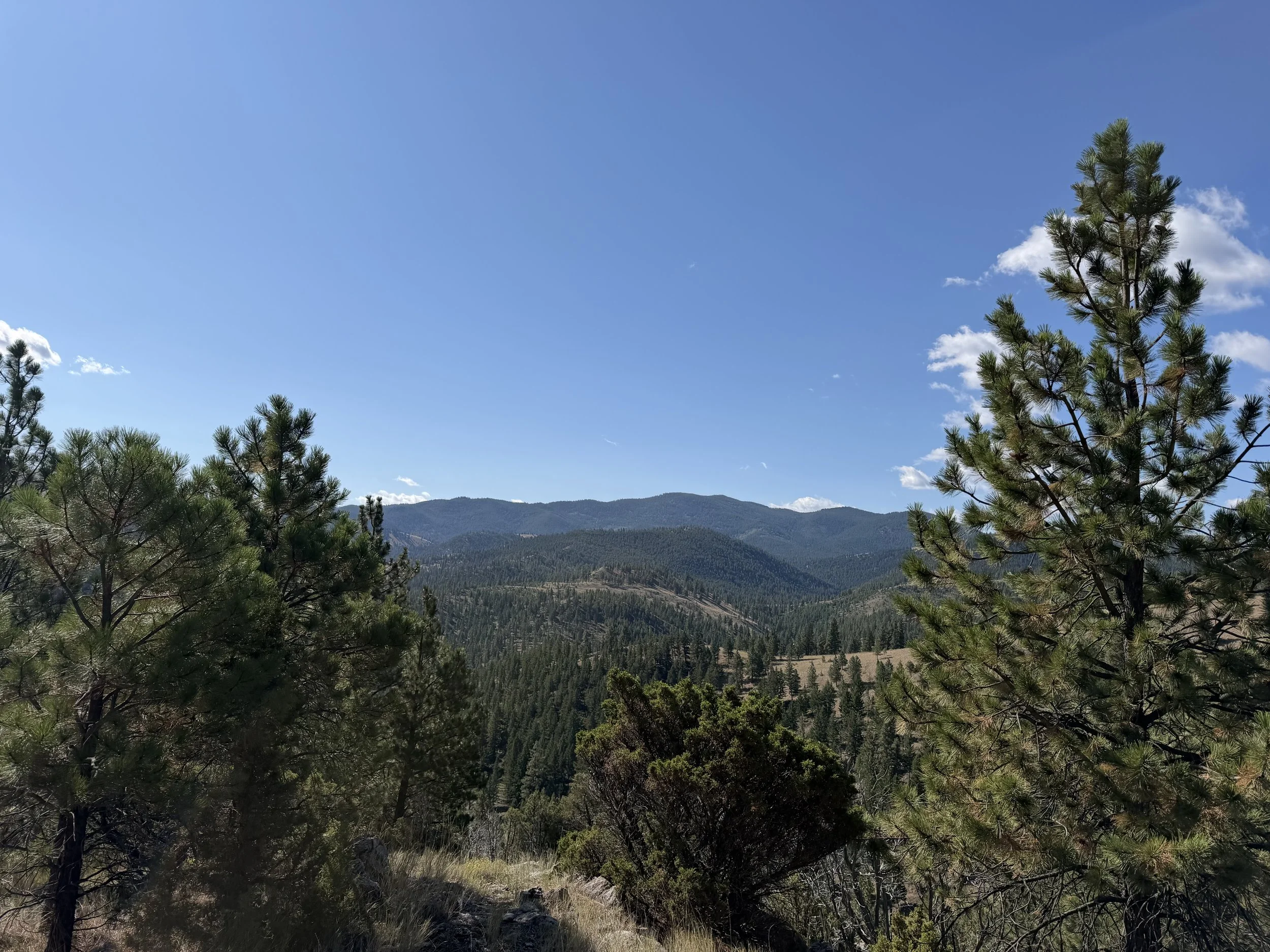
That evening over our dinner in that beautiful lodge just outside of White Sulpher Springs, Montana surrounded by encouraging, inspiring women, Mary, our Past President, told us about her family’s New Year tradition:
We each pick a single word to focus on for the year. That is a word which helps us prioritize our activities, and our choices in how we spend our time. My word this year is “healing.” Last year was a hard one for me, and I don’t feel like I’ve spent enough time recovering from those difficult situations. This year, I’ll be paying attention to healing from those painful experiences. Every choice I make in terms of how I spend my time will be viewed through that one word.
Each of us in the room took some time to think about this, and to offer our word for the year. Cassie, the incoming President, and I both picked the word FOCUS. We picked it for different reasons; she had jumped into multiple businesses the previous year and was running herself ragged with kids and work. She had been offered many exciting opportunities, and felt compelled to accept them without really considering the impact on her health and happiness. Cassie decided on FOCUS as a word to help her prioritize which opportunities she would take, and which she would reject with grace.
For me, the word focus had more to do with my inability to stop multitasking. It was about the way I went about my days, flitting from one thing to the next and not spending uninterrupted, focused time on any one thing. I was the queen of distraction, and wanted to address that weakness.
I wrote FOCUS on small sticky notes and placed them on my monitor at work, my laptop at home, on the bathroom mirror, and even on the dashboard of my car. Every once in a while I would switch them up on different colored paper, doodle drawings around the written word, and different colors of markers, because I know our brains start to ignore the things we get used to seeing.
The entire year was spent looking at that word, working hard to remember to focus on one thing at a time… and failing.
Literally – for an entire year I tried hard to be someone who could focus on something for longer periods of time, and consistently beat myself up over not being able to do that.
January came around again, and this time I was President of Women’s Leadership Network, Helena, and it was my turn to host the annual new board retreat. I told Mary’s story about her family tradition and asked the board members to think about their word for 2018. I started:
“My word this year, like last year, is FOCUS. I failed miserably in 2017 with my word, but this year will be different. I’m going to make this work! I may need your help, though, so please be my accountability partners?”
We went around the table after dinner; everyone shared their word for 2018 with enthusiasm, eager to use this tool to help prioritize time and energy.
Focus.
Focus.
Focus.
I tried hard, with a variety of tools, and by March was highly discouraged, frustrated with myself, and felt like a failure in that part of my life. By April I had completely given up, had thrown away all the sticky notes and other reminders, and beat myself up over it for weeks. We are our own worst critics, right?
In mid 2018 I took the StrengthsFinders assessment and wasn’t at all surprised by my results.
Of 34 themes, FOCUS is number 29.
The lightbulb went on. Memories of my best, most effective studying times came back in a rush: Sitting in a coffee shop or busy student center in college, just enough activity around me to keep my brain focused on the textbook or notes in front of me, and intermittent interruptions of friends stopping to say hi, or a nice waiter/waitress offering more coffee.
Focus is NOT one of my top strengths. I beat myself up for a year and a half for trying hard to be something I’m not. It was like hating myself for not being a famous basketball player – I’m just over five feet tall and probably the least coordinated musician you’ll ever know.
One of the things I love most about my work as a communication coach is the time I’ve spent being coached. (I believe strongly that you cannot be a great coach without getting great coaching.) And what I’ve really enjoyed in my 150+ of hours coaching using the StrengthsFinders tool is the “ah ha” moments I’ve experienced with my clients.
The beauty in knowing your strengths, those go-to skills that you use so naturally to solve problems and build relationships, is that you also know what doesn’twork for you. I see the word focus these days, and I laugh out loud, imagining myself trying a jump shot at the basketball court across the street. Uh uh. Not going to happen.
That doesn’t mean I never have a use for focus, it just means I have to use my innate strengths to achieve the same goal, I have to do things differently to get from point A to point B. Rather than hunker down in a quiet spot to focus, I think strategically about what it’s going to take, what helpful vs. harmful distractions I’ll experience, and how long the task is likely to take if I include the breaks I need to recharge and return to the project.
Hint: It’ll take LESS time if I use my strengths, rather than try to force myself to focus in a way that doesn’t come naturally to me.
Now it’s your turn:
What do you beat yourself up over that you have no natural, innate ability? Is there another way to accomplish a goal, other than to force-fit yourself into a specific method of doing things?
If you’re interested in figuring out what your top strengths are, I published a post & podcast called “What is your top strength?” that offers some ideas to help you identify your top strengths. When you know them, you might just be able to apply what you learn to do what you do even better.
Or better yet, I’m accepting new coaching clients now, individuals & teams; contact me for more information!
What is Your Top Strength?
Hint: It’s a Thing You Do Naturally, And Don’t Even Know It’s Unique
In March I was gifted a book and code to take the StrengthsFinders assessment. Because I trust and admire the person who gifted it to me, I took the assessment and read through what it meant. I’m not a big fan of personality tests and other assessments for a few reasons:
They can be used in a negative, labeling way, giving people an excuse to not pay attention to the needs of the people around them.
They often aren’t paired with coaching or clear strategies for applying what you learn about yourself.
If they are done out of context, without a specific purpose or mission, they miss an incredible opportunity for self reflection.
I took the assessment and read the results - no surprises there.

Again, because it was a gift from someone I trust, I decided to dig a little deeper and actually started to read the introduction for the book. It turns out that I was taking the assessment out of context, exactly what bothers me about most assessments! As I read the book, I started to realize the incredible value in the concept of focusing on our strengths to build and improve on them, as opposed to finding our weaknesses and trying to improve those.
The lightbulb went on in my head.
Regardless of the tool we use in terms of these assessments, we need to focus our attention on what we do really well, and build and develop those skills. When we work on those things we don’t have a natural ability to do, we not only miss opportunities to spend that time and energy nurturing our unique strengths, we miss opportunities to collaborate with people with complementary strengths, making it feel like we have to do things all on our own, when we absolutely know that strong teams are more effective than someone working alone.
There are some things we simply have to do in our lives, like basic math, reading, and laundry. But when it comes to other parts of our lives, especially professionally, knowing what we are really good at, what makes us feel confident, competent, and satisfied, focusing on our strengths simply makes us happier, more successful, and more productive.
When I finished the book, I checked out the website and clicked the button “become a Strengths coach”, and a few months later I completed the requirements and was certified through Gallup.
Thanks to the training, I am now exploring my own strengths more deeply as I coach others using this tool. And it was as I was hiking on the mountain behind my house that I finally understood how one of them really shows up in my life. I had some ideas about it, but most of what I was considering were things I believe other people (without Strategic in their top 5-10), could also do well.
You know those things you do every day, those things you do without thinking about them at all, but that make your life make sense? Think about what annoys you about someone you love and spend a lot of time with, and consider this:
It annoys you because you do it too, and you don’t like that aspect of yourself or;
it annoys you because you do it differently - better and more efficiently - and you can’t figure out why THEY don’t do it that way.
If the answer is the second one here, this may give you a clue about how a certain strength shows up in your life.
As I was walking up the mountain, I was thinking about exactly the path I would take, how I would get home, and exactly why one path might be a better option than another.
BAM. Strategic just showed up.
When I get into the car to go somewhere, before I even leave the driveway I’ve planned my route to be the most efficient way to get to point B from point A. And if it’s a variety of stops, I’ve figured out how to avoid turning left onto a busy street, whether I’ll have frozen or cold groceries in the car and what that might mean for which stops are first vs. last, and how much time each stop should take.
Do you do this before you leave your home? Strategic might be one of your top strengths.
I was riding with our older son yesterday; he pulled out of the parking spot in front of our house and immediately turned left onto the cross street. It was everything in me not to make a suggestion about how to get to where we needed to be.
That’s when I realized that he simply doesn’t think like I do. Strategic is not the first place he goes when interacting or solving a problem. This kid is really smart (of course I think so), and though he hasn’t taken the assessment yet, I know FOCUS will be one of his top strengths. EMPATHY will be another. Neither of those are anywhere near my top 10. As a matter of fact, focus is nearly at the bottom of my list.
In a perfect world, my family and friends would simply ask me: “What order should we run these errands, and what is the route to get to each?” That would mean they understood and valued how STRATEGIC shows up in my life. And when I need someone to help me with empathy, I would go straight to my son to ask for guidance.
But it’s not a perfect world, and I often choose not to say anything when my husband is behind the wheel… unless he asks. In the rest of my life, though, that strategic way of thinking has been a tool that my best employers have found incredibly valuable. It’s also a strength that was not so appreciated or valued by employers who didn’t understand it, especially when I didn’t know how to present the best, most efficient solution to a problem to them in language that matched their strengths.
Prior to reading the Clifton StrengthsFinders book and taking the assessment, I was sitting in a session about scaling our business at the No Longer Virtual event in Denver in February, 2018. I listened closely to Benjamin Walker, CEO of Transcription Outsourcing, Inc. as he spoke about when to hire staff or a contractor to delegate certain tasks.
“You started your business because you feel passionate about ___ and you’re especially talented at ___, so when you’re spending time on other aspects of the business, you’re practically leaving money on the table. Focus on what you do really well, and outsource the rest.”
Damn that’s smart.
Now it’s your turn.
Here’s your challenge, should you choose to accept it: Find your top strengths. Use an assessment if you’re having trouble identifying those activities that you thrive in, those things that come naturally to you. Try StrengthsFinders, DiSC (ask Heather Younger about this one), or Stand Out if you’re struggling, or if you just love this type of thing.
After you have a good idea about your top strengths, take a few weeks to absorb them, to find the ways they show up in your life so you can really own them.
Next? Find ways to use those strengths in your everyday activities, and take a moment to email me to share your observations. I’d love to hear from you.
Want to learn more about StrengthsFinders, and Elkins Consulting can help you and your team apply the results of your assessment to improve outcomes and communication? Email Sarah at sarahelkins@elkinsconsulting.com.