Your Stories Don’t Define You
How You Tell Them Will
A podcast to unlock your stories and uncover meaningful insights.
Episode 84: Never Try to Be Something You're Not
You wouldn’t think that word could cause such discouragement and frustration.
Focus.
It was the Women’s Leadership Retreat in early January, and my first experience on a board of a community organization. I was that year’s Vice President, and my primary responsibility for the year was to organize, coordinate, and host the annual conference that fall.
When You Know Your Limits, You Uncover Your Strengths
You know how important stories are in effective communication, but did you know that the stories you choose to share, and how you choose to share them have a huge impact on your internal messages, and in how you’re being perceived by the people around you?
This book will help you identify pivot points in your life – those moments that really shape who you are and why, and can help you figure out where certain damaging internal messages came from. When you understand that, you can find patterns in your life and address those messages and communication challenges that are limiting your success at work and in your relationships.
Focus
You wouldn’t think that word could cause such discouragement and frustration.
Focus.
It was the Women’s Leadership Retreat in early January, and my first experience on a board of a community organization. I was that year’s Vice President, and my primary responsibility for the year was to organize, coordinate, and host the annual conference that fall.
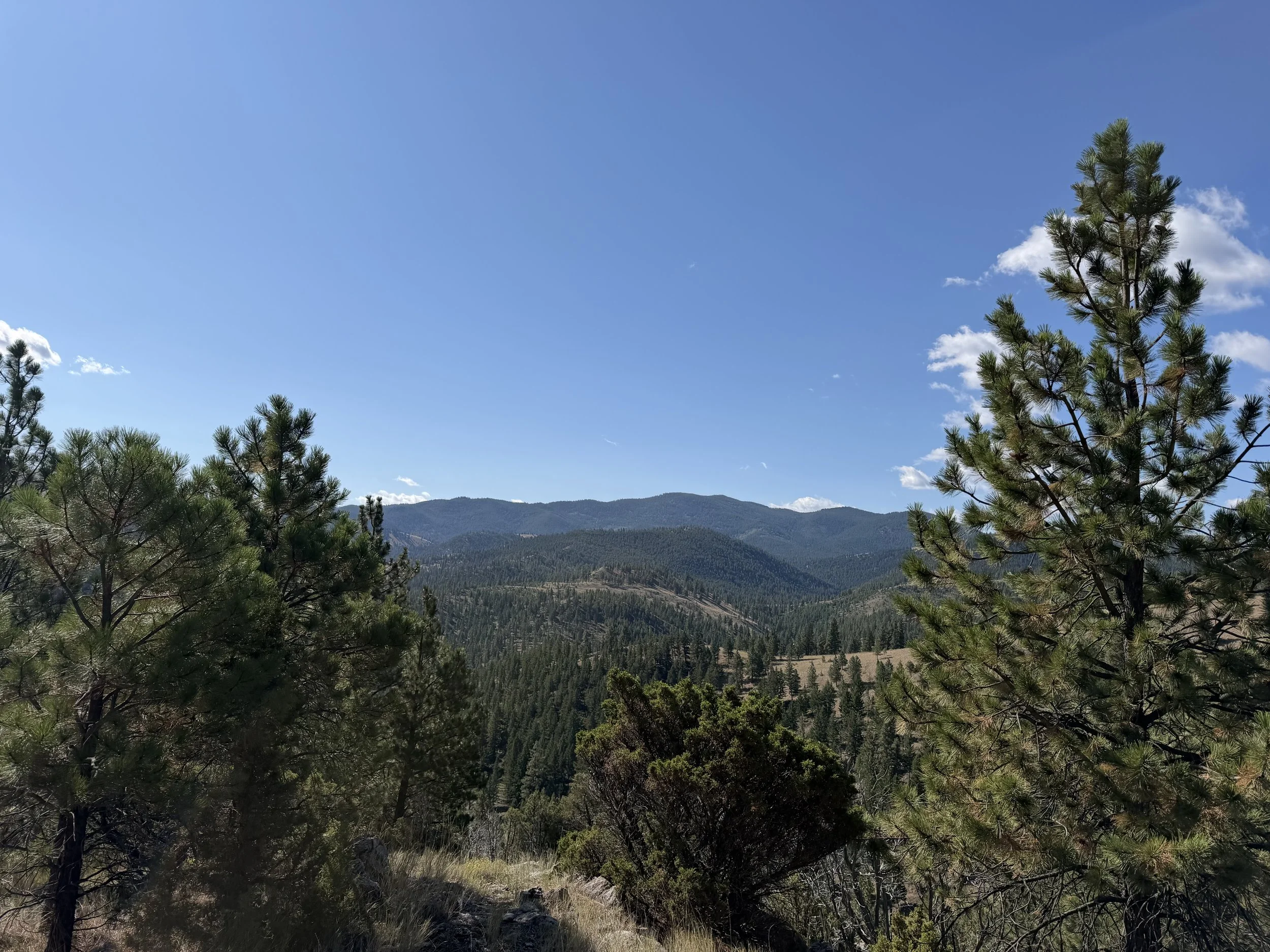
That evening over our dinner in that beautiful lodge just outside of White Sulpher Springs, Montana surrounded by encouraging, inspiring women, Mary, our Past President, told us about her family’s New Year tradition:
We each pick a single word to focus on for the year. That is a word which helps us prioritize our activities, and our choices in how we spend our time. My word this year is “healing.” Last year was a hard one for me, and I don’t feel like I’ve spent enough time recovering from those difficult situations. This year, I’ll be paying attention to healing from those painful experiences. Every choice I make in terms of how I spend my time will be viewed through that one word.
Each of us in the room took some time to think about this, and to offer our word for the year. Cassie, the incoming President, and I both picked the word FOCUS. We picked it for different reasons; she had jumped into multiple businesses the previous year and was running herself ragged with kids and work. She had been offered many exciting opportunities, and felt compelled to accept them without really considering the impact on her health and happiness. Cassie decided on FOCUS as a word to help her prioritize which opportunities she would take, and which she would reject with grace.
For me, the word focus had more to do with my inability to stop multitasking. It was about the way I went about my days, flitting from one thing to the next and not spending uninterrupted, focused time on any one thing. I was the queen of distraction, and wanted to address that weakness.
I wrote FOCUS on small sticky notes and placed them on my monitor at work, my laptop at home, on the bathroom mirror, and even on the dashboard of my car. Every once in a while I would switch them up on different colored paper, doodle drawings around the written word, and different colors of markers, because I know our brains start to ignore the things we get used to seeing.
The entire year was spent looking at that word, working hard to remember to focus on one thing at a time… and failing.
Literally – for an entire year I tried hard to be someone who could focus on something for longer periods of time, and consistently beat myself up over not being able to do that.
January came around again, and this time I was President of Women’s Leadership Network, Helena, and it was my turn to host the annual new board retreat. I told Mary’s story about her family tradition and asked the board members to think about their word for 2018. I started:
“My word this year, like last year, is FOCUS. I failed miserably in 2017 with my word, but this year will be different. I’m going to make this work! I may need your help, though, so please be my accountability partners?”
We went around the table after dinner; everyone shared their word for 2018 with enthusiasm, eager to use this tool to help prioritize time and energy.
Focus.
Focus.
Focus.
I tried hard, with a variety of tools, and by March was highly discouraged, frustrated with myself, and felt like a failure in that part of my life. By April I had completely given up, had thrown away all the sticky notes and other reminders, and beat myself up over it for weeks. We are our own worst critics, right?
In mid 2018 I took the StrengthsFinders assessment and wasn’t at all surprised by my results.
Of 34 themes, FOCUS is number 29.
The lightbulb went on. Memories of my best, most effective studying times came back in a rush: Sitting in a coffee shop or busy student center in college, just enough activity around me to keep my brain focused on the textbook or notes in front of me, and intermittent interruptions of friends stopping to say hi, or a nice waiter/waitress offering more coffee.
Focus is NOT one of my top strengths. I beat myself up for a year and a half for trying hard to be something I’m not. It was like hating myself for not being a famous basketball player – I’m just over five feet tall and probably the least coordinated musician you’ll ever know.
One of the things I love most about my work as a communication coach is the time I’ve spent being coached. (I believe strongly that you cannot be a great coach without getting great coaching.) And what I’ve really enjoyed in my 150+ of hours coaching using the StrengthsFinders tool is the “ah ha” moments I’ve experienced with my clients.
The beauty in knowing your strengths, those go-to skills that you use so naturally to solve problems and build relationships, is that you also know what doesn’twork for you. I see the word focus these days, and I laugh out loud, imagining myself trying a jump shot at the basketball court across the street. Uh uh. Not going to happen.
That doesn’t mean I never have a use for focus, it just means I have to use my innate strengths to achieve the same goal, I have to do things differently to get from point A to point B. Rather than hunker down in a quiet spot to focus, I think strategically about what it’s going to take, what helpful vs. harmful distractions I’ll experience, and how long the task is likely to take if I include the breaks I need to recharge and return to the project.
Hint: It’ll take LESS time if I use my strengths, rather than try to force myself to focus in a way that doesn’t come naturally to me.
Now it’s your turn:
What do you beat yourself up over that you have no natural, innate ability? Is there another way to accomplish a goal, other than to force-fit yourself into a specific method of doing things?
If you’re interested in figuring out what your top strengths are, I published a post & podcast called “What is your top strength?” that offers some ideas to help you identify your top strengths. When you know them, you might just be able to apply what you learn to do what you do even better.
Or better yet, I’m accepting new coaching clients now, individuals & teams; contact me for more information!
Your Brain on Stories: How Stories Impact Your World View
He was sitting in the school library with his friends on a rainy day, laughing and getting the negative attention of the staff. Picking up a random novel from the shelf to hide behind and pretend to read, a sentence actually caught his attention, and he was completely transported to the world of Dune.
Impacts of Hearing and Writing Other People's Stories
He was sitting in the school library with his friends on a rainy day, laughing and getting the negative attention of the staff. Picking up a random novel from the shelf to hide behind and pretend to read, a sentence actually caught his attention, and he was transported to the world of Dune.

It was the third in the series, and when he finished it, he went back to read the first two. That fateful rainy day changed how David Amerland saw his world, and his future in it. The premise behind Dune, written in 1965 is incredibly relevant today. Like so many of our most cherished science fiction novels, we’re seeing ominous signals of our future, strangely mirroring our wildest science fiction fantasies of the past.
In Dune, the people of the future are like computers, our minds are what drive development, not the opposite, as we see today. And that’s what David saw in his future; recognizing the incredible power of the human brain, and how it’s impacted by what we observe, consciously and unconsciously.
Our thoughts and behaviors are shaped by our perceptions of all of our interactions, experiences, and observations of our stories, and we’re also shaped by other people’s stories that we hear and read. Many iterations of “rags to riches” stories capture our attention, not because they are our stories, but because we are motivated and enthralled by the stories we want to relate to. When we hear or read about the struggles, obstacles, and successes of others, we can see ourselves in those stories, even if our experiences are completely different. It’s the emotion – the feelings – behind the stories that capture our attention, not necessarily the actual experiences.
Recent studies have shown that hearing someone tell a story triggers specific activity in our brains. When we hear a story being told, the active part of our brain is the same active part of the brain as the person who is telling the story. In other words, if I share a story really well, I can get others to practically experience it.
There’s more to it, of course, involving release of oxytocin in the brain. You can read more here, and here.
Listen to this fascinating conversation with David Amerland, and let us know your thoughts in the comments.
David Amerland is an international speaker, author and business journalist. He's also a gypsy careerist (like me), because his interests span the spectrum of science and humanity. His recently published book, The Sniper Mind, takes mindfulness and focus techniques that are critical to success in that arena, and applies those techniques to professional and personal success. I'm a little conflicted with this idea, and at the same time, totally intrigued by it.
Enjoyed the podcast? Read about David on his website, connect with him on LinkedIn, and buy his book.