Your Stories Don’t Define You
How You Tell Them Will
A podcast to unlock your stories and uncover meaningful insights.
Episode 164: Why I Added #Pronouns to My LinkedIn Profile Name
I added the pronouns (she, her) to my profile name on LinkedIn a couple of weeks ago, and left a comment on a friend's post shortly afterward.
That was the first time my name came up with the pronouns, and someone I love promptly responded with "lose the pronouns" in his response to my comment.
I was annoyed, why would he care what my title says? It felt insulting, critical, like a condescending comment you'd expect from your older brother when you were teenagers. I was being judged.
A Story of Being Intentional About Signals

Quote from podcast episode 164
I added the pronouns (she, her) to my profile name on LinkedIn a couple of weeks ago, and left a comment on a friend's post shortly afterward.
That was the first time my name came up with the pronouns, and someone I love promptly responded with "lose the pronouns" in his response to my comment.
I was annoyed, why would he care what my title says? It felt insulting, critical, like a condescending comment you'd expect from your older brother when you were teenagers. I was being judged.
Sometimes those things that trigger us are important cues for room for self-reflection and personal growth, right? This was one of those triggers.
Now I have nothing but appreciation for that snide remark.
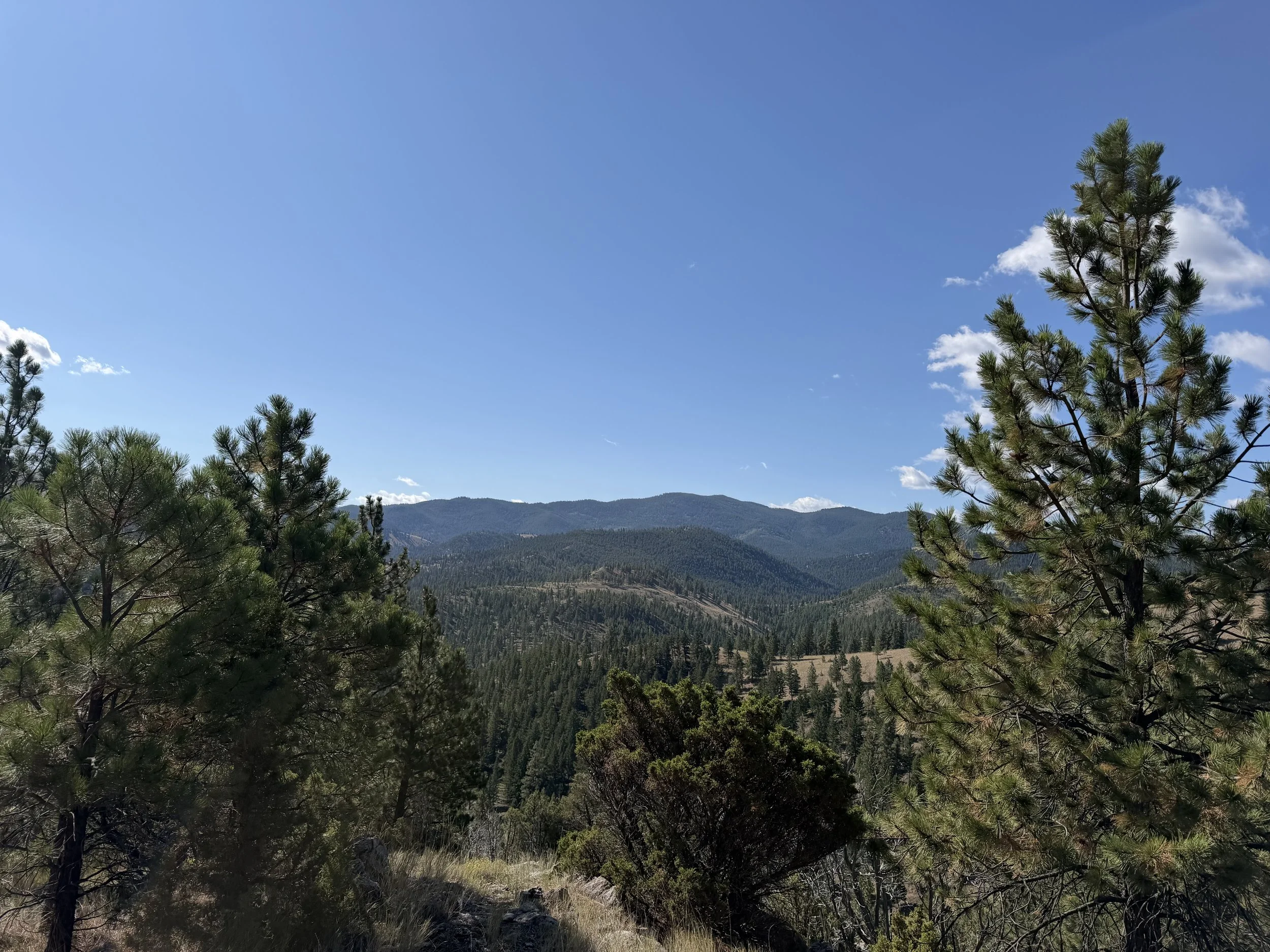
Mt Helena, Helena, Montana February 2021
As I took my walk on the mountain behind my house later that day, I thought more about his comment. It was really bothering me and I couldn’t pinpoint why I was feeling triggered and defensive.
Then it dawned on me, it was the same feeling I had as a teenager and young adult when my brother or sister would give me a hard time about something I said or did. It was the feeling of self-consciousness about not actually thinking through what I said or did, though they could have presented it more gently, there was merit to the criticism. That never feels good.
In this case, I was feeling self-conscious because I hadn't truly considered why I added the pronouns. So there was some merit to my friend’s critical comment. I realized how important it was for me to have clarity around the action of adding pronouns. Otherwise, it’s meaningless. My friends and connections know how much the word intention fills my world… I had done something without fully considering the intention behind it.
The evening before I added pronouns I participated in a webinar "The 5 Languages of Appreciation at Work" hosted by my dear friend Amy Ashworth (who nailed it, by the way.)
In the beginning of the webinar, one participant said that in other small, interactive webinars he attended, guests introduced themselves and added their pronouns to their name. That made sense to me, so I changed my name in Zoom to include my pronouns. I added them in LinkedIn at the same time, to be consistent.
The lightbulb went on in my brain as my heart rate went up, climbing a steep part of the mountain. (That's generally where I find my most meaningful ideas and inspirations.)
I had a vivid memory from just over five years ago: I was looking through my LinkedIn connections and realized the majority of them looked like me. Then I took a hard look at my connections on Facebook and locally, right here in my close community. Again, I was struck by the homogeny of what I was seeing.
Startled and disappointed, I began the work of intentionally broadening my network across political, ethnic, religious, gender identity, sexual preference, and all other communities that have significantly different life experiences from mine. Through a combination of curiosity and intention, I started to build a community that was far more diverse, not for the sake of diversity, but for the sake of inclusion, personal growth, and yes, love. I love people, even the ones I don’t like very much. And when I became aware of my limited circle of friends and acquaintances, I felt like a fraud. It seemed hypocritical for me to share my thoughts about love, justice, community, and communication, given my limited exposure to people who think and look and have experiences that are significantly different from mine.
In these past 5 years, my world has expanded and my feelings of connection have deepened. It hasn't always been easy, especially given the polarization of communities over the past 4 years. I've had to listen carefully, consider how my world view and experiences have created my biases and filters, and have experienced gentle and not-so-gentle correction for stepping in it with people I care deeply about.
Our micro-aggressions run deep, that's why they can be so hard for us to see, and why it hurts when someone points it out.
I’ve continued to practice my own gentle corrections when I’ve experienced bias, whether as a woman, a Jew, a mother, an American, and one time – as a Jewish woman living in Montana.
(My go-to demonstration of a micro-aggression is when a bartender said to me a few years ago: "You look really good for 40!" after asking to see my ID. I gently corrected him. "No need to qualify that compliment. Just tell me I look good.")
So why did I suddenly add pronouns?
I hadn't added pronouns before because I have a feminine name, and believe it's obvious that I identify as a woman. It didn’t seem necessary.
When our older son was the only Jewish kid in his class in kindergarten, and the teacher offered to let him put a birds nest on the top of his Christmas Tree calendar instead of a star. That way he could call it a Winter Tree instead.

When I added pronouns it wasn't for me. It isn't about me.
It’s about normalizing something for those who feel marginalized by having to point it out.
That was it. My "ah ha" moment on the mountain.
Adding pronouns was a simple and effective indication to my network that my world is broadening. Because what we share about ourselves, images, words, stories, and yes, pronouns, are all signals for the people around us.
I’m indicating that my love and care for people isn't despite their differences, but because of them.
Our differences aren't something to be tolerated, they're something to explore, to value, and to celebrate.

Sarah and chocolate lab, Toby, snow, Mt Helena, Helena, Montana
ABOUT SARAH:
In my work with coaching clients, I guide people to improve their communication using storytelling as the foundation of our work together. What I’ve realized over years of coaching and podcasting is that the majority of people don’t realize the impact of the stories they share - on their internal messages, and on the people they’re sharing them with.
My work with leaders and people who aspire to be leaders follows a similar path to the interviews on my podcast, uncovering pivotal moments in their lives and learning how to share them to connect more authentically with others, to make their presentations and speaking more engaging, to reveal patterns that have kept them stuck or moved them forward, and to improve their relationships at work and at home.
The audiobook, Your Stories Don’t Define You, How You Tell Them Will is now available!
Included with your purchase are two bonus tracks, songs recorded by Sarah's band, Spare Change, in her living room in Montana.
Episode 130: I Will Not Meet Hate at the Door, Lessons of Love and Forgiveness
What's really significant about Heather's words is that she backs them up with real action and and her behavior absolutely brings that message home. She chooses love, learning, and personal growth in response to the adversity she experienced as a child and young adult.
Stories of Love and Learning Through Adversity

Heather’s TEDx Colorado Springs - Transforming Adversity into Opportunity
Heather Younger is no stranger to adversity. Born to a white, Jewish mother and a black father, her mother's family was less than welcoming, and Heather grew up without any contact with the majority of that family.
What's really significant about Heather's words is that she backs them up with real action and and her behavior absolutely brings that message home. She chooses love, learning, and personal growth in response to the adversity she experienced as a child and young adult.
Now is the time for us to amplify messages like Heather's, to listen closely to her stories not to get angry or frustrated, but to learn how to hold space for learning and compassion for those who mistreat us.

Heather and I connected early in my LinkedIn activity, and we've had the opportunity to spend real time together - in person. She was one of the first to sign on to participate in the inaugural No Longer Virtual event in 2017, and hasn't missed and #NLV since.
I'm so grateful for her friendship, support, and incredibly inspiring way she speaks, lives, and loves.
Learn more about Heather by connecting with her on LinkedIn, visit her website, subscribe to her podcast, and be sure to watch her outstanding TEDx talk. You can also order her best selling book, 7 Intuitive Laws of Employee Loyalty on Amazon.
Episode 84: Never Try to Be Something You're Not
You wouldn’t think that word could cause such discouragement and frustration.
Focus.
It was the Women’s Leadership Retreat in early January, and my first experience on a board of a community organization. I was that year’s Vice President, and my primary responsibility for the year was to organize, coordinate, and host the annual conference that fall.
When You Know Your Limits, You Uncover Your Strengths
You know how important stories are in effective communication, but did you know that the stories you choose to share, and how you choose to share them have a huge impact on your internal messages, and in how you’re being perceived by the people around you?
This book will help you identify pivot points in your life – those moments that really shape who you are and why, and can help you figure out where certain damaging internal messages came from. When you understand that, you can find patterns in your life and address those messages and communication challenges that are limiting your success at work and in your relationships.
Focus
You wouldn’t think that word could cause such discouragement and frustration.
Focus.
It was the Women’s Leadership Retreat in early January, and my first experience on a board of a community organization. I was that year’s Vice President, and my primary responsibility for the year was to organize, coordinate, and host the annual conference that fall.
That evening over our dinner in that beautiful lodge just outside of White Sulpher Springs, Montana surrounded by encouraging, inspiring women, Mary, our Past President, told us about her family’s New Year tradition:
We each pick a single word to focus on for the year. That is a word which helps us prioritize our activities, and our choices in how we spend our time. My word this year is “healing.” Last year was a hard one for me, and I don’t feel like I’ve spent enough time recovering from those difficult situations. This year, I’ll be paying attention to healing from those painful experiences. Every choice I make in terms of how I spend my time will be viewed through that one word.
Each of us in the room took some time to think about this, and to offer our word for the year. Cassie, the incoming President, and I both picked the word FOCUS. We picked it for different reasons; she had jumped into multiple businesses the previous year and was running herself ragged with kids and work. She had been offered many exciting opportunities, and felt compelled to accept them without really considering the impact on her health and happiness. Cassie decided on FOCUS as a word to help her prioritize which opportunities she would take, and which she would reject with grace.
For me, the word focus had more to do with my inability to stop multitasking. It was about the way I went about my days, flitting from one thing to the next and not spending uninterrupted, focused time on any one thing. I was the queen of distraction, and wanted to address that weakness.
I wrote FOCUS on small sticky notes and placed them on my monitor at work, my laptop at home, on the bathroom mirror, and even on the dashboard of my car. Every once in a while I would switch them up on different colored paper, doodle drawings around the written word, and different colors of markers, because I know our brains start to ignore the things we get used to seeing.
The entire year was spent looking at that word, working hard to remember to focus on one thing at a time… and failing.
Literally – for an entire year I tried hard to be someone who could focus on something for longer periods of time, and consistently beat myself up over not being able to do that.
January came around again, and this time I was President of Women’s Leadership Network, Helena, and it was my turn to host the annual new board retreat. I told Mary’s story about her family tradition and asked the board members to think about their word for 2018. I started:
“My word this year, like last year, is FOCUS. I failed miserably in 2017 with my word, but this year will be different. I’m going to make this work! I may need your help, though, so please be my accountability partners?”
We went around the table after dinner; everyone shared their word for 2018 with enthusiasm, eager to use this tool to help prioritize time and energy.
Focus.
Focus.
Focus.
I tried hard, with a variety of tools, and by March was highly discouraged, frustrated with myself, and felt like a failure in that part of my life. By April I had completely given up, had thrown away all the sticky notes and other reminders, and beat myself up over it for weeks. We are our own worst critics, right?
In mid 2018 I took the StrengthsFinders assessment and wasn’t at all surprised by my results.
Of 34 themes, FOCUS is number 29.
The lightbulb went on. Memories of my best, most effective studying times came back in a rush: Sitting in a coffee shop or busy student center in college, just enough activity around me to keep my brain focused on the textbook or notes in front of me, and intermittent interruptions of friends stopping to say hi, or a nice waiter/waitress offering more coffee.
Focus is NOT one of my top strengths. I beat myself up for a year and a half for trying hard to be something I’m not. It was like hating myself for not being a famous basketball player – I’m just over five feet tall and probably the least coordinated musician you’ll ever know.
One of the things I love most about my work as a communication coach is the time I’ve spent being coached. (I believe strongly that you cannot be a great coach without getting great coaching.) And what I’ve really enjoyed in my 150+ of hours coaching using the StrengthsFinders tool is the “ah ha” moments I’ve experienced with my clients.
The beauty in knowing your strengths, those go-to skills that you use so naturally to solve problems and build relationships, is that you also know what doesn’twork for you. I see the word focus these days, and I laugh out loud, imagining myself trying a jump shot at the basketball court across the street. Uh uh. Not going to happen.
That doesn’t mean I never have a use for focus, it just means I have to use my innate strengths to achieve the same goal, I have to do things differently to get from point A to point B. Rather than hunker down in a quiet spot to focus, I think strategically about what it’s going to take, what helpful vs. harmful distractions I’ll experience, and how long the task is likely to take if I include the breaks I need to recharge and return to the project.
Hint: It’ll take LESS time if I use my strengths, rather than try to force myself to focus in a way that doesn’t come naturally to me.
Now it’s your turn:
What do you beat yourself up over that you have no natural, innate ability? Is there another way to accomplish a goal, other than to force-fit yourself into a specific method of doing things?
If you’re interested in figuring out what your top strengths are, I published a post & podcast called “What is your top strength?” that offers some ideas to help you identify your top strengths. When you know them, you might just be able to apply what you learn to do what you do even better.
Or better yet, I’m accepting new coaching clients now, individuals & teams; contact me for more information!