
Your Stories Don’t Define You
How You Tell Them Will
A podcast to unlock your stories and uncover meaningful insights.
408 Changing For Good
In this episode Sarah Elkins and Judit Piros discuss the importance of change in one's self, how healing often needs to be sought out and made active strides to achieve. From the highs and lows of being a parent, to the life of an artist, as well as the deep intrinsic self learning that comes from our unique walks of life that we must share with those around us. In doing so, we find we aren’t that different after all.
408 Changing For Good
In this episode Sarah Elkins and Judit Piros discuss the importance of change in one's self, how healing often needs to be sought out and made active strides to achieve. From the highs and lows of being a parent, to the life of an artist, as well as the deep intrinsic self learning that comes from our unique walks of life that we must share with those around us. In doing so, we find we aren’t that different after all.

Handmade Raku Clay Whale Light Sculpture – Unique Ceramic Art, One piece only, available on Etsy.
Highlights
Shifting perspective to see scenarios differently, especially if it is a scenario you didn’t expect to not work out.
Taking time for yourself to heal, find your counterweight, take whatever is thrown at you and still stand up. Especially for yourself and those you love.
Proportional responses and how necessary they are to healing.
Try to be gentle with yourself.
“The way you were born has very very much defined how you lived and how you experience life.”
“All life begins in darkness.”
“You need suffering in order to transform, and this is when you learn your own strength and your own capabilities.”

Handmade Raku Clay Whale Light Sculpture – Unique Ceramic Art, One piece only
Dear Listeners it is now your turn,
I have two things that I would like for you to consider over the next few weeks after listening to this episode.
1 - If you are a person who has given birth to a living child or living young adult, what is the birth story you share in front of them? What is the birth story you tell people? Is it traumatic? Have you figured out a way to share the story in a way that feels beautiful and meaningful, regardless of what actually happened that day, regardless of the pain you experienced and the fear. How can you tell this story so that when your child hears it, they hear the joy and gratitude that they are there with you now. That’s my first question.
2 - What is it that is your tell? What is the signal your body gives you when something isn’t right? I encourage you over the next few weeks to try to identify what that is. In Judit, she said that its a twitch in her hip, in the muscles around her hip. For me, it’s usually some sort of effect from my essential tremors, starting to shake badly enough that it’s very noticeable. So when you feel uncomfortable or something is making you anxious or angry, take inventory of your body, figure out where you’re feeling it. And make a choice, a conscious choice, to notice whenever that is the warning you need to change something.
And, as always, thank you for listening.
Mentioned in this episode
Download Judit’s free guide: Imferpect Design.
Do you remember the Weebles collectibles of the 1970s?
About Judit
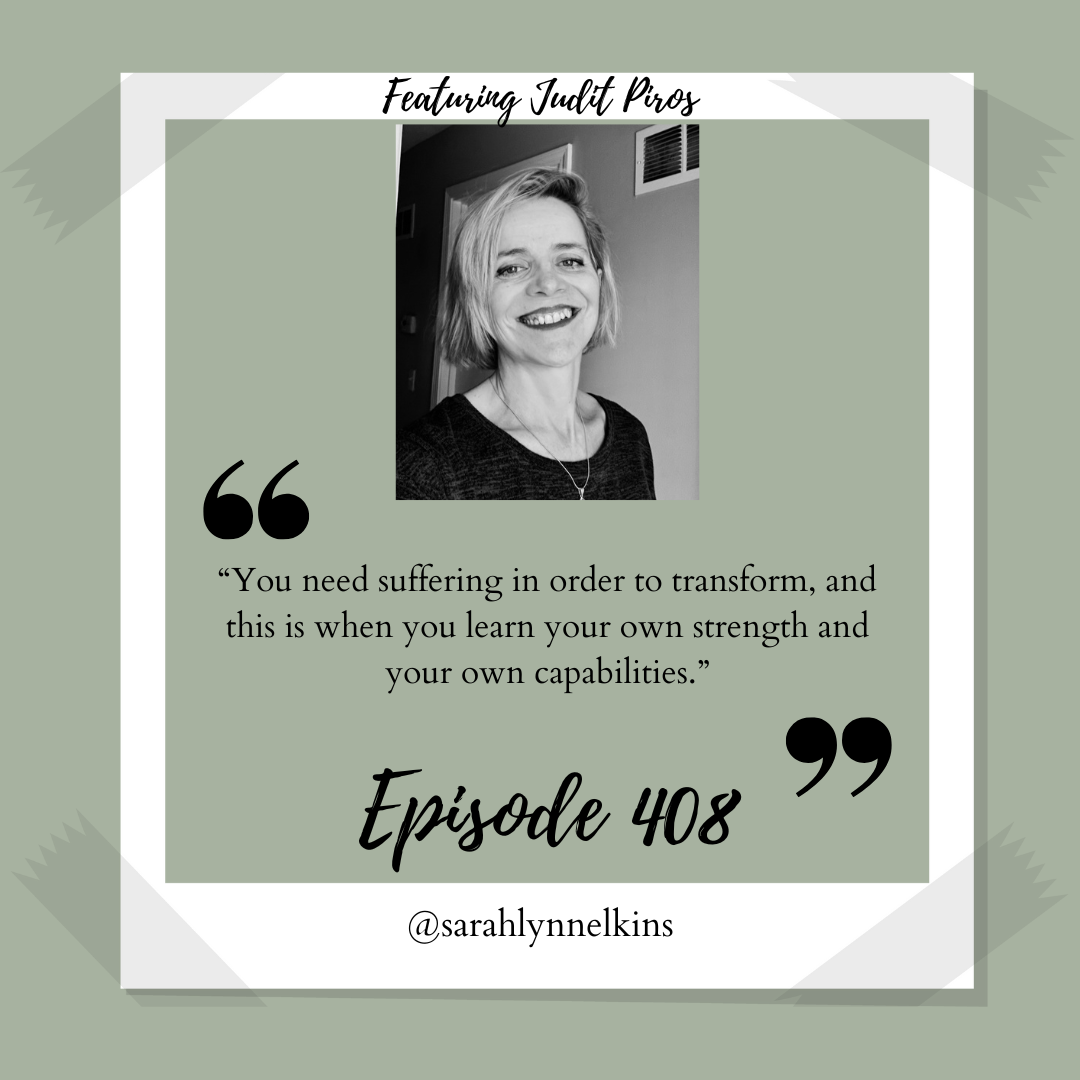
I am an Atlanta based Hungarian artist... right now artist, because my life was full of twists and turns before I reached to this point, calling myself this way. Economist by degree, designer by interest, mother of three by love, bellydance teacher, phorographer and doula by femininity and the deepest connection is about mental help, coaching and exploring the fields of Birth and Death.
I have a never fading excitement toward the pre- and perinatal traumas and more importantly: how to heal from this traumas. It took me ten years to get more or less over my own and opening that Pandora's box turned my whole life upside down, but worth it. Even the losses, because on this journey I found myself and this new self is a much more relaxed company for... well... for me :)
Be sure to check out Judit’s LinkedIn, Facebook, and Instagram! As well as Imferpect Design for a free guide!
About Sarah
"Uncovering the right stories for the right audiences so executives, leaders, public speakers, and job seekers can clearly and actively demonstrate their character, values, and vision."
In my work with coaching clients, I guide people to improve their communication using storytelling as the foundation of our work together. What I’ve realized over years of coaching and podcasting is that the majority of people don’t realize the impact of the stories they share - on their internal messages, and on the people they’re sharing them with.
My work with leaders and people who aspire to be leaders follows a similar path to the interviews on my podcast, uncovering pivotal moments in their lives and learning how to share them to connect more authentically with others, to make their presentations and speaking more engaging, to reveal patterns that have kept them stuck or moved them forward, and to improve their relationships at work and at home.
The audiobook, Your Stories Don’t Define You, How You Tell Them Will is now available!
Included with your purchase are two bonus tracks, songs recorded by Sarah's band, Spare Change, in her living room in Montana.
Be sure to check out the Storytelling For Professionals Course as well to make sure you nail that next interview!
Episode 135: Obstacles Can Be the Key to Building Resilience and Self Love
It's not unusual to have a "Series of Unfortunate Events" in our lives, those multiple years of trauma, grief, and struggle, that can either make us bitter, or help us develop resilience in a positive way, to become even more compassionate toward others.
Kerrian Fournier went through two of those phases, once in her early career, and again years later.
What is the Lesson? Your Life's Stories Create Your Identity
It's not unusual to have a "Series of Unfortunate Events" in our lives, those multiple years of trauma, grief, and struggle, that can either make us bitter, or help us develop resilience in a positive way, to become even more compassionate toward others.

Kerrian Fournier went through two of those phases, once in her early career, and again years later.
I often wonder what people see as their source of resilience, and Kerrian's is most definitely the motivation and determination to live a full life, and to demonstrate qualities of resilience, persistence, compassion, and courage for her highly intelligent daughter.
To learn more about Kerrian, visit her outstanding website, and connect with her on LinkedIn.
---
Sarah Elkins delights in guiding individuals and teams to improve communication, using storytelling as the foundation of her work. She is a Gallup certified Strengths coach and uses that tool to coach her clients to improve their communication in all relationships, and to find more satisfaction at work and at home.
Her book, Your Stories Don't Define You, How You Tell Them Will is available on bookshop.org (supporting independent booksellers), and on Amazon. The audiobook will be available in fall 2020.
106: Resilience and Persistence are Two Different Things - We Need Both to Thrive
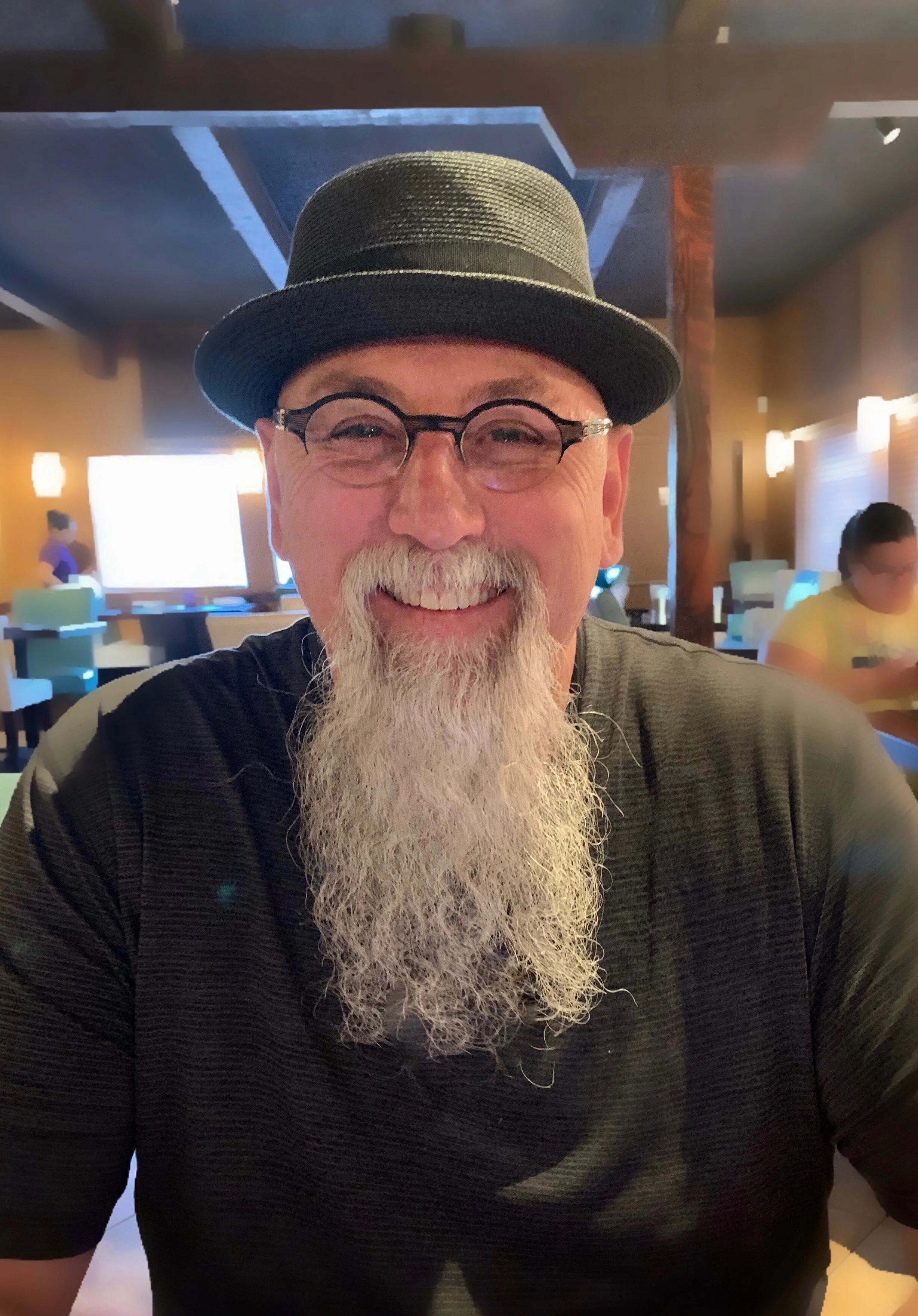
Russ Johns’ life changed dramatically after falling three stories to shatter his wrist and break his arm. He was a professional musician - a drummer - but that was no longer an option after two years of surgeries and physical therapy. He was lucky to have any use of his arm… he was lucky to be alive.
Stories of Loss and Grief, Coupled with Gratitude and Inspiration
Russ Johns’ life changed dramatically after falling three stories to shatter his wrist and break his arm. He was a professional musician - a drummer - but that was no longer an option after two years of surgeries and physical therapy. He was lucky to have any use of his arm… he was lucky to be alive.
There’s just something about Russ’s energy that caught my attention, and I realized during our call that it is his curiosity and openness to listening and sharing stories, coupled with his sense of gratitude and wonder at life and living.
He shared some very personal history with me during our conversation, and I was especially grateful for the grace with which he shared the story about his son’s suicide, a story he shared on stage at a The Moth Story Hour event.
Russ demonstrates the title of this podcast so beautifully, I hope you enjoy listening as much as I enjoyed recording this episode.
The National Suicide Prevention Lifeline 1-800-273-TALK (8255)
A free, 24/7 confidential service that can provide people in suicidal crisis or emotional distress, or those around them, with support, information, and local resources.
Crisis Text Line
741-741
This free text-message service provides 24/7 support to those in crisis. Text 741-741 to connect with a trained crisis counselor right away.
Episode 80: Some Stories Take Time to Make Sense
If you know him now, you'd describe him as a quintessential hippy artist; but Chip Clawsen was six when he connected deeply with the story his mother read to him, The Sands of Iwo Jima. It was at that tender young age that he decided he'd one day be a marine - a hero.
All of Our Stories Become Part of Our Truth

If you know him now, you'd describe him as a quintessential hippy artist; but Chip Clawsen was six when he connected deeply with the story his mother read to him, The Sands of Iwo Jima. It was at that tender young age that he decided he'd one day be a marine - a hero.
Throughout high school and college, he followed the path his parents expected of him, while telling them and his uncles that what he really wanted was to join the Marines.
His uncles, Army and Navy, told him he should pick a different branch - the Marines were the toughest, and Chip was small and wiry, no taller than 5'6". But Chip eventually enlisted with the Marines and tested into the flight program; he was going to be a pilot.
Chip's is a story of resilience, grit, and self-reflection that took him from a mindset of heroics in war to a mindset of heroics in peace. His pivot points, those moments in time that changed everything about who he thought he was, and how he saw his role in the world, pointed him in many different directions. The piece that always remained was his determination to follow his heart.
To learn more about Chip and his art, visit his artist index and check out an article about his recent sculpture creations.
Episode 72: Persistence, Curiosity, and Following Instincts Create Career Resilience
When Bob Musial failed his role-playing test in his first sales job, he was humiliated. He was the only new hire out of seven to fail that session, and that made him even more motivated to prove to himself and others that he would be successful in that job.
Apply All Experiences to Every New Environment

When Bob Musial failed his role-playing test in his first sales job, he was humiliated. He was the only new hire out of seven to fail that session, and that made him even more motivated to prove to himself and others that he would be successful in that job.
He could have given up; it would have been easier in some ways to choose a different path after that dip in his confidence, but he didn’t. Instead, he doubled down on efforts to prove to himself that he could do whatever he set his mind to do. Part of that was trusting his instincts and ignoring a lot of the advice and guidance he was being given. And that aspect of his career resilience, coupled with his sense of humor, stayed with him for his many career transitions through 40+ years.
“Your sense of humor will set you apart. Take your job seriously, but don’t take yourself seriously.”
When it comes to career resilience, some of us take a more zig zag path, what I like to call a “gypsy career.” For those of us who regularly choose to change industries, roles, and environments, career resilience is dependent not only on our curiosity and ambition, it depends on our ability to convey to a potential new employer that we can apply all of what we’ve learned from every experience to be successful in a completely different role or industry.
For people who choose a more linear career path, career resilience depends on an ability to stay curious, and to prove, over and over again, that they will continue to be competent as the organization shifts into the future.
What does career resilience look like for you?
“Be curious about every person you meet. A diverse network is a powerful network.”
Bob & I discussed this topic and agreed that regardless of your career path, your career resilience grows with every opportunity you take to learn, and to build strong relationships across all parts of your life. As I’ve mentioned before, protecting your future income is critical, and two aspects of that are life-long learning in every aspect of life (personal growth/development, skill building), and building your diverse network of people before you need them.
Bob Musial, principal at StreetSmart Business Development, is a coach, humorist and author, with a 45-year background in sales, marketing, advertising and customer experience. His book, “Soft Skills. Hard Returns,” contains humor-laced stories with practical applications of soft skills in situations most people encounter daily. The ebook is available on Amazon, Apple, Barnes & Noble and other platforms.
Connect with Bob on LinkedIn to keep up with work!