Your Stories Don’t Define You
How You Tell Them Will
A podcast to unlock your stories and uncover meaningful insights.
404 The Unpredictable Nature of Our Stories
Like the humble ant, we go about our lives caring for those in our home, seeking new horizons, and using our natural talents to build monuments to our success. However, just like the ant, we are subject to things out of our control; be it a rainstorm that floods known pathways or a cruel child with a magnifying glass. These things can break us, they often do, but just like the ant we must settle again, rebuild, and make our home safe again.
In this episode Sarah Elkins and Anne Plaisance discuss the many trials and tribulations they had faced and how they channeled it into something beautiful and powerful.

Like the humble ant, we go about our lives caring for those in our home, seeking new horizons, and using our natural talents to build monuments to our success. However, just like the ant, we are subject to things out of our control; be it a rainstorm that floods known pathways or a cruel child with a magnifying glass. These things can break us, they often do, but just like the ant we must settle again, rebuild, and make our home safe again.
In this episode Sarah Elkins and Anne Plaisance discuss the many trials and tribulations they had faced and how they channeled it into something beautiful and powerful.
Highlights
How have you surprised others? With your choices, strengths, and/or stories?
How have you turned the hard parts of your story into something inspiring? How have you transformed?
When was the moment your relief finally turned to joy?
Quotes
“What you don’t transform, you transmit.”
“I’d say it’s a little bit like kintsugi, the japanese art where you fill all the cracks with gold, but here you fill your soul with love.”
Dear Listeners it is now your turn,
My question isn’t necessarily what you’ll do with this information, my question for you today is will you take five minutes after listening to this podcast to take inventory of where you are right now in your feelings, in how you are taking action in something that you want to do, take five minutes and take inventory. What do you need now? What will put you in a better place now? And what tiny ant sized step can you take in that direction?
And, as always, thank you for listening.
About Anne

Internationally renowned painter Anne Plaisance has established herself as a key figure on the contemporary art scene, with over 100 exhibitions worldwide. She has been awarded numerous times, receiving major distinctions as well as grants from the prestigious Cambridge Arts Council and Massachusetts Cultural Council. Her work, marked by profound artistic and social engagement, has been featured in influential media outlets such as The Boston Globe, Harper’s Bazaar, Elle Decoration, and Artscope, and she has been regularly invited on television and radio programs.
Her creations are part of prestigious private collections in London, Milan, Paris, Warsaw, Dubai, Kyoto, and Boston, establishing her as a widely collected and internationally recognized artist.
Founder of the transformative art exhibition Wonder Women Now, she stands out for her commitment to women’s empowerment and her bold approach to the global issue of domestic violence, making her work a true force for social and cultural change.
Be sure to check out Anne’s Facebook, Instagram, and LinkedIn! As well as her website Anne Plaisance!
About Sarah
"Uncovering the right stories for the right audiences so executives, leaders, public speakers, and job seekers can clearly and actively demonstrate their character, values, and vision."
In my work with coaching clients, I guide people to improve their communication using storytelling as the foundation of our work together. What I’ve realized over years of coaching and podcasting is that the majority of people don’t realize the impact of the stories they share - on their internal messages, and on the people they’re sharing them with.
My work with leaders and people who aspire to be leaders follows a similar path to the interviews on my podcast, uncovering pivotal moments in their lives and learning how to share them to connect more authentically with others, to make their presentations and speaking more engaging, to reveal patterns that have kept them stuck or moved them forward, and to improve their relationships at work and at home.
The audiobook, Your Stories Don’t Define You, How You Tell Them Will is now available!
Included with your purchase are two bonus tracks, songs recorded by Sarah's band, Spare Change, in her living room in Montana.
Be sure to check out the Storytelling For Professionals Course as well to make sure you nail that next interview!
348 Artistry in Community
Art has always brought people together, even in the darkest times of human history there is always a creative trying to give the world just a little bit of light.
In today’s episode Sarah Elkins and Al Swanson discuss how community and artistry often go hand in hand, as well as the importance of giving back to your community.
348 Artistry in Community

Art has always brought people together, even in the darkest times of human history there is always a creative trying to give the world just a little bit of light.
In today’s episode Sarah Elkins and Al Swanson discuss how community and artistry often go hand in hand, as well as the importance of giving back to your community.
Highlights
Community.
Passion for the path you chose.
People will fall in love with the creator, not the product.
Quotes
“Though the challenges are there, … the more I’m interested in something, the more I want to talk about it.”
“Pick your medium, and you have to love it, and you’re gonna have to want to give it (to others).”
Dear Listeners it is now your turn,
What are you going to explore today, tomorrow, the next day, in your creative outlet? What small thing can you take on, it might be picking up a coloring book and starting to color, just start to explore that. It might be picking out a recipe you’ve never tried or maybe it’s finding your community at the library, a hiking group, maybe it’s the land trust near you to help with trail maintenance, maybe it’s something as simple as volunteering to read to children or seniors. What will you do to find your community, to contribute to it, to better yourself and keep yourself in alignment?
And, as always, thank you for listening.
About Al (bio from his website)
A.L. grew up on a small farm in Maine, surrounded by a beautiful forest, and raised by a father who loved working with wood. Watching his father create extraordinary pieces with his own two hands, with trees harvested from their land, left an impression on A.L. and sparked a passion that continues to this day.
After spending time studying business and agronomy at respective universities, he decided to follow the passions he discovered as a boy and pursue the fine craft of woodworking. He apprenticed under several elite cabinetmakers in Maine, mastering the traditional craft.
In 2000, he packed up his tools and gave in to the lure of the wide-open spaces of Montana, where he now calls home. Today he shares the passion he discovered as a boy with the folks who enjoy his collections of fine hardwood gifts for the home, exceptional hand-crafted furniture, and his line of wooden fly boxes, landing nets, and fly rod cases.
When he’s not in the studio creating something that will last for generations, you’ll find him out on the river casting for trout, spending time with his son, and dreaming up the next big project to exceed his patrons’ expectations.
Be sure to check out his website! As well as his Twitter and Facebook!
About Sarah
"Uncovering the right stories for the right audiences so executives, leaders, public speakers, and job seekers can clearly and actively demonstrate their character, values, and vision."
In my work with coaching clients, I guide people to improve their communication using storytelling as the foundation of our work together. What I’ve realized over years of coaching and podcasting is that the majority of people don’t realize the impact of the stories they share - on their internal messages, and on the people they’re sharing them with.
My work with leaders and people who aspire to be leaders follows a similar path to the interviews on my podcast, uncovering pivotal moments in their lives and learning how to share them to connect more authentically with others, to make their presentations and speaking more engaging, to reveal patterns that have kept them stuck or moved them forward, and to improve their relationships at work and at home.
The audiobook, Your Stories Don’t Define You, How You Tell Them Will is now available!
Included with your purchase are two bonus tracks, songs recorded by Sarah's band, Spare Change, in her living room in Montana.
Be sure to check out the Storytelling For Professionals Course as well to make sure you nail that next interview!
Episode 145: Vivid, Memorable Moments Hold Life's Pivotal Stories
As a child, Veronica Valadez thought that picking strawberries as a day laborer was fun, a time to run around the fields with her sister, throw overripe strawberries at each other, and sometimes pick enough strawberries to make some cash for school clothes.
The More Details You Remember of Your Story, the Better for Sharing

As a child, Veronica Valadez thought that picking strawberries as a day laborer was fun, a time to run around the fields with her sister, throw overripe strawberries at each other, and sometimes pick enough strawberries to make some cash for school clothes.

She would come home exhausted, covered in strawberry goo and mud, her tummy full of those sweet red berries. For her parents and older siblings, though, this was work - hard work - and they were being seriously exploited. She didn't realize that until far later in life.
It wasn't until she went to college that she started to understand her childhood from that perspective, and college was part of her life only because she had mentors that encouraged her to go. She was the first in her family to attend a four-year university, and to graduate with a degree.

Veronica's life has been all about self-discovery through her art, her activism, and in how she is raising her children.
During our conversation, Veronica spoke about the importance of her exposure to traditional Aztec dancers early in her college experience. Here’s an example for reference:
I enjoyed this conversation so much, and what really stood out to me was the moment Veronica described when she met her mentor and advocate for the first time.

Sarah Elkins loves to guide individuals and teams to improve communication, using storytelling as the foundation of her work. She is a Gallup certified Strengths coach and uses that tool to coach her clients to improve their communication in all relationships, and to find more satisfaction at work and at home.
Her book, Your Stories Don't Define You, How You Tell Them Will is available on bookshop.org (supporting independent booksellers), and on Amazon. The audiobook will be available in fall 2020.
Episode 89: Ending the Mental Illness Stigma One Story at a Time
Illness Might Just Be a Misnomer: Learn to Love Your Special Talents
Dale Morris caught my attention a few years ago on LinkedIn with his headline: “If you’re trying to think outside of the box, you’re still constrained by the box.”
I thought for days about that. Although I believe constraints often lead to extraordinary creativity, some of us don’t think in the context of constraints. We don’t know what we don’t know, so we try things others might think were impossible. Our older son and I are perfect examples of that. When we get an idea in our heads, we don’t think about what wouldn’t work. We think about what WILL work. When it comes to the idea of thinking outside of a box, we’re more likely to think: “Wait. Was there a box? Was I supposed to do something with a box? Damn. A box?” Sometimes that works against us, other times, it definitely works in our favor.
Dale is one of those people who doesn’t even consider why something won’t work, he just moves forward with his idea. That’s why he’s so good at what he does, both in art and in IT work.
We shared a great discussion about the possibility that certain diagnoses we call mental illness might actually be evolutionary shifts to address our very real over-stimulating environments. We also talked about how some people choose to see a diagnoses in the light of possibility - using that different way of thinking to be really good at certain tasks and jobs.
I especially loved the part of our conversation about Dale’s art when he was in college. He had a literature professor who required an essay about a work by an American author within a specific time period. Because of his differently-abled mind, he struggled with the essay. She offered to adjust his assignment: Paint your feelings about a work of literature.
He selected the protagonist from Steinbeck’s The Chrysanthemums. I won’t spoil the story by sharing it here, just listen.
Connect with Dale on LinkedIn to learn more about his extraordinary talent in un-puzzling IT puzzles.
Episode 87: Share Stories and OWN Your Talents
Al Swanson has always been an outdoorsy guy, so much that his first plan out of high school was to study turf management. Yes, turf management. His interest began with a manager who was on the cutting edge of sustainable, ecologically healthy golf course management. That manager was way ahead of his time, and Al knew it.
Don’t tell people what you’re good at. Demonstrate it with a story!
Al Swanson in his studio in Helena, Montana
Al Swanson has always been an outdoorsy guy, so much that his first plan out of high school was to study turf management. Yes, turf management. His interest began with a manager who was on the cutting edge of sustainable, ecologically healthy golf course management. That manager was way ahead of his time, and Al knew it. That experience is part of what inspired him to continue his work as a sustainable craftsman.
A back injury prevented him from taking his degree to work, so to speak, and after a few learning opportunities, he came back to his roots (so to speak), in woodworking with sustainably harvested trees.
Al Swanson’s Shop, Helena, Montana

Delicious beer from Lewis & Clark Brewing Company
We spoke at his shop in Helena, Montana, while sipping some local beers with the extraordinary scent of cedar and pine all around us.
There are two reasons I asked Al to be a guest on the podcast. One was that during our last conversation, he told me a story about running into some people at a brewery in Phillipsburg, Montana, and having a moment of celebrity status - and owning it. I was intrigued with his idea about being comfortable with that feeling and choosing to be exactly what your admirers expect you to be. It’s not about being a know-it-all, or any kind of superiority. It’s about owning what you’re awesome at, knowing you’re still growing and learning, and acknowledging and appreciating it when people recognize your magic.
Al is well known for his fly fishing accessories, but he developed his reputation for fine art and craftsmanship in his furniture business. That’s how I met him; I coveted an absolutely stunning piece he had donated to an auction for our Prickly Pear Land Trust annual event, the Harvest Moon Banquet.
Fly boxes custom made for Patagonia
The other reason I asked Al to chat with me was that his work is truly extraordinary, and I wanted to learn more about his motivation behind what he does. We share the theory that when we provide a service or product, it’s the details that make your work unique. Similar to my conversation with Rocky Connell, the artisan bread maker at Park Avenue Bakery, we spoke about the energy we put into everything we do.
In Al’s case, a huge part of receiving a piece built by him is how he packages the gift. It’s all about the experience, not just the beautiful artistry in the piece itself. Al includes cedar, hand shaved into fragrant, curly, fine strips in the box. When that box is opened, the receiver is instantly transported to the shop where the piece was made, with a sense of belonging and longing for the forest where the wood was harvested.
One of the great stories he shared was about how he was inspired to create fly fishing accessories, many are available thanks to his relationship with Orvis. Because of Al’s generous spirit, he fixed a broken landing net (used to carefully scoop up a fish after catching it) that was meaningful to a young man who happened to walk into the A.L. Swanson gallery in downtown Helena. That young man was about to join the leadership team at Orvis.
Episode 80: Some Stories Take Time to Make Sense
If you know him now, you'd describe him as a quintessential hippy artist; but Chip Clawsen was six when he connected deeply with the story his mother read to him, The Sands of Iwo Jima. It was at that tender young age that he decided he'd one day be a marine - a hero.
All of Our Stories Become Part of Our Truth
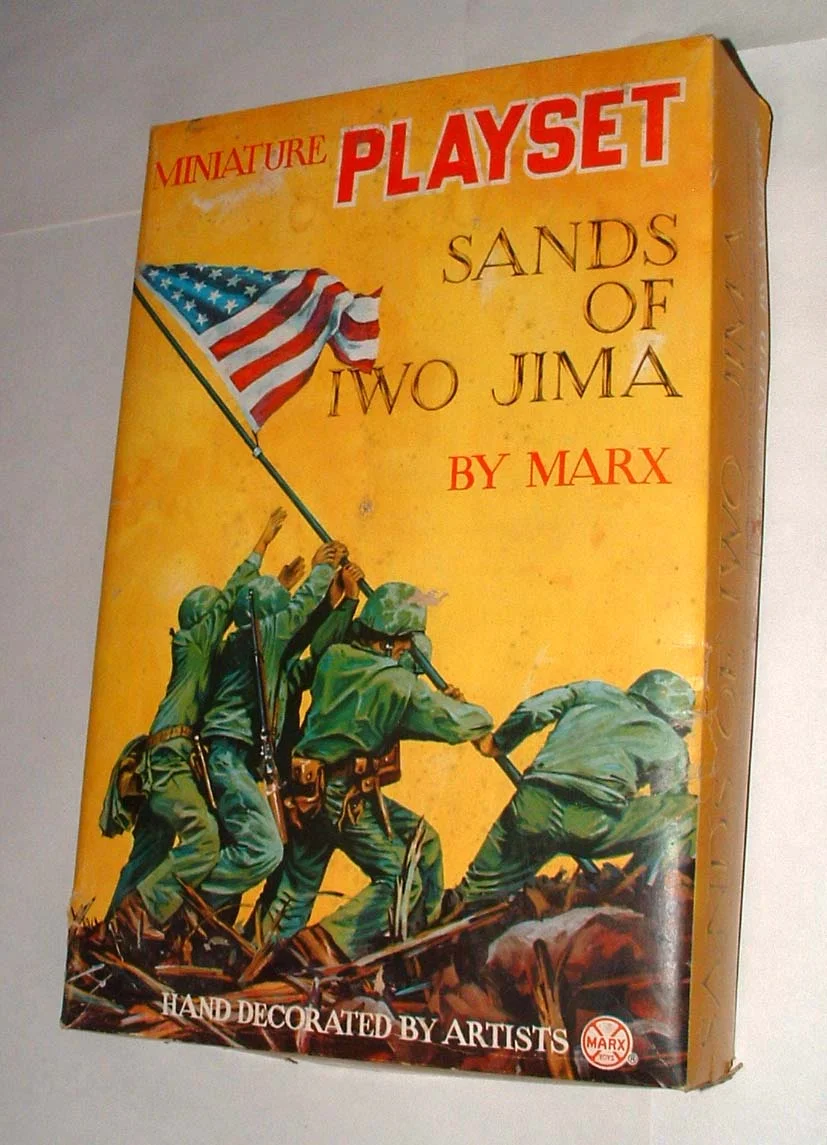
If you know him now, you'd describe him as a quintessential hippy artist; but Chip Clawsen was six when he connected deeply with the story his mother read to him, The Sands of Iwo Jima. It was at that tender young age that he decided he'd one day be a marine - a hero.
Throughout high school and college, he followed the path his parents expected of him, while telling them and his uncles that what he really wanted was to join the Marines.
His uncles, Army and Navy, told him he should pick a different branch - the Marines were the toughest, and Chip was small and wiry, no taller than 5'6". But Chip eventually enlisted with the Marines and tested into the flight program; he was going to be a pilot.
Chip's is a story of resilience, grit, and self-reflection that took him from a mindset of heroics in war to a mindset of heroics in peace. His pivot points, those moments in time that changed everything about who he thought he was, and how he saw his role in the world, pointed him in many different directions. The piece that always remained was his determination to follow his heart.
To learn more about Chip and his art, visit his artist index and check out an article about his recent sculpture creations.
Help Appears When You Least Expect It
He was driving a new, fancy car, living in a beautiful apartment, wearing expensive clothes, and living a life he considered pretty luxurious. So why was he sinking?
Stories of Friendship and Angels in Disguise
When he was struggling in a job that a was a terrible fit, Robert Downs suddenly developed a craving for a burrito - in a city more than 8 hours drive away. He arrived in the city where he had lived before, connected with a couple of friends, ate a burrito, and then drove back.

It took time for him to process the why behind his spontaneous craving, and a few other examples of that kind of behavior, for him to realize he was sinking. He was driving a new, fancy car, living in a beautiful apartment, wearing expensive clothes, and living a life he considered pretty luxurious. So why was he sinking?
Many of us have a skewed version of what we consider success in our lives, especially early in our careers. We seek out happiness based on that skewed version of what success looks like, and when it falls short of making us happy, we think something is wrong with us.
When he finally decided to truly follow his heart - and his familial roots in creativity and art, help appeared. Is it always easy? No, of course not. But when you know you’re doing what you were meant to do, the right people fall into your path to keep you company. And when you have the opportunity to give back into that system of support and encouragement, you take it.
I know you want to learn more about Robert Downs and his life as a photographer. My favorite way of keeping up with this guy and his adventures is his always-insightful blog posts.
You can also follow him on Instagram, and visit his website.
From his website:
ROBERT DOWNS
For many an artist, creativity is in the genes. For photographer Robert Downs that creativity springs from both sides of parental well. His mother was a graphic artist and father was a photojournalist for more than forty years with the Atlanta Journal and Constitutionwhich is where they met.
“I used to beg my father to take me to work with him on the weekends,” Robert remembers. “My job would be to carry all the staff photographer’s cameras to the football field and pick up film at half-time. My reward was I got to use a camera and dump my film in with the rest of the guys. Whether it was or cruel joke, or just fate, my shots started showing up in the paper. I was 13 when I scored the front page of the sports section. It was then I knew that I wanted to be a photographer.”
Over the past 10 years, Robert Downs has sustained that dreammaking a living combining art and commerce with clients ranging from the Los Angeles Times and Sony Pictures to Kaman Music, SKB, Audix Microphones and Gibson Guitars. His work has been featured extensively on covers and editorial spreads for for Drum! and Traps magazines, plus a host of the world’s top drum companies such as Pearl, Gretsch, Tama, Bosphorus and Zildjian. He’s also photographed some of the top musicians and bands on the charts including Incubus, Stone Temple Pilots, Deftones, Tommy Lee, Public Enemy, Hatebreed, Cult, Linkin Park, and many more.