
Your Stories Don’t Define You
How You Tell Them Will
A podcast to unlock your stories and uncover meaningful insights.
406 Screen Time for Young Children: A Parent's Search for Answers and Options
In a day and age of smartphones, electronic billboards, TVs, and the seemingly impossible to avoid screen, it’s easy to lose connection to what matters most, that being our community as human beings. We crave connection, and by mindlessly scrolling or putting on a video to appease ourselves or a child, we inherently rob ourselves and our charges of a chance to truly connect, oftentimes causing irrevocable damage to the brain.
In this episode Sarah Elkins and Will Maurer discuss the importance of early childhood development and how it is harmed by overstimulating media, as well as the research going into this issue.
406 Screen Time for Young Children: A Parent's Search for Answers and Options

In this day and age of smartphones, electronic billboards, TVs, and the seemingly impossible-to-avoid screen, it’s easy to lose connection to what matters most, our community as human beings. We crave connection, and by mindlessly scrolling or putting on a video to appease ourselves or a child, we inherently rob ourselves and our charges of a chance to truly connect, oftentimes causing irrevocable damage to the brain.
We know screens are here to stay, so the question becomes how we can shift how we use them to encourage in-person interaction and relationship-building.
In addition to researching how to undo the damage to young people's brains, thanks to the addictive nature of shows and games, we need to research how to reduce the harm in the first place.
In this episode Sarah Elkins and Will Maurer discuss the how research on screentime for infants has been limited because of the blanket prohibition and shame related to it, and why it's critical to continue this research. (Hint: Infants will be exposed to screentime by parents, older siblings, and others, so let's figure out how to reduce harm and maybe even find value in it!)
Highlights
Screen time and how it affects infants & children's brains.
Taking steps to create a personalized plan for your child or yourself regarding screen time.
Doing the research that needs to be done, especially in necessary but difficult paths.
What exactly is it that makes certain shows addictive and damaging?
What are the consequences of ignoring the obvious - that infants are being exposed to screen time despite the general prohibition?
Quotes
“Are they absorbing anything? Is a parent able to co-view and add to that experience?”
“As a society we put a lot of money into addressing issues after the fact.”
Dear Listeners it is now your turn,
What will you take away from this conversation? If you don’t have young children at home, what can you do that’s a little bit different to connect with the young children you see around you? One of the things I say in my TED Talk is, we can connect with people around us through story easily and with total strangers, and one of the examples I gave is when you sit next to a family at a restaurant and you watch a child playing a familiar game or watching a familiar show and you share a brief story how your kid liked that too. This is your chance, find ways to connect to the people around you, through story.
And, as always, thank you for listening.
Mentioned in this episode
Do Policy Statements on Media Effects Faithfully Represent the Science?
About Will

As a TEDx speaker and leading voice in children’s media reform, Will Maurer is pioneering evidence-based guidelines and solutions that bridge scientific research with real-world execution. His work challenges industry norms, prioritizes early childhood learning, and champions equitable, enriching content for the next generation. Through advocacy, research, and leadership, he is reshaping the future of children's media - driving systemic change and setting new standards for quality, impact, and accessibility on a global scale.
Be sure to check out Will’s Facebook, LinkedIn, and Instagram! As well as his LinkTree!
About Sarah
"Uncovering the right stories for the right audiences so executives, leaders, public speakers, and job seekers can clearly and actively demonstrate their character, values, and vision."
In my work with coaching clients, I guide people to improve their communication using storytelling as the foundation of our work together. What I’ve realized over years of coaching and podcasting is that the majority of people don’t realize the impact of the stories they share - on their internal messages, and on the people they’re sharing them with.
My work with leaders and people who aspire to be leaders follows a similar path to the interviews on my podcast, uncovering pivotal moments in their lives and learning how to share them to connect more authentically with others, to make their presentations and speaking more engaging, to reveal patterns that have kept them stuck or moved them forward, and to improve their relationships at work and at home.
The audiobook, Your Stories Don’t Define You, How You Tell Them Will is now available!
Included with your purchase are two bonus tracks, songs recorded by Sarah's band, Spare Change, in her living room in Montana.
Be sure to check out the Storytelling For Professionals Course as well to make sure you nail that next interview!
A Spark of Inspiration is Only as Good as Your Response to It
The Spark that Started a Story of Innovation in Education
It was a TED video that caught Don Wettrick’s attention during his lunch hour. He’s always looking for inspiration through reading and videos, and as a teacher, he’s used to fitting that inspiration into little boxes necessary to keep administration happy. But this was different, partly because he had switched schools and his administrator was more open to changes and innovation, and partly because he really wanted to see his students find something they could get excited about.
When his students came to class that afternoon, Don showed them the video. They were not as impressed as he was, it seemed a little dry to them. And yet, as the discussion continued, an idea emerged. Students had often complained that if they were just given some freedom, they had all kinds of interests and projects they’d want to dig into.
“What if you had 30 minutes every Friday to work on whatever project you wanted?”
Don expected students to jump at the opportunity, and some did, but what he found was that a lot of students were so driven by grades and being pleasers, that when it came time to take those 30 minutes, he heard things like: “Well, Mr. Wettrick, what do you want me to work on?” And he’d answer, “whatever you want. What are you interested in?”
Many of the students had a really hard time thinking through that question, sparking an even greater desire for the idea of an innovation class, and curiosity about what would drive students to think more about what they liked, what they were interested in, and what they were good at.
Fast forward a few years after that spark of inspiration, and we see Don making waves all over the country with his work in bringing student innovation to classrooms everywhere.
Don Wettrick is the Innovation Coordinator at Noblesville High School, and is the author of "Pure Genius: Building a Culture of Innovation and Taking 20% Time to the Next Level." Wettrick has worked as a middle school and high school teacher; educational and innovation consultant; CEO, and podcast host. He is also the founder of StartEdUp, an organization dedicated to help transform the school culture toward innovation and enable student-led entrepreneurship.
In the podcast, he speaks about his great kids, particularly Ava and her podcast, redefining (thank goodness) influence and mentorship on younger generations.

Welcome to the Real World
"Have fun, welcome to the real world!" As if your life as you know it, the here and now, isn't somehow the REAL WORLD?
Our older son is getting ready to graduate from high school. It has not been an easy road for him. We spent a lot of time and money over the years at office supply stores, trying to find tools to help him stay organized and on top of things. Nothing really worked, and as a result, his grades were never stellar. To add to his level of stress over the past few years, our family has experienced a lot of grief, the loss of both of his grandfathers, his step-grandfather, and a very close family friend, all within 3 years. After our most recent loss, a musician who spent a lot of time in our house, I asked how he was feeling:
"I'm ok, mom. I guess I'm just sort of numb at this point."
When people talk about his graduation and the beginning of his "real world" experience, I bristle.
I remember when I was graduating from high school and people said: "Have fun, welcome to the real world!" I also remember being in college and people dismissed my frustrations with comments like "just wait until you get into the REAL WORLD."
It was as if life as I knew it, those years of struggle and growth, somehow didn't qualify as the REAL WORLD.
I can't be the only one who remembers those tween and teen years like they were yesterday. It's not just memories of things that happened or things I did; I have vivid, painful and wonderful memories of how I felt. Those feelings were real. Those struggles were real, some of them more real and more impactful than many experiences since then. Those difficult times, those triumphs and perceived failures were very real to me and continue to shape who I am and who I want to be in the future.
Can you honestly say those years didn't somehow change you? That the personal discoveries and dysfunctional relationships, those physical changes didn't have an impact on who you are today?
The real world is whatever we are experiencing at any given time. I can appreciate that as a young child and teenager my worries were significantly different from the adults around me, but they weren't insignificant. I didn't have to go to a job I might not like for 40+ hours each week; I didn't have to buy my own groceries, toilet paper, and laundry detergent, and I didn't have to worry about rent or mortgage or savings.
My real world then was filled with mean girls, difficult relationships, being a mediocre student (at best), and all the drama that comes with the hormonal fluctuations of a teenager. I wouldn't go back -- there's absolutely no way I would go back to those years.
In different stages of life, I remember observing people older than me and wondering what I would be like at that point in my life. In other stages in my life, I observe people younger than I am, and remember so much of what I was like, what I thought, how I felt, how I behaved. It gives me perspective and helps to remind me to not judge others; I can't possibly know what they're going through, what shaped them.
Maybe if we recognize that each individual has stories that shape us, from toddlers to adults, and that each story is relevant at every point in our lives, we can develop a better sense of how to help each other.
What do you think? Do you remember what it was like to be a teenager and young adult? Did those years feel like real life to you?

It's Hard Work to Decompress
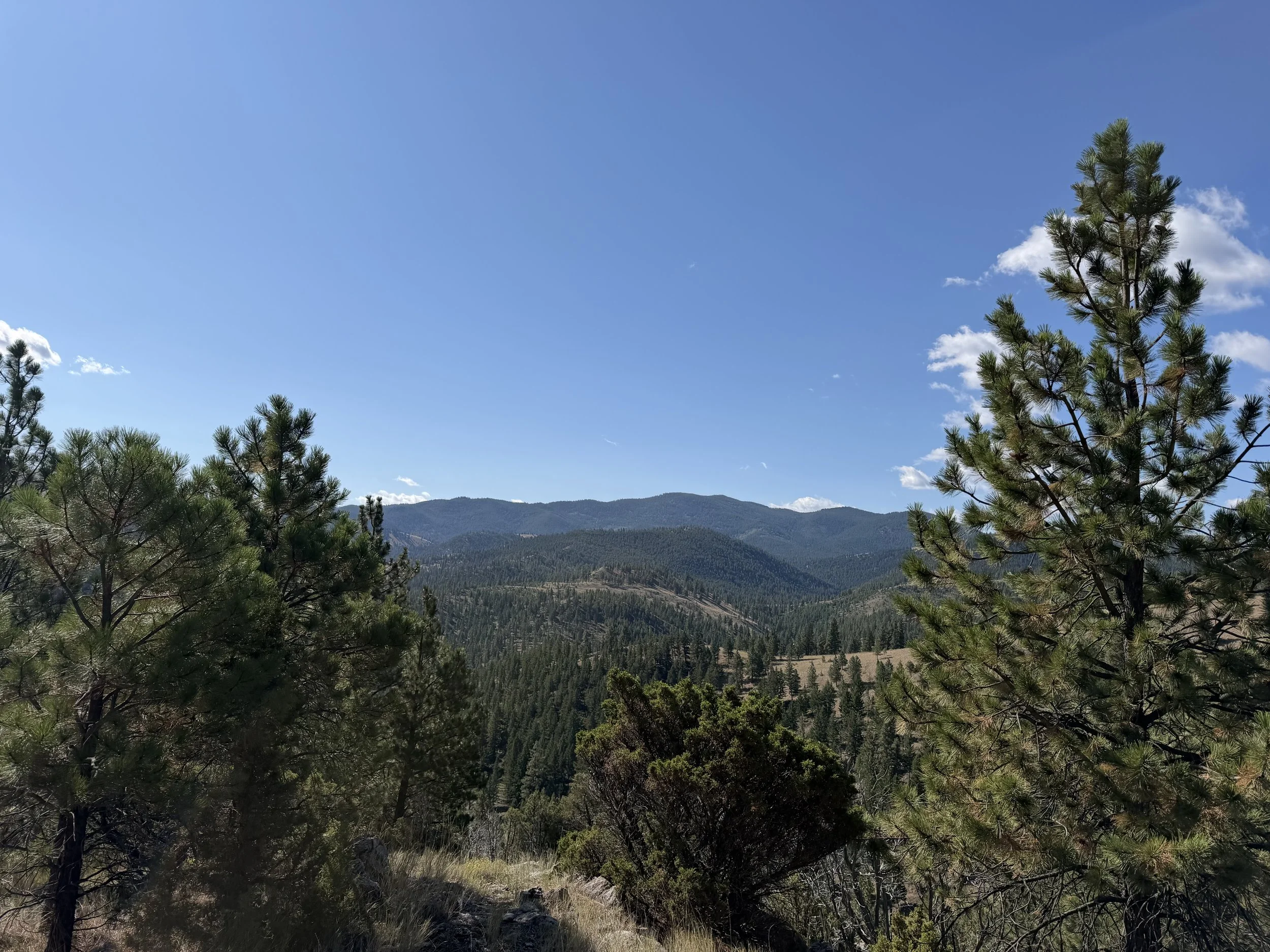
Why couldn't I clear my head? I closed my eyes, trying hard to think of nothingness, to listen intently to the sounds around me, to smell the air and nearby wild flowers.
Even in the most beautiful environment, decompressing doesn't always come quickly or easily.
We took our time getting out of town, knowing it would be light well into the evening and not wanting to get started on our hike while it was still over 80 degrees outside. I had never backpacked into the wilderness for overnight camping, though I had spent plenty of time hiking through the mountains. Gear is important for trekking into bear country, so we made sure we had a can of bear spray and a loud whistle for each of us, good shoes for hiking and crossing streams, a water pump so we wouldn't have to carry too much water, and the right food to sustain us.
It was about 5:30 in the evening when we left the car with our packs on our backs and started hiking into the Scapegoat Wilderness Area in Montana. It was a well-worn trail, lots of horses and hikers have explored the area, and many take the three mile hike in for a day trip to visit the famously beautiful Devil's Glen section of the Dearborn River. It was not too rigorous a hike for our first trip in with heavy packs, and though my pack looked almost as big as I am, it was only around 30 pounds.
It didn't seem like very long before we hit the three mile mark and saw a handful of tents and campers around fires in the meadow above the Devil's Glen. We decided to keep hiking and see if we could find a more secluded spot near the river. Another 3/4 of a mile and we headed down a less-worn path toward the river. Bob spotted a perfect campsite on the other side, so we crossed carefully, found a place to pitch the tent, and settled in for two nights.
The river was loud and full of life; as we watched the sunset, we saw a trout splashing in a large pool on the opposite side of the river, heard grasshoppers and birds, and the droning sound of insects all around. After a simple dinner of freeze-dried convenience with decent flavor, we shared a sip of bourbon from the flask and sat by the river to enjoy the view. My head was clear for the moment, taking in the spectacular pink and orange across the sky.
When we climbed into our little tent and put our heads down on make-shift pillows of clothes, I thought I'd fall right to sleep. The temperature was perfect, the air clean and fresh with a slight breeze through the tent, and I was tired from the day. But as my eyes were closing, I became super aware of the sounds of the night around me, remembering that I was in bear country. It took me hours to fall asleep, jolting awake after incorporating the sound of Bob's snore into a dream about a bear outside the tent. Eventually, I fell into a deep sleep and was disappointed to wake up to the early morning light coming into the tent, and my head full of busy-ness.
I thought that within a few hours of being in the wild mountains of Montana, my head would be clear of my every day activities -- but it wasn't. Despite spending hours wandering through the spectacular wilderness, my head was still stuck in overdrive. I woke as I always wake at home, with my head full of thoughts about what would come next, what I forgot to do at work, excitement for our next musical performance, upcoming travel plans, and thoughts of what our boys might be doing at that moment by themselves at the house.
Why couldn't I clear my head? I closed my eyes, trying hard to think of nothingness, to listen intently to the sounds around me, to smell the air and nearby wild flowers. It must have been more than 20 minutes that I tried to relax back into my sleeping bag, getting more and more frustrated with my inability to simply be there, enjoying the peaceful moment. I finally turned to Bob and suggested we get up, get the food bag from the tree, and get coffee and breakfast.
I've been here before; many years ago I was on my yoga pad at the end of a class, trying to get into the ending meditation provided by the instructor. I was filled with frustration. Every time I focused and dropped myself into the meditation, I'd find my mind wandering all over the place, flitting from one topic to the next. That was the moment, after about 10 years of trying, I realized I didn't like yoga.
That first morning in the woods, focusing on action helped; I was hungry and immediately set off to pump some water for our coffee. I never would have thought flies, especially the biting kind, would be a welcome distraction. But there I was, swiping at the flies landing on my legs and starting up the little burner for coffee, no thoughts buzzing in my head but the need for coffee and oatmeal.
We packed up for a day hike and headed upstream, bushwhacking through the dense, lush forest among wild roses, Indian Paintbrush, elk scat, mushrooms, and dead trees littering the ground. Stopping along the rushing river periodically for Bob to cast his nymph, hoping for a brown trout for dinner, I had the camera poised for my own catch for the weekend. It was mostly quiet, which, in bear country, isn't really a good thing, so I hummed and sang some of the songs we were working on for our next gig. My head wasn't clear, but I was relaxed.
By the time we hiked back out to the car after two nights, I was tired but not exhausted. I felt strong, healthy, and comfortable in my skin, even though I smelled like I hadn't bathed in three days. I unloaded my backpack into the car and opened the cooler we had stashed inside, pulling out my favorite local brew, Lewis and Clark Brewery's Prickly Pear Pale Ale. My head was finally clear.
Driving back through some of the most beautiful landscapes in the country, I turned on my phone to let our boys know we were on our way, and to suggest they clean up evidence of junk food binging. It beeped and beeped as the signal came on to retrieve missed calls and text messages. I wanted to ignore it, but the pull of connection was too strong. I read the messages. I really didn't miss anything. So I put the phone down and didn't pick it up again until we unloaded the car back at our house.
I had no intention of looking at my computer when I got home, and managed to leave it closed until late into the evening when I had to review a document for a client. She was expecting feedback the next day and I knew it just had to be done.
It took me three days to disconnect from my electronic devices and clear my head. That can't be a good thing. I made some decisions that evening, after I closed up the laptop.
- I will set hours of device use from now on: Unless I have a looming deadline, I will not open my laptop between 10pm and 8am.
- Disconnecting is important, so I will put my phone away when I am in a face-to-face conversation, no matter with whom or for how long.
- I will schedule disconnected, outdoor time more regularly and find tools to help me clear my head in a reasonable amount of time and with a reasonable amount of effort.
- As annoying as mundane chores can be, I find that doing laundry, cleaning the kitchen, and weeding the garden are activities that actually clear my head. I plan to stop fighting those activities and try to take them on with the intent to clear my head, as opposed to doing them with the sole intention of accomplishing the actual task.
A lot has been written about humanity's disconnect from nature as a result of our addiction to our electronic devices. That disconnect has wreaked havoc on our ability to safely spend time in nature and effectively connect with people around us. There are far too many recent stories of people being injured and killed in our national parks as a result of our naiveté around wild animals and dangerous areas in nature. If we don't disconnect from screens and reconnect with people, ourselves, and our natural environment, we will lose our ability to connect in any real way with our own humanity.
What will you do to change this trajectory in your life and the lives of your family and community? How will you adjust your patterns to encourage and build a solid connection with the people you love and with the world around you?

Make Every Encounter an Opportunity
Her face brightened. Our boys have that effect on people; there is something about a kind, polite, genuine kid that makes people feel good.
As I finished my purchase at our local grocery store, the clerk smiled at me and we wished each other a good day. Our younger son, now taller than I am, chimed in. He looked straight at her (sometimes grumpy) face and said with genuine kindness: "Have a good afternoon!"
Her face brightened. Our boys have that effect on people; there is something about a kind, polite, genuine kid that makes people feel good.
When I was a brand new mother, a friend told me about an interaction with her four year old son. When she disciplined him with a time-out, he told her "you're mean, mommy." Her response has stayed with me for many years:
I'm mean sometimes because I never want you to be the kid no one wants to be around.
That statement is part of why our boys are polite and people enjoy them. As parents, we encouraged kindness and respectful behavior, and also set boundaries with them that made sense -- and followed through with consequences.
I'd like to take the credit for that, but I think it has more to do with their nature and many role models. Because of their observations of the behavior of their father, their grandparents, aunt & uncles, close neighbors and adult friends, and yes, me, they understand that each person must be valued. Even people who are mean, who behave badly, must be treated respectfully. That doesn't mean they are respected; those are two different things.
When our younger son and I walked out of the grocery store, the expression on the clerk's face stayed with me for a while. I was smiling, off in my head, when our son asked me: "Why are you smiling like that?"
It took me a moment to realize I was smiling "like that" and to put my thoughts into words. He knows me -- so he waited. I asked him:
is it fake to act pleasant when you don't feel pleasant?
And then I said:
My friend and I recently had a conversation about the difference between being fake, acting like you're happy when you're really not, and being kind to people despite not being happy at every moment.
Did you see how that woman lit up when you smiled and told her to have a good afternoon? She glowed. What you said, and the way you said it with genuine kindness, changed the flow of her day. If you were having a bad day but still made an effort to do what you did with her, is that being fake? Or is it being kind? For her, that momentary interaction was the difference between slogging through the afternoon, and feeling a small burst of warmth and satisfaction.
You often have that effect on people, Max. They can't help but smile when you're around. I hope you understand that, and that you continue to choose -- that you are intentional -- to be kind toward others. There is something about you that makes people want to be their best selves when you're around. You're magical!
Our conversation turned to something else, and for the moment I was distracted from that introspection.
In the shower the next morning, our conversation came back to me.
We have many opportunities in our days to make that tiny bit of difference in each interaction. We have a choice to say "thank you" to the person in front of us, to wave and smile at the driver who lets us merge into traffic. We have a choice when we hold the door for someone coming in behind us to smile with genuine kindness and care. Why wouldn't we make that effort with every single person in our day? It takes less energy to smile at someone than it does to be angry, or to actively ignore a person.
Being kind doesn't mean letting people treat you like a doormat, sometimes you have to choose confrontation. Being unkind won't change things, so keeping in mind the result you want from the confrontation really helps in keeping emotion out of a conflict. I recently told someone "you're not nice to me." I didn't add any emotion to the comment, just a matter-of-fact observation to explain why I avoided interaction with her. I often use a strategy I wrote about, imagining that if I was recording it, how I would want to see myself years after the confrontation.
Think for a moment about the people you want to be around, the people you enjoy spending time with. I'm a lot pickier these days about where I choose to spend my energy and time, and I choose people who are positive, the ones who are curious, and who choose to learn, grow, and be kind. This doesn't mean we are always happy, real life is often not happy.
We all have choices to make, every day, and I choose kindness. What will you choose?
Send me a message, I love to hear from readers.