
Your Stories Don’t Define You
How You Tell Them Will
A podcast to unlock your stories and uncover meaningful insights.
413 Love, Connection, Belonging, and Comfort Zones
It’s easy to forget to take care of the many facets of our health in a world obsessed with value and progress. We forget to care for our mental, emotional, physical, and spiritual health in ways that dramatically affect us in the long run, which is why it is vital for us to sit down and take stock of our health and to take the time to tend to our own needs.
In today’s episode Sarah Elkins and Kevin Strauss discuss the importance of connection, comfort zones, boundaries, love, and how important it is to ourselves as humans.
413 Love, Connection, Belonging, and Comfort Zones
Title card for episode 413 featuring Kevin Strauss, the title reads Love, Connection, Belonging, and Comfort Zones
It’s easy to forget to take care of the many facets of our health in a world obsessed with value and progress. We forget to care for our mental, emotional, physical, and spiritual health in ways that dramatically affect us in the long run, which is why it is vital for us to sit down and take stock of our health and to take the time to tend to our own needs.
In today’s episode Sarah Elkins and Kevin Strauss discuss the importance of connection, comfort zones, boundaries, love, and how important it is to ourselves as humans.
Highlights
Emotional, physical, and spiritual health and what the differences are.
How we learn and how it shapes us into who we are.
Identifying your comfort zone so you feel safe stepping into your stretch zone.
Taking care of every aspect of your health so that you can operate perfectly.
Quit trying to distract, soothe, or numb yourself to your needs. Take the time to properly address them so that you can be a truly healthy and functional person.
What is your reference for comfort?
Quotes
“There is no right or wrong or better or worse way, it’s just that this is how we are operating in the world and this is how we learn.”
“Value in our brain translates to love, and that’s really an emotional health need. So we’re try to feel more valuable, because value equals love in our brain.”
“We try to show our value, that we are worthy of love, but it’s never enough. It never soothes, we always need more, more, more, because we aren’t addressing the real problem. And the real problem is we don’t feel love just for who we are.”
“How many people on the planet are actively, intentionally, daily, practicing love and connection?”
Dear Listeners it is now your turn,
I’m going to ask you to define your comfort zone. Consider a moment in time when you felt truly comfortable, loved, safe, supported, just like when I stood in my doorway and saw my children in the room, and thought “If that’s not nice, then what is?”
Find a handful of moments like that in your life, define what it felt like, because once you have that foundation, you can step out of it.
And, as always, thank you for listening.
Mentioned in this episode
The Curious Incident of The Dog in the Nighttime by Mark Haddon
The Comfort Crisis by Michael Easter
About Kevin
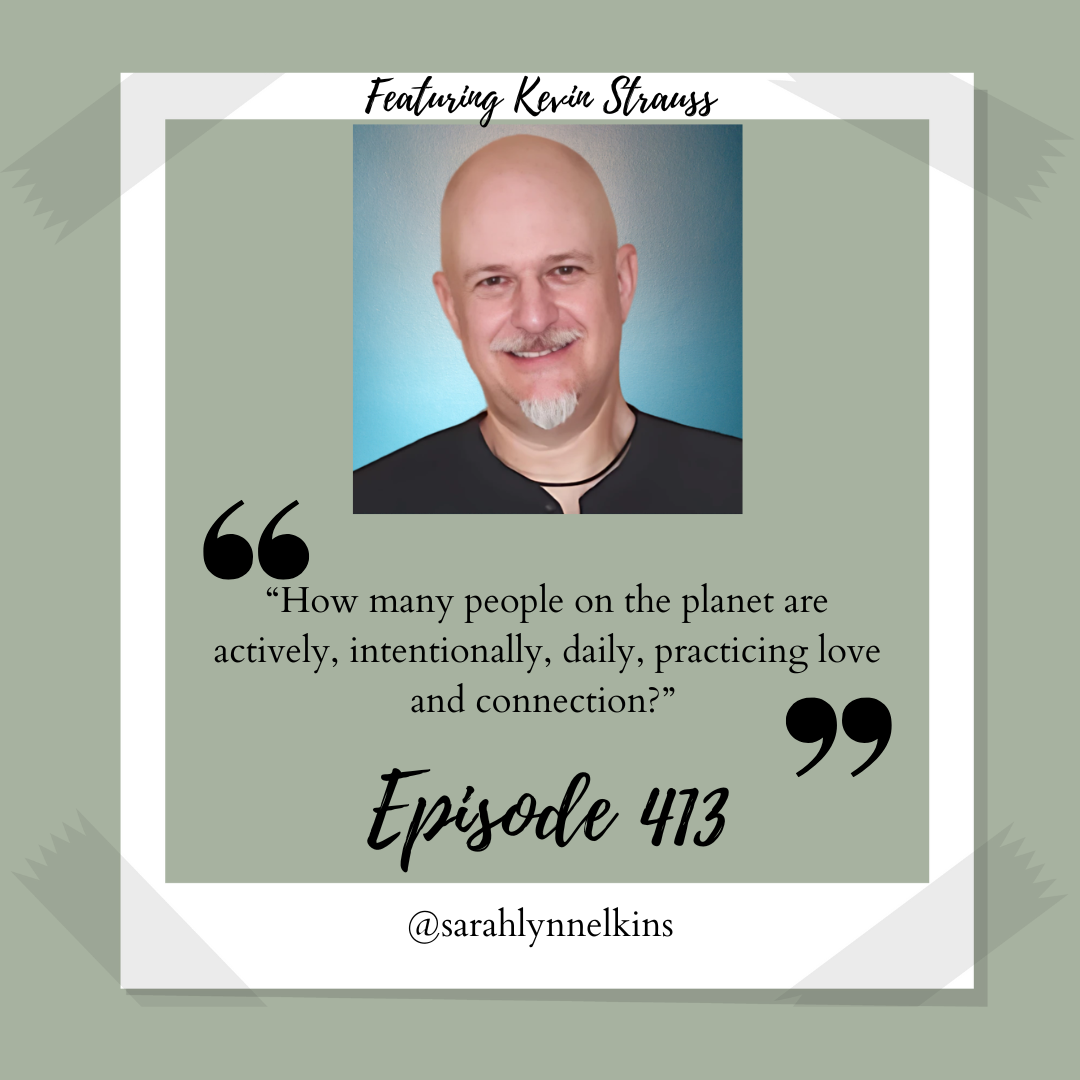
Quote card featuring a photo of Kevin, smiling. The quote reads “How many people on the planet are actively, intentionally, daily, practicing love and connection?”
Kevin R. Strauss is the CEO of Uchi, a platform built on one simple truth — everything feels possible when you know someone has your back, every day. With 30 years in human behavior, innovation, and wellness, Kevin focuses on solving long-standing problems with simple solutions.
His career began in biomedical engineering, earning more than 75 patents and multiple publications, but his deeper passion has always been understanding people and why we behave the way we do. Through Uchi, Kevin helps families, schools, workplaces, and communities create stronger relationships so people can do better together.
He’s also the author of Innovate The 1% and host of the Question It podcast. Outside of work, Kevin is a 24-year, injury-free Ironman Triathlete, expedition backpacker, and award-winning ballroom dancer.
Be sure to check out Kevin’s LinkedIn, Instagram, and Facebook! As well as his website, Kevin R Strauss, his Youtube, and Uchi Connections!
About Sarah
"Uncovering the right stories for the right audiences so executives, leaders, public speakers, and job seekers can clearly and actively demonstrate their character, values, and vision."
In my work with coaching clients, I guide people to improve their communication using storytelling as the foundation of our work together. What I’ve realized over years of coaching and podcasting is that the majority of people don’t realize the impact of the stories they share - on their internal messages, and on the people they’re sharing them with.
My work with leaders and people who aspire to be leaders follows a similar path to the interviews on my podcast, uncovering pivotal moments in their lives and learning how to share them to connect more authentically with others, to make their presentations and speaking more engaging, to reveal patterns that have kept them stuck or moved them forward, and to improve their relationships at work and at home.
The audiobook, Your Stories Don’t Define You, How You Tell Them Will is now available!
Included with your purchase are two bonus tracks, songs recorded by Sarah's band, Spare Change, in her living room in Montana.
Be sure to check out the Storytelling For Professionals Course as well to make sure you nail that next interview!
Episode 173: If You Want to Make a Positive Impact, Love the People You Want to Influence
"I love you, now get out of here!"
That's how Tammie Schrader sent her 7th grade science students to their next class after the bell rang on the first day of school. And every day after that was the same.
After about 3 weeks, she missed the first part: "Okay, kids, get out of here!" She was gently nudged by her students who didn't stand up from their seats. "Mrs. Schrader, you forgot to start with 'I love you.'"
Stories of a Truly Exceptional Teacher, and What Makes Her That Way

Tammie Schrader podcast episode cover art with image of Tammie.
"I love you, now get out of here!"
That's how Tammie Schrader sent her 7th grade science students to their next class after the bell rang on the first day of school. And every day after that was the same.
After about 3 weeks, she missed the first part: "Okay, kids, get out of here!" She was gently nudged by her students who didn't stand up from their seats. "Mrs. Schrader, you forgot to start with 'I love you.'"
Tammie's students were treated to hands on learning in that classroom, and to an incredibly nurturing, encouraging environment. That's because she knows that the only way people learn is by doing, and the most effective way to teach is to care for - to love - the people you're trying to influence.
My favorite story Tammie shared was about students nearing their final days of middle school before the big graduation ceremony. They were reminded to be on their best behavior because any infraction would result in their not being allowed to participate in graduation festivities. Later that day, students were caught tossing one of their peers high into the air and catching him. When asked what they were thinking, they answered: “I don’t know, it didn’t seem like a big deal. We didn’t hurt anyone, everyone was having fun.”
Tammie asked: “When you were just about to toss your friend high into the air, did you take just a moment to look around the yard to make sure no adults were watching?” They nodded. “Then you knew, guys, you knew this might not be a good idea.”
Her TEDxSpokane talk is what caught my attention a few months ago. The dynamic way she presented her "idea worth sharing" had me compelled to watch and learn. I had to reach out to hear more of this extraordinary teacher's story.
We ran out of time before I could get an important question answered, "why did you leave the classroom?" It seemed like such a huge transition away from her purpose in terms of working with students.
With grace and generosity, Tammie emailed me the answer:
While working as a teacher, I was fortunate enough to have a superintendent, Dr. Michael Dunn, who possessed leadership qualities I had never experienced before. I remember sitting in on the superintendent interviews and recognizing that he was the only one that talked about serving students. This spoke to my heart. The great news is that the Cheney School Board had the thoughtfulness to recognize his incredibleness and hired him. Things in our district shifted immediately.
Dr. Dunn is the kind of man who shares his vision just by being himself. He was in buildings and classrooms all the time. He wrote personal emails wishing teachers well and genuinely cared about each of us. I was once stuck on Snoqualmie Pass on a Friday heading to a conference over the weekend. Monday morning I had an email from Dr. Dunn expressing how grateful he was that I was safe. To this day I have no idea how he knew I had been stuck during snowstorm.
Mike left Cheney to become the superintendent of an organization called an Education Service District (ESD) that serves 59 public school districts and upwards of 40 private schools. 7 years ago he asked me if I would apply to be the science coordinator for his organization. The conversation went something like this:
Me: Mike, I just love my classroom and I love my kids
Mike: Well I’m not asking you to come serve 59 school districts because you don’t love kids!
And I was sold. I will say I cried the whole time I packed my classroom and at least for the year after that. I did go to Mike after a year and told him I missed kids way too much, and his reply was simply: I totally understand and I get it, and I’ll remind you that you have access to 59 school districts full of kids. After that I made it a point to be in classrooms with kids at least weekly. Mike always seems to say the right thing at the right time.
Thanks for asking because you are so correct in knowing that leaving a classroom was one of the hardest decisions I’ve ever made. If it weren’t for Dr. Dunn’s leadership, I wouldn’t have done it. Ever.
You'll want to connect with Tammie on LinkedIn after listening to this episode and watching her TEDx talk!

Podcast cover art with Tammie Schrader quote and image from her TEDxSpokane talk in 2020.
Tammie is the Regional Science and Computer Science Coordinator for Northeast Washington Education Service District 101 in Washington State. She taught science at Cheney Middle School, in Cheney, Washington for 15 years. She's also an adjunct science methods instructor at Whitworth University.
When she taught middle school, her subjects were Life Science, Computer Programming, Gaming Programming, Robotics, as well as coaching the Science Olympiad Team, Robotics Club, SeaPerch Team and Future Business Leaders of America.
She is currently enrolled as a Ph.D. candidate and am writing my dissertation on Leadership and Game Based Education in the Classroom.
In 2013, she was selected as a Hope Street Fellow, working on Education Policy around coding in the classroom, was also awarded a National Science Foundation grant working with Filament Games on Educational Video Games in the classroom, was selected as a 2008-2009 Teacher Fellow for the Department of Education, and was named Pacific Northwest Earth Science Teacher of the Year, among other accomplishments in her career.
ABOUT SARAH:
"Uncovering the right stories for the right audiences so executives, leaders, public speakers, and job seekers can clearly and actively demonstrate their character, values, and vision."
In my work with coaching clients, I guide people to improve their communication using storytelling as the foundation of our work together. What I’ve realized over years of coaching and podcasting is that the majority of people don’t realize the impact of the stories they share - on their internal messages, and on the people they’re sharing them with.
My work with leaders and people who aspire to be leaders follows a similar path to the interviews on my podcast, uncovering pivotal moments in their lives and learning how to share them to connect more authentically with others, to make their presentations and speaking more engaging, to reveal patterns that have kept them stuck or moved them forward, and to improve their relationships at work and at home.
The audiobook, Your Stories Don’t Define You, How You Tell Them Will is now available!
Included with your purchase are two bonus tracks, songsrecorded by Sarah's band, Spare Change, in her living room in Montana.

It's Hard Work to Decompress
Why couldn't I clear my head? I closed my eyes, trying hard to think of nothingness, to listen intently to the sounds around me, to smell the air and nearby wild flowers.
Even in the most beautiful environment, decompressing doesn't always come quickly or easily.
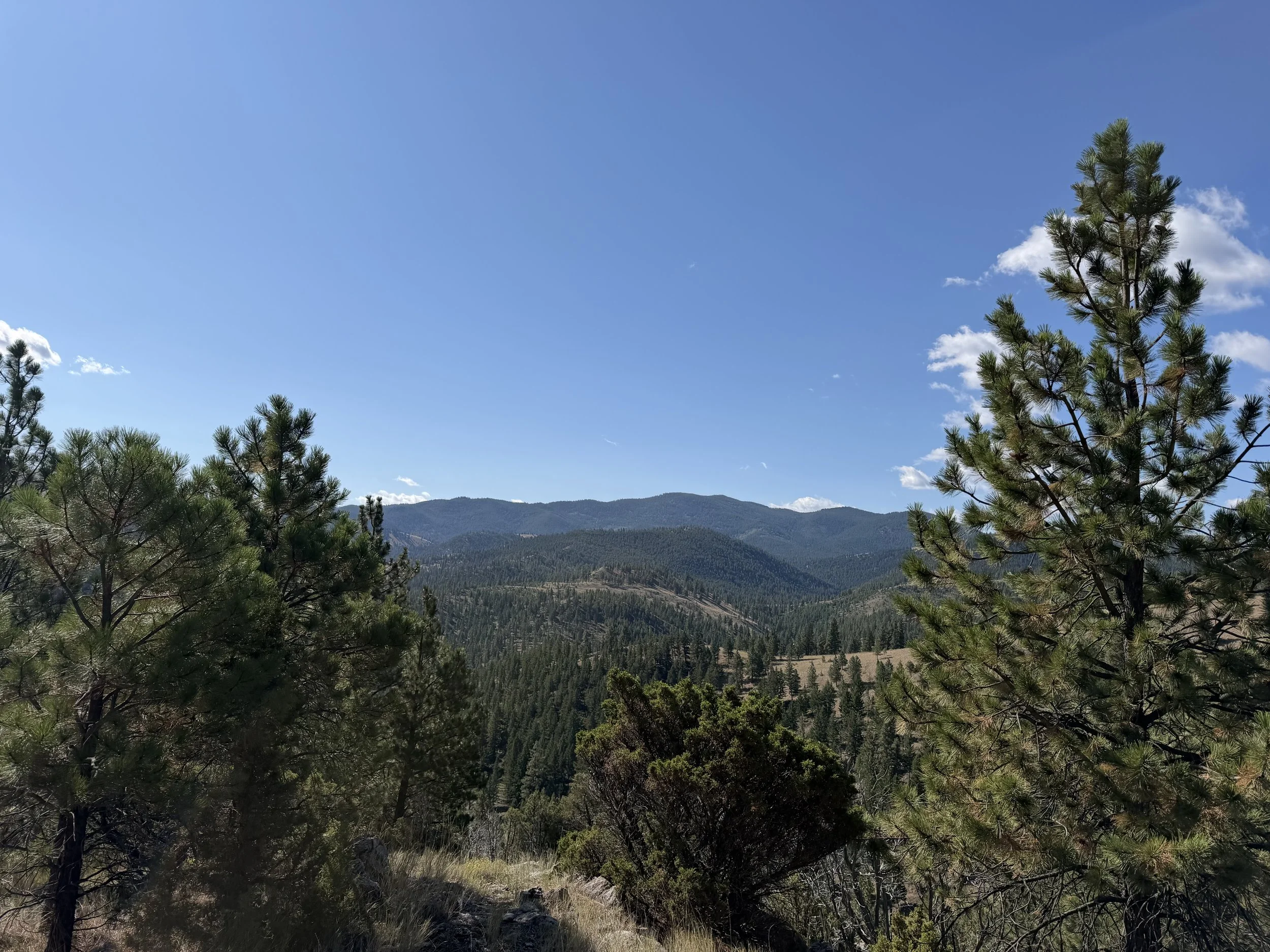
We took our time getting out of town, knowing it would be light well into the evening and not wanting to get started on our hike while it was still over 80 degrees outside. I had never backpacked into the wilderness for overnight camping, though I had spent plenty of time hiking through the mountains. Gear is important for trekking into bear country, so we made sure we had a can of bear spray and a loud whistle for each of us, good shoes for hiking and crossing streams, a water pump so we wouldn't have to carry too much water, and the right food to sustain us.
It was about 5:30 in the evening when we left the car with our packs on our backs and started hiking into the Scapegoat Wilderness Area in Montana. It was a well-worn trail, lots of horses and hikers have explored the area, and many take the three mile hike in for a day trip to visit the famously beautiful Devil's Glen section of the Dearborn River. It was not too rigorous a hike for our first trip in with heavy packs, and though my pack looked almost as big as I am, it was only around 30 pounds.
It didn't seem like very long before we hit the three mile mark and saw a handful of tents and campers around fires in the meadow above the Devil's Glen. We decided to keep hiking and see if we could find a more secluded spot near the river. Another 3/4 of a mile and we headed down a less-worn path toward the river. Bob spotted a perfect campsite on the other side, so we crossed carefully, found a place to pitch the tent, and settled in for two nights.
The river was loud and full of life; as we watched the sunset, we saw a trout splashing in a large pool on the opposite side of the river, heard grasshoppers and birds, and the droning sound of insects all around. After a simple dinner of freeze-dried convenience with decent flavor, we shared a sip of bourbon from the flask and sat by the river to enjoy the view. My head was clear for the moment, taking in the spectacular pink and orange across the sky.
When we climbed into our little tent and put our heads down on make-shift pillows of clothes, I thought I'd fall right to sleep. The temperature was perfect, the air clean and fresh with a slight breeze through the tent, and I was tired from the day. But as my eyes were closing, I became super aware of the sounds of the night around me, remembering that I was in bear country. It took me hours to fall asleep, jolting awake after incorporating the sound of Bob's snore into a dream about a bear outside the tent. Eventually, I fell into a deep sleep and was disappointed to wake up to the early morning light coming into the tent, and my head full of busy-ness.
I thought that within a few hours of being in the wild mountains of Montana, my head would be clear of my every day activities -- but it wasn't. Despite spending hours wandering through the spectacular wilderness, my head was still stuck in overdrive. I woke as I always wake at home, with my head full of thoughts about what would come next, what I forgot to do at work, excitement for our next musical performance, upcoming travel plans, and thoughts of what our boys might be doing at that moment by themselves at the house.
Why couldn't I clear my head? I closed my eyes, trying hard to think of nothingness, to listen intently to the sounds around me, to smell the air and nearby wild flowers. It must have been more than 20 minutes that I tried to relax back into my sleeping bag, getting more and more frustrated with my inability to simply be there, enjoying the peaceful moment. I finally turned to Bob and suggested we get up, get the food bag from the tree, and get coffee and breakfast.
I've been here before; many years ago I was on my yoga pad at the end of a class, trying to get into the ending meditation provided by the instructor. I was filled with frustration. Every time I focused and dropped myself into the meditation, I'd find my mind wandering all over the place, flitting from one topic to the next. That was the moment, after about 10 years of trying, I realized I didn't like yoga.
That first morning in the woods, focusing on action helped; I was hungry and immediately set off to pump some water for our coffee. I never would have thought flies, especially the biting kind, would be a welcome distraction. But there I was, swiping at the flies landing on my legs and starting up the little burner for coffee, no thoughts buzzing in my head but the need for coffee and oatmeal.
We packed up for a day hike and headed upstream, bushwhacking through the dense, lush forest among wild roses, Indian Paintbrush, elk scat, mushrooms, and dead trees littering the ground. Stopping along the rushing river periodically for Bob to cast his nymph, hoping for a brown trout for dinner, I had the camera poised for my own catch for the weekend. It was mostly quiet, which, in bear country, isn't really a good thing, so I hummed and sang some of the songs we were working on for our next gig. My head wasn't clear, but I was relaxed.
By the time we hiked back out to the car after two nights, I was tired but not exhausted. I felt strong, healthy, and comfortable in my skin, even though I smelled like I hadn't bathed in three days. I unloaded my backpack into the car and opened the cooler we had stashed inside, pulling out my favorite local brew, Lewis and Clark Brewery's Prickly Pear Pale Ale. My head was finally clear.
Driving back through some of the most beautiful landscapes in the country, I turned on my phone to let our boys know we were on our way, and to suggest they clean up evidence of junk food binging. It beeped and beeped as the signal came on to retrieve missed calls and text messages. I wanted to ignore it, but the pull of connection was too strong. I read the messages. I really didn't miss anything. So I put the phone down and didn't pick it up again until we unloaded the car back at our house.
I had no intention of looking at my computer when I got home, and managed to leave it closed until late into the evening when I had to review a document for a client. She was expecting feedback the next day and I knew it just had to be done.
It took me three days to disconnect from my electronic devices and clear my head. That can't be a good thing. I made some decisions that evening, after I closed up the laptop.
- I will set hours of device use from now on: Unless I have a looming deadline, I will not open my laptop between 10pm and 8am.
- Disconnecting is important, so I will put my phone away when I am in a face-to-face conversation, no matter with whom or for how long.
- I will schedule disconnected, outdoor time more regularly and find tools to help me clear my head in a reasonable amount of time and with a reasonable amount of effort.
- As annoying as mundane chores can be, I find that doing laundry, cleaning the kitchen, and weeding the garden are activities that actually clear my head. I plan to stop fighting those activities and try to take them on with the intent to clear my head, as opposed to doing them with the sole intention of accomplishing the actual task.
A lot has been written about humanity's disconnect from nature as a result of our addiction to our electronic devices. That disconnect has wreaked havoc on our ability to safely spend time in nature and effectively connect with people around us. There are far too many recent stories of people being injured and killed in our national parks as a result of our naiveté around wild animals and dangerous areas in nature. If we don't disconnect from screens and reconnect with people, ourselves, and our natural environment, we will lose our ability to connect in any real way with our own humanity.
What will you do to change this trajectory in your life and the lives of your family and community? How will you adjust your patterns to encourage and build a solid connection with the people you love and with the world around you?