
podcast

Slowing Down Time: Be a Storymaker

Appreciating the "In-Between Space”

Many years ago, I read a post by Nilofer Merchant about what she calls In-Between Space:

Summers when you were young were the in-between spaces of learning – where you could languish in play time and know learning time was ahead... That time where you got a job offer but hadn’t started yet. Maybe even during the search for a new role. Perhaps it is as simple as when you are clear of a new direction. 

embrace_the_inbetween.png

I think of that post often; I live in an In-Between Space, it's a weird sort of comfort zone for me. I rarely stay content in a job, place, or project. There has to be consistent growth and change in everything I do.

And while it’s not uncommon to find people like me, I believe for the majority of people the equation, comfort=happiness, is true. 

It was in a recent conversation that I realized this about myself, that I am in a constant state of change and churn, and that I sometimes let that get me anxious and stressed. It's silly, really, since I know I bring this on myself.

I could say no. I could turn down opportunities to sing, to speak, to mentor someone. But I love it. I love the feeling of change and growth, and none of my choices and activities I do are things I don't want to do. Anything that feels like obligation makes me prickly, so I know when I choose to do something, it’s MY choice.

In one eye-opening conversation, as I was sharing my upcoming schedule with someone, I said: "Thank goodness I don't have anything in the next 5 days to stress about."

Her response was exactly what I needed to hear:
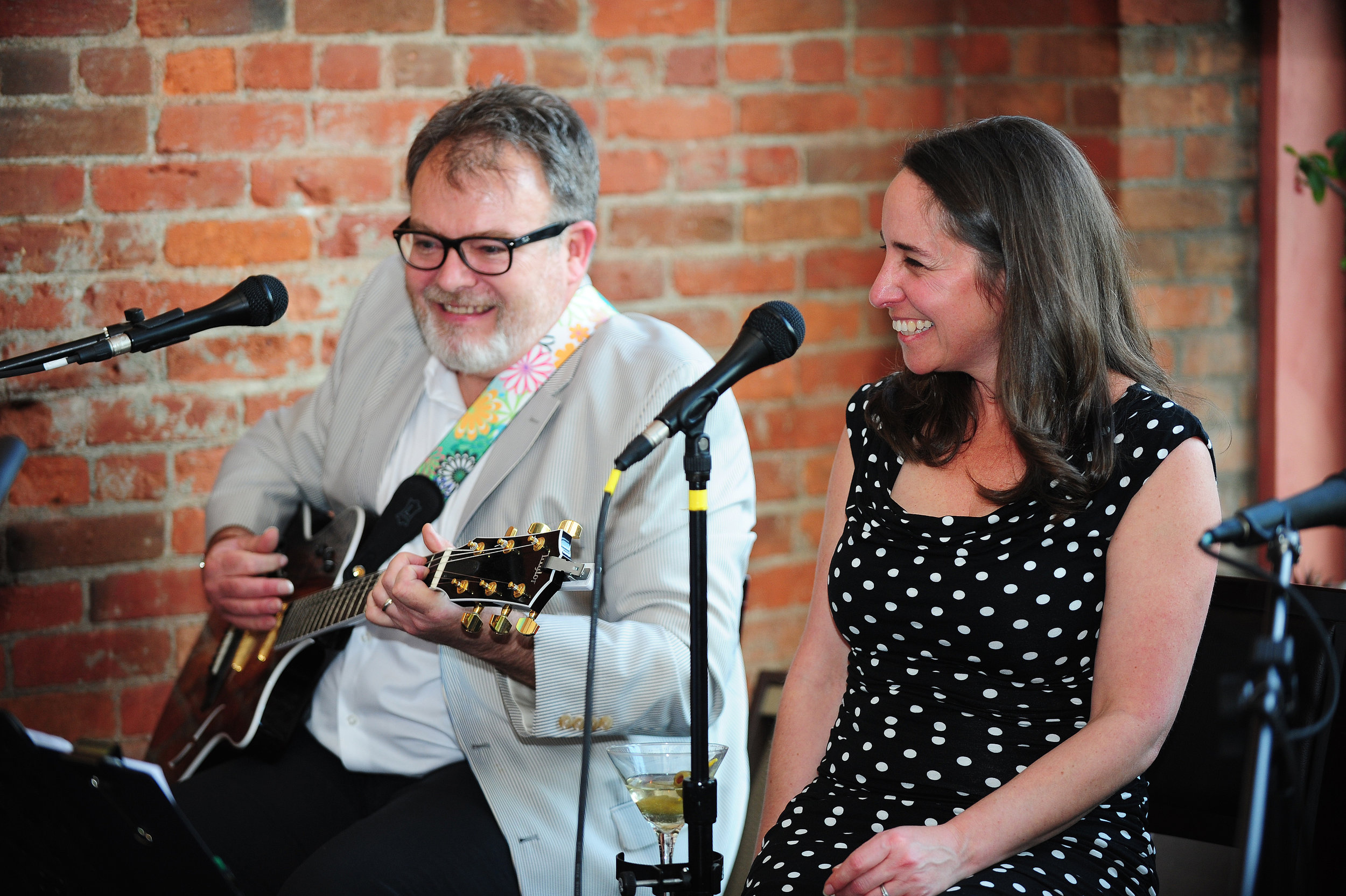
Spare Change at On Broadway, Helena, Montana

"Did you hear what you just said? I know you're excited about those two performances, but the way you said that made it sound like it was too stressful, like you should have said no."

She was right. I was telling myself that the upcoming things I LOVE to do were stressful. Yes, preparing for something like a live performance takes time, but is that stressful, or is it just figuring out a schedule?

The reality is that whether it’s good stress or bad stress, it has the same negative impact on your body and brain. That’s why it’s so important to not only find ways to decompress, but to choose to be present in everything we do.

The next "Ah Ha" came when someone mentioned an annual event where I'll be singing. It was in April, and I didn't want to talk about it at that point in early February.

I realized that I had many great things coming up before that April performance, and I didn’t want to rush to April. That's when Nilofer's post came back to me again. I was in the In-Between Space with my conference, No Longer Virtual, and a few other exciting events that were scheduled over the following months.

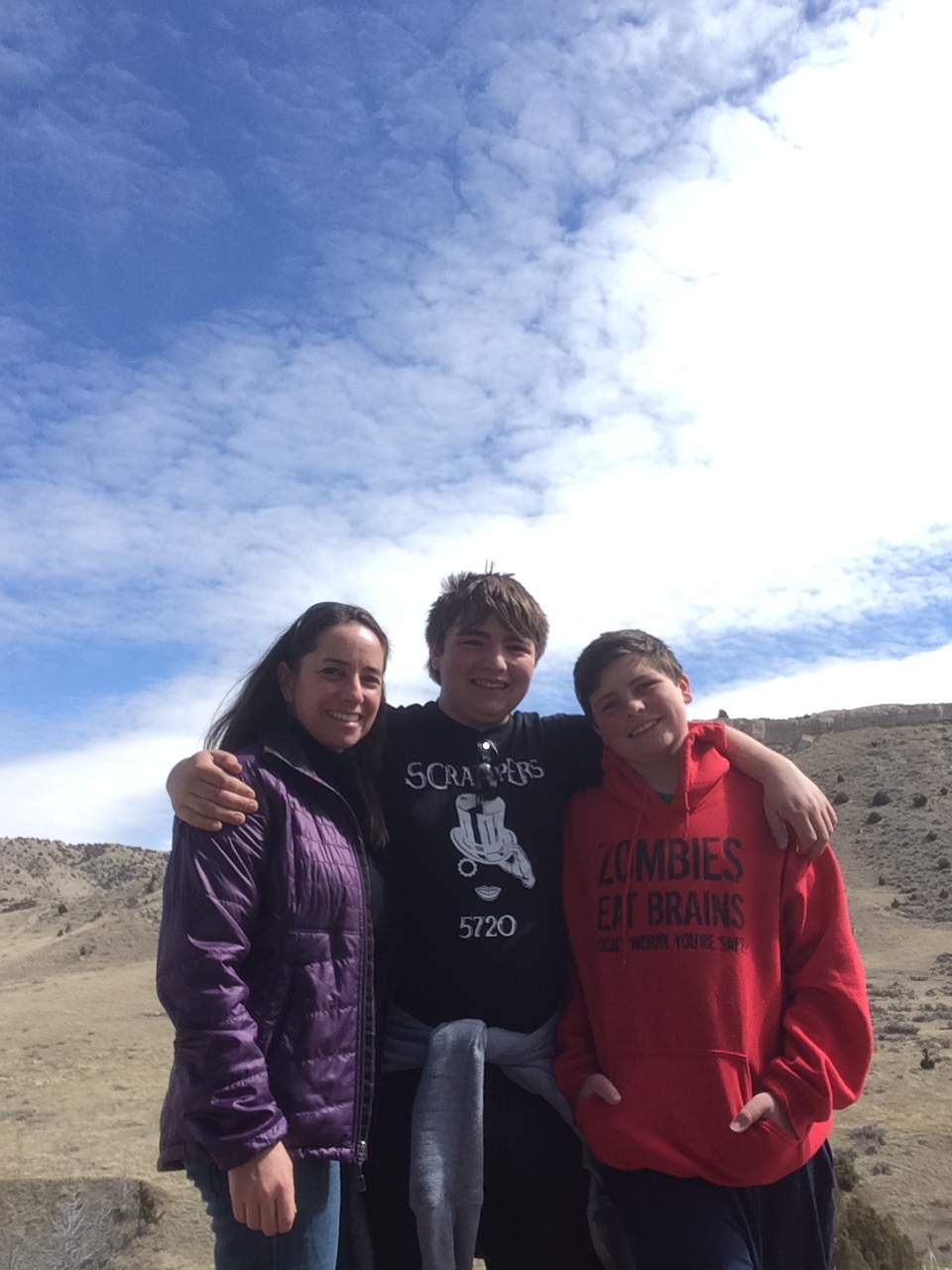
When planning our wedding 20 years ago, I kept a journal with photos taped inside to document the details of the planning process. I knew that by embracing and enjoying each part of the journey, I would slow down the time before the actual wedding day. I also figured that this strategy would help with the emotional let-down following a major event. People talk about what a blur their weddings were, that they don’t feel like they really had a chance to enjoy it. That strategy worked for me, and now I always recommend it to others planning their weddings. It’s almost like slowing down time.
IMG_3312.JPG

It’s not easy to be present every day, in every moment, and if we want to slow down time and enjoy this wild adventure called life, we have to decompress periodically and be intentional about how we choose to spend our time.

That concept of the in-between space is an important one because it reminds us that living for the weekend, or an upcoming vacation, or the next promotion or raise, leaves us without time to enjoy the little things, the small joys in just, well, BEING. Being near people we love, being in nature, being in a place to create and build and grow something, being quiet.

To slow down time, we need to stop thinking of each day as stressful, trying to make something happen, and start thinking about each day as an opportunity to enjoy the journey.
P1060524.JPG

Even in the most beautiful environment, decompressing and finding your way back to being present doesn't come quickly or easily.

A few years ago when I realized this concept of in-between space and slowing down time, I asked my husband to plan a backpacking trip. I had always wanted to try packing into the wilderness like many of our friends do. I thought that if there was a way to slow down time, I’d find it by disconnecting from devices and reconnecting with myself in nature.

We took our time getting out of town, knowing it would be light well into the evening and not wanting to get started on our hike while it was still over 80 degrees outside. I had never backpacked into the wilderness for overnight camping, though I had spent plenty of time hiking through the mountains. Gear is important for trekking into bear country, so we made sure we had a can of bear spray and a loud whistle for each of us, good shoes for hiking and crossing streams, a water pump so we wouldn't have to carry too much water, and the right food to sustain us.

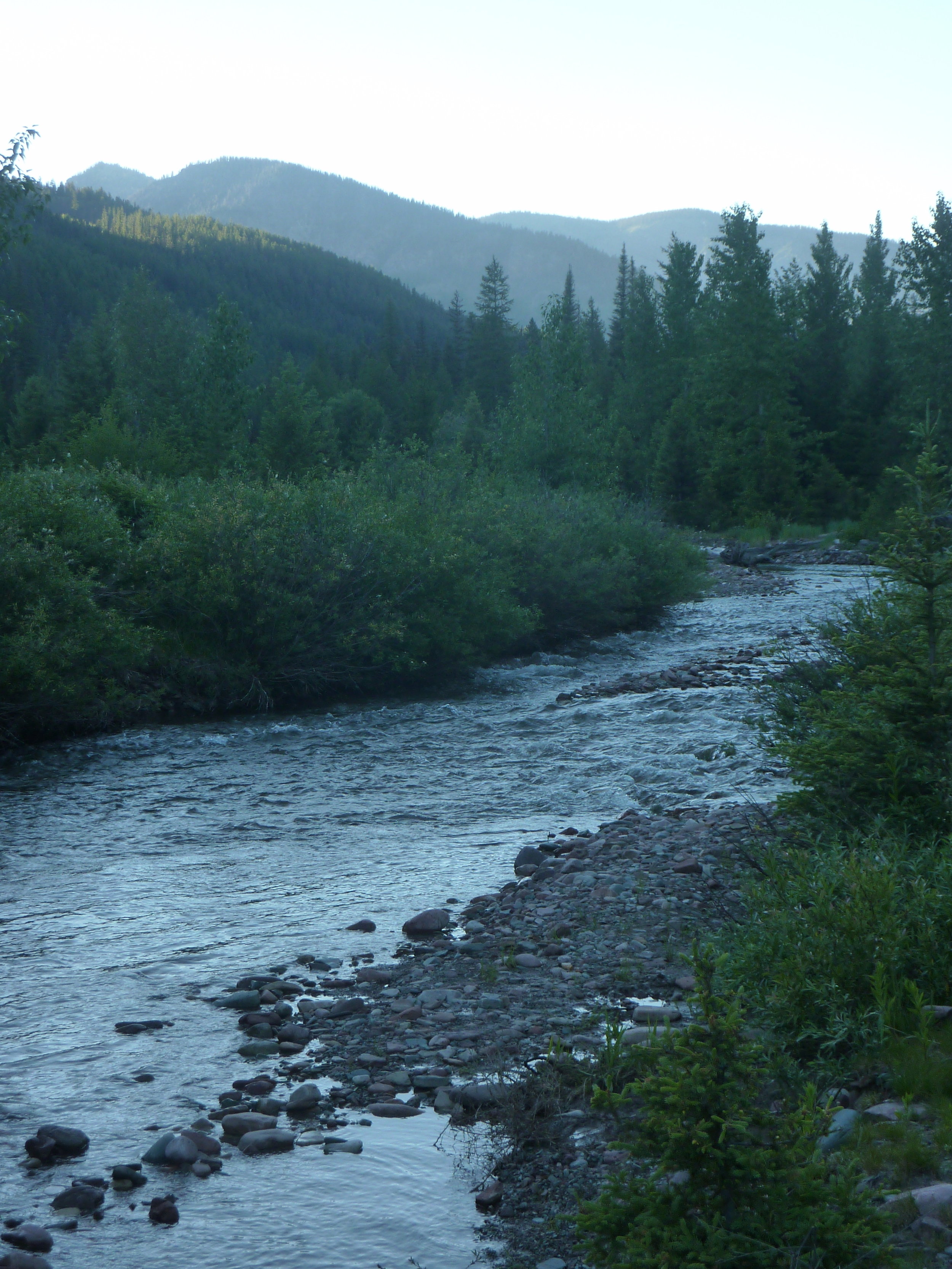
It was about 5:30 in the evening when we left the car with our packs on our backs and started hiking into the Scapegoat Wilderness Area in Montana. It was a well-worn trail, lots of horses and hikers have explored the area, and many take the three mile hike in for a day trip to visit the famously beautiful Devil's Glen section of the Dearborn River. It was not too rigorous a hike for our first trip in with heavy packs, and though my pack looked almost as big as I am, it was only around 30 pounds.

It didn't seem like very long before we hit the three mile mark and saw a handful of tents and campers around fires in the meadow above the Devil's Glen. We decided to keep hiking and see if we could find a more secluded spot near the river. Another 3/4 of a mile and we headed down a less-worn path toward the river. Bob spotted a perfect campsite on the other side, so we crossed carefully, found a place to pitch the tent, and settled in for two nights.

The river was loud and full of life; as we watched the sunset, we saw a trout splashing in a large pool on the opposite side of the river, heard grasshoppers and birds, and the droning sound of insects all around. After a simple dinner of freeze-dried convenience with decent flavor, we shared a sip of bourbon from the flask and sat by the river to enjoy the view. My head was clear for the moment, taking in the spectacular pink and orange across the sky.

IMG_3725.JPG

When we climbed into our little tent and put our heads down on make-shift pillows of clothes, I thought I'd fall right to sleep, I was exhausted. The temperature was perfect, the air clean and fresh with a slight breeze through the tent. As my eyes were closing, I became super aware of the sounds of the night around me, remembering that I was in bear country. It took me hours to fall asleep, jolting awake after incorporating the sound of Bob's snore into a dream about a bear outside the tent. Eventually, I fell into a deep sleep and was disappointed to wake up to the early morning light coming into the tent, my head full of busy-ness.

I thought that within a few hours of being in the wild mountains of Montana, my head would be clear of my every day activities -- but it wasn't. Despite spending hours wandering through the spectacular wilderness, my mind was still stuck in overdrive. I woke as I always wake at home, with my head full of thoughts about what would come next, what I forgot to do at work, excitement for our next musical performance, upcoming travel plans, and thoughts of what our boys might be doing at that moment by themselves at the house.

Why couldn't I clear my head? I closed my eyes, trying hard to think of nothingness, to listen intently to the sounds around me, to smell the air and nearby wild flowers. It must have been more than 20 minutes that I tried to relax back into my sleeping bag, getting more and more frustrated with my inability to simply be there, enjoying the peaceful environment.

I finally turned to Bob and suggested we get up, get the food bag from the tree, and make coffee and breakfast.

I've been here before; many years ago I was on my yoga pad at the end of a class, trying to get into the ending meditation provided by the instructor. I was filled with frustration. Every time I focused and dropped myself into the meditation, I'd find my mind wandering all over the place, flitting from one topic to the next. That was the moment, after about 10 years of trying, I realized I didn't like yoga.

That first morning in the woods, focusing on action helped; I was hungry and immediately set off to pump some water for our coffee. I never would have thought flies, especially the biting kind, would be a welcome distraction. But there I was, swiping at the flies landing on my legs and starting up the little burner for coffee, no thoughts buzzing in my head but the need for coffee and oatmeal.

We packed up for a day hike and headed upstream, bushwhacking through the dense, lush forest among wild roses, Indian Paintbrush, elk scat, mushrooms, and dead trees littering the ground. Stopping along the rushing river periodically for Bob to cast his nymph, hoping for a brown trout for dinner, I had the camera poised for my own catch for the weekend. It was mostly quiet, which, in bear country, isn't really a good thing, so I hummed and sang some of the songs we were working on for our next gig.

My head wasn't clear, but I was relaxed.

By the time we hiked back out to the car after two nights, I was tired but not exhausted. I felt strong, healthy, and comfortable in my skin, even though I smelled like I hadn't bathed in three days. I unloaded my backpack into the car and opened the cooler we had stashed inside, pulling out my favorite local brew, Lewis and Clark Brewery's Prickly Pear Pale Ale. My head was finally clear.

Driving back through some of the most beautiful landscapes in the country, I turned on my phone to let our boys know we were on our way, and to suggest they clean up evidence of junk food binging. It beeped and beeped as the signal came on to retrieve missed calls and text messages. I wanted to ignore it, but the pull of connection was too strong. I read the messages.

I really didn't miss anything. So I put the phone down and didn't pick it up again until we unloaded the car back at our house.

I had no intention of looking at my computer when I got home, and managed to leave it closed until late into the evening when I had to review a document for a client.

It took me three days to disconnect from my electronic devices and clear my head. That can't be a good thing.

A lot has been written about humanity's disconnect from nature as a result of our addiction to our electronic devices. That disconnect has wreaked havoc on our ability to safely spend time in nature and effectively connect with people around us.

If we don't disconnect from screens and reconnect with people, ourselves, and our natural environment, and find ways to embrace the in-between space, we will lose our ability to connect in any real way with our own humanity.

What will you do to change this trajectory in your life and the lives of your family and community? How will you adjust your patterns to slow down time? If you don't, you'll miss out on all kinds of stories to share. Enjoy the in-between, be a storymaker.

SAVE-THE-DATE for the third annual No Longer Virtual conference on February 21 and 22nd in Atlanta, Georgia. It's already half-way to capacity, so save your spot today.

Avoiding the After Conference Hangover

Create Memorable Stories and Relationships to Keep Your Momentum and Inspiration

No Longer Virtual, Denver 2018

No Longer Virtual, Denver 2018

I was so excited to start working on some of the ideas I had, and to apply what I had learned, I actually arrived early to work the morning I returned from the conference. That's a big deal for me; I love to sleep and rarely choose to get up any earlier than I have to. But that morning was different. That week would be different. My JOB would be different. I was on fire.

The conference had been full of great topics, from sales to leadership, from marketing to financial analysis. The keynote session and the breakout session hosted by the keynote speaker were my favorites. The topics were marketing, and he drilled down in the breakout session to help us work through some his strategies to apply them to our specific goals. He reminded me why I loved that class when I was going through my undergraduate business program. His excitement for the planning process, implementation, and follow up analysis was contagious; I couldn't wait to get back to work and start my own projects!

That Monday, I sat down at my desk and penciled in time on my busy calendar to work on a formal marketing plan. When I started that job just four months before, I dove right in and didn’t give myself any opportunity to think through a strategy to market the hotel. It’s as if I had forgotten all of what I had learned in school.

I thought that giving myself a set amount of time, maybe 30 minutes each day would get me to where I wanted to be. I started first thing that morning by looking at available online templates for a marketing plan that would fit the needs of the hotel, and selected a simple but solid format to download. My boss walked in as I was saving it; he was surprised to see me already settled into my day, earlier than usual. In an uneasy, suspicious, fake-happy tone, he asked me:

“What are you so happily working on first thing this morning?”

"You know that break-out session I went to at the conference last week? The one on marketing plans and implementation? I'm working on a marketing plan for us, to formalize some of what I've been doing, to make it easier to budget and measure the success of what we're doing here. We can’t possibly analyze whether what we’re spending money on in advertisement is working unless we find a way to measure it, right? I've been so busy since I started my job here, trying to make sales and get people in the door, I completely forgot how important this tool can be!"

He had no idea what I was talking about, and erupted at me: “Why do we need a marketing plan? You should be pounding the pavement. Didn't we have this conversation, that you need to spend less time onsite and more time selling?”

In less than ten seconds, my boss had me nearly deflated. I didn't give up, though, because I knew I was on the right track. Every time I had 15 minutes alone in the office, I worked on that marketing plan. I knew I needed the document to help me stay on track and see the results of my efforts at that job. In my optimistic mind, when I presented the finished product to my boss, he'd appreciate it -- he'd realized why we needed it.

I'll save the results of that work for another blog post; let's just say it wasn't pretty.

I tried to keep my enthusiasm that week and the next. Interactions with staff included some discussion of things I learned and ideas I wanted to share; some were motivated to work on them. Most just nodded and smiled, assuming the ideas would go away and they could get back to their routines without having to work too hard.

Within two weeks, I may as well have not gone to that conference at all. I had an after-conference hangover.

I had been all excited, full of motivation and ambition for my job when I returned from the conference, but because my boss didn’t understand the “why” behind my project ideas, my colleagues hadn’t been to the conference and hadn’t experienced the camaraderie and enthusiasm of the other participants and the speakers, and because I had zero support at work for implementation of new ideas, all of that excitement and motivation just *poof* disappeared.

What a waste of time, money, and, well, ME.

Granted, my boss wasn’t great at his job and it wasn’t a good work environment in general, but aren’t there things I could have done to prevent the deflation of my enthusiasm, if I knew in advance it was likely to happen?

I am a big believer in attending face-to-face conferences and events, especially when you’re particular about the types of events you attend. There is nothing like that face-to-face learning and interaction with others in your industry or simply with people who have similar motivation and ambition - regardless of industry.

Every event is an opportunity to improve yourself, and not just to gain skills for your current job, so how do we make the most of these conferences? And, more importantly, how do we keep our enthusiasm when we’re faced with little to no support and encouragement when we go home and back to our routines?

I have a few strategies that I’ve used in recent years and have found them to be effective when I’m consistent with them:

First - During a conference, I don’t try to meet as many people as possible - I try to meet a handful of people and get to know them well. Believe it or not, I am actually kind of shy, so this isn’t as easy as it sounds!

I make sure to attend meals and sit at tables with people I don’t know. There are a few good stories I know I can share to make people laugh, especially when I’m in a big city outside of Montana. People are always curious about Montana, so that’s a great topic to start with. And then I simply ask people questions like:

Where do you live?

Did you grow up there?

Do you have pets, kids?

Did you get any good nuggets in the morning sessions you attended, anything you’re thinking of working through when you get home?

Being a bit shy doesn’t mean I don’t like to talk to people, it just means it’s not easy for me to walk into a roomful of strangers and start talking to them. The one thing that always works for me is curiosity. When I’m genuinely curious about people, they feel it and respond to that curiosity.

When I’m asking questions, I’m looking right at the person answering, making sure I catch their name, and if they have a name tag on, looking at the written letters and then at his or her face, and creating a mental image of the name with the face. That helps me remember names and some details about the conversation.

Asking those questions is a great way to know whether this person is enthusiastic and motivated by what they do. Those are the people I make special efforts to connect more deeply with.

When I attended the Government Social Media Conference in Dallas, I met dozens of really motivated, ambitious people that I liked a lot. I connected deeply with about 6 of them. More than a year later, I’m still in touch with 4 of those people and we connect periodically to catch up. Those four people continue to motivate me!

On our last day, four of us checked out of the hotel and shared a ride to a Vietnamese restaurant across town, and three of us shared a ride to the airport after that. The experience of sharing the ride, sharing food, and then enjoying a cocktail together at the airport made the connections even more sticky, more real.

Why do I pick just a handful of people to get to know well?

Because these are the people who help me avoid that after-conference hangover, that’s the other half of my strategy - to keep in contact with that handful of people.

When I return from a conference, I go straight to my calendar and schedule follow up calls with the people I connected with. I also schedule time each week to work on whatever really excited me at the conference, even if those were not directly related to my current job.

It was when I was planning the first No Longer Virtual conference in Atlanta in 2017 that this concept, the After Conference Hangover, really took shape in my mind. After many years of attending conferences and planning events, I had a lot of ideas about what I didn’t want for No Longer Virtual, and one major component was to include strategies throughout the conference to help participants avoid that after-conference hangover. That included making sure that everyone in the room had contact information for each other, and specific communication plans following the event.

Because participation is limited to 50 people, every person had the opportunity to meet the facilitators and other participants, to truly connect with each person. Think about the value of that roomful of advocates for you, your career, and your business, when you keep in contact following an event. Not only was there learning and motivation from the event itself; the relationships that were built in those 48 hours created a sustainable energy well beyond the last session.

The next time you’re investing time and money to attend a conference, think about how you’ll be able to sustain that motivation and inspiration after you get home.

If you’re intrigued by my description of No Longer Virtual events, visit my website, elkinsconsulting.com for more information.

Connect Deeply Through Travel and Adventure

What traveling teaches us is how to be resourceful, and that we have a choice in how we react to obstacles and challenges. When we're traveling, we're really at the mercy of the people around us, the weather, and all kinds of things over which we have no control. But what we can control is our choice to see it as part of the adventure, and to make the best of whatever we're faced with.

We Can Choose How Our Stories Define Us

She could easily have given up all of her power, her love, her compassion. As a matter of fact, she tried to when she was 25. As she woke in the hospital after a suicide attempt, her dad (she was finally adopted by a loving family), who was not a particularly affectionate person, but who demonstrated love in other ways, was there, patting her hand. The look on his face said it all: He was disappointed, hurt, heartbroken at Ashley's choice to leave him and this world.

You Never Know Which of Your Stories Will Inspire You

When Gail shared the story of her mother’s advocacy work for victims of domestic violence with Rebecca, they agreed immediately that their business had to have another side to it, a side that would benefit that same population of their community.

Being Born to do Something Doesn't Mean it's Easy

The Story of Your Passion is Also a Story of Overcoming Fear

He was six when he heard Fats Domino's Blueberry Hill*, got those telltale chills up his spine, and knew he was born to play guitar and sing. He was nine when that passion was tested, and it took him five years to recover.

Sometimes our passion for something must be tested so we know, absolutely, that this is exactly what we want. When Duke Robillard stood on a stage to sing for the first time in front of a large audience, the spotlight on him, his nine-year-old confidence and character were simply not prepared for what he saw. His mother told him later - he doesn't remember this at all - that he sang, yes, and was crying at the same time.

I can imagine that little boy in his bowtie and fancy, Sunday shoes standing there, terrified and yet completely committed to doing what he set out to do. It took him a long time to recover from that stage fright. Duke wouldn't sing for an audience again for five years, and even as a professional musician with Roomful of Blues, he fought the urge to walk away from the stage, full of anxiety and fear.

But when you know innately what you were born to do, at no matter what age you figure it out, you're tested over and over again. And every time you stand up to that fear, every time you make the choice to put yourself back on that path, you not only strengthen your commitment to your life's work, you give the gift of what you were born to do to the people around you.

Thank goodness Duke got past that stage fright to create and perform incredible music for the past 50+ years. Here's one of my favorites from Roomful of Blues' first album:

Duke and I met in 1997, though my husband introduced me to his music a couple of years before that. A friend gave us tickets to see him as a wedding gift; it was a small venue in Washington DC. Bob and I were standing right up front near the stage for Duke's set, and I was completely sold on this guy's talent. As we waited for the next act to come on stage, I went to grab us a couple of drinks. On my way back, I saw Duke's bass player, Marty Ballou, standing near the stage and introduced myself. We hit it off; not only was I seriously impressed with the incredible soul with which he played the bass (he made a 3/4 bass look small), he is also a warm, affectionate, and kind person. (He was inducted into the Rhode Island Music Hall of Fame in 2015.)

The next band got started, and we were getting squished by the audience. We decided to head to the back of the bar, and maybe leave since we had come to see Duke, and not the other guy on the stage. As I led the way through the crowd, I could see Marty waving at me - he was a head taller than anyone else in the room. He gave me a big hug, and I introduced him to Bob. We met Duke a few minutes later, and couldn't believe how down to Earth he was. Marty and I exchanged numbers, and every time the band would be within a couple of hours' drive of Washington DC, Marty would call me and ask how many he should put on the guest list. We followed them around the region for two years, and then moved to Montana. I kept in touch with Marty, and once in a while I'd email Duke just to check in.

To this day I cannot believe our luck in connecting with these musicians. (Duke was inducted into the Rhode Island Music Hall of Fame in 2014.)

Naturally, we refer to a variety of music throughout our conversation on this podcast. This first reference was part of a story when my sister and I saw him in Baltimore. I introduced the two of them and my sister said: "Huh. You're not ugly at all! Actually, you're very handsome!"

I couldn't breathe for a moment, and knew I had turned beet red. That's when my sister looked at me and realized what she had said. Completely embarrassed and trying to recover, she said: "Sarah made me a mix CD and your song, I May Be Ugly But I Sure Know How to Cook was my favorite song on the mix... so, um, that's why I said that..."

Thank goodness he's such a good sport, charming, and has a sense of humor. We all burst out laughing as he walked away to start his set. Did I mention I just love this guy?

From Duke's recent album, a refreshing collection of swing music with some of my favorite female vocalists, here's Squeeze Me with Madeleine Peyroux:

And just to show off a bit, here's Duke in a jam session with the amazing Stevie Ray Vaughan:

In the podcast, I mention Ed Sheeran's version of the song The Parting Glass, and here's the one I listen to:

And, just for kicks, here's the other version I mention in the podcast, by the Wailin' Jennys:

I hope you enjoy this episode, and that you do some of your own digging into this extraordinary musician's work. Of course, I highly recommend his most recent album, Duke and His Dames of Rhythm.

If this podcast speaks to you, please leave a comment and let's start a conversation about the challenges we face, even when we absolutely have no doubt that we're doing what we were born to do.

*Blueberry Hill was recorded by Glenn Miller's big band. Jack Rabid, an infamous NYC drummer and punk rock DJ, recently told us the story that Fats Domino was inspired by Glenn Miller's version of the tune. It's likely that Glenn Miller was inspired by Gene Autry's version in the movie The Singing Hill. So there you have it - the beat goes on... so to speak. 

Use Humor to Engage and Connect

Storytelling is Best with an Element of Humor

Ron Feingold, like other brilliant and well-know, but not necessarily famous comedians, has worked for nearly 30 years to make people laugh, to entertain them, and to connect with them for the brief time he has on stage for each show.

Every story he shares has some element of humor in it, though sometimes it's subtle. What I love about his style is that he's doing his own thing. He's not trying to be like anyone else. He's also combining comedy with his love for music, something unique and very entertaining.

There are pivotal moments in our lives that we recognize immediately, and that we know within seconds that they have changed us and how we see the world - and ourselves. But most of our pivotal moments aren't that obvious. Most of them are hidden in our brains until an experience that may feel similar happens to wake the memory and bring it to the conscious mind. I love discovering those moments with people, uncovering them and making necessary adjustments in order to take responsibility for our current actions and decisions.

The first pivotal moment Ron shared in this episode was one he didn't necessarily know would change his world, but after processing it for a few weeks and months, he was able to identify it as a turning point.

That first story might just take you back to a similar experience, one where a virtual stranger offered time, patience, kindness and wisdom at exactly the moment you needed those things. I know it brought back a couple of memories for me. Your lesson may be different; my lesson was simply a reminder to be as present and engaged as I can when I see someone who needs that same time, patience, and kindness. A moment of kindness like that can truly be the difference between life and death.

I'll be curious to hear your thoughts about this conversation, please let me know if you have a memory pop into your head that is similar, and maybe the lesson you can take from it now, possibly decades later.


Ron Feingold is a comedian and musician, and always has an entrepreneurial idea in his head. You can find more information about him, and even book him for your next event by visiting his website. My favorite thing he does is "The Power of the Smile", exactly the inspirational performance that any organization will appreciate at a conference or training.

You can also connect with him on LinkedIn, and please take a few minutes to enjoy this: