
Your Stories Don’t Define You
How You Tell Them Will
A podcast to unlock your stories and uncover meaningful insights.
Episode 108: Real Change Requires the Right "Gear", Creating the Right Environment, and Celebrating Small Wins
I’ve been thinking a lot about motivation, habit, and successful, sustainable changes in both. On The Hidden Brain, an NPR radio show, I heard a researcher talking about the fact that successfully developing strong habits like everyday workouts and healthy eating isn’t a result of better self-control or motivation, it comes from developing the habits themselves.
It’s Not Self-Control that Makes Change Stick, It’s Developing Habits

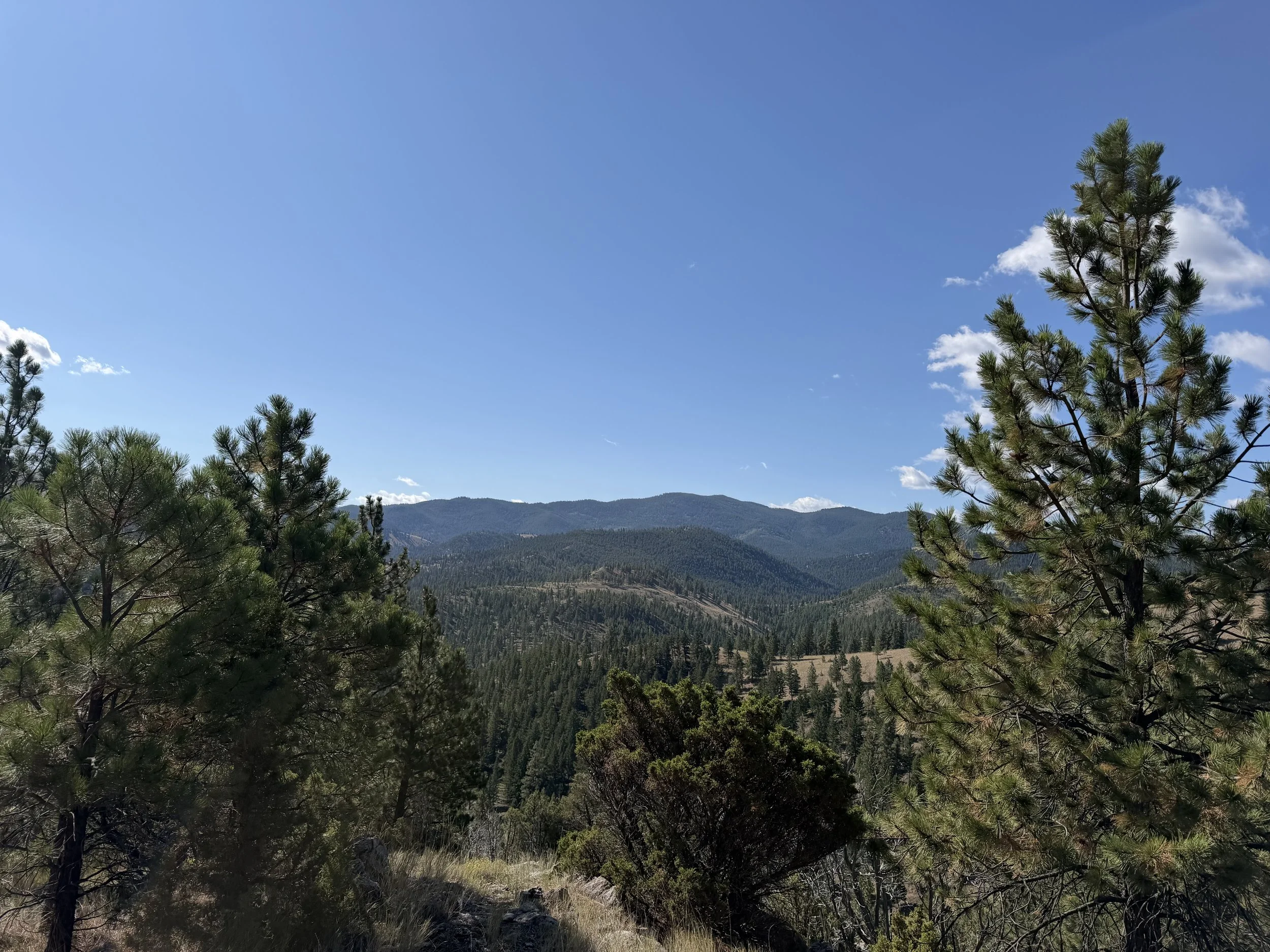
Quarry Trail, Mt. Helena, Montana - January 2020
I’ve been thinking a lot about motivation, habit, and successful, sustainable changes in both. On The Hidden Brain, an NPR radio show, I heard a researcher talking about the fact that successfully developing strong habits like everyday workouts and healthy eating isn’t a result of better self-control or motivation, it comes from developing the habits themselves.
As a person who developed a habit of nearly-daily hiking year-round on the mountain behind near my home, I started to wonder how it happened. I’ve never considered myself particularly outdoorsy. I was born in Washington DC, a city not known for healthy habits and a natural environment, and lived in LA for my early formative years. We moved to Colorado Springs when I was in junior high school, and I started to explore the Garden of the Gods, a beautiful natural park with HUGE red rocks when I got a car and driver’s license.
On any warm afternoon after school my junior and senior years, particularly after stressful days, I could be found bouldering on those rocks by myself, barefoot.
And as an adult, when I moved from Washington DC to Montana, I was determined to spend more time outside with our infant son. We moved in April, and all summer long the baby would be in a backpack on my back, hiking in the hills nearby, or fly fishing the streams just over the mountain from our little town. – But I still didn’t consider myself “outdoorsy”, probably because the women I connected with over the years were far MORE outdoorsy and hard core than I was. Those women would backpack into wilderness areas by themselves or in small groups for a few days at a time, carrying 30-40 pound packs and cooking on a campfire. And they were outdoorsy year-round, where I considered myself a “fair-weather” hiker and angler, only exploring the trails and rivers when I didn’t have to bundle up and wear warm gloves.
That version of hiking worked for me until recently. You see, we adopted a big chocolate lab mix a couple of years ago, and he is very different from our previous dogs: He won’t “do his thing” on a tether or leash in our yard or driveway – he requires a walk of a minimum of about 4 blocks.
We adopted him in March, and the weather had started to improve by then, so taking him on daily walks up the mountain nearby wasn’t too much of a chore. As a matter of fact, it became a welcome part of the mid-morning after I left my full time job to be self-employed that July. I found myself returning to my home office with more energy and inspiration, even if I left the house feeling obligated for the walk.
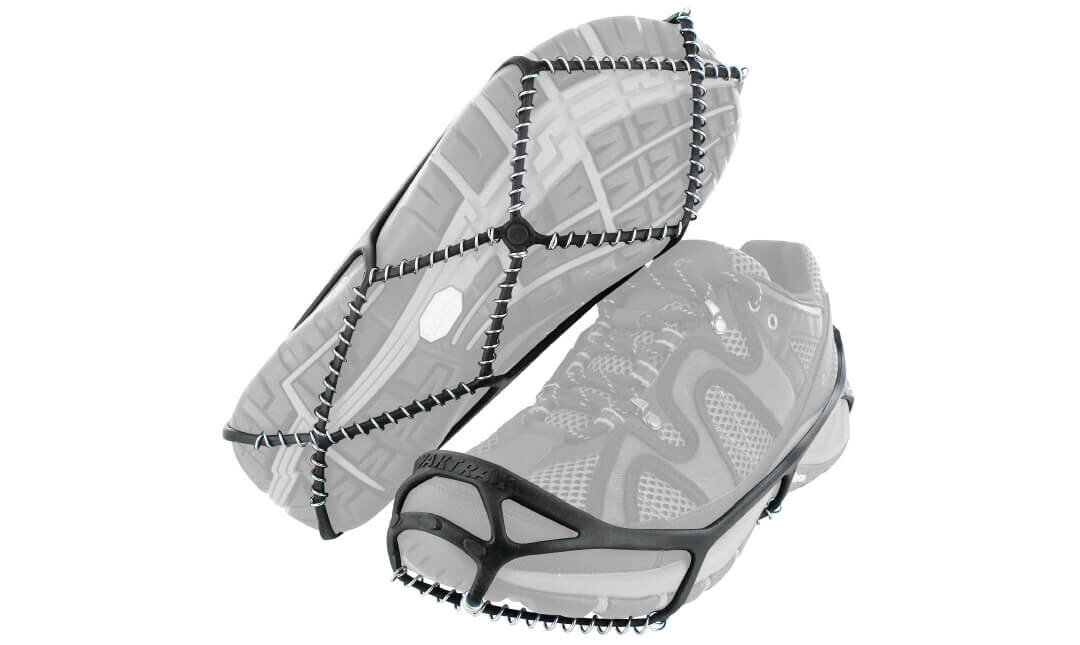
Yak Tracks
And then it got cold. REALLY COLD. And icy. And sometimes blowing snow. And the dog STILL required his long, daily walks. I don’t enjoy our walks in the neighborhood on the sidewalks nearly as much as I enjoy getting onto the mountain only two blocks away, so I purchased Yak Tracks, rubber & wire attachments for my shoes that would help with traction on ice and packed snow. In early winter those worked pretty well, but when the ice on the trails started to get thicker and more slippery, the lightweight Tracks just weren’t effective enough for me to feel safe walking up the mountain.
I found myself avoiding my walks, asking one of our boys or my husband to take the dog to the park nearby to throw the frisbee instead – which was an alternative that worked to get the dog to do his thing.
It took me a few weeks of those intermittent walks to realize I missed doing it more regularly. I’d dive into my work, lose track of time through distractions, and suddenly it was the afternoon and I felt all used up. Little motivation and almost no inspiration. I needed that time in nature to recharge and get out of my head.

As you can imagine, we have a great selection of outdoors stores here in Montana, and two are within walking distance of our house, so I walked into one that I love, and walked out with heavy-duty ice grippers – spikes that attach to my hiking boots that are super-effective at improving traction on ice. (If you visit my blog, you’ll be treated to pictures and even a video of how these things work.)
They sat in their box for months because I was intimidated by them. I didn’t even open the box until the beginning of the following winter. I’d put on the less effective ones for periodic walks, and was able to get back into my routine soon after – because it was spring and I didn’t have to worry about slipping anymore.
Winter arrived early last year, our first significant snowfall was in late September, which is highly unusual where I live. It warmed up a bit, snow melted, and then WHAM – we were hit with another significant snowfall. Those storms combined to create seriously slippery conditions on my mountain trails.

Summit, Mt. Helena, Montana - January 2020
I was determined to try out the heavy-duty spikes, took them out of the box, and put them on my hiking boots. With my trusty dog, Toblerone beside me on his leash, we walked up the two blocks of the alley to the trail and started our ascent.
“What the heck was I afraid of?! These are AWESOME!”
When we got back to the house I hung those spikes up on a hook next to the back door where I would see them every morning as I made coffee. And every day I’d smile, knowing I had the gear to make my hike more pleasant – even under the worst conditions. It could be blowing snow and in single digit temperatures and I would bundle up in multiple layers, a warm hat and gloves, and my awesome spikes.
I’d get to the top of a hill, and even to the summit a couple of times each week, look around at the fantastic views, smile, and feel like a total badass. This was a feeling worth repeating. Often.
Here’s what I’ve realized about developing sustainable, emotional and physical habits:
You have to have the right gear,
you have to create the right environment, and
you have to take every opportunity to celebrate small wins.

My hiking “gear” to keep me accountable - Toblerone “Toby”
By “gear”, I’m not just talking about physical gear like those spikes I described. I mean you have to surround yourself with the things and people you need to be successful. If you want to eat a more healthy diet, make sure you have the food in your home, and tools you need to make habits stick. If you want to get physically more fit, make sure you invest in the gear you need, don’t go cheap on this – comfortable workout clothes, good shoes, easy to use equipment or a great gym to do that. AND for your “people” gear, make sure you’re surrounding yourself with other people who want to be healthy, people who can be your accountability partners, supporters, and encouragers.
When I say create the right environment I mean this: If you buy a fancy Pelaton and put it in your basement or an unused guestroom – out of sight – you’re unlikely to create a habit around that gear. I had to put those spikes in a place I’d see them every day in order to inspire me to put them on. If you sit in an office that doesn’t inspire you, you’re not in an environment to create and sustain good, productive work habits. If you surround yourself with people who do not inspire you, who create an environment that’s tense and bitter, you’re highly unlikely to make sustainable change.
And last, when you reach a high point – lose 5 pounds, make the choice NOT to buy the potato chips when you’re at the grocery store, get to the top of the hill, or the summit – no matter how many times each week you DO THOSE THINGS, celebrate yourself. Take a moment to congratulate yourself on your good choice. Take that moment to be grateful for yourself and your hard work to make that memory strong and sticky, to keep you company for the next challenge.
Join me and an extraordinary group of professionals at the 2020, 4th annual No Longer Virtual conference on March 12 & 13th in Chicago. When I say “find your tribe”, this group is what I’m talking about. The common characteristics of people who attend are curiosity, compassion, and an entrepreneurial mindset.

The agenda is full of relevant, engaging sessions, and you’ll be surrounded by some of the most wicked-smart, generous, creative, supportive professionals around. Limited to 50 participants, you’ll have the opportunity to truly connect and build strong relationships. And the best part? You’ll avoid the “after-conference hangover” by remaining in close contact with your network after the event.
Here’s a peek at the agenda:
• Supercharge your LinkedIn experience, hosted by Shelly Elsliger & Zach Messler
• Turning ideas into action by clarifying your why, prioritizing, action planning & increasing accountability, hosted by Kris Macc & Craig Thomason
• Non-sales workshop to engage your audience and grow your revenue, hosted by Hannah Bratterud and Arlene Mendoza
• Achieving win-win relationships to improve your outcomes, with a field trip to the Art Institute of Chicago, hosted by Chris Spurvey & Megan Miller
• Nurturing your emotional health to improve outcomes, hosted by Renee Smith & Kevin Strauss
DISCOUNT CODE:
Since early registration ended, here’s a $100 discount offer from the full price NLVFRIEND, and if you make arrangements with me to register two or more guests, I’ll offer a discount code for $125 off each of your registrations.
There are 13 spots left as of January 12, 2020!
I hope to see you at #nlvchicago2020, investing in yourself, taking the steps necessary to take action toward your dreams, and building and nurturing your network that can help you get there.
Episode 64: Like Change, Uncertainty Is a Constant Undercurrent in Life
Stories of Risk and Addressing Uncertainty
Marylene Delbourg-Delphis doesn’t see risk the same way most people might define it. To her, it’s all about how prepared you are for whatever step you intend to take, the people you’ve surrounded yourself with and trust to take that step with you, and your ability to address uncertainty at any given moment.
Uncertainty is, like change, a constant undercurrent of life. There’s nothing certain in life, and there definitely isn’t anything certain in business. So how do we find ways to cope with an ever-uncertain world?
As a founding CEO and a turn-around CEO, Marylene has learned to quickly identify the resources she will need to address uncertainty and to make decisions effectively. She also has learned to trust that people truly want to learn, they have the capacity to learn, and they want to do a good job.
We covered a lot of ground in our conversation about how she sees risk, and how she addresses learning and innovation in her employees. One strategy Marylene uses in her presentations is to include music, particularly classical symphonies and opera. Here are a few links we agreed to share for you - our listeners - to get a better understanding of the impact:
Hector Berlioz - Symphonie Fantastique
Why listen to what Marylene has to say about building a strong, engaged, trusting workplace? For one thing, she has had great success in this area. For another, she is the one who, when she started her first US tech firm, poached Guy Kawasaki from Apple, and wrote the French forward for his recent book!
The operatic piece she mentioned, featuring Maria Callas:
And the book The Republic, by the philosopher Plato.
Learn more about Marylene by checking out her book, Everybody Wants to Love Their Job, and by connecting with her on LinkedIn.
Are you enjoying listening to episodes of this podcast? Are you wondering how you can help me sustain this project, to support and encourage the sharing of important stories?
Here are a few ideas!
1) Leave a rating and comment on your favorite podcast service like iTunes or Stitcher
2) Share a link to the show and tell people why you like it
3) Become a sponsor (for as little as $2/month) by going to Patreon
Embracing Life Transitions as the New Normal
We are Living in Transition Now, What Stories Help Us Navigate this New Normal?

Kris Macchiarola left the corporate world because her activities there just didn’t align with her core values and priorities. What she discovered after leaving that world is a community of women in varying types of transitions in their lives: Divorce, empty nesting, career changes, priority changes, and a general desire for something different in their lives.
There appears to be three responses to these major life adjustments:
People see an open door and choose to turn back around to the known dynamics of their previous jobs, industries and types of partners, regardless of happiness and fulfillment.
People see an open door and freeze, not knowing which opportunity to take because there seem to be too many options.
People see an open door and leap across the threshold, choosing risk over safety and comfort because there are simply no other options for them.
In this podcast episode, we share some of our own stories of transition, the stories of some of our friends, and some important strategies and thought processes to consider in this changing world of transition.
Kris Macchiarola is a consultant, speaker, leader, and coach. She specializes in helping organizations create a culture where employees feel energized, enabled, and engaged, ultimately, giving them a competitive advantage. She is an EQ champion and specializes in Human to Human. Connect with her on LinkedIn, check out her Patreon profile, and visit her website to learn more.