

Your Stories Don’t Define You
How You Tell Them Will
A podcast to unlock your stories and uncover meaningful insights.
430: Every Emotion Comes from Needs, Met and Unmet - featuring Morgane Borzée
"... we talk about feelings, but... At the end, every feeling has an underlying need. If it's a pleasant feeling, it's a met need. If it's an unpleasant feeling, it's an unmet need. And needs drive our behavior."
This conversation with Morgane Borzée filled in so many gaps in my understanding of what I've heard referred to as trauma-informed coaching, teaching, and counseling.
I thought I understood the connection between emotional intelligence and behavior, but I was missing a key component:
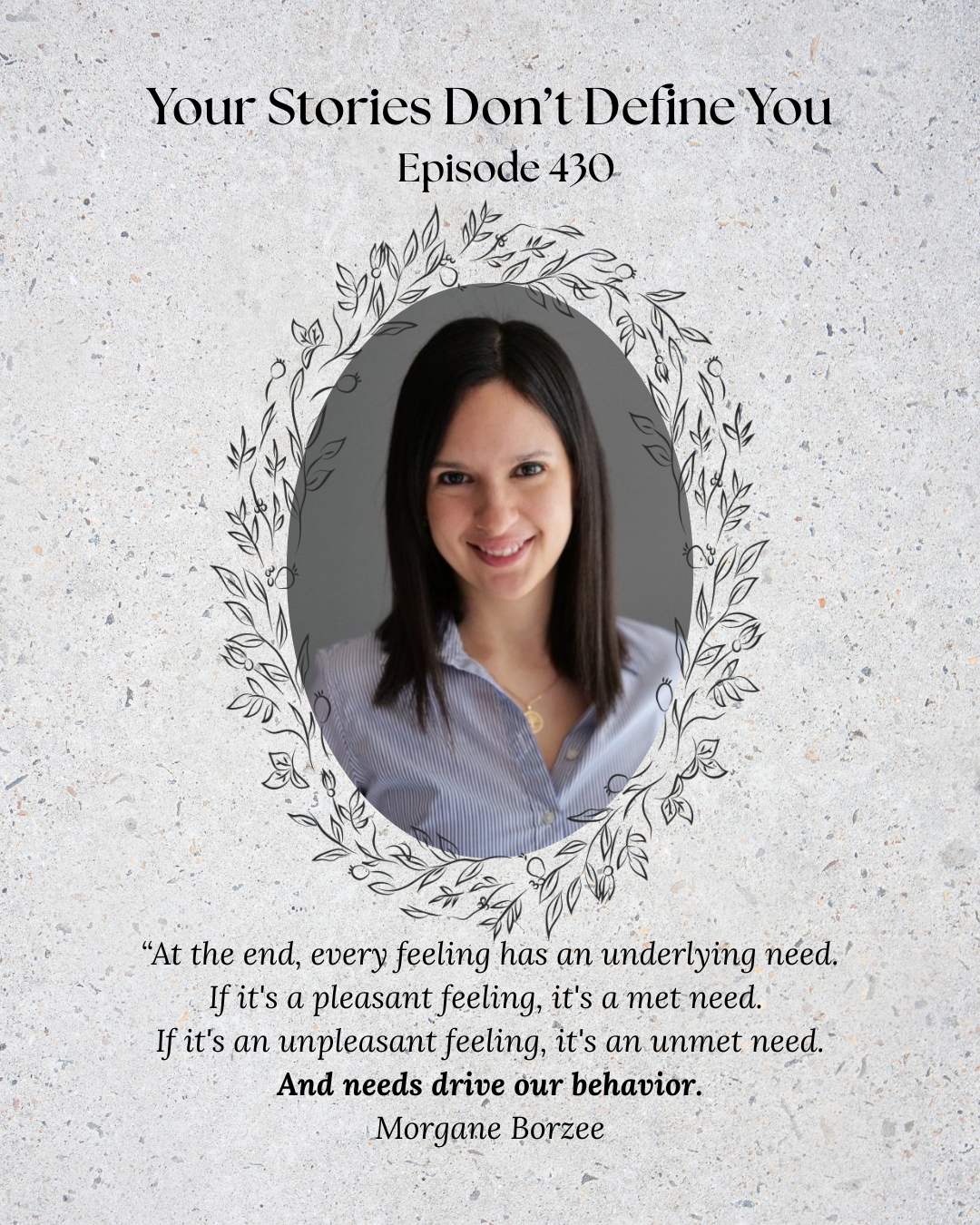
"... we talk about feelings, but... At the end, every feeling has an underlying need. If it's a pleasant feeling, it's a met need. If it's an unpleasant feeling, it's an unmet need. And needs drive our behavior."
This conversation with Morgane Borzée filled in so many gaps in my understanding of what I've heard referred to as trauma-informed coaching, teaching, and counseling.
If you're anything like me, you associated the word trauma with something dramatic, like abuse or neglect, death, major accidents, war, natural disasters, etc. Many of us don't feel comfortable using the word trauma to describe experiences in our lives that don't seem to compare with what we know others have experienced.
But trauma in childhood can be something as innocuous as an underlying current of the repression of anger, financial stress and anxiety, sibling rivalry. And each person experiences it differently. Ask your siblings or cousins about growing up and they'll remember completely different episodes as traumatic - or not.
Morgane suffered from severe anxiety as a young adult, and was referred to a therapist that she didn't realize was a trauma specialist. She thought she might be in the wrong place until she heard from the therapist that her anxiety might be coming from repression of anger. And she might be repressing anger because that's how she responded to her fear of the anger she saw expressed in her childhood home, among her family.
"... for years, I was shortcutting anger with anxiety. So whenever a situation would make me angry, I didn't feel angry, I felt anxious."
Her experience with the therapist not only gave her the tools she needed to start truly addressing the anxiety at that deeper level. It gave her the inspiration she then used to create an incredible platform to make what she was learning more accessible and approachable for others.
She took what she learned in academic, research-based, deeply intellectual settings, and translated into everyday language and characters that the rest of us can apply, learn from, and make real change in our lives and those of the people we influence.
Highlights
The word trauma feels big, feels significant, and it is, but it's also relative. Each person experiences it differently.
Needs met and unmet are what drive our emotions and behavior.
Listeners, now it's your turn. During our call, I started writing notes about my own needs and how they affect my behavior when they're not met: My need for respect and how that might show up in emotional responses and anger.
What are yours?
A need for basic food staples in your house? If somebody gets upset when you run out of peanut butter or eggs, it may be a need in terms of food security that wasn't. What is a pattern of conflict or frustration that you've experienced yourself or experienced with somebody else that might be related to this issue? When your needs are met, you have a particular emotional response, and when they're not met, you have another emotional response. I'm curious to hear what came up for you, what patterns you've uncovered, and maybe what you're going to do about it.
From Morgane:
I’m the founder of Equanima. I created it after years of struggling with anxiety and realizing how powerful emotional intelligence can be when you actually understand what’s happening inside you.
As a designer, I saw a gap between complex psychological concepts and what people can realistically use in daily life. Equanima exists to bridge that gap by turning emotional intelligence into clear, practical, and visual tools that help people understand their patterns, regulate under pressure, and live more aligned lives.
Visit my website to learn more, and be sure to connect and/or follow me on LinkedIn and Instagram.
About Sarah

Sarah is a Montana based workplace communication trainer, TEDx speaker, DisruptHR speaker, public speaking coach, professional storyteller, musician, and podcast host. Her workshops and coaching packages with teams and their leaders are known to address and reduce miscommunication – the most common cause of tension and stress in the workplace. Using the team’s results from the StrengthsFinder assessment, she guides teams in learning to speak each other’s “language”, learning to value each other’s strengths and connecting with each other through enhanced self-reflection and effective listening.
Sarah’s nearly 20 years working in government agencies inspired her to complete her MBA and to achieve her StrengthsFinder certification to improve work environments for others, guiding teams toward increased satisfaction, productivity, and happiness.
Visit her website to purchase her book, Your Stories Don't Define You in paperback or audiobook.
354 Amy's Mess
Hunger, for the lucky among us, is an inconvenience, the final straw during a bad day that fuels a bad temper, or an awkward moment in a silent room. But for many in our community hunger is painful, difficult, and inescapable making it near impossible to do anything let alone attend school. Approximately 2.5 million children are homeless in the United States, many of whom somehow still have to attend school, often hungry. But we can help, whether it be through donations or time, we can help the children in our communities.
Today Sarah Elkins and Amy Adams discuss Amy’s Mess, a nonprofit organization that seeks to feed the children and families of the Helena Community and to spread awareness of the plight of homeless families.
354 Amy’s Mess

Hunger, for the lucky among us, is an inconvenience, the final straw during a bad day that fuels a bad temper, or an awkward moment in a silent room. But for many in our community hunger is painful, difficult, and inescapable making it near impossible to do anything let alone attend school. Approximately 2.5 million children are homeless in the United States, many of whom somehow still have to attend school, often hungry. But we can help, whether it be through donations or time, we can help the children in our communities.
Today Sarah Elkins and Amy Adams discuss Amy’s Mess, a nonprofit organization that seeks to feed the children and families of the Helena Community and to spread awareness of the plight of homeless families.
Highlights
Acts of kindness can help your community.
Doing what you can within your means.
Working together with your community to help eachother.
Quotes
“I realize what I’m doing is not a fix, but at the same time these kids have a lot of instability and insecurity in their lives, you know they’re living in a hotel or a camper. Regardless of what the parent’s situation is these kids are still hungry.”
“I realize you don’t know me, but I know I can help.”
Dear Listeners it is now your turn,
Amy started this just by understanding a need and figured out what she could do and what she could count on to help her make even a small difference in the lives of these students. I’m a huge believer that food and giving in this way is a pathway to reduce drop-outs, to reduce criminal activity, to reduce addiction, to reduce violence at schools. Feeding people, nourishing and nurturing them, especially students is going to make a difference in our communities. What will you do and how do you see the change and the shift?
And, as always, thank you for listening.
About Amy
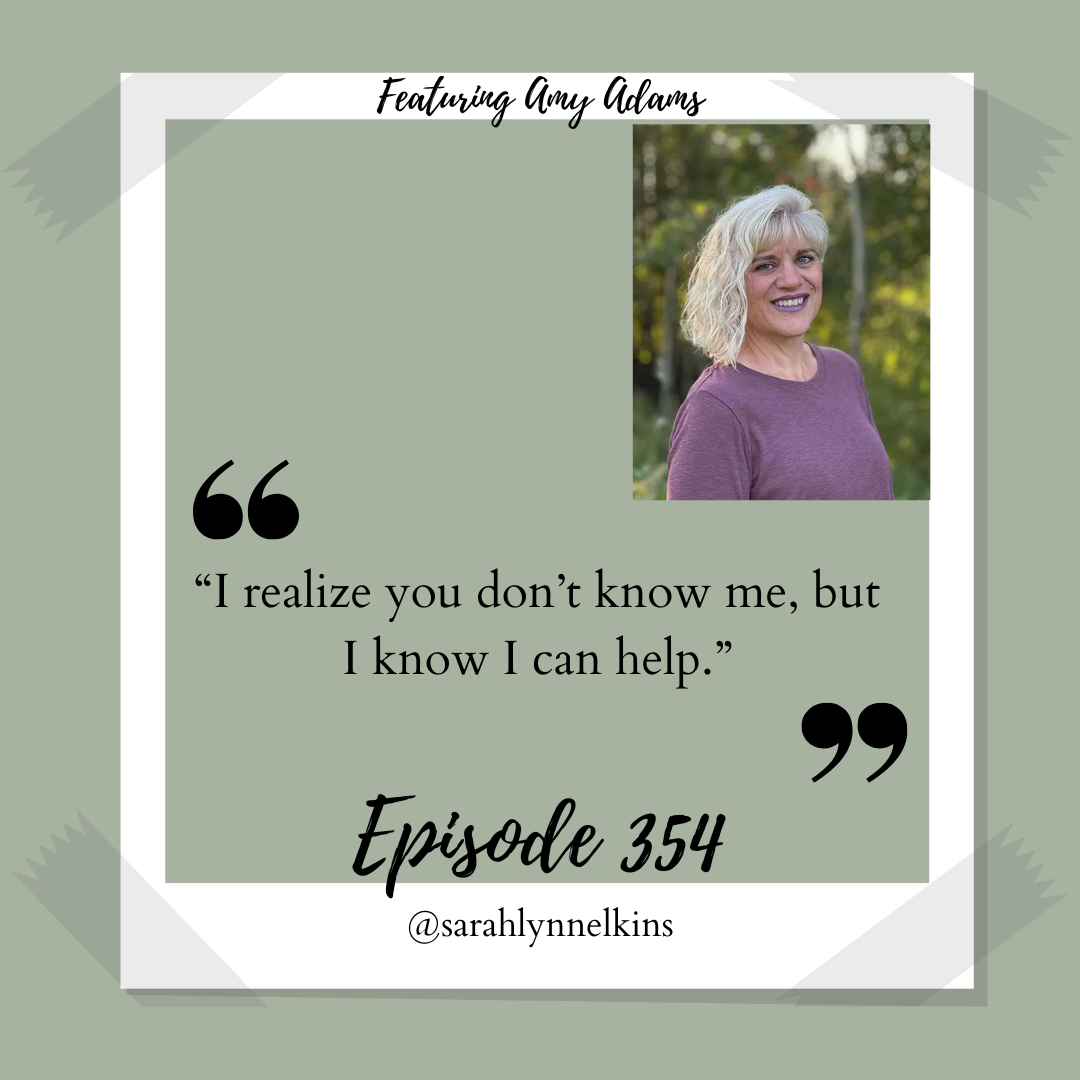
I am just an individual who cared to start something.
Be sure to check out Amy’s LinkedIn and Facebook!
Visit Amy’s Mess to find out more and donate to help feed hungry families.
About Sarah
"Uncovering the right stories for the right audiences so executives, leaders, public speakers, and job seekers can clearly and actively demonstrate their character, values, and vision."
In my work with coaching clients, I guide people to improve their communication using storytelling as the foundation of our work together. What I’ve realized over years of coaching and podcasting is that the majority of people don’t realize the impact of the stories they share - on their internal messages, and on the people they’re sharing them with.
My work with leaders and people who aspire to be leaders follows a similar path to the interviews on my podcast, uncovering pivotal moments in their lives and learning how to share them to connect more authentically with others, to make their presentations and speaking more engaging, to reveal patterns that have kept them stuck or moved them forward, and to improve their relationships at work and at home.
The audiobook, Your Stories Don’t Define You, How You Tell Them Will is now available!
Included with your purchase are two bonus tracks, songs recorded by Sarah's band, Spare Change, in her living room in Montana.
Be sure to check out the Storytelling For Professionals Course as well to make sure you nail that next interview!
Episode 98: Make a Choice to Experience Resilience & Growth Through Struggle
In our conversation, Oleg shared some important moments in his story, particularly of his first few months in his adopted family in the United States. What I love about the stories he shared was how he presented the other characters, the supporting roles in his stories. From the classmate on the soccer field who managed to understand Oleg’s body language to pass the ball to him, to his adoptive parents who placed small sticky notes on everything in the house, wall, window, door, table, fork, couch, to help him learn English, Oleg can look back at his transition with gratitude for those characters. He looks for those parts of his experience to share the beauty of overcoming odds.
Your Stories Create Your Identity. Cherish Them.

Oleg Lougheed
Awful, tragic things happen in life. When those things happen to you as a child, you get to a point in your young adulthood when you can choose to either be bitter about them and resent them, or to learn from them and grow into your resilience and character.
Oleg Lougheed made the choice, after spending a lot of time asking “why me?” to not only learn from those traumatic childhood experiences, but to share them with others to help them see their own potential to overcome, grow, and thrive, despite their circumstances.
In our conversation, Oleg shared some important moments in his story, particularly of his first few months in his adopted family in the United States. What I love about the stories he shared was how he presented the other characters, the supporting roles in his stories. From the classmate on the soccer field who managed to understand Oleg’s body language to pass the ball to him, to his adoptive parents who placed small sticky notes on everything in the house, wall, window, door, table, fork, couch, to help him learn English, Oleg can look back at his transition with gratitude for those characters. He looks for those parts of his experience to share the beauty of overcoming odds.
What will you choose to remember of your stories that will help build your resilience, your hope, and your ability to positively influence others?
Oleg Lougheed’s start in life was inauspicious. At 9 years old, he relinquished his parents' rights and entered the Russian orphanage. At 12 years old, he decided to be adopted into a new family, in a new country, halfway across the world, to start a new life. At 24 years old, he began his journey of helping others live the life they have always dreamed of, despite their hardships and misfortunes by allowing them to recognize the uniqueness and worth within their own story.
Connect with Oleg on LinkedIn, and be sure to follow him on Instagram, Facebook, and on his website.
A Hero's Story Doesn't Have to be Epic
One thing people seem to misunderstand about being a storyteller, or simply about sharing stories, is that a story doesn't have to be flashy or exciting to make it interesting. As a matter of fact, most people prefer stories they can relate to, that they find humor in, and that connect with them on an emotional level.
It Just Has to be Meaningful and Well Told

One thing people seem to misunderstand about being a storyteller, or simply about sharing stories, is that a story doesn't have to be flashy or exciting to make it interesting. It doesn't have to involve celebrities or risk of life and limb. As a matter of fact, most people prefer stories they can relate to, that they find humor in, and that connect with them on an emotional level.
These are aspects of storytelling that really lend themselves well to video; when we share a story on video, as opposed to in writing or audio-only, we share our facial expressions, body language, and tone of voice, all on a potentially much larger scale than face-to-face performance.
Jason and Matt from Beard & Bowler are very familiar with emotionally connecting stories, and are masters at uncovering personal, heroic stories and sharing them with the world. Though that wasn't what they thought they'd be doing with their lives, they have taken on this task with great competence and ambition.
Their first hero story was when they realized they were really on to something. Jason's experience as a journalist was what pushed him to seek out these hero stories. He got tired of every story being sad and full of grief; he realized not only was he becoming cynical and accustomed to a similar tragic story every day, he also realized that those stories were self-fulfilling, and that the more we shared them, the more it would become common to experience them. That's when he decided to look for the good stories, the stories of people being compassionate, generous, and making a positive difference in their communities. And not just the big, well-known, celebrity style stories. Jason and Matt look for the stories of people within companies that make great ambassadors both as employees and as people.
Listen to the podcast to hear where this motivation comes from, you might be surprised.
Visit the Beard & Bowler website to learn more about what they do and how they do it, and connect with Jason and Matt on LinkedIn.