

Your Stories Don’t Define You
How You Tell Them Will
A podcast to unlock your stories and uncover meaningful insights.
413 Love, Connection, Belonging, and Comfort Zones
It’s easy to forget to take care of the many facets of our health in a world obsessed with value and progress. We forget to care for our mental, emotional, physical, and spiritual health in ways that dramatically affect us in the long run, which is why it is vital for us to sit down and take stock of our health and to take the time to tend to our own needs.
In today’s episode Sarah Elkins and Kevin Strauss discuss the importance of connection, comfort zones, boundaries, love, and how important it is to ourselves as humans.
413 Love, Connection, Belonging, and Comfort Zones
Title card for episode 413 featuring Kevin Strauss, the title reads Love, Connection, Belonging, and Comfort Zones
It’s easy to forget to take care of the many facets of our health in a world obsessed with value and progress. We forget to care for our mental, emotional, physical, and spiritual health in ways that dramatically affect us in the long run, which is why it is vital for us to sit down and take stock of our health and to take the time to tend to our own needs.
In today’s episode Sarah Elkins and Kevin Strauss discuss the importance of connection, comfort zones, boundaries, love, and how important it is to ourselves as humans.
Highlights
Emotional, physical, and spiritual health and what the differences are.
How we learn and how it shapes us into who we are.
Identifying your comfort zone so you feel safe stepping into your stretch zone.
Taking care of every aspect of your health so that you can operate perfectly.
Quit trying to distract, soothe, or numb yourself to your needs. Take the time to properly address them so that you can be a truly healthy and functional person.
What is your reference for comfort?
Quotes
“There is no right or wrong or better or worse way, it’s just that this is how we are operating in the world and this is how we learn.”
“Value in our brain translates to love, and that’s really an emotional health need. So we’re try to feel more valuable, because value equals love in our brain.”
“We try to show our value, that we are worthy of love, but it’s never enough. It never soothes, we always need more, more, more, because we aren’t addressing the real problem. And the real problem is we don’t feel love just for who we are.”
“How many people on the planet are actively, intentionally, daily, practicing love and connection?”
Dear Listeners it is now your turn,
I’m going to ask you to define your comfort zone. Consider a moment in time when you felt truly comfortable, loved, safe, supported, just like when I stood in my doorway and saw my children in the room, and thought “If that’s not nice, then what is?”
Find a handful of moments like that in your life, define what it felt like, because once you have that foundation, you can step out of it.
And, as always, thank you for listening.
Mentioned in this episode
The Curious Incident of The Dog in the Nighttime by Mark Haddon
The Comfort Crisis by Michael Easter
About Kevin
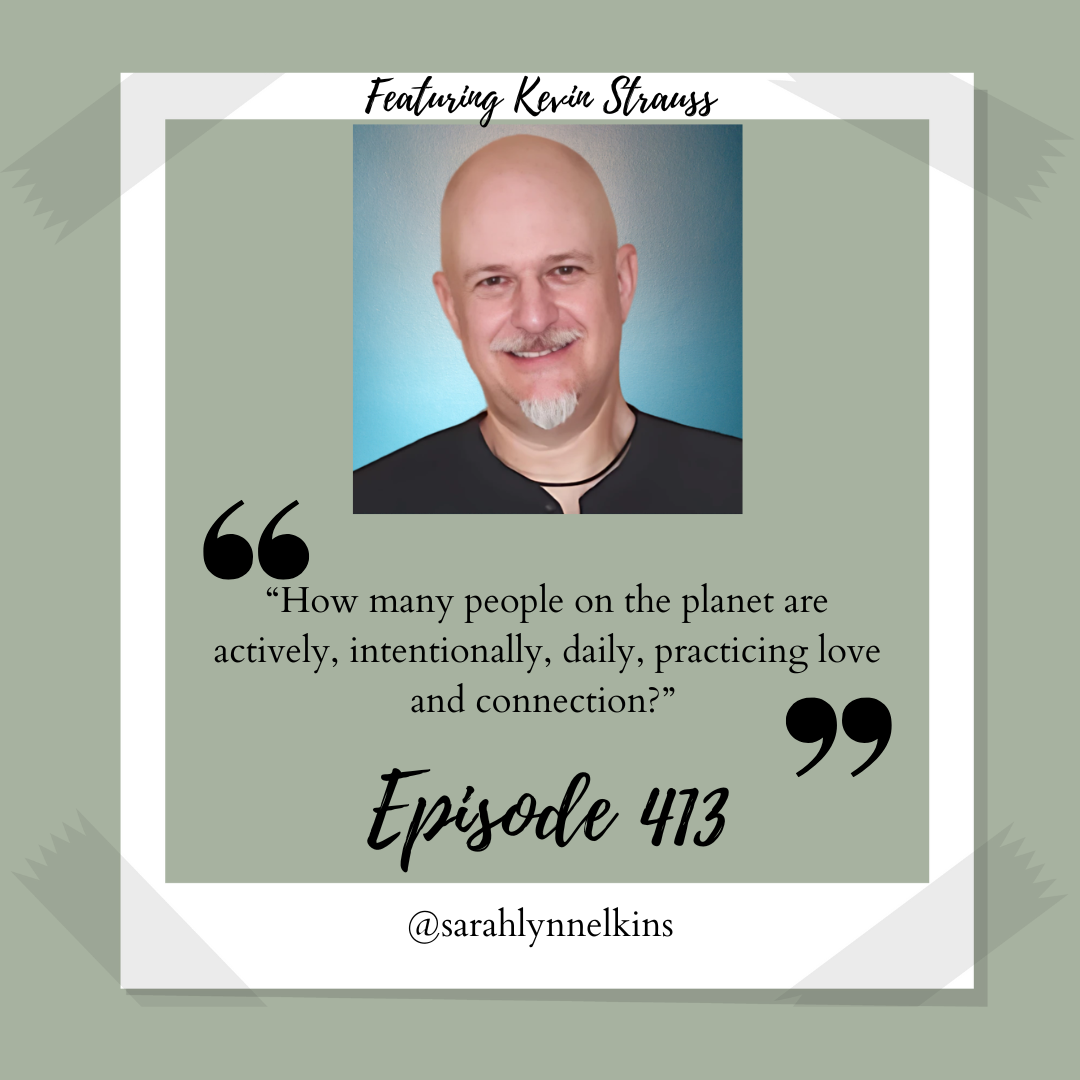
Quote card featuring a photo of Kevin, smiling. The quote reads “How many people on the planet are actively, intentionally, daily, practicing love and connection?”
Kevin R. Strauss is the CEO of Uchi, a platform built on one simple truth — everything feels possible when you know someone has your back, every day. With 30 years in human behavior, innovation, and wellness, Kevin focuses on solving long-standing problems with simple solutions.
His career began in biomedical engineering, earning more than 75 patents and multiple publications, but his deeper passion has always been understanding people and why we behave the way we do. Through Uchi, Kevin helps families, schools, workplaces, and communities create stronger relationships so people can do better together.
He’s also the author of Innovate The 1% and host of the Question It podcast. Outside of work, Kevin is a 24-year, injury-free Ironman Triathlete, expedition backpacker, and award-winning ballroom dancer.
Be sure to check out Kevin’s LinkedIn, Instagram, and Facebook! As well as his website, Kevin R Strauss, his Youtube, and Uchi Connections!
About Sarah
"Uncovering the right stories for the right audiences so executives, leaders, public speakers, and job seekers can clearly and actively demonstrate their character, values, and vision."
In my work with coaching clients, I guide people to improve their communication using storytelling as the foundation of our work together. What I’ve realized over years of coaching and podcasting is that the majority of people don’t realize the impact of the stories they share - on their internal messages, and on the people they’re sharing them with.
My work with leaders and people who aspire to be leaders follows a similar path to the interviews on my podcast, uncovering pivotal moments in their lives and learning how to share them to connect more authentically with others, to make their presentations and speaking more engaging, to reveal patterns that have kept them stuck or moved them forward, and to improve their relationships at work and at home.
The audiobook, Your Stories Don’t Define You, How You Tell Them Will is now available!
Included with your purchase are two bonus tracks, songs recorded by Sarah's band, Spare Change, in her living room in Montana.
Be sure to check out the Storytelling For Professionals Course as well to make sure you nail that next interview!
Episode 196: Get Out There! Dance! Be Silly! Don't Face Regret
I remember being shy, I remember being more self conscious than I am now. I like to say I don’t regret, but there are definitely some moments in my past that I wish I could do over again. A lot of them involve sitting out a great song because I was self conscious about dancing. Opportunities flew right past me: To sing with great musicians, to dance, to swim in the ocean. The memories of that person, the girl who didn’t raise her hand to volunteer on stage, the girl who said no to a cute boy because she didn’t think she could dance, the one who was so concerned about how she looked or that she might mess up a note, those memories came back to me as I watched the woman in the audience look away from me. What a waste.
Mae West Said It Best: "I Only Regret the Things I Didn't Do"
*Note from Sarah: We're just a few weeks away from publishing our 200th episode! If you're a fan of the podcast, we'd love to hear from you and include your words in the beginning of that episode. Simply email your thoughts to sarahelkins@elkinsconsulting.com, or record a short voice memo on your phone and email it to me. Thank you in advance for helping us celebrate this milestone!*

Sarah Elkins quote and image for podcast cover art.
She was sitting on a bench in the corner of the room, watching people dancing and having fun. I could see her toe tapping, she seemed to be enjoying the music, but I couldn’t really tell because her face didn’t show any signs of a smile. I saw her the last time our band played at that venue, and remembered when she quietly came to me afterward to tell me how much she liked our band, and that if she knew how to dance, she would have. She was so shy.
I called out to her from the stage: “Come on out, dance with us! I can see you want to! Come on out and have some fun!” I motioned to my friends on the dance floor, smiling to encourage her.

Sarah Elkins performing on stage with Bob Schmitt and the band Rocket to Uranus
She looked behind her, assuming I was talking to someone else. And then she looked straight at me with zero expression. I gave up. A song or two later, I noticed she had left her spot and walked further away from stage, watching from a safer distance.
I remember being shy, I remember being more self conscious than I am now. I like to say I don’t regret, but there are definitely some moments in my past that I wish I could do over again. A lot of them involve sitting out a great song because I was self conscious about dancing. Opportunities flew right past me: To sing with great musicians, to dance, to swim in the ocean. The memories of that person, the girl who didn’t raise her hand to volunteer on stage, the girl who said no to a cute boy because she didn’t think she could dance, the one who was so concerned about how she looked or that she might mess up a note, those memories came back to me as I watched the woman in the audience look away from me. What a waste.
How did things change for me? With a little help from my friends. I was lucky enough to have friends to pull me out on the dance floor, to volunteer me to get on a stage, to tell me not to be scared. Now I’m that friend.
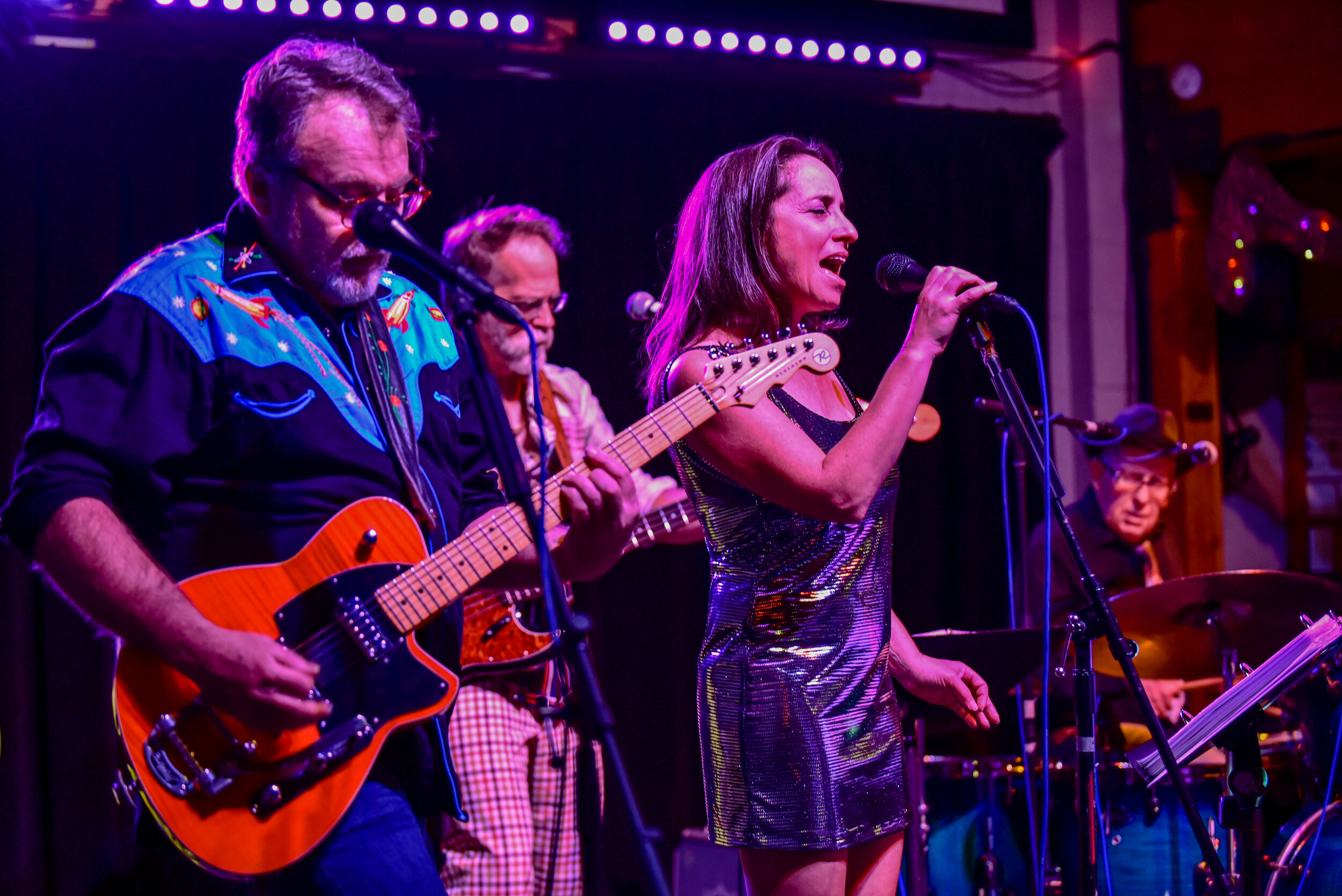
Rocket to Uranus on stage at Lewis and Clark Brewing, Helena, Montana 2019
At some point in my life, I realized:
It doesn’t matter if you do something silly, as long as you own it. The audience likes to see you laugh, and if there are hecklers, they really don’t matter.
The majority of the people in the audience want to see you succeed, they want to see you having fun, and many are thinking about how brave you are for getting up there.
I tell my friends, my coaching clients, my children, that they must step up when an opportunity presents itself. If, for just a moment, you think “wow, that looks like fun, I wonder what it’s like to…,” take it. Leave that self conscious person behind and take the leap.

Sarah Elkins quote and image for podcast cover art.
Living with regret is not living. When you don’t have the energy or physical ability to dance, you will be sitting in the corner, thinking “what I’d give to dance right now. I love this song.”
I hope not. I know I won’t be that person.
I’ll be the one holding the mic.
ABOUT SARAH:
"Uncovering the right stories for the right audiences so executives, leaders, public speakers, and job seekers can clearly and actively demonstrate their character, values, and vision."

Image of Sarah with dog, Toby, in the snow with Elkins Consulting logo and Gallup StrengthsFinder logo
In my work with coaching clients, I guide people to improve their communication using storytelling as the foundation of our work together. What I’ve realized over years of coaching and podcasting is that the majority of people don’t realize the impact of the stories they share - on their internal messages, and on the people they’re sharing them with.
My work with leaders and people who aspire to be leaders follows a similar path to the interviews on my podcast, uncovering pivotal moments in their lives and learning how to share them to connect more authentically with others, to make their presentations and speaking more engaging, to reveal patterns that have kept them stuck or moved them forward, and to improve their relationships at work and at home.
The audiobook, Your Stories Don’t Define You, How You Tell Them Will is now available!
Included with your purchase are two bonus tracks, songs recorded by Sarah's band, Spare Change, in her living room in Montana.
Episode 112: Why Do We Believe Lyrics?
I opened my eyes and the restaurant had become very quiet. Many of the conversations had stopped momentarily, and I noticed the host and a server standing at the edge of the dining room, listening. For the first time that evening, I had the attention of the busy customers and staff. Finishing the song, I could see from the expressions that the song hit its mark.
Lyrics Create Powerful Internal Connections through Stories and Emotion
“...but it’s the little things, the little things,
not expectations
that make life worth living, worth living.”
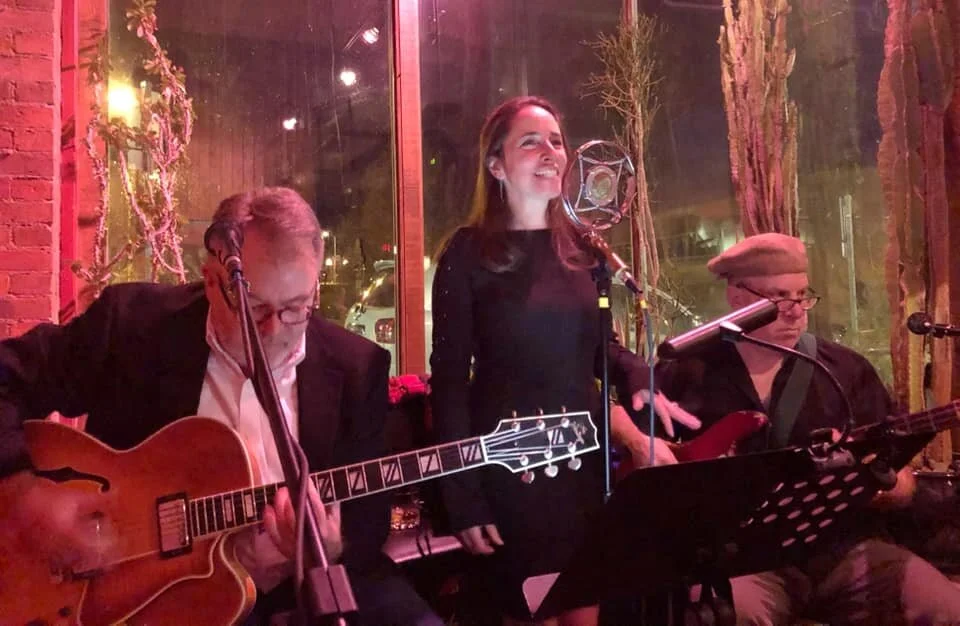
Spare Change at On Broadway, Helena, Montana (Photo credit, Angie Fiskum)
Those were the lyrics I was hearing in my head over and over again as I processed the previous two weeks of drama at our house. My husband had discovered this song by JJ Grey and Mofro, and had suggested we work on it to perform with one of our bands.
The first time we practiced that song, it was everything in me to sing it without tears dripping down my cheeks. The soulfulness that JJ Grey infuses as he performs it, through his tone, his phrasing, and his emotion, is captivating and heartbreaking.
I hadn't heard of JJ Grey before we started learning that song, but it didn't take long for me to find a few songs that were equally powerful.
As I performed it for the first time at a gig, I closed my eyes as I reached the chorus:
“Glory glory, hallelujah
The sun is shining, shining down
Glory glory, hallelujah
I’m alive, and I’m feeling, feeling fine.”
I opened my eyes and the restaurant had become very quiet. Many of the conversations had stopped momentarily, and I noticed the host and a server standing at the edge of the dining room, listening. For the first time that evening, I had the attention of the busy customers and staff. Finishing the song, I could see from the expressions that the song hit its mark.
Later that evening, as I was visiting with another musician who had come to support us, she asked me about the song. “I could tell it was really meaningful to you, Sarah.”
I couldn’t stop thinking about the response of the audience to that song as I tried to go to sleep that night. It struck me how powerful lyrics can be, and I started to wonder what it is about songs, lyrics, poems, and other forms of art that reach into your heart and soul and grip them in fierce joy and devastating sorrow.
What is it about music and lyrics that make us BELIEVE them? Why is it that we believe that there is truth in them, without any knowledge of the songwriter's credentials? Is he a psychoanalyst? How does she KNOW?
Think about the song you listen to when you’re sad, when you’re happy, the music that helps you process experiences. They tell stories with messages in them, and for some reason, even with no data or research to support the assertions, we believe them. Why?
Maybe it’s the fact that they speak to a human condition, common themes that we experience in life, isolation, pain, love, heartbreak. All the things we experience on a unique, individual level, but that resonate across all human life - even as we say: “You don’t understand” to someone who tries to help.

Spare Change at Draughtworks, Missoula, Montana 2019
Isn’t it puzzling that we respond in that way, to our parents, to our friends, “you don’t understand”, but then listen to a song written by a total stranger and find great comfort that he or she understands, even when the lyrics have nothing in common with our actual, individual experience?
My friend Trent doesn’t believe in empathy, and I can understand why. He says that when we say: “I know how you feel,” we’re shifting the conversation and making it about ourselves. How can we possibly know how someone feels if we cannot hear the internal voice that’s screaming at them?
And yet… we know, thanks to neuroscience, that we often cannot help mirroring - reflecting the emotions of another person. Which is basically the definition of empathy. But that’s not actually FEELING what someone else is feeling. It’s reflecting our version of their emotion, based on our own experience and internal messaging.
I do believe in empathy. I believe some people can actually feel what another is feeling, in terms of emotion, otherwise music and lyrics simply wouldn’t have the impact they have on us. And I don’t believe empathy is something we can or should teach. I would much prefer to help people learn compassion by learning to observe the emotions in others, and maybe have a sense through those observations about their happiness and pain through our own lens of experience.
Lyrics and music speaks to our humanity, our common language of the spectrum of emotion from euphoria to sorrow, bringing us comfort by demonstrating, through the songwriter and performer, that we are not alone in this world, that someone, somewhere went through something similar and came out on the other side.
I’m a big believer in identifying theme songs for different situations in our lives, selecting songs that speak to us when we’re feeling insecure, sad, lonely, or absurdly happy and satisfied.
I’ve found that when I have my theme song in my head, James Brown’s I Feel Good, before I step in front of an audience for a keynote, my energy is almost immediately transferred to the people in front of me.
What will your theme song be the next time you’re stepping out of your comfort zone? What lyrics will you have in your head that bring you comfort, that you believe to be absolutely true, to know you’re not alone as you step into the spotlight?
Episode 61: Grief Isn't the End, It Can Be a Beginning
Shortly after the loss of her son, she went right back to work as a news anchor, a very public life. But shortly after her return, she realized her heart just wasn’t in it anymore. She felt as if she had just been going through the motions, mostly because that was what was expected of her.
Stories of Transition and Growth

Sherrie Dunlevy has had her share of tragedy and grief. Shortly after the loss of her son, she went right back to work as a news anchor, a very public life. But shortly after her return, she realized her heart just wasn’t in it anymore. She felt as if she had just been going through the motions, mostly because that was what was expected of her.
Sherrie wasn’t sure what to do next, broadcast journalism is what she knew, what she was good at, and what people knew her for; it was a huge part of her identity. And though that had shifted to “the woman who lost her son,” she felt like there was something missing in her career.
As she processed her grief, one thing became very clear: People around her didn’t know what to say or what to do to support her. She looked for books to help her not only process what had happened, but to help her friends in their attempts to support her through her loss. She never found a book that fully satisfied what she thought was a big gap in education. Nothing she could find was really relevant to the need she saw in her friends and family.
Sherrie believes that when something keeps coming back up in your life, you were meant to do something with it, whether for yourself, or as a gift to your community. It took her years, and many cues that she MUST write the book she imagined, but she eventually wrote it… and it sat on her shelf for another year before she received another cue from the Universe that it was time to share it.
What cues have you received many times before you finally acted on whatever those cues were trying to tell you? Why did you wait? Do you think waiting made the cues stronger, and that waiting was part of the journey to fulfilling whatever promise the Universe was sending you?
Sherrie and I would love to hear your thoughts, please comment and tell us your story!
A popular media figure for over 30 years. Sherrie Dunlevy hosted her own radio talk show and was a TV news Anchor. Now she has reinvented her life after age 50 as an author, speaker and business owner.
Her book, “How Can I Help- Your Go-to Guide for Helping Loved Ones through Life’s Difficulties,” was written following the death of her son and consequential loss of a few close friends, to help people become their best by reaching out beyond their fears and helping those they love and care about in life.
It has been named as one of the “Top Self Help Books for Men” by Fupping.com and UpJourney.com.

Are you enjoying listening to episodes of this podcast? Are you wondering how you can help me sustain this project, to support and encourage the sharing of important stories?
Here are a few ideas!
1) Leave a rating and comment on your favorite podcast service like iTunes or Stitcher
2) Share a link to the show and tell people why you like it
3) Become a sponsor (for as little as $2/month) by going to Patreon

We All Need a Foundation to Step Out of Our Comfort Zone
It's a mattress! It's not practical to keep a mattress when I've managed to give away and throw away the majority of my "stuff" so we can travel, untethered.
I can't let go of it, even though I know I should.
"What do you mean, you know you should?"
It's a mattress! It's not practical to keep a mattress when I've managed to give away and throw away the majority of my "stuff" so we can travel, untethered.
It's not about the mattress, though. It's about the values you've attached to it, right?
She was talking about the mattress she bought after leaving her abusive husband, sleeping in her car for 6 months, and had finally moved into an apartment by herself. That mattress represented the first real thing she owned, free and clear, since leaving him -- and all of her things -- behind. Now she's in the midst of disrupting her life, again, is remarried to a wonderful, adventurous guy, and is downsizing to live as minimally as possible so they can travel all over the world.
Don't get rid of it. You have a storage area that can hold it for you for a while. Keep it until you don't feel like you need it any more. We all need something to help us feel grounded when we're about to take a leap out of our comfort zone.
Healthy toddlers are known to wander away from their parents, though usually they will turn to see them, to make sure they can still see them, before they get too far. If you read anything by my friend Sara Jacobovici, you'll read that in infant and child development, we need a close bond with someone (or something) in order to become independent. It's a paradox for sure, but not too surprising. Read child development articles and they will describe how thumb-suckers are statistically more likely to be more confident teenagers because they've had the ability to self-sooth. I believe in thumb-sucking - no one can take away the thing that can bring you comfort!
I had a good, solid, healthy childhood for the most part. My parents were loving and we always had a roof over our heads and plenty of food to eat. We have a warm, huggy, sometimes overwhelmingly loving extended family of aunts, uncles, cousins, and friends who became family wherever we lived. And we moved a lot in my youth. I went to four different elementary schools. No wonder I sucked my thumb well into 1st grade. No matter where we lived, or the adventures and trouble I got into in my late teens and early 20's, I always had my family as my foundation.
I got a cat when I was 20 because I felt the impulsive need to spite a landlord. Needless to say, I wasn't thinking long term. He wasn't the sweetest cat, though he was devoted to me. Clawed was huge and created a lot of complications for me. Having a cat limited the apartments I could rent, limited my travel plans & spontaneity, and there were times that he had food and I went without.
When my parents were divorcing and they sold the only house we lived in for more than 4 years, Clawed was my foundation. Wherever I adventured, like moving from Fort Collins, Colorado to Washington DC by myself, he was with me. He was the one consistent thing in my life for more than 9 years, and I was devastated when he died, even though I had a wonderful husband and new baby at that time.
My little gold Super Beetle, handed down to me from my brother, was another foundation piece that broke my heart when I had to get rid of it. Now I have a weird attachment to our 1991 Suburban. There's no way for someone else to truly understand why we have attachments to certain things. Sometimes we don't really know ourselves.
I wrote an article about shoes being my wardrobe foundation; this is the same idea. When I am about to embark on a new adventure, whether that's applying for, or starting a new job, preparing for a speaking engagement, planning a trip, or any other activity that will push me out of my comfort zone, I have certain things I can count on to bring me back to center. Whether its cues like shoes or an outfit that make me feel really good, or a quiet moment with my supportive husband and kids, a glass of wine with a friend, or a good snuggle with my dog, having a foundation (like a mattress, or my thumb) reminds me that whatever I'm about to do, I have a place to go (or people to comfort me) afterward to find my balance again.
What are your foundations? Are you intentional about finding that center before you jump into something out of your comfort zone? Do you recognize which arbitrary objects you're most attached to, and may have foundational values associated with them?