
Your Stories Don’t Define You
How You Tell Them Will
A podcast to unlock your stories and uncover meaningful insights.
Not All of the Most Important Lessons Come from Struggle
We learned so much about ourselves and our relationship on that adventure. Our resourcefulness, silly senses of humor, and resilience was on full display.
Celebrating Lessons Learned from Joy - 50th Podcast Episode!

Karen & Sarah, Road Trip Warriors
I talk a lot about the lessons I’ve learned through struggle, I call them “opportunities for growth”, and many people believe the most important lessons in life are those learned during difficult times. I learn a lot about my strength, resilience, and courage through those obstacles and grief; I also learn a lot about myself, my relationships, and the world around me through happy experiences.
My sister and I decided to take a road trip in the last week I was in Colorado before moving to Washington DC for a paid internship after college. I had just graduated from Colorado State - Fort Collins, and she was a second semester freshman at the University of Northern Colorado in Greeley. It was early January, our dad was fixing my little Chevette to make the trip to DC, and we had just a few days before I had to leave.
We weren’t sure where we wanted to go, and as we drove to the AAA office to grab a map, we talked about maybe making it to Las Vegas. The AAA associate was concerned about this long trip, I think she assumed we were about 16, and she mentioned as she highlighted the route from Colorado Springs to Las Vegas: “That’s a very long drive, ladies, especially in winter!”
“That’s okay, it’s really not about the destination.”
Karen and I left with our map, stopped at the nearest Kmart for a case of oil, she drove an old Honda that burned through oil, and headed north and then west.

Always Great Travel Companions
Skirting Denver to head west, we passed the familiar sign “Buffalo Overlook”, and I couldn’t believe it. “Karen! There are buffalo at the buffalo overlook!” Puzzled, she smiled at me. “Um… yes, Sarah.”
“I’ve passed this sign a hundred times at least, and I look out every time, and this is THE FIRST time I’ve ever actually buffalo here!”
We drove into Glenwood Springs, a beautiful little town in western Colorado, where we had spent some time as young children.
“We could stop here and soak in the hot springs, and maybe see if they have a room for us here.”
Karen told me she was eager to get out of Colorado, so we kept on driving.
As we chugged in the little Honda up a hill just over the Utah state line, we realized the car was misfiring and having some trouble with acceleration, so we pulled off at the next exit with a gas station.
It was a gas station with a diner nearby - and nothing else. We filled up the tank and I put a bottle of dry gas into the tank, just in case there was moisture in it. Pulling around to the diner lot, I noticed the blinds of the diner pop open, and a few pair of eyeballs staring out at us. I went in to use the bathroom, which was a mistake, and when I came out, Karen was holding one of the spark plugs in a paper towel in her hand.
She asked if I happened to have some sandpaper with me that we could use to rub the carbon off the edges of the plus.
“No, but I have an emery board!” It didn’t fit in the gap, so I peeled the paper off the board. One at a time, my sister pulled out the plugs, I carefully pulled the sandpaper through the gaps, and she put them back. At some point, one of the pairs of eyes from the diner came out to ask if we “ladies” needed help. His belly arrived significantly before he did, and when we said we were okay, he huffed, annoyed, and stomped back into the diner. We saw the blinds pop open again as all of them watched us finish our work.
“McGyver!” Karen shouted, and we high-fived.
We drove away and didn’t have any more acceleration problems the rest of the trip.
Our adventure was filled with hilarious moments, especially late that night when we had been on the road for 8+ hours and were tired and punchy.
Eventually we stopped in Mesquite, Nevada. I got us a room, then we walked into the casino to look around. We won $300, got ID’d at least 6 times in the hour we were wandering, and were compensated for the hassle by the manager, who bought us dinner in the restaurant.
Later that year, I took the map we used, wrote short stories and quotes on it along the route, attached some pictures, and gave it to my sister in a frame as a gift.
We learned so much about ourselves and our relationship on that adventure. Our resourcefulness, silly senses of humor, and resilience was on full display. Maybe we knew innately that we held those traits, but experiencing this together was great confirmation.
The next time you are experiencing an “opportunity for growth”, think about some of those adventures you loved, those stories in your life that brought you great joy, and really consider the lessons you learned from those experiences. And when you’re in the middle of one of those joyful adventures, take time afterward to find the lessons in it.
Why It Works with Joe Kwon - Storytelling
5.0 Why It Works: Sarah Elkins on Storytelling
in Podcast
Have you ever wondered why some storytellers mesmerize you and others give Ambien a run for its money? How come some stories you tell have people on the edge of their seat and others induce yawns? Did you know that there is a lot more than words that goes into telling a good story?
In today's episode of "Why It Works," Sarah Elkins, a leadership and storytelling coach, reveals some of the hidden mechanisms behind storytelling. Listen in to find out the connection between vulnerability and storytelling, how lessons from music can improve your storytelling and the one thing that drives Sarah crazy about bad storytellers.
The Stories You Share Define You
The Stories You Share Demonstrate Your Character
When Kyle Burt shared the story of creating a roller hockey team from scratch at Arizona State University, and how he did it, I was immediately intrigued.
This is far less common than I used to think: Some people do what they say they're going to do. And they dive head first into whatever it is, there's no toe-dipping for people like that.
As soon as I heard Kyle's story, I knew a few things about his character. He told the story with some level of humor and humility, not taking all the credit himself, and he shared the story as a reminder that we can all do what we set out to do if we use our resources and follow through. He didn't need to tell me he was a "do-er", that he is a leader, or that he has a sense of humor. He demonstrated all of those things in his story.
The great thing about our lives is that as adults, we choose our next move, our response to situations, and the people we spend time with. When we surround ourselves with people who support us, encourage us, and who have the enthusiasm to follow through with us, we can accomplish great things.
Connect with Kyle on LinkedIn, watch a recent episode of his show, #CoffeeWithKyles, and visit his website to learn more about him.
Struggle Stories Help Define Patterns
Code: Opportunity for Personal Growth
After two years in the position, I found myself standing in the bathroom with a tear-stained face... again. What was wrong with me? Why couldn't I make this work? I'm not a particularly emotional person and yet, here I was with swollen eyes and runny nose... again. Why was I letting my boss get to me like this?
This wasn't the first time I found myself struggling with an abusive boss in a bad environment. Just two positions before this one I had another abusive boss. As I stood looking in the mirror, my reflection said it all: You've been in this position before that, too.
I started to look back at all of my jobs, all the way back to being a food server at an IHOP in college. There were some exceptions; I did experience jobs where I was valued, where I thrived and became the professional person I am today. Looking back though, there were far too many similar situations in my past. This was a pattern.
It took some deep self-reflection to come to this conclusion, the most humbling and difficult moment in my career.
I had some complicity here.
What an awful realization. Who wants that kind of answer to a question? No one I know wants to admit they did something wrong or that they played a part in what was wrong with a relationship or job.
I'm not for a second suggesting that bullying and abuse is the fault of the victim.
I'm not for a second suggesting that it is ever okay to treat people badly or that a victim as somehow earned abuse.
there are circumstances and patterns, though, that when we see them in our lives can awaken us to our role in our own success, if we take responsibility as adults and choose to make changes.
I learned a lot of lessons in those 2+ years; I continue to face similar challenges, now I'm more aware of my actions that might be contributing to the problems.
Here are some of the lessons I continue to practice:
- Your contribution may not be necessary or may not add value to the discussion. Stop. Think. Listen. Then decide how or if to weigh in with your thoughts or suggestions.
- Trust is good, but take the time to know a person before you share. Trust your instincts! If you observe characteristics about a person, incorporate those observations into your overall level of trust and figure out with what you can trust each person in the environment. If someone is sharing gossip with you, they're likely sharing gossip about you.
- Related to #2, be careful where you dump (especially if you live in a small town), and DO NOT DUMP at work. The person you want to vent about may be right around the corner and that is simply disrespectful - and you will not like yourself afterward. As bad as it is, it can be worse when you know you've earned some of the scorn. Sometimes you need to share frustrations at work, be careful not to become the person who is constantly griping and complaining.
- Sometimes you have to play the game. Don’t antagonize, especially if it won’t bring you closer to your goal. Always think of your ultimate goal for the relationship and your job. I once hit "send" on an email I knew I shouldn't have sent. It took me about five minutes to feel the consequences and to know how sophomoric I was for sabotaging my own day. That's where I developed the 24 Hour Rule.
- Be aware that your position in the project may not be what you want it to be, find out what's expected for your role and focus! Do your job with all of your skills and energy, and learn what you must to do your job well. My mom once told me that every trial you face will keep coming back until you learn your lesson from it. Remember that it's not forever and that you must "find the nugget" before you can leave.
- Find people you trust and who know you well, but are separate enough from the situation to provide an outside perspective, and ask them for specific ideas about where you should be looking for your next adventure.
- When faced with a difficult situation, reflect on how you would want to perceive it from 20 years in the future. Did you handle it well, with grace, dignity and compassion?
- Sometimes people are just mean. It may be time to call them on it and stand up for yourself and others, or get out.
- My most unpleasant lesson: Figure out how you might be complicit in your own patterns of frustration in jobs and relationships. Until you identify your patterns, you will continue to face similar situations. If every boss, or every romantic partner in your life was the same... the common piece of the puzzle is you.
There are no easy answers.
Be kind to yourself while you work through this. And know that you are a work in progress; what makes you happy and content today will probably change in the future.
Road Trip Stories to Build Relationships
What You and Your Children Remember of Their Childhood Can Be Wildly Different

Max
Ridiculously fun travel partner.
He knows it's never really about the destination.
It was just a short road trip for our younger son, Max, and me; around 1.5 hours for a spring break spontaneous getaway. I took advantage of our time alone together to record this podcast.
We've done quite a lot of traveling with our two boys, via air and car, and have made incredible memories. The one thing that makes a road trip different from any other kind of travel is the long hours in the car together, with little distraction, and lots of opportunity for frustration, connection, and snacks.
You'll hear the sound of the road in the background of our recording, adding just a little ambient sound to our discussion. I love to ask our boys what they remember about our family road trips; their memories are so different from mine, and when I hear their memories I learn even more about them, and how they see the world.
Road trips offer great opportunities to get to know people. I think traveling together, particularly in the car, can be the best test of a relationship. How compatible are you, really? When it comes to spending hours together with little distraction, and lots of opportunity for frustration - getting lost, bad weather, questionable road conditions - you learn quickly whether you can rely on each other to solve problems and keep a positive attitude in trying situations.
Max and I had a great, though too short trip together, and this recording is just a snippet of the kind of conversation we have when we spend time traveling together.
Here's an article I wrote about another road trip with our boys. I'm so grateful not only for the time I get to spend with them, but also for their sense of humor, their insights, and their incredible warmth and sparkle.
Your Value is Yours to Define
In this podcast, Arminda shares a couple of stories that will resonate with listeners; one is an example of when she not only realized her boundaries for what she would accept from others, she set them definitively by walking away from a job after an abusive event.

How you share your stories matters.
Arminda Lindsay is a force. She's a force of integrity, love, and inner strength. That's because she knows who she is, what drives her, and that she does Arminda better than anyone else could.
She wasn't always this way. Her life isn't all roses and sunshine; it took her a long time to come to the point of trusting herself and her instincts enough to bring her whole self to every environment. This is a large part of what makes her such a good coach.
In this podcast, Arminda shares a couple of stories that will resonate with listeners; one is an example of when she not only realized her boundaries for what she would accept from others, she set them definitively by walking away from a job after an abusive event.
When we share stories like this, they're not only reminders, or evidence that we are resilient; these stories help others to know they're not alone, and that they can make decisions that are right for them. We learn from these stories that we CAN and MUST choose ourselves and our well-being, and that we define our own value. If we don't define our value for ourselves, we leave that critical aspect of our lives to those around us. And very few people will value us any more than we value ourselves.
The first step must be define our core values, and to be introspective enough to recognize what drives us. As Arminda said in the podcast, if we want to find satisfaction in life, we must stick to our integrity, our knowledge of our own needs. Because if that's out of alignment, nothing feels right, and we lose our sense of self.
Bonus: In the podcast, Arminda shared something about herself that I didn't know, though now that I do, I'm not at all surprised. Here's a little something to make you smile:
Arminda loves coaching extraordinary women to see the beauty of who they truly are by accessing the power they possess when they step into ownership of their full expression. In addition to working with women, she has also worked with C-Suite executives, leadership teams, business owners, and entrepreneurs for over a decade, and is a trusted advisor who coaches leaders to elevate their strategic thinking and performance to expand their vision and its impact on their organizations and leadership teams.
When Choose Your Own Adventure books hit the scene my enthusiasm could not be sated. I devoured these books, always reading them from start to stop as many times as I could choose a different direction to guide the fate of the main character through one seemingly critical decision after another, never tiring of the delightful discovery of how one choice could lead to such different consequences and possible outcomes. When I came to the conclusion of a series of choices, I happily turned back to page one and started over again, always choosing differently than my previous read through the same plot.
I’ve come to understand that my life is no different than the storybooks I’ve always loved to read. And up until a few years ago, I was so invested in believing my own story to be true that I was no more writing my story as much as I was allowing it to be written by everything and everyone around me. I was a character in my own story, but one who existed at the mercy of the plot unfolding around me.
We All Need a Foundation to Step Out of Our Comfort Zone
It's a mattress! It's not practical to keep a mattress when I've managed to give away and throw away the majority of my "stuff" so we can travel, untethered.
I can't let go of it, even though I know I should.
"What do you mean, you know you should?"
It's a mattress! It's not practical to keep a mattress when I've managed to give away and throw away the majority of my "stuff" so we can travel, untethered.
It's not about the mattress, though. It's about the values you've attached to it, right?
She was talking about the mattress she bought after leaving her abusive husband, sleeping in her car for 6 months, and had finally moved into an apartment by herself. That mattress represented the first real thing she owned, free and clear, since leaving him -- and all of her things -- behind. Now she's in the midst of disrupting her life, again, is remarried to a wonderful, adventurous guy, and is downsizing to live as minimally as possible so they can travel all over the world.
Don't get rid of it. You have a storage area that can hold it for you for a while. Keep it until you don't feel like you need it any more. We all need something to help us feel grounded when we're about to take a leap out of our comfort zone.
Healthy toddlers are known to wander away from their parents, though usually they will turn to see them, to make sure they can still see them, before they get too far. If you read anything by my friend Sara Jacobovici, you'll read that in infant and child development, we need a close bond with someone (or something) in order to become independent. It's a paradox for sure, but not too surprising. Read child development articles and they will describe how thumb-suckers are statistically more likely to be more confident teenagers because they've had the ability to self-sooth. I believe in thumb-sucking - no one can take away the thing that can bring you comfort!
I had a good, solid, healthy childhood for the most part. My parents were loving and we always had a roof over our heads and plenty of food to eat. We have a warm, huggy, sometimes overwhelmingly loving extended family of aunts, uncles, cousins, and friends who became family wherever we lived. And we moved a lot in my youth. I went to four different elementary schools. No wonder I sucked my thumb well into 1st grade. No matter where we lived, or the adventures and trouble I got into in my late teens and early 20's, I always had my family as my foundation.
I got a cat when I was 20 because I felt the impulsive need to spite a landlord. Needless to say, I wasn't thinking long term. He wasn't the sweetest cat, though he was devoted to me. Clawed was huge and created a lot of complications for me. Having a cat limited the apartments I could rent, limited my travel plans & spontaneity, and there were times that he had food and I went without.
When my parents were divorcing and they sold the only house we lived in for more than 4 years, Clawed was my foundation. Wherever I adventured, like moving from Fort Collins, Colorado to Washington DC by myself, he was with me. He was the one consistent thing in my life for more than 9 years, and I was devastated when he died, even though I had a wonderful husband and new baby at that time.
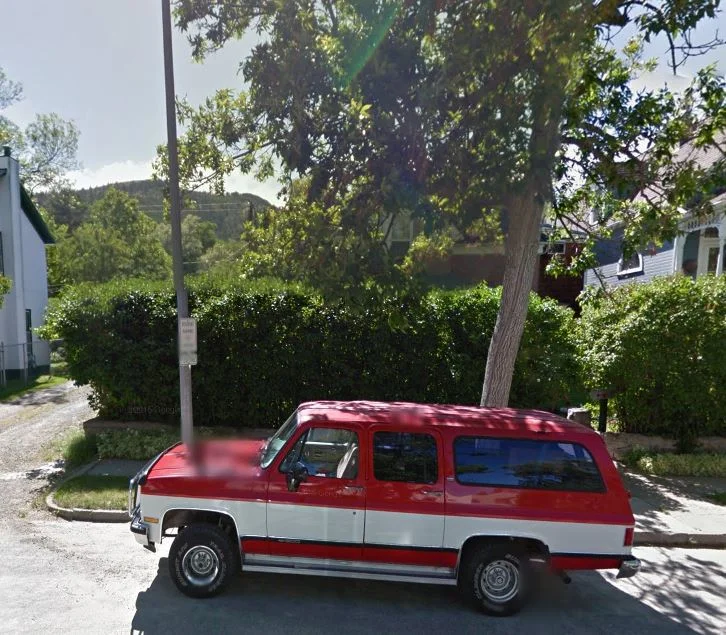
My little gold Super Beetle, handed down to me from my brother, was another foundation piece that broke my heart when I had to get rid of it. Now I have a weird attachment to our 1991 Suburban. There's no way for someone else to truly understand why we have attachments to certain things. Sometimes we don't really know ourselves.
I wrote an article about shoes being my wardrobe foundation; this is the same idea. When I am about to embark on a new adventure, whether that's applying for, or starting a new job, preparing for a speaking engagement, planning a trip, or any other activity that will push me out of my comfort zone, I have certain things I can count on to bring me back to center. Whether its cues like shoes or an outfit that make me feel really good, or a quiet moment with my supportive husband and kids, a glass of wine with a friend, or a good snuggle with my dog, having a foundation (like a mattress, or my thumb) reminds me that whatever I'm about to do, I have a place to go (or people to comfort me) afterward to find my balance again.
What are your foundations? Are you intentional about finding that center before you jump into something out of your comfort zone? Do you recognize which arbitrary objects you're most attached to, and may have foundational values associated with them?