Your Stories Don’t Define You
How You Tell Them Will
A podcast to unlock your stories and uncover meaningful insights.
Episode 188: Podcast Brief 2 - Strategic and Activator Might Just Look Impulsive
She called me Speedy Gonzalez. My first coach after becoming a Gallup certified StrengthsFinder coach had a gorgeous Barcelonan accent, and she said: “Sarah, you’re like Speedy Gonzalez. Imagine you notice the village is running low on cheese, so you take money from the village coffer, run fast, as you do, to a nearby village, buy cheese, and run back. Problem solved! Except that when you return, you hear the villagers having a discussion about what kind of cheese to get this time… or maybe they won’t get cheese, maybe it’ll be salami instead… But you’ve already solved the problem, right?”
I’m such a visual person, I immediately imagined the tiny mouse running, like a blur, to the next village and running back carrying a huge block of cheese over his head.
And just like that (snap), I had a deep insight into how I sometimes get in my own way.
Using Self-Reflection To Improve Relationships & Life Satisfaction
This week’s episode of Your Stories Don’t Define You is part 2 of a series I’m exploring:

Podcast cover art with image and quote from Sarah Elkins
Last week I shared what it is like to have Command in your top talents using the StrengthsFinder assessment. This week I’m sharing about what my top two talents, Strategic & Activator look like for me, and next week I’ll share stories of how these talents, combined with Ideation and Adaptability, all of my top 5, show up in my life, for better and for worse.
As a Gallup certified StrengthsFinder coach, I’ve taken opportunities to work with other coaches for two reasons, one is that I believe in this stuff, the idea that when we understand our own way of thinking, our natural, instinctive talents, and when we understand where we might be getting in our own way, we find more satisfaction in our lives. Another reason is that to be a coach and to have a coach demonstrates my belief that this works, that working with a good coach adds value. I know that the more I know about my own talents and blind spots, the more effective I can be for my clients.
As I mentioned, today you’ll hear how my top two strengths, Strategic & Activator, show up in my daily life, and some strategies I now use to make sure they’re working for me and not against me.
When I saw the word Strategic on the Strengths report as my number one talent I laughed out loud. “I’m not strategic. This so far off. This is one of the reasons I don’t like these personality assessments.”
“Chances are good that you sometimes delve into opportunities or situations to find clues for handling them. It’s very likely that you customarily pinpoint the core problems and identify the best solutions.”

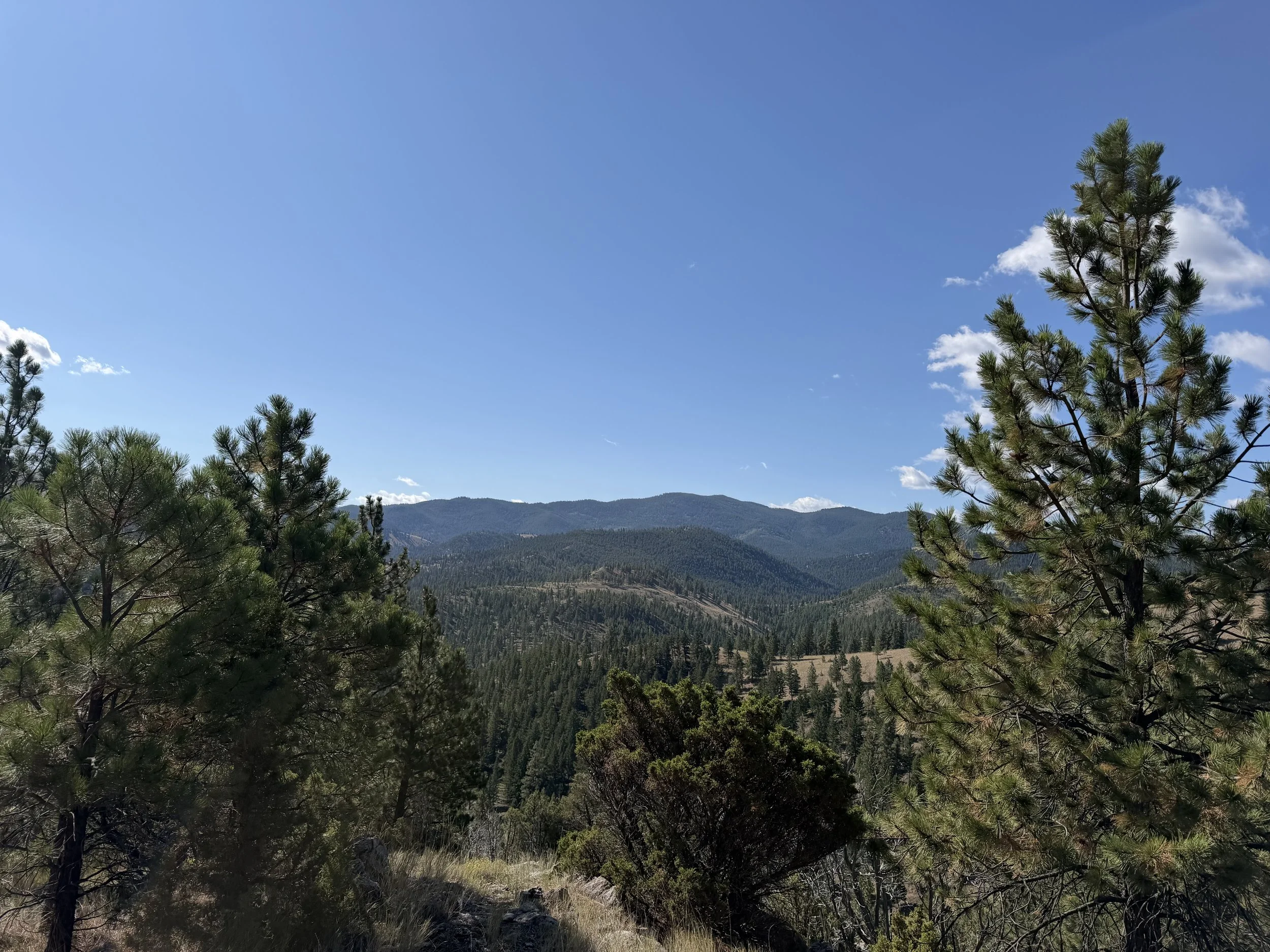
Notice the strategically taken photo! ~ Sarah Elkins, photographer, image of Robert Downs with dog in forefront, Helena, Montana
But because it was a dear friend, Tom Dietzler, who gave me this gift, I decided to look at my results in a different way. I sent the description of Strategic as it was written in my report to my sister and husband, the two people I believe know me sometimes better than I know myself, and did NOT include the word Strategic in the message. I asked: “What do you think of this? Do you think it describes me?” I didn’t want to influence their answers, so I did my best to ask without a hint of how ridiculous I thought it was.
My sister responded almost immediately: “wow, Sarah, they sure have your number. That’s exactly you.”
I called her to ask for specific examples, stories of times when she thought that description showed up in our interactions. She had LOTS of examples. So did my husband.
That’s when I invested in a StrengthsFinder coach. I had to find out more about this talent that I couldn’t see in myself.

Speedy Gonzalez, the little Robin Hood of Cheese
She called me Speedy Gonzalez. My first coach after becoming a Gallup certified StrengthsFinder coach had a gorgeous Barcelonan accent, and she said: “Sarah, you’re like Speedy Gonzalez. Imagine you notice the village is running low on cheese, so you take money from the village coffer, run fast, as you do, to a nearby village, buy cheese, and run back. Problem solved! Except that when you return, you hear the villagers having a discussion about what kind of cheese to get this time… or maybe they won’t get cheese, maybe it’ll be salami instead… But you’ve already solved the problem, right?”
I’m such a visual person, I immediately imagined the tiny mouse running, like a blur, to the next village and running back carrying a huge block of cheese over his head.
And just like that (snap), I had a deep insight into how I sometimes get in my own way.
My strategic brain immediately comes up with a solution to a puzzle or problem. Many times it comes so fast that I’m not even sure I thought about it, the solution simply popped into my head. And because my Strategic is immediately followed by Activator, I just GO. I take the first step and know I’ll deal with obstacles or consequences as I meet them… or hit them face first.
Most of the time this way of thinking is awesome. It guides me to the fastest, simplest solutions to complex problems. I make decisions quickly, and the majority of the time, they have been excellent decisions. When I worked as a Peoplesoft consultant with Federal agencies in the DC area, those skills are what made me successful in identifying solutions for the help desk, creating easy to understand training materials, and finding solutions to implementation issues around data collection.
But for most of my life I considered myself impulsive because I didn’t realize my brain was actually coming to the solution before I could fully process what that meant. The map is in my head and I’m taking the first step. And I don’t always take stakeholders on the ride with me, causing communication issues and the appearance that I’m impulsive.
Here’s an example:

Fresh basil won’t keep in the car, either! (Image, fresh basil being made into pesto)
When I get into the car to run more than one errand, before I even plug my seatbelt in I have the route in my head. Not because I’m a planner, or because I think about it with intention, but because that’s how my brain works. The route is specific, many things taken into account, like not wanting to turn left across traffic on a busy street, not wanting to backtrack but wanting an efficient route, and knowing the grocery store has to be the last stop because it’s 80 degrees outside and I’ll have frozen peas in the car.
It wasn’t until a few months after my first conversation with a coach that I came to this realization. And years later I continue to see where my Strategic shows up in my daily activities. What’s especially interesting to me is that many people struggle in seeing that first, number 1 talent as a talent, or even as something that truly describes them.

Podcast cover art with image and quote from Sarah Elkins
Here’s why: Those top two strengths are so natural, so innate, that we cannot even see how they’re unique or special. I can tell when I’ve identified a true talent when I ask my client to tell me about the most common compliment they receive and they tell me, and then qualify it by saying something like: “But everyone does that.” Or “Doesn’t everyone do that?” They dismiss the compliment because the skill or talent comes too easily for them. They cannot own this natural talent because it wasn’t a struggle to get good at it… isn’t that kind of silly when you think about it?
Here’s another way I know I’ve uncovered something special in a client: When I ask them about how they feel when other people don’t think in the natural way they do, like when my husband drives us on errands and I have to bite my tongue because he doesn’t seem to have a route in his head, it feels like each turn he takes is an assault on my brain. I get annoyed, I’ll admit it, and I used to think: “How is this possible? He’s the smartest guy I know! Why would he turn left here, doesn’t he know that now he’ll have to go left across traffic on the busiest street in town?”
I worked with a coach to better understand my talents and how to apply them with intention, it also helped me know which talent to employ at different times. When I get annoyed because someone isn’t doing something the way I would do it, I use my Ideation (my #3 talent that magically comes up with ideas all. The. Time.), to focus my brain on curiosity about the situation. I begin to ask myself questions like: why am I getting prickly & annoyed, what’s triggering this? Does it matter right now if he takes a different route, am I in a hurry? And when I’ve answered those questions, I may ask my husband what his plan his for our errands, what he’s thinking about for our shopping list.
I do this at work, with my children, and even when I’m driving behind someone who seems to be lost.
My drivers are Strategic / Activator, neither of which are in the relationship building domain of the four StrengthsFinder domains. That alone is a clue about where my motivation is, which is mostly task-based, not people-based. And now that I know that, my communication has shifted, I’m using those talents with far more intention, and my relationships and leadership has improved dramatically.
The only way we grow as humans, the only way we can truly find satisfaction in our relationships, is to be self-reflective. This is not the same as being hyper critical of ourselves!
Being self-reflective means understanding our role in every situation, in every relationship. What am I doing to move this conversation in a positive direction? What was my role in the conflict with my coworker? What natural talents am I using in ways that are positive, and where am I getting in my own way?
If you enjoyed this podcast brief, stay tuned for next week’s episode, when we’ll explore Ideation & Adaptability, rounding out my top 5 talents.
ABOUT SARAH:
elkins consulting logo plus image of sarah elkins"Uncovering the right stories for the right audiences so executives, leaders, public speakers, and job seekers can clearly and actively demonstrate their character, values, and vision."
In my work with coaching clients, I guide people to improve their communication using storytelling as the foundation of our work together. What I’ve realized over years of coaching and podcasting is that the majority of people don’t realize the impact of the stories they share - on their internal messages, and on the people they’re sharing them with.
My work with leaders and people who aspire to be leaders follows a similar path to the interviews on my podcast, uncovering pivotal moments in their lives and learning how to share them to connect more authentically with others, to make their presentations and speaking more engaging, to reveal patterns that have kept them stuck or moved them forward, and to improve their relationships at work and at home.
The audiobook, Your Stories Don’t Define You, How You Tell Them Will is now available!
Included with your purchase are two bonus tracks, songs recorded by Sarah's band, Spare Change, in her living room in Montana.
Episode 139: A Silent Retreat, an Adirondack Chair, and an Open Field: A Story of Letting Go
Sabrina Woods is a typical Type A personality. She thrives on setting goals and smashing them out of the park. For most of her life she pushed and climbed, and spent almost every moment DOING.
At some point, though, she started to feel tired. She started to question the constant doing, and began thinking more about being.
She was in between jobs thanks to a reorganization in the higher education institution she was working with, a couple of car accidents, and other stressful events, when she invested in herself by going on a silent retreat over a long weekend.
Pushing Ahead Rarely Leaves Room for Unusual Opportunities

In my years guiding clients in improving communication techniques, whether that's for keynote speaking or simply presenting themselves and their work, I've found that when we uncover pivotal moments in their lives and career, their most meaningful stories, they become more comfortable and confident to speak - anywhere.
As you listen to this podcast, consider the stories you share and how you share them. Think about how those stories build your personal brand, and how people perceive you based on the stories you share.
You'll hear me ask specific questions, revealing details that create an image in the minds of both the storyteller and the listener. This is a key to improving relationships with yourself and others: Being able to share your story in your voice with your genuine intent to connect with those around you.
---
Sabrina Woods is a typical Type A personality. She thrives on setting goals and smashing them out of the park. For most of her life she pushed and climbed, and spent almost every moment DOING.
At some point, though, she started to feel tired. She started to question the constant doing, and began thinking more about being.
She was in between jobs thanks to a reorganization in the higher education institution she was working with, a couple of car accidents, and other stressful events, when she invested in herself by going on a silent retreat over a long weekend.
Sitting on an Adirondack chair, looking out over an open meadow, Sabrina became attached to the idea of letting go, allow for flow and openness, and take a break from pushing so hard, from beating herself up over the situation she found herself in.
As often happens, within a few months of "letting go", a perfect part time position dropped into her lap.
If you've been in that tough spot, or you're in it now, worried for the future and listening to the external voices about what you should do, it might be time to let go. Consider the worst-case-scenario, and the true likelihood of that situation occurring.
Sabrina walks us through an example of this strategy during this insightful episode, full of insights, entertainment, and of course... stories.
We touched on how our strengths show up as we make career decisions and in the projects we take on. I promised to reference our strengths here.
Sabrina's top 5: Maximizer / Activator / Ideation / Positivity / Connectedness
Sarah's top 5: Strategic / Activator / Ideation / Command / Adaptability
To learn more about the Gallup StrengthsFinder assessment, click here.
When discussing our strengths (Gallup StrengthsFinder assessment results), I mentioned how I describe the theme Maximizer, using This Is Spinal Tap, the movie, as an analogy. Here’s the scene I referred to:
Connect with Sabrina on LinkedIn, and visit her website to learn more!
From her website:
Sabrina Woods has been helping individuals for 20 years to look more closely at their interests, skills, values and desires to help them discern what really matters and take the next steps to refocus their lives.
---
Sarah Elkins loves to guide individuals and teams to improve communication, using storytelling as the foundation of her work. She is a Gallup certified Strengths coach and uses that tool to coach her clients to improve their communication in all relationships, and to find more satisfaction at work and at home.
Her book, Your Stories Don't Define You, How You Tell Them Will is available on bookshop.org (supporting independent booksellers), and on Amazon. The audiobook will be available in fall 2020.
Episode 83: Your Strengths are Your Stories
Lisa was promoted and knew she would work hard to be a great manager. She had enough experiences, good and bad, to know what she didn’t want to do. But she had an immediate challenge in one of her employees, and had almost decided to find a way to let her go, to fire her. Something about having that kind of power, the ability to make a decision that would at least temporarily have a big impact on a person’s life, made her question her decision, thank goodness.
Personality Assessments are Meaningless Unless You Find Application For What You Learned
Lisa was promoted and knew she would work hard to be a great manager. She had enough experiences, good and bad, to know what she didn’t want to do. But she had an immediate challenge in one of her employees, and had almost decided to find a way to let her go, to fire her. Something about having that kind of power, the ability to make a decision that would at least temporarily have a big impact on a person’s life, made her question her decision, thank goodness.
That was when she was introduced to StrengthsFinders. She took the assessment, began digging into applying what she was learning about herself through the reports generated for her results, and realized she could be a much better manager as she became more self-reflective. What really opened her eyes, though, was the realization that she could be an even better manager if she knew the results of her staff using that assessment. She recognized the value of better understanding not only what motivated them, but what they were particularly good at - what lit them up.
She used that tool for years, uncovering strengths in her staff while becoming more and more aware of her own filters and bias' in how she saw her team. With the woman she had considered letting go, she realized how great a complement that woman could be on the team because she thinks so differently from Lisa.
In this episode, we spoke about some of our strengths, and discussed how we coach people within their specific themes. The Maximizer theme came up a couple of times, and I referred to the movie This Is Spinal Tap, a mock-umentary, a fake rock band documentary. Here’s the scene I mentioned:
A maximizer is someone who sees something that’s a 7.5 or an 8 on a 10 point scale and immediately has ideas about how to make it even better, they want to make it an 11. Think about the person in your life who always has an idea about something to add to improve an already awesome recipe. They’re usually perfectionists and have a hard time stepping away from something. The only time you’d hear this person say: “That’s good enough.” is when they weren’t all that excited about the project to begin with - they didn’t see the potential for it to be GREAT.
We also spoke about the differences in how people get from point A to point B, and the fact that there are always multiple ways to do that, but most of the time we have a narrow vision based on our own experience and strengths. When we recognize others for the value they bring, we find more effective ways to accomplish our goals.
Connect with Lisa Cummings on LinkedIn, and check out her website Lead Through Strengths.
Speaking of strengths, have you seen Heather Younger’s TEDx about finding strength in adversity? I highly recommend you listen in: