Your Stories Don’t Define You
How You Tell Them Will
A podcast to unlock your stories and uncover meaningful insights.
Episode 189: Podcast Brief 3 - Ideation & Adaptability Gain Momentum
In this week’s episode I’ll round out a description of my top five talents with Ideation and Adaptability. Ideation being the one that I imagine as a hamster on a wheel in my head, constantly running, coming up with ideas about what I’ll do next, ideas to solve problems, sometimes completely random ideas about why things happen the way they do, how things work (usually unrelated to anything that actually matters in my life), and how to express concepts so they’re sticky and/or persuasive.
Adaptability is the talent that allows me to switch gears easily, and that makes me a good person to be around when a project goes sideways.
StrengthFinder Results Can Bring Clarity to Your Communication Patterns of Friction
Podcast brief 3 – Ideation / Adaptability

Podcast cover art with image and quote from Sarah Elkins
This week’s episode of Your Stories Don’t Define You is part 3 of a series I’m exploring to clarify how StrengthsFinder results can provide clarity around your life's patterns.
Two weeks ago I shared what it’s like to have Command in your top talents using the StrengthsFinder assessment, and last week I shared stories about my top two talents, Strategic & Activator: how they used to look to me, what they look like now in my life, and some of the strategies I use so they work for me instead of against me.
As a Gallup certified StrengthsFinder coach, I’ve taken opportunities to work with other coaches for two reasons, one is that I believe in this stuff, the idea that when we understand our own way of thinking, our natural, instinctive talents, and when we understand where we might be getting in our own way, we find more satisfaction in our lives. Another reason is that to be a coach and to have a coach demonstrates my belief that this works, that working with a good coach adds value. I know that the more I know about my own talents and blind spots, the more effective I can be for my clients.

Image of a hamster running in a wheel.
In this week’s episode I’ll round out a description of my top five talents with Ideation and Adaptability. Ideation being the one that I imagine as a hamster on a wheel in my head, constantly running, coming up with ideas about what I’ll do next, ideas to solve problems, sometimes completely random ideas about why things happen the way they do, how things work (usually unrelated to anything that actually matters in my life), and how to express concepts so they’re sticky and/or persuasive.
Adaptability is the talent that allows me to switch gears easily, and that makes me a good person to be around when a project goes sideways.
My top five talents combined; Strategic, Activator, Ideation, Command, and Adaptability are what make me great at what I do, they’re also the things that get me into trouble when I’m not using them with intention. When I look back at the experiences of significant friction in my life, I now know part of why they happened, how I contributed to my own struggles, and maybe ways I could have done things a little differently.
It doesn’t help, necessarily, to think about the “what ifs” directly, I like to think of it more as identifying patterns so I can make changes in my responses & reactions when similar situations appear, which happens a lot.
When I was 18 and struggling in a job, I told my mother I was thinking of quitting.
“Sarah, if you quit now, this same scenario will come up over and over again until you learn the lesson you’re supposed to learn from it. It’ll be different people, but a very similar struggle.”
I stayed, and yes, I did learn a lot from the experience. I was proud of myself for sticking it out, I felt strong, resilient, and ready for the next challenge.
Though I learned a lot about myself and the world around me in that job, it took another 20 years to truly uncover the pattern that began to emerge that year. That’s the beauty of self-reflection: When you uncover negative patterns from your past, you can begin to change them for your future.
Prior to about 2015, if you changed jobs more than twice in a 5 year period, you were considered a “job hopper”, which made hiring managers pretty uncomfortable when they looked at your resume. In the 2020s, between the lack of consistency in industries and the gig economy making waves, we’re seeing a much needed change in that way of thinking. Maybe I was just ahead of my time…
It wasn’t until I saw my results in the StrengthsFinder assessment, with Adaptability in large, bold font on the report, that I understood my self-created label of being a “2 to 3 year employee.”
When a job lasted longer than that, I can see in my rearview that the job shifted often enough to keep me moving, motivated, and interested. For instance, when I worked as a software consultant, implementing large-scale HR programs, the longest contract I was on lasted 14 months, and then my company would move me onto a new client project.
Many years later I was a compliance officer for a Federal grant - and I don’t even like rules. Looking back, I know why I applied for the job – to get more financial skills to round out my business experiences after completing my MBA – but I have no idea why they hired me or why I accepted the position.
The first few weeks were spent reading the rules related to the grant, reporting requirements, and everything I could get my hands on to make sure I understood all the strings attached to the 2+ million dollars that would be moving through our project.
The next few weeks were spent with that hamster in my head that I mentioned, constantly coming up with ideas about how to collect the required data from our 44 sub-grantees, how to manage our budget, and how to make sure our sub-grantees understood their role in compliance.
Using Microsoft Access, I created a robust database for data collection and budget management. I created easy to use forms to enter data, using drop down boxes, radio buttons, and select fields as much as possible to limit typos and errors in formatting.
Looking back, I can easily see how my top strengths made me successful in that position, despite being in a job that wasn’t a great fit, and with a boss with significantly different motivation and perspectives on work and management.
When I look back now, I realize I knew two things when I started, even though I didn’t think intentionally about them at the time:
1) To ensure compliance from our sub-grantees, I needed to have strong, positive relationships with them. They must WANT to be compliant, rather than HAVE TO be compliant to make this work smoothly and get the most positive impact out of the investments we were making.
2) I needed structures and processes that made sense in collecting data, managing the budget, and creating required, accurate reports, because I knew myself well enough to know that once I got into maintenance mode, I was unlikely to be as good at managing details.
I mentioned the boss & I had some friction… This is what happens when your strengths are significantly different from others in your team, and communication styles aren’t addressed early in the relationships.
My mouse hovered over the send button.
The email message was pointed—direct—and I felt strongly that these words needed to be shared with my boss and a director of the agency. But I hesitated as my mouse hovered.
I had felt lethargic throughout the weekend. From the time I left the office on Friday evening until Tuesday morning, I couldn’t shake this lack of motivation. A few minutes after I sat down at my desk on that Tuesday morning, I looked up at my calendar, and the lightbulb in my head went on. Monday had been my two-year anniversary at that job.
When I left my previous position, I made a “deal-breaker” list. It was basically my top priorities for my next job. A micromanaging, cruel boss was at the top of my list of deal breakers. Next was my workspace. An internal cubical, small and without windows, was also a deal breaker. There were a few others, but those were the big ones.
As I walked into the building for my third interview, and was shown to what would be my third-floor office with huge windows and a fantastic view, I knew this would be mine. And here I was, exactly two years later, feeling lethargic and sad despite this phenomenal view from my desk.
I shifted the mouse pointer away from the send button and reread the message.
A memory from my previous position floated to the front of my brain.
My mouse pointer had hovered dangerously over the send button two+ years prior at my previous job. I absolutely knew this message was likely to create drama with my boss. I rationalized hitting the send button: “It’s a reasonable thing to forward. I’m not doing anything wrong.”
I totally underestimated the drama, and seconds after I hit the button, my boss was next to my desk, her voice rising in pitch and volume.
I blushed, angry at the overreaction and embarrassed at the attention she was drawing to our cubicle, as I tried to explain why I sent the email. Nothing I said made a difference, and she stomped away from me, furious.
A few minutes later, as I was walking around the building to get some fresh air and perspective, it dawned on me. I totally earned that embarrassment. I poked the bear. I knew I was going to poke the bear. I knew I was antagonizing her when I hit the send button on that message. No matter how rational and reasonable the content of that message, I knew I was stirring up trouble and I did it anyway.
Why?
At that point in my job, I was in maintenance mode. I had set up systems to manage reporting and compliance, and most of my days were spent reviewing spreadsheets and building reports based on the data I was collecting. It was relatively quiet for our team that week, and I was probably bored, so I sabotaged myself.
Fast-forward two years later as my mouse pointer hovered over the send button, my memory of the other experience vivid and ready to be applied. I stopped myself. I reflected. I was bored, and I was about to sabotage myself . . . again.
I realized that if I was bored, it was up to me to find a more constructive way to address it. In that job, I had a lot of autonomy and freedom to work on projects, so I took some time to think about what I wanted to learn more about, what projects would truly benefit the organization and our community, and those I could persuade my boss and other leaders in the organization to support and implement. Making a list and starting to carefully word my next proposal, I saved that email message for another time, and as a reminder to avoid sabotaging myself again.
Now that you know how my Strategic, Activator, Ideation, Command, and Adaptability show up, you could probably pinpoint exactly where they served me well, and where they didn’t in my past.
Without being conscious of my top talents, I can be very good at what I do, but there will always be a limit to my growth. Not only because I’m not practicing with intention to grow my use of those talents, but because I would be unaware of the ways my talents are creating unnecessary obstacles and struggles.
The only way we grow as humans, the only way we can truly find satisfaction in our relationships, is to be self-reflective. This is not the same as being hyper critical of ourselves!
Being self-reflective means understanding our role in every situation, in every relationship. What am I doing to move this conversation in a positive direction? What was my role in the conflict with my coworker? What natural talents am I using in ways that are positive, and where am I getting in my own way?
Please send me a message if you enjoyed this series of podcast briefs! If they were useful to listeners, I’ll do another series in the future.
Next week’s episode of the Your Stories Don’t Define You podcast features Terre Roche, vocalist and guitar player famous for her performances with her sister and their band The Roches! Hearing her stories of touring across the country at 17 years old, her love for music, and her accidental career will inspire you to look at your life in a different way. Don’t miss it!
ABOUT SARAH:

Elkins Consulting logo with image of Sarah and her dog.
"Uncovering the right stories for the right audiences so executives, leaders, public speakers, and job seekers can clearly and actively demonstrate their character, values, and vision."
In my work with coaching clients, I guide people to improve their communication using storytelling as the foundation of our work together. What I’ve realized over years of coaching and podcasting is that the majority of people don’t realize the impact of the stories they share - on their internal messages, and on the people they’re sharing them with.
My work with leaders and people who aspire to be leaders follows a similar path to the interviews on my podcast, uncovering pivotal moments in their lives and learning how to share them to connect more authentically with others, to make their presentations and speaking more engaging, to reveal patterns that have kept them stuck or moved them forward, and to improve their relationships at work and at home.
The audiobook, Your Stories Don’t Define You, How You Tell Them Will is now available!
Included with your purchase are two bonus tracks, songs recorded by Sarah's band, Spare Change, in her living room in Montana.
Episode 188: Podcast Brief 2 - Strategic and Activator Might Just Look Impulsive
She called me Speedy Gonzalez. My first coach after becoming a Gallup certified StrengthsFinder coach had a gorgeous Barcelonan accent, and she said: “Sarah, you’re like Speedy Gonzalez. Imagine you notice the village is running low on cheese, so you take money from the village coffer, run fast, as you do, to a nearby village, buy cheese, and run back. Problem solved! Except that when you return, you hear the villagers having a discussion about what kind of cheese to get this time… or maybe they won’t get cheese, maybe it’ll be salami instead… But you’ve already solved the problem, right?”
I’m such a visual person, I immediately imagined the tiny mouse running, like a blur, to the next village and running back carrying a huge block of cheese over his head.
And just like that (snap), I had a deep insight into how I sometimes get in my own way.
Using Self-Reflection To Improve Relationships & Life Satisfaction
This week’s episode of Your Stories Don’t Define You is part 2 of a series I’m exploring:

Podcast cover art with image and quote from Sarah Elkins
Last week I shared what it is like to have Command in your top talents using the StrengthsFinder assessment. This week I’m sharing about what my top two talents, Strategic & Activator look like for me, and next week I’ll share stories of how these talents, combined with Ideation and Adaptability, all of my top 5, show up in my life, for better and for worse.
As a Gallup certified StrengthsFinder coach, I’ve taken opportunities to work with other coaches for two reasons, one is that I believe in this stuff, the idea that when we understand our own way of thinking, our natural, instinctive talents, and when we understand where we might be getting in our own way, we find more satisfaction in our lives. Another reason is that to be a coach and to have a coach demonstrates my belief that this works, that working with a good coach adds value. I know that the more I know about my own talents and blind spots, the more effective I can be for my clients.
As I mentioned, today you’ll hear how my top two strengths, Strategic & Activator, show up in my daily life, and some strategies I now use to make sure they’re working for me and not against me.
When I saw the word Strategic on the Strengths report as my number one talent I laughed out loud. “I’m not strategic. This so far off. This is one of the reasons I don’t like these personality assessments.”
“Chances are good that you sometimes delve into opportunities or situations to find clues for handling them. It’s very likely that you customarily pinpoint the core problems and identify the best solutions.”

Notice the strategically taken photo! ~ Sarah Elkins, photographer, image of Robert Downs with dog in forefront, Helena, Montana
But because it was a dear friend, Tom Dietzler, who gave me this gift, I decided to look at my results in a different way. I sent the description of Strategic as it was written in my report to my sister and husband, the two people I believe know me sometimes better than I know myself, and did NOT include the word Strategic in the message. I asked: “What do you think of this? Do you think it describes me?” I didn’t want to influence their answers, so I did my best to ask without a hint of how ridiculous I thought it was.
My sister responded almost immediately: “wow, Sarah, they sure have your number. That’s exactly you.”
I called her to ask for specific examples, stories of times when she thought that description showed up in our interactions. She had LOTS of examples. So did my husband.
That’s when I invested in a StrengthsFinder coach. I had to find out more about this talent that I couldn’t see in myself.
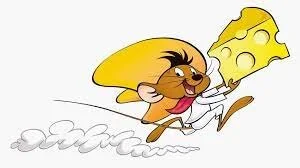
Speedy Gonzalez, the little Robin Hood of Cheese
She called me Speedy Gonzalez. My first coach after becoming a Gallup certified StrengthsFinder coach had a gorgeous Barcelonan accent, and she said: “Sarah, you’re like Speedy Gonzalez. Imagine you notice the village is running low on cheese, so you take money from the village coffer, run fast, as you do, to a nearby village, buy cheese, and run back. Problem solved! Except that when you return, you hear the villagers having a discussion about what kind of cheese to get this time… or maybe they won’t get cheese, maybe it’ll be salami instead… But you’ve already solved the problem, right?”
I’m such a visual person, I immediately imagined the tiny mouse running, like a blur, to the next village and running back carrying a huge block of cheese over his head.
And just like that (snap), I had a deep insight into how I sometimes get in my own way.
My strategic brain immediately comes up with a solution to a puzzle or problem. Many times it comes so fast that I’m not even sure I thought about it, the solution simply popped into my head. And because my Strategic is immediately followed by Activator, I just GO. I take the first step and know I’ll deal with obstacles or consequences as I meet them… or hit them face first.
Most of the time this way of thinking is awesome. It guides me to the fastest, simplest solutions to complex problems. I make decisions quickly, and the majority of the time, they have been excellent decisions. When I worked as a Peoplesoft consultant with Federal agencies in the DC area, those skills are what made me successful in identifying solutions for the help desk, creating easy to understand training materials, and finding solutions to implementation issues around data collection.
But for most of my life I considered myself impulsive because I didn’t realize my brain was actually coming to the solution before I could fully process what that meant. The map is in my head and I’m taking the first step. And I don’t always take stakeholders on the ride with me, causing communication issues and the appearance that I’m impulsive.
Here’s an example:

Fresh basil won’t keep in the car, either! (Image, fresh basil being made into pesto)
When I get into the car to run more than one errand, before I even plug my seatbelt in I have the route in my head. Not because I’m a planner, or because I think about it with intention, but because that’s how my brain works. The route is specific, many things taken into account, like not wanting to turn left across traffic on a busy street, not wanting to backtrack but wanting an efficient route, and knowing the grocery store has to be the last stop because it’s 80 degrees outside and I’ll have frozen peas in the car.
It wasn’t until a few months after my first conversation with a coach that I came to this realization. And years later I continue to see where my Strategic shows up in my daily activities. What’s especially interesting to me is that many people struggle in seeing that first, number 1 talent as a talent, or even as something that truly describes them.

Podcast cover art with image and quote from Sarah Elkins
Here’s why: Those top two strengths are so natural, so innate, that we cannot even see how they’re unique or special. I can tell when I’ve identified a true talent when I ask my client to tell me about the most common compliment they receive and they tell me, and then qualify it by saying something like: “But everyone does that.” Or “Doesn’t everyone do that?” They dismiss the compliment because the skill or talent comes too easily for them. They cannot own this natural talent because it wasn’t a struggle to get good at it… isn’t that kind of silly when you think about it?
Here’s another way I know I’ve uncovered something special in a client: When I ask them about how they feel when other people don’t think in the natural way they do, like when my husband drives us on errands and I have to bite my tongue because he doesn’t seem to have a route in his head, it feels like each turn he takes is an assault on my brain. I get annoyed, I’ll admit it, and I used to think: “How is this possible? He’s the smartest guy I know! Why would he turn left here, doesn’t he know that now he’ll have to go left across traffic on the busiest street in town?”
I worked with a coach to better understand my talents and how to apply them with intention, it also helped me know which talent to employ at different times. When I get annoyed because someone isn’t doing something the way I would do it, I use my Ideation (my #3 talent that magically comes up with ideas all. The. Time.), to focus my brain on curiosity about the situation. I begin to ask myself questions like: why am I getting prickly & annoyed, what’s triggering this? Does it matter right now if he takes a different route, am I in a hurry? And when I’ve answered those questions, I may ask my husband what his plan his for our errands, what he’s thinking about for our shopping list.
I do this at work, with my children, and even when I’m driving behind someone who seems to be lost.
My drivers are Strategic / Activator, neither of which are in the relationship building domain of the four StrengthsFinder domains. That alone is a clue about where my motivation is, which is mostly task-based, not people-based. And now that I know that, my communication has shifted, I’m using those talents with far more intention, and my relationships and leadership has improved dramatically.
The only way we grow as humans, the only way we can truly find satisfaction in our relationships, is to be self-reflective. This is not the same as being hyper critical of ourselves!
Being self-reflective means understanding our role in every situation, in every relationship. What am I doing to move this conversation in a positive direction? What was my role in the conflict with my coworker? What natural talents am I using in ways that are positive, and where am I getting in my own way?
If you enjoyed this podcast brief, stay tuned for next week’s episode, when we’ll explore Ideation & Adaptability, rounding out my top 5 talents.
ABOUT SARAH:
elkins consulting logo plus image of sarah elkins"Uncovering the right stories for the right audiences so executives, leaders, public speakers, and job seekers can clearly and actively demonstrate their character, values, and vision."
In my work with coaching clients, I guide people to improve their communication using storytelling as the foundation of our work together. What I’ve realized over years of coaching and podcasting is that the majority of people don’t realize the impact of the stories they share - on their internal messages, and on the people they’re sharing them with.
My work with leaders and people who aspire to be leaders follows a similar path to the interviews on my podcast, uncovering pivotal moments in their lives and learning how to share them to connect more authentically with others, to make their presentations and speaking more engaging, to reveal patterns that have kept them stuck or moved them forward, and to improve their relationships at work and at home.
The audiobook, Your Stories Don’t Define You, How You Tell Them Will is now available!
Included with your purchase are two bonus tracks, songs recorded by Sarah's band, Spare Change, in her living room in Montana.
Episode 187: Podcast Brief 1 - When Command is in Your Top StrengthsFinder Talents
My mother and her twin sister said: “Sarah, you’re so bossy.” Our large family had a reservation at a restaurant and I was being insistent that people stop yammering and get into cars, directing people and touching them on the arm to gesture toward a vehicle.
I was insulted and defensive. It was my intention to get the family to the restaurant on time for our reservation out of respect to the venue, which seemed reasonable to me. I felt like I had been gentle in terms of nudging my aunts, uncles, and cousins to get moving. That’s not how my mom and aunt saw it.
That wasn’t the first time I was called bossy or pushy, and it wouldn’t be the last.
My Command Hasn't Always Been Appreciated
This week’s episode of Your Stories Don’t Define You is part of a new series I’m exploring:

Podcast cover art with quote and image of Sarah Elkins
For the next few weeks, I’ll be sharing brief stories about my experiences in understanding my natural strengths and using them with intention. As a Gallup certified StrengthsFinder coach, I’ve taken opportunities to work with other coaches for two reasons, one is that I believe in this stuff, the idea that when we understand our own way of thinking, our natural, instinctive talents, and when we understand where we might be getting in our own way, we find more satisfaction in our lives.
Another reason is that to be a coach and to have a coach demonstrates my belief that this works, that working with a good coach adds value. I know that the more I know about my own talents and blind spots, the more effective I can be for my clients.
Today we’ll start with a talent that Gallup calls Command. If you’re more familiar with DiSC profiles, you might find similarities in people strong in the “d” style, with “i” as a close second.
You’ll hear how my command shows up, for better and for worse, and some of the ways I’ve found to present it differently so it’s intentional and positive, rather than subconscious and negative.
---
My mother and her twin sister said: “Sarah, you’re so bossy.” Our large family had a reservation at a restaurant and I was being insistent that people stop yammering and get into cars, directing people and touching them on the arm to gesture toward a vehicle.
I was insulted and defensive. It was my intention to get the family to the restaurant on time for our reservation out of respect to the venue, which seemed reasonable to me. I felt like I had been pretty gentle in terms of nudging my aunts, uncles, and cousins to get moving. That’s not how my mom and aunt saw it.
That wasn’t the first time I was called bossy or pushy, and it wouldn’t be the last. One of my bosses once said: “sometimes you’re pushy” in an annual evaluation, in the context of my efforts to move a project forward.
Years after the incident with my extended family and the restaurant reservation, my mother’s husband died and I flew from Montana to California to support her. When I walked into the house, she collapsed into my arms: “Thank goodness you’re here, now I know everything will be okay.”
I held her for a long moment, her huge dog, Pogo, leaning against my leg, my younger sister and my mom’s twin sister standing from the couch to welcome me.
And then I said: “Mom, have you eaten?”
She told me she wasn’t hungry, so I said: “I know, mom. Just sit at the table for a few minutes. If you don’t eat, that’s fine, I’ll eat it or we’ll give it to the dog.” I made a couple of fried eggs and toast, exactly the way I know she likes it, with a sliced peach on the plate. She ate all of it. I knew she would unconsciously start to eat what was in front of her – it was simple, familiar, comfort food. She was surprised when I took the empty plate from in front of her, her eyes welling with tears. I knew she didn’t actually taste the food, and I knew her body and brain desperately needed the fuel.

Podcast cover art with quote and image of Sarah Elkins
And then I started to arrange food for the many guests coming by, cleaned up the kitchen, and made sure things were in order as we navigated the next few days of solemn activities.
That’s my role. When things are in flux and people are floundering I can’t help myself. I step in and make order, delegating and doing what needs to be done. It’s not that I want to take a leadership role, most of the time I don’t, actually. My natural instinct is to take that role when I perceive a situation as out of sorts or chaotic. But that’s an important distinction – perceive.
The most practical thing I got out of my training, and continue to get out of working with a coach myself, is that I now understand, embrace, and present my Command far more effectively. I still get called bossy once in a while, but it doesn’t bother me, especially when I know my bossiness ultimately had positive impact on the people around me.
I know when my instinct to lead is driving my behavior, and these days I’m able to take a step back to assess the situation first. I ask questions, I observe, and I decide whether my initial perception of a lack of leadership or direction was accurate. And then I ask the person I believe to have authority if I may facilitate to help guide things forward.
That’s my command. If you’re wondering if I’ve always had this in my top talents, I promise you my mother would say yes. Does any of this sound familiar to you?
The only way we grow as humans, the only way we can truly find satisfaction in our relationships, is to be self-reflective. This is not the same as being hyper critical of ourselves!
Being self-reflective means understanding our role in every situation, in every relationship. What am I doing to move this conversation in a positive direction? What was my role in the conflict with my coworker? What natural talents am I using in ways that are positive, and where am I getting in my own way?
If you enjoyed this podcast brief, stay tuned for next week’s episode, when we’ll explore the Activator talent!
Ready for a deep dive into your natural talents? Click here to schedule a 90 minute session with Sarah, and find out why this tool can be so easily applied, practical, and effective in improving relationships.
ABOUT SARAH:

Elkins Consulting logo plus image of Sarah Elkins and her dog, with Gallup Strengths Coach logo
"Uncovering the right stories for the right audiences so executives, leaders, public speakers, and job seekers can clearly and actively demonstrate their character, values, and vision."
In my work with coaching clients, I guide people to improve their communication using storytelling as the foundation of our work together. What I’ve realized over years of coaching and podcasting is that the majority of people don’t realize the impact of the stories they share - on their internal messages, and on the people they’re sharing them with.
My work with leaders and people who aspire to be leaders follows a similar path to the interviews on my podcast, uncovering pivotal moments in their lives and learning how to share them to connect more authentically with others, to make their presentations and speaking more engaging, to reveal patterns that have kept them stuck or moved them forward, and to improve their relationships at work and at home.
The audiobook, Your Stories Don’t Define You, How You Tell Them Will is now available!
Included with your purchase are two bonus tracks, songs recorded by Sarah's band, Spare Change, in her living room in Montana.