

Your Stories Don’t Define You
How You Tell Them Will
A podcast to unlock your stories and uncover meaningful insights.
Episode 157: What if You Were Compelled to be a Chameleon to Succeed?
Jason Greer can be a chameleon when necessary. When Jason Greer and his co-author Phil Dixon began the journey of writing their book, Bias, Racism, and the Brain, Jason didn't consider how writing the stories of racism in his life would impact his internal messages, and how they would affect the simmering of those experiences under the surface of his life.
How Would Your Stories Shift, And What Does That Mean for Your Internal Messages?

Jason Greer can be a chameleon when necessary. When Jason Greer and his co-author Phil Dixon began the journey of writing their book, Bias, Racism, and the Brain, Jason didn't consider how writing the stories of racism in his life would impact his internal messages, and how they would affect the simmering of those experiences under the surface of his life.
At one point after sending a story to his co-author, Phil sent it back, saying that Jason had to go into more detail, to dig deeper if their intention to guide readers to empathy and compassion was going to be successful.
What Jason didn't realize was that though he had these vivid memories, he had largely buried the emotional connection to them. And when he began to write, truly write them down, that simmering often came to a boil, not just of anger and injustice, but of frustration and concern that he had not yet addressed these experiences in a way that would allow him to be truly comfortable in his skin. His brown, beautiful skin.
Jason told me that he often had to be a chameleon in his life, adjusting how he speaks, dresses, and carries himself depending on his audience. In his book, he mentions "the clutch", his reference to when white women clutch their purses to them when he walks nearby.
He finds himself shrinking his posture and speaking more softly to make people around him more comfortable.

Jason with his parents, Elaine & Dr. Jerome Greer
We talked about how that impacts his inner voice and sense of identity, that requirement to be different somehow, just to make himself less ... well... himself, less of a perceived threat, no matter whether he's wearing a fine tailored suit or workout clothes.As I read this book, I felt anger, frustration, grief, a sense of helplessness. Mostly I felt anger that these things happened to anyone, and that so many people continue to experience these acts of subtle and overt racism and bigotry.
A couple of things that really stuck with me were that I felt I could relate to some of the stories, even as a white woman, because every one of us has experienced bigotry at some point. Against our gender, where we grew up, our education or lack of, our accent... the list goes on.
But the other thing that stuck with me is more relevant: How little we notice and acknowledge this common experience of bigotry in our lives in order to stop ourselves from doing it to others.
Lucky for us readers, Phil Dixon explains a lot of why this occurs, what kind of bias that is, and offers some strategies to notice, reduce, and adjust those biases.

Jason & his wife, Tiffany
This was a conversation I will remember for years, I'm sure. And I sincerely hope listeners will read this book, absorb it, and get embarrassed and angry enough to step up to address our complicit behaviors when people around us experience bigotry and racism of any kind.
During this episode, I shared that when our boys were little, I gave Hanukkah presentations to the students in their elementary school every year. I knew that if I didn't do this, the majority of these students in Montana wouldn't be exposed to Judaism by a Jewish person. I bought dreidels (spinning top game for Hanukkah) in bulk and gave away hundreds of them over the years. A local bakery would make miniature jelly doughnuts (an Israeli Hanukkah treat) by the multiple dozens for me and I'd distribute both to hundreds of students each year.

2010: Photo courtesy of Dylan Brown, Helena Independent Record
During my presentation I would explain that tolerance is only the beginning. Tolerance is putting on blinders and saying: "I don't care what you do as long as it doesn't affect me." (It's kind of like telling people you're color blind.)
We must go far beyond tolerance to acknowledging and valuing the differences among us. Not to just accept those differences, but to embrace them as beautiful contributions to our communities.
Start here. (Link to Jason & Phil's book.)
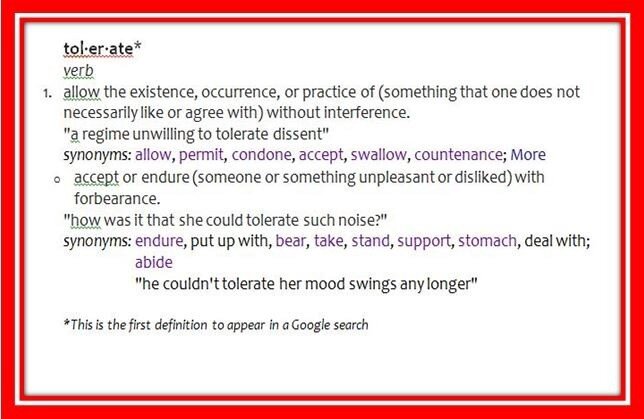
Tolerance is only the beginning…
---
Jason Greer (also known as the "Employee Whisperer") provides expertise and solutions for companies on how to empower and retain employees and managers while also helping these systems to remain union free.
Jason previously served as a Federal Agent with the National Labor Relations Board where he managed private sector labor relations’ issues and worked to improve the labor petition filing process.
Jason has been recognized as an Employee/Labor Relations and Diversity expert by Forbes, The Wall Street Journal, The Los Angeles Times, ABC, CBS and Fox News. Jason was named one of the Top Entrepreneurs To Watch in 2020 by Thrive Global. He is also the author of the Amazon #1 Best Selling Book “People Matter Most”.
Connect with Jason on LinkedIn, and visit his website to learn more.
---
About Sarah:

In my work with coaching clients, I guide people to improve their communication using storytelling as the foundation of our work together. What I’ve realized over years of coaching and podcasting is that the majority of people don’t realize the impact of the stories they share - on their internal messages, and on the people they’re sharing them with.

My work with leaders and people who aspire to be leaders follows a similar path to the interviews on my podcast, uncovering pivotal moments in their lives and learning how to share them to connect more authentically with others, to make their presentations and speaking more engaging, to reveal patterns that have kept them stuck or moved them forward, and to improve their relationships at work and at home.
The audiobook, Your Stories Don’t Define You, How You Tell Them Will is now available!
Included with your purchase are two bonus tracks, songs recorded by Sarah's band, Spare Change, in her living room in Montana.
Episode 154: What Can We Say, What Questions Can We Ask to Help Us Understand Each Other?
Desiree Adaway is no stranger to being the only black person in a room, or even in an entire community.
At 16, while skipping class, she saw an ad in the back of a magazine about exchange student programs and applied, signing her mother’s name on the application, the passport application, and all other necessary documents.
Stories of Racism, and the Importance of Acknowledging Each Other’s Experiences
Desiree Adaway is no stranger to being the only black person in a room, or even in an entire community.

At 16, while skipping class, she saw an ad in the back of a magazine about exchange student programs and applied, signing her mother’s name on the application, the passport application, and all other necessary documents.
She was accepted into the program, but had to decline the invitation because she knew her mother couldn’t afford it. The program administrator found a sponsor, and Desiree started packing - before ever talking to her mother.
Desiree didn’t want to go to Germany. She felt a deep need to go, like she would suffocate if she didn’t go.
Arriving in Germany, she was placed with a host family in a tiny town where she was the only person with dark brown skin within more than a 500 mile radius. Her peers touched her skin and hair, stared at her, she felt like an animal at the zoo. And that was only the beginning.
Throughout school and career, she had many of these experiences, including being the only black person at board meetings, management team events. She lost track of the number of times strangers have reached out without hesitation, much less asking to touch her hair, her skin, one woman at a market hugged her as if she had no ownership of her own body. People have had an outrageous sense of entitlement to touch her. This may not seem like a big deal, but when you put this entitlement into the context of the history of the enslavement of dark skinned people, you might begin to understand.
This part of her story particularly resonated with me because of my experiences as a pregnant woman. Strangers would randomly reach out to touch my belly - and I know this is a common experience during pregnancy. It’s absurd.
Our conversation here is rich with experiences, stories to open eyes to the many different ways racism is experienced in a variety of environments.
The highlight for me was when I asked Desiree about a positive experience when a white person acknowledged racism, acknowledged the beauty of diversity as opposed to pretending to be “color blind.”
She said that her business partner, early in their relationship, pulled her aside and said these words:
One day my whiteness will betray me and I’m going to make a mistake. What will we do to move through that?
The extraordinary thing about how Desiree told me this is that she turned it around and applied that sentiment to herself. She acknowledged that at some point she will fall into that trap as well, potentially with gender identity issues and other parts of humanity that she’s unfamiliar.
If we want to address inequity and racism, we must acknowledge it as it exists for those who experience it.
If you’re ready to take action as a human, you don’t have to make huge gestures. You must notice when micro-aggressions happen, and if you miss it and someone points it out to you, do not dismiss the concern. Ask about it, find out why it’s so insulting, demeaning, why the action or words are symbols of racism and bigotry.
—-
Desiree Adaway is a consultant, trainer, coach and speaker building resilient, equitable, and inclusive organizations. She holds a vision for people’s lives, workplaces and communities until they can hold it for themselves. Learn more by visiting her website, connect with her on LinkedIn, and be sure to follow her on your favorite social media platforms: Twitter, Instagram, and Facebook.
Episode 138: One Family Story Can Shift Our Identity
Being Jewish was always part of his identity, but it didn't seem particularly meaningful until that moment. He and his sisters started to ask questions, and learned more about the incident and the events that took place afterward. It was those stories that shifted Alan's perspective about hate, about racism, and about bigotry of every kind.
Stories of Family History Can Shift How We See Ourselves, and How We Show Up in the World
Well into his adulthood, Alan Samuel Cohen heard a family story that shifted his sense of self, his identity.
While sitting together at a family dinner with his adult siblings and aging aunts, one of those older women mentioned a specific violent incident that occurred before the family moved to America. She spoke of it clinically, historically, without anger or emotion, though it involved a violent murder that her father, Alan's grandfather, had witnessed.

Being Jewish was always part of his identity, but it didn't seem particularly meaningful until that moment. He and his sisters started to ask questions, and learned more about the incident and the events that took place afterward. It was those stories that shifted Alan's perspective about hate, about racism, and about bigotry of every kind.
In this episode of Your Stories Don't Define You, Alan and I discussed the story, how it affected him, and how he's showing up differently now, when it comes to racism and hate.
---
From his website: "For over three decades Alan Cohen has worked with business leaders as an executive coach, senior marketing professional, and human resources consultant. As a sought-after speaker, author, leadership instructor and executive coach, he has helped and inspired senior-level executives and teams to become more connected to their lives and business goals, resulting in greater performance and highly improved business results."
Connect with Alan on LinkedIn, and be sure to order his recently published book.
—-
Sarah Elkins delights in guiding individuals and teams to improve communication, using storytelling as the foundation of her work. She is a Gallup certified Strengths coach and uses that tool to coach her clients to improve their communication in all relationships, and to find more satisfaction at work and at home.
Her book, Your Stories Don't Define You, How You Tell Them Will is available on bookshop.org (supporting independent booksellers), and on Amazon. The audiobook will be available in fall 2020.
Episode 133: Choosing Yourself is a Vast Improvement to Settling for Less
Adolescent years are hard on anyone, to add challenges like moving to a new town and school, particularly as someone who naturally stands out, and you have serious potential for confidence busting.
Karyn Beach Loves the Skin She's In

Adolescent years are hard on anyone, to add challenges like moving to a new town and school, particularly as someone who naturally stands out, and you have serious potential for confidence busting.
Karyn is a force, and by her stories you can tell she has always been that way. But for many years, she struggled with confidence, and ended up in relationships that were just not good for her - personally and professionally.
She decided to choose herself and realized being by herself was far more pleasant and satisfying than sharing space with someone who didn't value and respect her. In fact, she loves being in her own company. And that's part of what makes it so wonderful to be there with her.
---
Connect with Karyn on LinkedIn, check out her website, and be sure to catch her podcast, Fun. Feisty. Fabulous!
---
"The choice of Sarah Elkins (as our conference keynote) was inspired. Her emphasis that we need to think more carefully as advocates about how we are perceived, that we need to demonstrate our values authentically (and bravely) so as to build trust, was perhaps more important than all the specific storytelling tools discussed.”

Sarah is a storyteller, communication coach, author and professional musician. Her keynotes and workshops are entertaining and engaging, because she uses storytelling as the foundation of her work. Her podcast, Your Stories Don’t Define You, How You Tell Them Will was named in the top 50 in 2019 in the category of emotional intelligence on player.FM, and her book of the same title is now available on Bookshop.org, Amazon.com, and Barnes & Noble.
Episode 130: I Will Not Meet Hate at the Door, Lessons of Love and Forgiveness
What's really significant about Heather's words is that she backs them up with real action and and her behavior absolutely brings that message home. She chooses love, learning, and personal growth in response to the adversity she experienced as a child and young adult.
Stories of Love and Learning Through Adversity

Heather’s TEDx Colorado Springs - Transforming Adversity into Opportunity
Heather Younger is no stranger to adversity. Born to a white, Jewish mother and a black father, her mother's family was less than welcoming, and Heather grew up without any contact with the majority of that family.
What's really significant about Heather's words is that she backs them up with real action and and her behavior absolutely brings that message home. She chooses love, learning, and personal growth in response to the adversity she experienced as a child and young adult.
Now is the time for us to amplify messages like Heather's, to listen closely to her stories not to get angry or frustrated, but to learn how to hold space for learning and compassion for those who mistreat us.

Heather and I connected early in my LinkedIn activity, and we've had the opportunity to spend real time together - in person. She was one of the first to sign on to participate in the inaugural No Longer Virtual event in 2017, and hasn't missed and #NLV since.
I'm so grateful for her friendship, support, and incredibly inspiring way she speaks, lives, and loves.
Learn more about Heather by connecting with her on LinkedIn, visit her website, subscribe to her podcast, and be sure to watch her outstanding TEDx talk. You can also order her best selling book, 7 Intuitive Laws of Employee Loyalty on Amazon.