Your Stories Don’t Define You
How You Tell Them Will
A podcast to unlock your stories and uncover meaningful insights.
Episode 193: Hillary Johns "It's an Honor and a Privilege to be a Lawyer"
"I consider our country as a whole" is how Hillary Johns explains her appreciation and love for the variety of experiences our country offers. As a bi-coastal attorney, Hillary explores everything from entertainment law, civil litigation, business law, torts, employment law, to outdoors activities like hiking and camping, and even volunteers to work with animals.
Stories from a Multi-Faceted Attorney
*This episode was recorded while Hillary was in-transit, sound quality is limited.*

Hillary Johns quote and image for podcast cover art
"I consider our country as a whole" is how Hillary Johns explains her appreciation and love for the variety of experiences our country offers. As a bi-coastal attorney, Hillary explores everything from entertainment law, civil litigation, business law, torts, employment law, to outdoors activities like hiking and camping, and even volunteers to work with animals.
We spoke of the need for people who work hard in one aspect of their lives to take breaks and have hobbies complete outside of that particular work environment.

Hillary Johns image and quote for podcast cover art
It can be surprising to hear what people choose in that way, from fostering older shelter animals, to beadworking and fly fishing.
Hillary's career has taken some interesting twists and turns that I'm sure listeners will find inspiring and fascinating.
About Hillary Johns
Hillary Johns is a member of the Time’s Up Legal Defense Fund. She works with the American Bar Association to provide legal services to military personnel. Ms. Johns has also served as a pro bono attorney and volunteer for local, statewide and national domestic violence organizations. She is a past alumni committee chair and current student mentor with Occidental College. She is a member of the Beverly Hills Bar Association and the Beverly Hills Chamber of Commerce.
Outside of her legal career, Ms. Johns was a competitive ranked soccer player and professional athlete. She is a licensed competitive youth soccer coach, and coaches youth soccer. Her interests include European and American history, competitive sports, fitness for people of all ages, and animal rights.
Episode 149: The Story of Your Life Starts Early When Your Future Presents Itself to You
Michael sat with his mother when she went to the hospital for breast cancer treatment appointments. He was struck by the compassionate care of her doctors, the fact that they treated her with dignity, kindness, and as if she was far more than a patient or a diagnosis.
He was in high school at the time, and had all kinds of ideas about what he wanted for his future. That experience, though, gave him the inspiration and motivation he needed, and he signed up for pre-med classes the following semester.
One Experience Inspired Michael's Career Goals

Michael sat with his mother when she went to the hospital for breast cancer treatment appointments. He was struck by the compassionate care of her doctors, the fact that they treated her with dignity, kindness, and as if she was far more than a patient or a diagnosis.
He was in high school at the time, and had all kinds of ideas about what he wanted for his future. That experience, though, gave him the inspiration and motivation he needed, and he signed up for pre-med classes the following semester.
When he graduated from high school and started school at Carroll College in Helena, Montana, he was well on his way toward his dream - he would be a doctor.
Michael Fuller and I have been friends for years, thanks to my introduction to his parents. I've always found both Michael and his brother, Joshua, to be thoughtful, considerate people, and that isn't at all surprising, given what I know of their parents.
As he's grown into himself and his future, we've taken opportunities to go for long walks together, sit in coffee shops, and even have a beer together (after his 21st birthday, of course), and have had deeply thoughtful, insightful conversations.

Michael Fuller, Summit of Mt. Helena, March 2020
It occurred to me that his story is one many can related to: The decision to go into a specific area of study and work as a result of watching a loved one go through a difficult situation.
You'll hear that Michael finished his bachelor's degree and has been accepted into a few medical school programs. He hasn't decided yet where he'll go. I know that whatever his future holds in terms of a career and location, he will contribute an extraordinary amount of courage, kindness, compassion and healing to those fortunate enough to find themselves in his care.
And if I'm lucky, I might just get a hold of his brother for another episode of Your Stories Don't Define You.
About Sarah:

In my work with coaching clients, I guide people to improve their communication using storytelling as the foundation of our work together. What I’ve realized over years of coaching and podcasting is that the majority of people don’t realize the impact of the stories they share - on their internal messages, and on the people they’re sharing them with.
My work with leaders and people who aspire to be leaders follows a similar path to the interviews on my podcast, uncovering pivotal moments in their lives and learning how to share them to connect more authentically with others, to make their presentations and speaking more engaging, to reveal patterns that have kept them stuck or moved them forward, and to improve their relationships at work and at home.
The audiobook, Your Stories Don’t Define You, How You Tell Them Will, will be released in mid-November, and for a limited time, the ebook is just $0.99!
As a special bonus for listeners, the book will include two songs recorded by my band, Spare Change, in my living room in Montana. Keep an eye out for announcements through LinkedIn and via my Elkins Consulting Facebook & Instagram pages, or visit my website to learn more.
Episode 116: The Realities of Improving Our Polarized Communities
In 2018, Monica Bourgeau felt compelled to write a book that would help people come to a basic understanding about our common, “wicked” problems, and how to help create solutions. Her October, 2014 article on Huffington Post, “7 Ways You Can Change the World”, continues to grab views, and she was hearing from readers that the article made a big difference for them.
Stories that Offer Hope For Our Polarized Communities Through Understanding and Non-Judgment

Monica Bourgeau, Author of The Change Code
In 2018, Monica Bourgeau felt compelled to write a book that would help people come to a basic understanding about our common, “wicked” problems, and how to help create solutions. Her October, 2014 article on Huffington Post, “7 Ways You Can Change the World”, continues to grab views, and she was hearing from readers that the article made a big difference for them.
Her original plan was to expand on that article, share stories about each of those seven ideas, and make the book not just inspiring, but actionable.
Though her vision didn’t falter, it did shift as she started writing the book. She was introduced to the theory of Spiral Dynamics, pioneered by psychologist Dr. Clare W. Graves, when an announcement was made following a church service as she sat with her daughter one Sunday. There would be a six-week workshop on the theory, which focuses on how our communities develop in terms of self-actualization and community values, and offers a visual representation of why those matter.
Monica was immediately intrigued, though she had never heard of Spiral Dynamics before. She signed up to participate and committed to attending every session, despite her already hectic schedule between work and home life.
Through that program, she started to piece together the relationship between her original article and the concepts of Spiral Dynamics. Over the next few months, she fell deeply into research, interviews, and storytelling around the theory - but what was most important to her was uncovering how to apply it to bring people together.
The key to the theory isn't necessarily to understand each of the waves Dr. Graves describes, but to grow into a sense of non-judgment when considering where people are on that spectrum of self-actualization, values, and motivation in order to connect and collaborate.
It's really about how to adjust our conversations to consider the people in front of us and the environment that shaped them. This is the only way to develop trust and to develop solutions for the complex, extremely polarizing issues facing our global population.
Monica’s book, The Change Code, was recommended to me by my dear friend Andy Hedges, who happens to live near Sydney, Australia, and whom I’ve never actually met in person. We connected on LinkedIn years ago and became close friends despite the distance. When he suggested I read the book, I didn’t hesitate, and I’m so glad for that recommendation. As I read it, I realized Monica was on to something, and I reached out to ask her to be a guest on my podcast as soon as I finished reading the book.
As small-world as it gets, I looked her up on LinkedIn to find that she grew up here in Montana, and that we have quite a few mutual local connections. As we started to chat for this episode, we realized we had even more in common, including an overlap in Fort Collins, Colorado in the early 90s.
Episode 115: This Too Shall Pass, For Better or For Worse
This would be my last hike on the mountain for at least a month, and as my dog panted and slobbered by my legs, I felt it – grief. I would leave my mountain and my dog for an entire month. Maybe this was a mistake. I sat down on a rock and tried to meditate, to just be still for a few minutes to let the thoughts flow and clear.
Everything in Life is Temporary, Embrace the Transient Nature
I stood at the summit of my mountain, Mount Helena in #Montana, breathing hard after the fast climb I took, trying to keep up with the dog.
Summit of Mt. Helena, Helena, MT January 2020
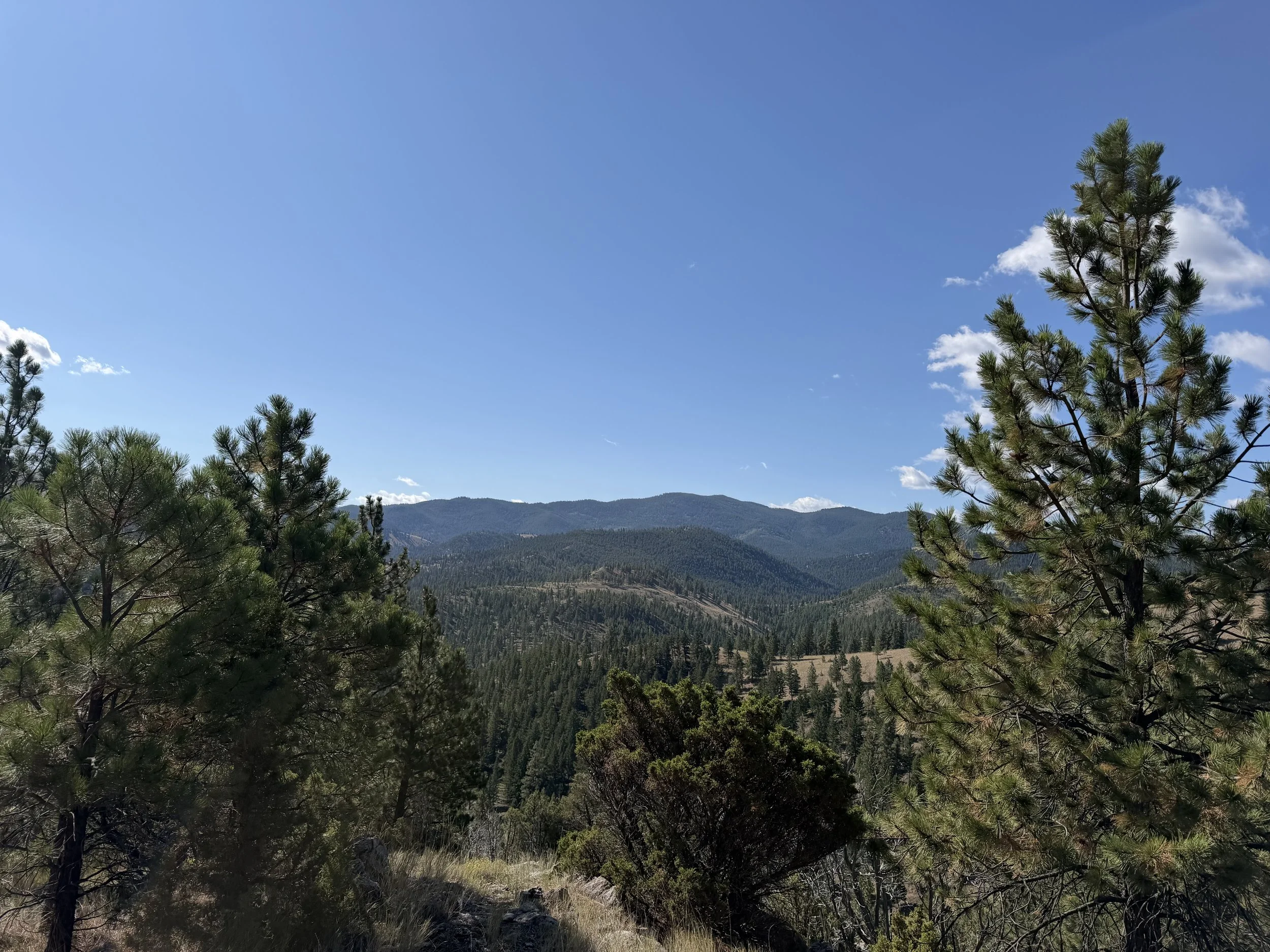
It was spectacular, as always. No matter how many times I get up there, probably nearly a hundred times in the 20 years we’ve lived here, it always takes my breath away, literally and figuratively. Gazing to the southwest, there are no buildings, just huge, snow covered mountains and forest as far as I can see. To the north is our town’s guardian, the #SleepingGiant, a #mountain I had an opportunity to climb a few years ago. I looked east to see our small city 1,000 feet below me, the Cathedral, the dome of our Capitol building, and the beautiful buildings of #CarrollCollege slightly north of downtown.

Sleeping Giant - head to the right, large nose, Montana
This would be my last hike on the mountain for at least a month, and as my dog panted and slobbered by my legs, I felt it – grief. I would leave my mountain and my dog for an entire month. Maybe this was a mistake. I sat down on a rock and tried to meditate, to just be still for a few minutes to let the thoughts flow and clear.
But I had too much going on in my head, packing, making sure everything was in order in the house, plans to check in with our son who would be taking care of the house and the dog. Far too much clutter was in my head, and I knew the only solution was to raise my heart rate again by jogging down the mountain, watching for trip hazards and ice, not allowing distraction by focusing on what was right in front of me.
When our youngest started high school, my husband and I started talking about what we would do when he left home. My husband already worked remotely for a company, so he could work from anywhere. It was my job that kept us in Montana year-round, and one idea that really appealed to us was living in different places for four to eight weeks at a time, getting to know another town, locals, cultures, and exploring different parts of the world.
Over the next few years, I started to build my #coaching and #speaking business with that idea in my head. I could either make this business successful and generate income, or I would have to find a company that would allow me to work remotely. My eyes were always open to opportunities with companies I thought would be a good fit for me, but nothing ever quite fit. #ElkinsConsulting would have to generate more income.
Our son started as a freshman in college last fall, and when we moved him into the dormitory, my husband and I talked again about our dream to work somewhere else for a month or so. We settled on the central coast of #California for our first experiment in living away like that.
Lots of research later, we decided on a #beach house within our price range, paid the deposit, and began the preparation to live away for an entire month in the winter. No #snow shoveling, no bundling up in hat, coat, mittens and snow boots to go to the grocery store for a whole month. We were both eager, excited, and a little anxious.
It was the day before our trip would begin, and I found myself sitting on the top of the mountain, worried and feeling a sense of grief – of loss – as I contemplated leaving my beautiful mountain, my boys, and that trusty dog by my side.
The next day, we were only 10 miles from home when started thinking of the things we forgot, things we had intended to bring with us, but decided not to go back. And the next evening we were checking into our home away from home, late at night, in the dark. As I used the code to unlock the front door, I could hear the #ocean nearby, but I couldn’t see it.
On our first morning, we walked the block west from our house to the beach and marveled at the little town we would call home.
We went out for breakfast that first morning, and as I walked into the little café with my Gates of the Mountains cap on (a famous section of the Missouri River near Helena, home to a boat tour through part of the Lewis & Clark expedition route), the young woman at the counter said: “Is that hat from Montana?”
Yes, the very first person I met on my first day in a little beach town in California was from Helena. She went to the same high school our boys went to, and had moved to live with her father and finish her senior year in California. Small, small world. That interaction felt like confirmation that we were right where we were supposed to be.
I completely overbooked my schedule that month with travel in the area and guests coming to spend time with us. The time absolutely flew by, but I took great advantage of my time there. I walked on the beach almost every day, took off my shoes and waded up to mid-shins in the ocean, picked up beach glass, shells, and sand dollars, and almost every evening my husband and I would walk to the pier to watch the sunset.
On our last day, after I had most of our things packed up, I walked by myself back to the beach and took off my shoes to feel the #sand and the #sea. Standing there, watching the waves, breathing the briny scent of the ocean, and watching the birds poke in the sand looking for food, it happened again. That moment of grief – of loss – as I contemplated leaving that beautiful place.
Cayucos, CA, February 2020
This time, though, it didn’t last as long as it did on my mountain. I realized it was exactly the same feeling of #grief and #discomfort as I felt before I left my mountain just 4 weeks before. Smiling to myself, I took in my surroundings, deeply #grateful for both the ocean and the mountains, and filled with the kind of #comfort and #peace you can only find when you embrace the temporary nature of life, and make a #conscious choice to live in grace and #gratitude.
Episode 92: Active Listening: The Power of Unlocking the Stories of Others
I love my work. Every client, every group brings new challenges and learning to me. I had an incredible opportunity to work with dependents of National Guardsmen who had been, or were currently deployed. The woman who hired me described the students as resilient, curious, and full of compassion. And when I met them that day, I completely agreed with her assessment. I’ve never worked with a group quite like these teenagers. They were welcoming, warm, and very bright. Every one of them had something to contribute to each conversation I facilitated, when I left, I had more hope than ever for the future of our communities.
Build Trust, Connect, and Deepen Your Relationships
I love my work. Every client, every group brings new challenges and learning to me. I had an incredible opportunity to work with dependents of National Guardsmen who had been, or were currently deployed. The woman who hired me described the students as resilient, curious, and full of compassion. And when I met them that day, I completely agreed with her assessment. I’ve never worked with a group quite like these teenagers. They were welcoming, warm, and very bright. Every one of them had something to contribute to each conversation I facilitated, when I left, I had more hope than ever for the future of our communities.
When we started the workshop, I talked about personal brand, being an ambassador for your people – no matter who you represented at any given time, to any audience. We discussed how we can share specific stories about our experiences in order to demonstrate the qualities we want to demonstrate to an audience, whether that’s a friend, family member, in an interview, or any other situation.
It was the last hour of our time together, and time to focus on listening, rather than sharing.
We were sitting in a large circle on white folding chairs, 12 teenagers between 13 and 17 years old, talking about storytelling and active listening.
I had described some of the techniques I use for active listening, like repeating words back to people to make sure I understand them, leaning forward, and making sure my body language is open and approachable, but I knew a demonstration would be more effective for the group.
Turning my chair to face the boy sitting to my right, a shy athlete with his arms crossed over his chest, I started to ask him questions. I leaned forward slightly, my hands relaxed on my lap. I was fully present, and as I started the conversation, my full attention was on him, the others just faded away for me.
“I know you love sports, and that you’ve had some great moments playing baseball and football. What else do you do?”
“Not much. Hang out with friends, I guess.”
“Do you have a dog?”
“Yes.”
“What’s your dog’s name?”
“Henry.”

Australian Shepherd/Lab Mix: Aussiedor
“Henry! What a great name for a dog. What is his breed?”
“He’s an Australian Shephard/lab mix.”
“I bet he’s really sweet. How do you spend time with him? Walks? Snuggles?”
“We walk together almost every day.” He smiled subtly, just the edges of his lips turning upward.
“I’ll bet you really love Henry and he loves you! Did you get him as a puppy, or did you adopt him?”
“We got him when he was only 8 weeks old.”
“Oh, how sweet. Was he super snuggly with you back then?”
“Yes.”
“Do you miss his snuggly puppy days?”
He smiled sweetly this time, an obvious grin at the memory of Henry as a puppy. That’s when his hands dropped into his lap, relaxed.
“I love puppies, even though they’re a lot of work. Did you train Henry to do any tricks?
“Yes, he’s really smart. One time I taught him to...”
He went on, sharing a story of how he trained his dog to do a trick. We wrapped up the conversation, and I turned my chair to face the rest of the group.
“Anyone notice what happened there?”
Almost immediately, and almost in unison, the teens said:
“Yes! He put his hands down from crossing them across his chest! He dropped his hands into his lap.”
I couldn’t have planned a better demonstration of the power of active listening, and that audience immediately understood that power when they saw the shift in their friend’s body language. They had spent a lot of time with him but hadn’t heard the story of how he trained his dog to do a trick.
If we want to truly connect with a person, we have to help them feel safe. One of the best ways to do that is to open our body language and ask questions to draw out stories.
Episode 88: Great Adventures Often Begin with Zero Preparation
Until very recently, women working in traditionally male roles like ranching and agriculture had to either wear clothes for men that simply didn’t fit, or women’s clothes they knew wouldn’t last or protect them properly.
The Story of Work Clothes for Women is Born of Necessity, and Raised in an Airstream
Until very recently, women working in traditionally male roles like ranching and agriculture had to either wear clothes for men that simply didn’t fit, or women’s clothes they knew wouldn’t last or protect them properly.
Sarah Calhoun saw a need in the market and found a way to fill it. Her story begins with her childhood, growing up on a llama farm with her sister, and works its way across the country with direct sales out of an Airstream RV. Red Ants Pants was born of necessity and raised by working women across the country. And not just any working women: Women who work in rural America on ranches and farms, and who never had clothes made to fit them that would protect their skin when working in tough environments.
I was intrigued about her background and motivation after a friend shared her website with me, a page in the Red Ants Pants Foundation about a girl’s leadership program. We talked about why she started this program for young women heading into their junior year of high school in rural Montana. And I heard some great stories about starting a business with almost zero preparation.
Check out the Red Ants Pants website, the Foundation website, and don’t miss the one devoted to building women leaders in rural America.
Episode 87: Share Stories and OWN Your Talents
Al Swanson has always been an outdoorsy guy, so much that his first plan out of high school was to study turf management. Yes, turf management. His interest began with a manager who was on the cutting edge of sustainable, ecologically healthy golf course management. That manager was way ahead of his time, and Al knew it.
Don’t tell people what you’re good at. Demonstrate it with a story!
Al Swanson in his studio in Helena, Montana
Al Swanson has always been an outdoorsy guy, so much that his first plan out of high school was to study turf management. Yes, turf management. His interest began with a manager who was on the cutting edge of sustainable, ecologically healthy golf course management. That manager was way ahead of his time, and Al knew it. That experience is part of what inspired him to continue his work as a sustainable craftsman.
A back injury prevented him from taking his degree to work, so to speak, and after a few learning opportunities, he came back to his roots (so to speak), in woodworking with sustainably harvested trees.
Al Swanson’s Shop, Helena, Montana

Delicious beer from Lewis & Clark Brewing Company
We spoke at his shop in Helena, Montana, while sipping some local beers with the extraordinary scent of cedar and pine all around us.
There are two reasons I asked Al to be a guest on the podcast. One was that during our last conversation, he told me a story about running into some people at a brewery in Phillipsburg, Montana, and having a moment of celebrity status - and owning it. I was intrigued with his idea about being comfortable with that feeling and choosing to be exactly what your admirers expect you to be. It’s not about being a know-it-all, or any kind of superiority. It’s about owning what you’re awesome at, knowing you’re still growing and learning, and acknowledging and appreciating it when people recognize your magic.
Al is well known for his fly fishing accessories, but he developed his reputation for fine art and craftsmanship in his furniture business. That’s how I met him; I coveted an absolutely stunning piece he had donated to an auction for our Prickly Pear Land Trust annual event, the Harvest Moon Banquet.
Fly boxes custom made for Patagonia
The other reason I asked Al to chat with me was that his work is truly extraordinary, and I wanted to learn more about his motivation behind what he does. We share the theory that when we provide a service or product, it’s the details that make your work unique. Similar to my conversation with Rocky Connell, the artisan bread maker at Park Avenue Bakery, we spoke about the energy we put into everything we do.
In Al’s case, a huge part of receiving a piece built by him is how he packages the gift. It’s all about the experience, not just the beautiful artistry in the piece itself. Al includes cedar, hand shaved into fragrant, curly, fine strips in the box. When that box is opened, the receiver is instantly transported to the shop where the piece was made, with a sense of belonging and longing for the forest where the wood was harvested.
One of the great stories he shared was about how he was inspired to create fly fishing accessories, many are available thanks to his relationship with Orvis. Because of Al’s generous spirit, he fixed a broken landing net (used to carefully scoop up a fish after catching it) that was meaningful to a young man who happened to walk into the A.L. Swanson gallery in downtown Helena. That young man was about to join the leadership team at Orvis.