

Between Your "Why" and Your "How" are Your Stories
Uncovering Stories to Complete a Picture
It turns out that philosophy is not only NOT boring, when appropriately applied, philosophy can help you understand yourself and the world around you. Philosophy isn’t about memorizing what Socrates or Plato said; philosophy is about curiosity and questions.
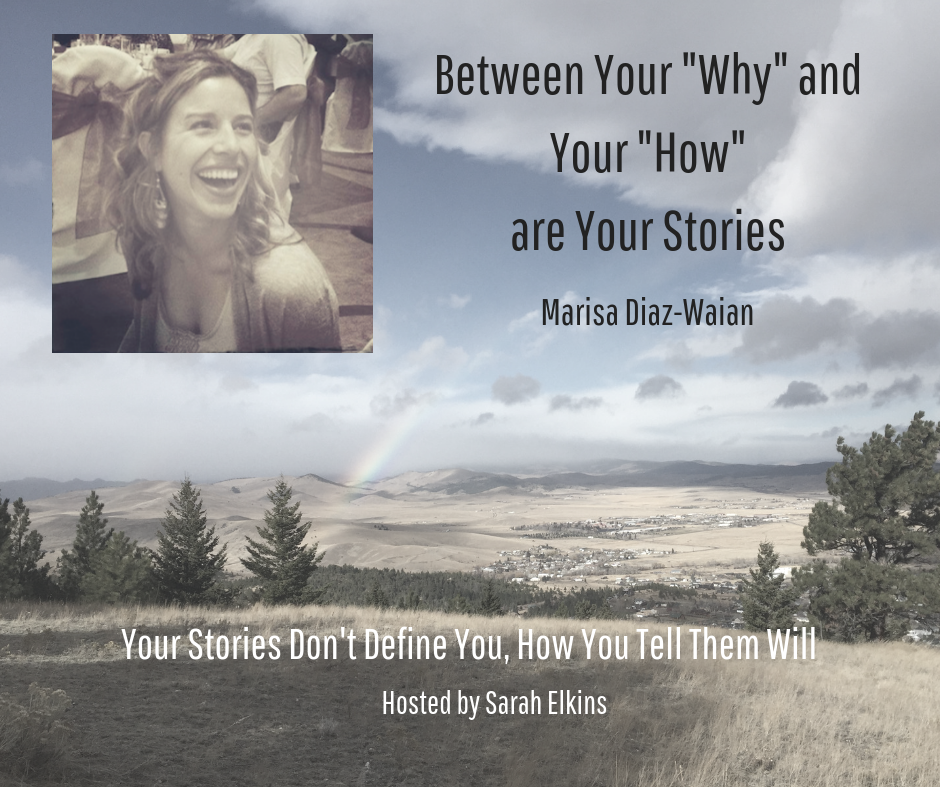
That’s how Marisa Diaz-Waian sees it, and she’s on a mission to help bring philosophical thinking and questions to current issues humanity is facing, as well as the timeless issues of our lived experience in general: Who are we, how can we live the good life, and what does this even mean?
From Philosophy Symposiums discussing the impact of AI on humanity, Bioethics, and The Environment, Ethics & Stewardship, to Philosophy Walks to ask questions and observe the world around us, to Philosophy Think & Drinks (my favorite), Marisa sees philosophy as a way to build collaboration, consultation, and community. That’s what it says on her website, but I like to add curiosity, because that’s where I see a huge need she can fill in our global community through these activities.

Father & daughter, Ennis, Montana
It was her father’s way of asking questions and making her think about what she was seeing in the world around her that brought her to her interest and passion for philosophy, but she didn’t see it as a way of life right away. Her first philosophy class in college was her eye-opener, but the dream of bringing these ideas to the world didn’t come until much later. Throughout her bachelor’s degree, she combined philosophy with other areas of interest, not knowing that doing exactly that would set her up to see how philosophy could be applied to so many other subjects and fields.
From Marisa:
After high school I went to Saddleback Community College, then transferred to Humboldt State University. I was halfway through my BA degree when I returned home to be with my father, in light of an unexpected series of events – the separation between he & my mother and a life-altering health condition.
My father had been diagnosed with Parkinson’s Disease, something we did not find out until later that summer. I transferred to California State University, San Marcos to finish out my degree and stay with him.
After graduation from CSUSM, my dad’s Parkinson’s had leveled out some with the new regimen of medications and he was able to return to most of his normal activities (with caution). He was able to travel back and forth to Montana on his own, fly fish, and continue his post retirement research.
I traveled with him frequently…and we still resided together (in California and Montana)…but I was on the road a lot with my job, doing concert touring and other oddball stuff. A couple of years passed like this and then he was in a horrible car accident en route to Montana. A triple roll-over, demolished airstream, and my father army-crawling out of the driver’s-side window in search of our cat, who had been ejected during the tumble and somehow managed (like my father) to escape with minimal injuries. A few broken ribs and bruising for him and a slight concussion for the cat. I have no idea how they survived.
After the accident, my dad’s health quickly declined, and solo travel was no longer an option. Over the next couple of years, we moved to New Hampshire, he underwent brain surgery in Boston, heart surgery in Boston (unexpectedly), and then we returned to Oceanside, California. About 1 year after moving back to Oceanside and settling in, I applied to graduate school at San Diego State University. My father’s influence continued, and my enthusiasm for philosophy grew.
Our plan was for me to finish grad school, and then for us to relocate to Montana and live on the nature preserve. Every summer we went back to Montana to work on the cabin in preparation for our move.
Unfortunately, our relocation never happened; my dad passed away on May 16th, 2010, about 2 semesters before I was due to finish grad school. I returned to Montana for the summer, a devastating one without my poppa, one of the hardest of my life.
After the summers’ end, I drove back to Oceanside, CA to finish graduate school…the final semester of which was spent in Los Angeles caring for my grandmother during the last months of her life. Shortly after my grandmother passed, my thesis had been accepted, and I graduated…I moved back to Montana to stay for good.
In thinking about this chain of events, I recall a precious memory shared with my father about 2 weeks before he died. I was inducted into a scholastic community, based on my performance in grad school. My father was in a wheelchair at that time (mostly due to lack of strength and balance).
We were driving from Oceanside to the campus in San Diego and I remember seeing a car on the side of the road and an older gentleman pulling a gas can out of his trunk in route to the offramp. I began to pull over to help the man and I recall my father being very adamant that we would not be stopping — we had places to go. I was furious with him at the time, thinking that it was so selfish. Why shouldn’t we help the man?
In retrospect, I wish I had not been so furious. My father had a deeper mission — me. And I also think he knew something that I didn’t; he was not going to make it to Montana. He knew he wouldn’tmake it to my graduation; for him, this award ceremony was my graduation, and he was going to be there to celebrate.
And celebrate we did! At the ceremony, we were given medallions on long necklaces. During the opening portion of the event, we were asked to stand and put our hands over our chests, where the medallions were supposed to be, but my medallion was hanging so low that I had to put my hand over my stomach.
I leaned over to my dad and whispered….”Geezuz, if this is where my chest is now….perhaps I should have sped this grad school thing up a bit?!”
We burst out laughing so hard that the spanakopita he had been munching on ended up all over me - and the back of the head of the man in front of us, who graciously understood, and had been chuckling with us about my comment.
Later, when we were buckling up in the car and getting ready to pull out of the parking lot, my dad reached out for my hand and held it in his: “Thank you for today. This meant more to me than you will ever know. I am so proud of you.” I teared up, as I always do: “Awww, Poppa, of course, poppa. You’re my best friend. I couldn’t have done it without you. Now let’s go get some food, you must be starving! You know… hehehe.. since you lost half your spanakopita earlier.”
Moving in to care for him was an easy decision for her to make, and spending those 12 years with him as an adult, with his same extraordinary way of asking questions and making her think differently about the world around her lit exactly the fire she needed.

Our conversation took us full circle, starting with describing Merlin and its mission, discussion about why she took that path, and the stories that drove her, and ending with how her development of this non-profit has contributed to our community.
It was a couple of days after recording this podcast that she came to me with the realization that she knew her “why”, she was figuring out her “how”, and that the stories we uncovered during our conversation are the link between those. When we dig back into our memories for specific incidents and conversations that shaped us, we develop that link between our actions and thoughts, and can more intentionally align our dreams with our internal messages of strength, perseverance, and love.
During our conversation, Marisa shared that her favorite, dog-eared, well-worn book is Plato’s Dialogues, specifically The Complete Works of Plato, edited by John M. Cooper. After our recording, I asked her for some suggestions for people who might be interested in getting started with philosophy and applications to current reflections and discussions. She suggested starting on the Merlin webpage, Resources, and the book Learning to Be a Sage by Hsi Chu.
And a few more books to recommend:
Epictetus, Discourses, Fragments, Handbook, translated by Robin Hard (Oxford Worls’s Classics, 2014) - STOICISM
Kierkegaard, Fear & Trembling - EXISTENTIALISM
John M. Cooper, Pursuits of Wisdom: Six Ways of Life in Ancient Philosophy from Socrates to Plotinus. Princeton University Press, 2013. - PHILOSOPHY AS A WAY OF LIFE

Marisa, is the Founder and Executive Director of Merlin CCC. Born in Santa Monica, CA, she spent the majority of her formative years along the coastlines of Southern & Northern California. As she grew older, Ennis, Bozeman & Helena, MT became regular stomping grounds. Her summers were frequently spent fly fishing, bird watching & “wandering into the great wide open” with her late father (and buddy), Lee. B. Waian. An active member of the Helena community, Marisa happily “hangs her hat” at Merlin Nature Preserve (located just outside of Helena) & serves as its trustee and steward.
Will You Disrupt Yourself? Or Will You Be Disrupted?
Disruption: Our Subconscious Mind Knows When We Need One

Photo credit: Pete Longworth
Whitney Johnson knew she found something really useful in the book she was reading, The Innovator’s Dilemma, but she had no idea that it would change her perspective about her career and life trajectory.
She was in the middle of a major project, doing research on disruption in the telecom industry when she realized that the description of disruption as a business concept could easily be applied to personal growth and career.
That seed turned into a full sized tree over the next few years as she started to consider all the other traditionally labeled business concepts that could be applied to career and personal growth. The beauty of those concepts is that they could help not only explain where we are in terms of learning and development in a job, they could help people create a visual representation to help people apply those concepts to ultimately improve their productivity and engagement at work.
In our conversation, I discovered two things about Whitney that surprised me: She didn’t cook until recently, choosing to avoid the connection between “women’s work” and her professional image, and she is a musician. She is a classically trained pianist, but had given up piano after completing her music degree. Even more interesting to me than learning those things was learning that she had taken both up in the recent past, learning to cook (and enjoy it), and coming back to the piano through the discovery of a love and connection to Gospel music.
I had to mention my love for Gospel and Spiritual music, of course. I’m not a Christian, but I get chills up my spine when I hear people perform this music with passion and a depth of spirituality.
Our conversation took some wonderful twists and turns, from our relationships with our mothers and children, to career challenges related to boredom and a lack of dopamine boosts from learning something new.
One of my favorite parts of this conversation was an “ah ha” moment related to the challenges of parenting adult children, and trying to avoid letting our “advice monster” out in conversations with them.
To me, the most important concept in our conversation was that our brains crave learning new things. When we aren’t exploring something new, whatever that may mean, we are likely to find unproductive activities to satisfy that craving. Have you found yourself in a job that isn’t satisfying, and suddenly either you’ve been let go, or you notice more drama going on in your personal life? Whitney and I shared a theory that when we aren’t actively learning and satisfying our brain’s craving, we often sabotage ourselves in different areas of our lives.
In her book, Disrupt Yourself, Whitney spends time exploring the S-curve (typically used to describe a business’s growth) as a visual representation of skill-building or the learning curve of a new job or career. When we reach the top of the S, we hit a plateau and either stay there for a while, or we jump onto a different S, usually having to start at the bottom again.
Because of our human need to learn new things, when we sit on top of that S-curve too long, we tend to get bored. In my case, that’s when I sabotage relationships and jobs. In Whitney’s case, that’s when she takes on new or renewed interest in creative outlets.
It was a pleasure to spend time with Whitney after more than five years of conversing through email and on LinkedIn. She was a major source of inspiration for me when I started blogging, and I couldn’t be more grateful for the opportunities she offered when she published one of my first posts on her website, and a follow up post a few years later.
Recognized as one of the 50 leading business thinkers in the world (Thinkers50), Whitney Johnson is an expert on disruptive innovation and personal disruption; specifically, a framework which she codifies in the critically acclaimed book Disrupt Yourself: Putting the Power of Disruptive Innovation to Work and in her latest book Build an “A” Team: Play To Their Strengths and Lead Them Up the Learning Curve. (Harvard Business Press, 2018). She is also the author of Dare, Dream, Do: Remarkable Things Happen When You Dare to Dream
She developed her proprietary framework and diagnostics after having cofounded the Disruptive Innovation Fund with Harvard Business School’s Clayton Christensen. This framework is complemented by a deep understanding of how executives create and destroy value, having spent nearly a decade as an Institutional Investor ranked equity analyst on Wall Street.
In addition to her work as a speaker and advisor, Whitney is one of Marshall Goldsmith's original cohort of 25 for the #100 Coaches Project, is a coach for Harvard Business School's Executive Education program, frequent contributor to the Harvard Business Review, is a Linkedin influencer, and hosts the weekly Disrupt Yourself Podcast. You can follow her on Twitter at @johnsonwhitney.
Your Words Have Impact When You Least Expect It
And Your Actions Will Carry Even More Weight

Sarah & Mom, Mt. Helena City Park
I have moments in conversations with my children that I think: “That was good! Where did that wisdom come from?” And in my mind, I’ve said something so perceptive, so wise, that my boys are sure to remember it and apply it.
That’s rarely the way it works. They remember some of the most ridiculous things I’ve said, and most of the time when they tell me something deep that I shared with them, I have no memory of the conversation.
When my mother came to visit our family recently, I took the opportunity to have this conversation with her: Do you remember telling me these wise things that I’ve written about in my blog? At the time you shared these words with me, did you think they would have life-long impact?
I loved this conversation, partly because it confirmed this generational commonality, that our children remember things we don’t remember. And more importantly, that they remember our actions, the values we demonstrated to them, with even more clarity.
In our conversation we mentioned a few things related to childbirth and breast feeding, and I promised to include links to explain. Mom mentioned meconium aspiration, and her activity in the early 70s with La Leche League.
Also in the conversation, we talked about the Jewish holiday called Purim, the cookies we make to celebrate that holiday, and the act of delivering a basket of those cookies and other treats anonymously to people.

Sarah and Mom, Helena Regional Airport
Knowing that we think differently, and process information differently is critical to the health of our relationships, and talking through how we remember our family history helps clarify those differences. When I remember hard times, specific incidents that had impact on me, I vividly remember the people involved, and my feelings and experiences with those people. It turns out that when my mother remembers specific incidents that had big impact on her, she remembers her feelings about it, the emotions she experienced, not the specific people involved.
Having this conversation allowed me some insights in terms of her emotional response to things I say or struggles she experiences in her life. She simply processes things differently from how I process them, and there’s so much beauty in that difference.
Your Turn
Have you told people the impact they had on you? Do you share your memories with people, so they understand how much their actions meant to you? When you share these stories with people in your life, you have an incredible opportunity not only to be grateful, which has positive impact on your brain, and to thank people, but to see those same experiences through their eyes.
Not All of the Most Important Lessons Come from Struggle
We learned so much about ourselves and our relationship on that adventure. Our resourcefulness, silly senses of humor, and resilience was on full display.
Celebrating Lessons Learned from Joy - 50th Podcast Episode!
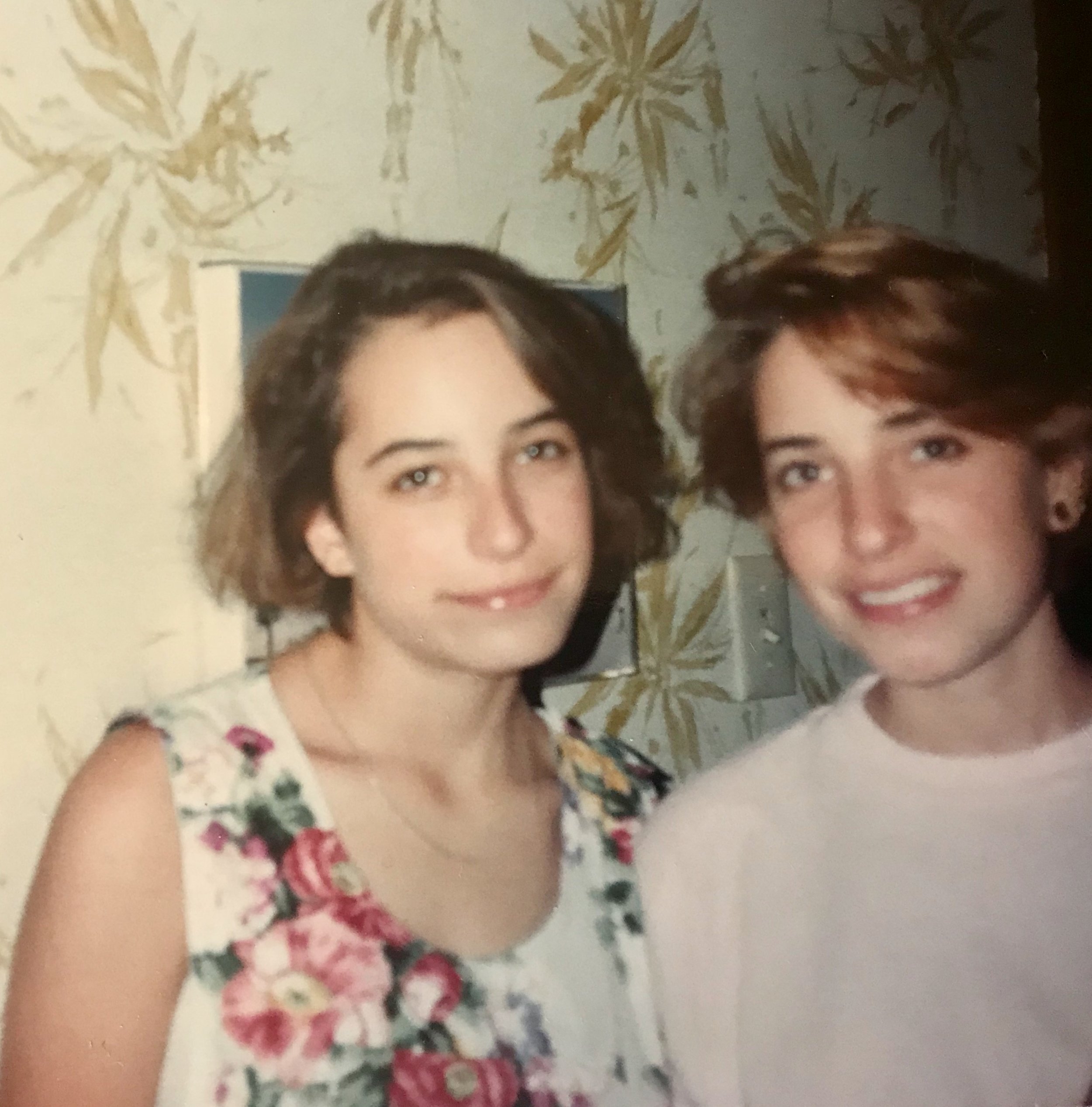
Karen & Sarah, Road Trip Warriors
I talk a lot about the lessons I’ve learned through struggle, I call them “opportunities for growth”, and many people believe the most important lessons in life are those learned during difficult times. I learn a lot about my strength, resilience, and courage through those obstacles and grief; I also learn a lot about myself, my relationships, and the world around me through happy experiences.
My sister and I decided to take a road trip in the last week I was in Colorado before moving to Washington DC for a paid internship after college. I had just graduated from Colorado State - Fort Collins, and she was a second semester freshman at the University of Northern Colorado in Greeley. It was early January, our dad was fixing my little Chevette to make the trip to DC, and we had just a few days before I had to leave.
We weren’t sure where we wanted to go, and as we drove to the AAA office to grab a map, we talked about maybe making it to Las Vegas. The AAA associate was concerned about this long trip, I think she assumed we were about 16, and she mentioned as she highlighted the route from Colorado Springs to Las Vegas: “That’s a very long drive, ladies, especially in winter!”
“That’s okay, it’s really not about the destination.”
Karen and I left with our map, stopped at the nearest Kmart for a case of oil, she drove an old Honda that burned through oil, and headed north and then west.

Always Great Travel Companions
Skirting Denver to head west, we passed the familiar sign “Buffalo Overlook”, and I couldn’t believe it. “Karen! There are buffalo at the buffalo overlook!” Puzzled, she smiled at me. “Um… yes, Sarah.”
“I’ve passed this sign a hundred times at least, and I look out every time, and this is THE FIRST time I’ve ever actually buffalo here!”
We drove into Glenwood Springs, a beautiful little town in western Colorado, where we had spent some time as young children.
“We could stop here and soak in the hot springs, and maybe see if they have a room for us here.”
Karen told me she was eager to get out of Colorado, so we kept on driving.
As we chugged in the little Honda up a hill just over the Utah state line, we realized the car was misfiring and having some trouble with acceleration, so we pulled off at the next exit with a gas station.
It was a gas station with a diner nearby - and nothing else. We filled up the tank and I put a bottle of dry gas into the tank, just in case there was moisture in it. Pulling around to the diner lot, I noticed the blinds of the diner pop open, and a few pair of eyeballs staring out at us. I went in to use the bathroom, which was a mistake, and when I came out, Karen was holding one of the spark plugs in a paper towel in her hand.
She asked if I happened to have some sandpaper with me that we could use to rub the carbon off the edges of the plus.
“No, but I have an emery board!” It didn’t fit in the gap, so I peeled the paper off the board. One at a time, my sister pulled out the plugs, I carefully pulled the sandpaper through the gaps, and she put them back. At some point, one of the pairs of eyes from the diner came out to ask if we “ladies” needed help. His belly arrived significantly before he did, and when we said we were okay, he huffed, annoyed, and stomped back into the diner. We saw the blinds pop open again as all of them watched us finish our work.
“McGyver!” Karen shouted, and we high-fived.
We drove away and didn’t have any more acceleration problems the rest of the trip.
Our adventure was filled with hilarious moments, especially late that night when we had been on the road for 8+ hours and were tired and punchy.
Eventually we stopped in Mesquite, Nevada. I got us a room, then we walked into the casino to look around. We won $300, got ID’d at least 6 times in the hour we were wandering, and were compensated for the hassle by the manager, who bought us dinner in the restaurant.
Later that year, I took the map we used, wrote short stories and quotes on it along the route, attached some pictures, and gave it to my sister in a frame as a gift.
We learned so much about ourselves and our relationship on that adventure. Our resourcefulness, silly senses of humor, and resilience was on full display. Maybe we knew innately that we held those traits, but experiencing this together was great confirmation.
The next time you are experiencing an “opportunity for growth”, think about some of those adventures you loved, those stories in your life that brought you great joy, and really consider the lessons you learned from those experiences. And when you’re in the middle of one of those joyful adventures, take time afterward to find the lessons in it.
True Leaders Know They Always Have Something to Learn
Stories of Learning and Growth as a Leader
Just like many bosses before him, Rich Gassen was offered a management position without having ever been a manager, and without any training. Fortunate for his employees, he knew what he didn’t know, and took it upon himself to find the resources he needed to learn to do his job and do it well.
In my experience, the worst managers are the ones who think they have nothing to learn, and who don’t see themselves as their employees see them. Many take on the management style of someone they worked for, even if they disliked that manager, and complained often about their poor management and the disconnect with their staff.
But not Rich. Not only did he take advantage of the training opportunities and other resources available to him from his organization, he joined a group of managers that met regularly to share what they knew - and to complain. The dynamic changed in that group when they realized there were many other managers there who didn’t know what resources were available to them, and they decided to open up their informal group to create a more formal, active agency to help all managers improve.

Rich Gassen, bottom left, an unplanned, unexpected rock star.
In our conversation, we had a chance to talk about music, one of my favorite topics, of course. Here’s the link Rich promised to share, a song recorded in his time as a vocalist in a rock band called Madcity.
Connect with Rich on LinkedIn, and check out the website he created and manages for the Campus Supervisors Network at UW-Madison.
When Your Heart is In It, You Bring Great Value
Stories of Understanding the Value of Your Work
Going into the resume and job search business, John Sattler underestimated the impact he could have on the lives of others. His interest in starting this business had more to do with using the knowledge and skills he had developed as a recruiter to make his income, and less to do with the “why” behind it.
His “ah ha” moments came when he opened his mind and heart to really get to know a few of his clients. John realized that each client had a completely different and interesting story to tell, they just didn’t know how to tell it.
He’s not a soft-skills guy, in terms of how he approaches his work. John isn’t the guy you go to cry on his shoulder; he’s the guy who will tell you exactly what he thinks, and will not sugar coat his advice and suggestions. That’s why he won’t take on every client that knocks on his door. If he gets the impression that the client isn’t going to put in the work and effort it will take to get a job, and if he gets the impression that the client won’t choose to be self-reflective about his or her past challenges, he will refer that client to someone else. And that’s what makes him such an asset to the clients who retain him.
It’s magical when you realize that your skills and competence can make a real difference in a person’s life, and that they realize your value and will invest in themselves to benefit from those skills and competence.
Help Appears When You Least Expect It
He was driving a new, fancy car, living in a beautiful apartment, wearing expensive clothes, and living a life he considered pretty luxurious. So why was he sinking?
Stories of Friendship and Angels in Disguise
When he was struggling in a job that a was a terrible fit, Robert Downs suddenly developed a craving for a burrito - in a city more than 8 hours drive away. He arrived in the city where he had lived before, connected with a couple of friends, ate a burrito, and then drove back.

It took time for him to process the why behind his spontaneous craving, and a few other examples of that kind of behavior, for him to realize he was sinking. He was driving a new, fancy car, living in a beautiful apartment, wearing expensive clothes, and living a life he considered pretty luxurious. So why was he sinking?
Many of us have a skewed version of what we consider success in our lives, especially early in our careers. We seek out happiness based on that skewed version of what success looks like, and when it falls short of making us happy, we think something is wrong with us.
When he finally decided to truly follow his heart - and his familial roots in creativity and art, help appeared. Is it always easy? No, of course not. But when you know you’re doing what you were meant to do, the right people fall into your path to keep you company. And when you have the opportunity to give back into that system of support and encouragement, you take it.
I know you want to learn more about Robert Downs and his life as a photographer. My favorite way of keeping up with this guy and his adventures is his always-insightful blog posts.
You can also follow him on Instagram, and visit his website.
From his website:
ROBERT DOWNS
For many an artist, creativity is in the genes. For photographer Robert Downs that creativity springs from both sides of parental well. His mother was a graphic artist and father was a photojournalist for more than forty years with the Atlanta Journal and Constitutionwhich is where they met.
“I used to beg my father to take me to work with him on the weekends,” Robert remembers. “My job would be to carry all the staff photographer’s cameras to the football field and pick up film at half-time. My reward was I got to use a camera and dump my film in with the rest of the guys. Whether it was or cruel joke, or just fate, my shots started showing up in the paper. I was 13 when I scored the front page of the sports section. It was then I knew that I wanted to be a photographer.”
Over the past 10 years, Robert Downs has sustained that dreammaking a living combining art and commerce with clients ranging from the Los Angeles Times and Sony Pictures to Kaman Music, SKB, Audix Microphones and Gibson Guitars. His work has been featured extensively on covers and editorial spreads for for Drum! and Traps magazines, plus a host of the world’s top drum companies such as Pearl, Gretsch, Tama, Bosphorus and Zildjian. He’s also photographed some of the top musicians and bands on the charts including Incubus, Stone Temple Pilots, Deftones, Tommy Lee, Public Enemy, Hatebreed, Cult, Linkin Park, and many more.