Your Stories Don’t Define You
How You Tell Them Will
A podcast to unlock your stories and uncover meaningful insights.
415 Striving For Excellence
When was the last time you took a moment to truly acknowledge just how far you’ve come and the work you have done to get to this point? No exceptions, no talking down about your accomplishments, just true and genuine acceptance of how amazing you are because of how hard you have worked. Perfection is impossible, but Excellence is achievable. We can always improve, but we must also acknowledge and sit with how well we have done to get to this moment.
In this episode Sarah Elkins and Anne Catherine discuss the importance of art and the soul, the necessity of knowing when we are truly excellent, and to encourage it in others and ourselves.
415 Striving For Excellence
When was the last time you took a moment to truly acknowledge just how far you’ve come and the work you have done to get to this point? No exceptions, no talking down about your accomplishments, just true and genuine acceptance of how amazing you are because of how hard you have worked. Perfection is impossible, but Excellence is achievable. We can always improve, but we must also acknowledge and sit with how well we have done to get to this moment.
In this episode Sarah Elkins and Anne Catherine discuss the importance of art and the soul, the necessity of knowing when we are truly excellent, and to encourage it in others and ourselves.
Highlights
What super power are you hiding?
What is the art you practice that you don’t often think is art?
Are you coloring in someone else’s lines or your own?
Letting go of perfection and striving for excellence.
What was the last thing you were really proud of? No buts.
Quotes
“It’s funny because I didn’t study art or anything right? My medium is paint, of all sorts so I could say I’m a painter, but I never started. I always went straight to artist because I think it’s in your soul, it doesn’t matter even when I do science, I assemble molecules. There’s an art to that. That’s what felt right to me, I never defined myself as a painter even though that’s my medium for traditional art as we would say so.”
“You don’t have to pick, you can be all the things that your heart desires.”
“I don’t want to color in someone else’s lines anymore.”
Dear Listeners it is now your turn,
What will you do with your insights from this conversation? Will you choose to color out of the lines or to make your own lines? Will you choose to simply color within those lines just to express your own need for color for some form of relaxing, because it can be a great tool. But if you are driven, if you are compelled to stop coloring inside someone else’s lines, I want to know what that looks like for you.
And, as always, thank you for listening.
About Anne Catherine
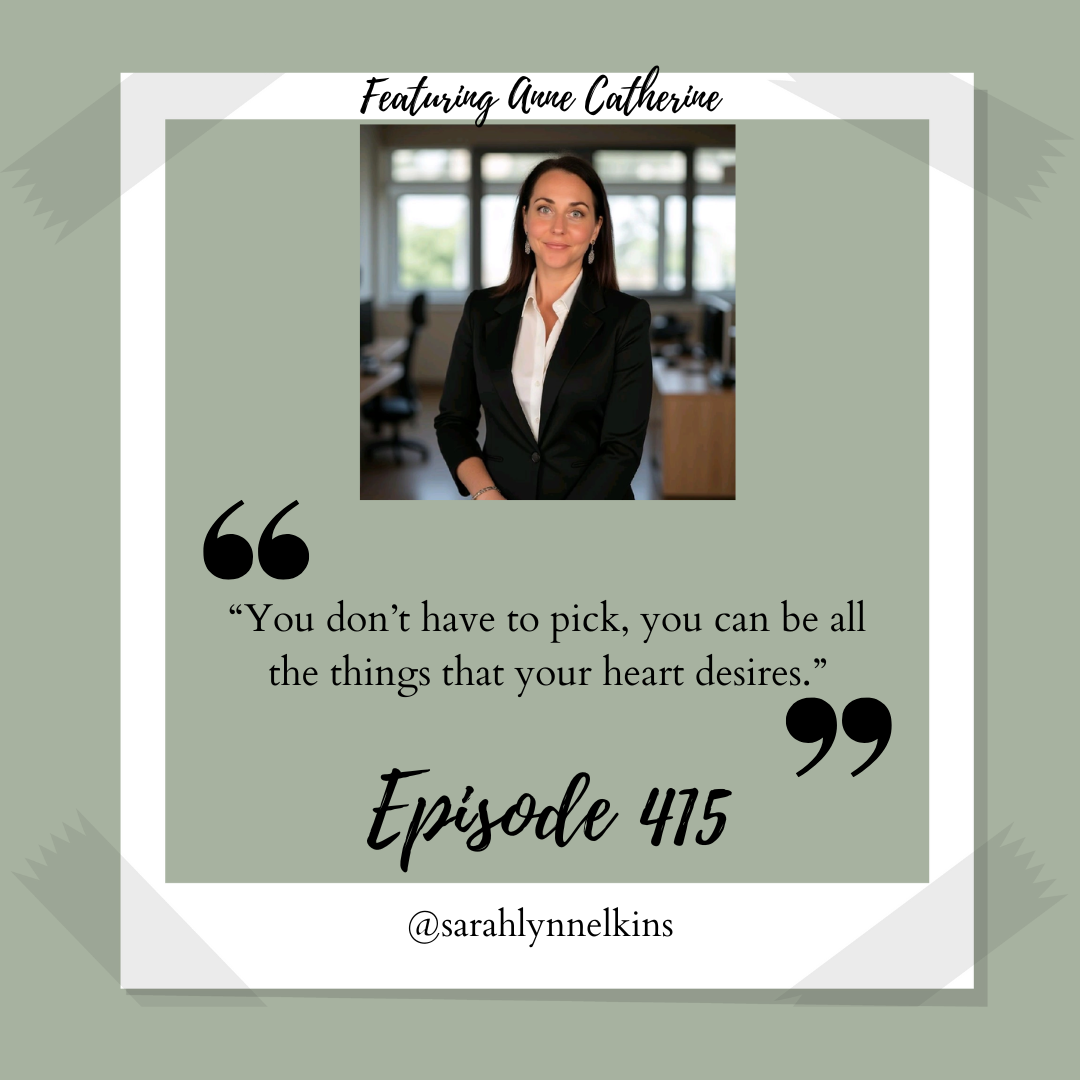
Anne-Catherine is a French-Canadian PhD chemist and abstract artist whose work invites people to reclaim their wholeness. She bridges two worlds that rarely meet: science and art.
What started as a personal outlet became a transformative practice that helped her process emotions beyond the reach of language. This shaped her belief that creative expression can regulate the nervous system and reconnect us with the parts of ourselves we tend to silence.
Through her brand Labcoat & Leggings, she explores the intersection of scientific themes and bold creative freedom. As a scientist and a mother, she has witnessed how often women in STEM hide parts of themselves to navigate spaces not designed for them. Her work is about reclaiming what we mute and showing what it looks like when someone leads with honesty and humanity in a way that makes the world more welcoming and inclusive for all.
Be sure to check out Anne’s LinkedIn and Instagram! And be sure to check out her website Labcoat & Leggings!
About Sarah
"Uncovering the right stories for the right audiences so executives, leaders, public speakers, and job seekers can clearly and actively demonstrate their character, values, and vision."
In my work with coaching clients, I guide people to improve their communication using storytelling as the foundation of our work together. What I’ve realized over years of coaching and podcasting is that the majority of people don’t realize the impact of the stories they share - on their internal messages, and on the people they’re sharing them with.
My work with leaders and people who aspire to be leaders follows a similar path to the interviews on my podcast, uncovering pivotal moments in their lives and learning how to share them to connect more authentically with others, to make their presentations and speaking more engaging, to reveal patterns that have kept them stuck or moved them forward, and to improve their relationships at work and at home.
The audiobook, Your Stories Don’t Define You, How You Tell Them Will is now available!
Included with your purchase are two bonus tracks, songs recorded by Sarah's band, Spare Change, in her living room in Montana.
Be sure to check out the Storytelling For Professionals Course as well to make sure you nail that next interview!
406 Screen Time for Young Children: A Parent's Search for Answers and Options
In a day and age of smartphones, electronic billboards, TVs, and the seemingly impossible to avoid screen, it’s easy to lose connection to what matters most, that being our community as human beings. We crave connection, and by mindlessly scrolling or putting on a video to appease ourselves or a child, we inherently rob ourselves and our charges of a chance to truly connect, oftentimes causing irrevocable damage to the brain.
In this episode Sarah Elkins and Will Maurer discuss the importance of early childhood development and how it is harmed by overstimulating media, as well as the research going into this issue.
406 Screen Time for Young Children: A Parent's Search for Answers and Options

In this day and age of smartphones, electronic billboards, TVs, and the seemingly impossible-to-avoid screen, it’s easy to lose connection to what matters most, our community as human beings. We crave connection, and by mindlessly scrolling or putting on a video to appease ourselves or a child, we inherently rob ourselves and our charges of a chance to truly connect, oftentimes causing irrevocable damage to the brain.
We know screens are here to stay, so the question becomes how we can shift how we use them to encourage in-person interaction and relationship-building.
In addition to researching how to undo the damage to young people's brains, thanks to the addictive nature of shows and games, we need to research how to reduce the harm in the first place.
In this episode Sarah Elkins and Will Maurer discuss the how research on screentime for infants has been limited because of the blanket prohibition and shame related to it, and why it's critical to continue this research. (Hint: Infants will be exposed to screentime by parents, older siblings, and others, so let's figure out how to reduce harm and maybe even find value in it!)
Highlights
Screen time and how it affects infants & children's brains.
Taking steps to create a personalized plan for your child or yourself regarding screen time.
Doing the research that needs to be done, especially in necessary but difficult paths.
What exactly is it that makes certain shows addictive and damaging?
What are the consequences of ignoring the obvious - that infants are being exposed to screen time despite the general prohibition?
Quotes
“Are they absorbing anything? Is a parent able to co-view and add to that experience?”
“As a society we put a lot of money into addressing issues after the fact.”
Dear Listeners it is now your turn,
What will you take away from this conversation? If you don’t have young children at home, what can you do that’s a little bit different to connect with the young children you see around you? One of the things I say in my TED Talk is, we can connect with people around us through story easily and with total strangers, and one of the examples I gave is when you sit next to a family at a restaurant and you watch a child playing a familiar game or watching a familiar show and you share a brief story how your kid liked that too. This is your chance, find ways to connect to the people around you, through story.
And, as always, thank you for listening.
Mentioned in this episode
Do Policy Statements on Media Effects Faithfully Represent the Science?
About Will

As a TEDx speaker and leading voice in children’s media reform, Will Maurer is pioneering evidence-based guidelines and solutions that bridge scientific research with real-world execution. His work challenges industry norms, prioritizes early childhood learning, and champions equitable, enriching content for the next generation. Through advocacy, research, and leadership, he is reshaping the future of children's media - driving systemic change and setting new standards for quality, impact, and accessibility on a global scale.
Be sure to check out Will’s Facebook, LinkedIn, and Instagram! As well as his LinkTree!
About Sarah
"Uncovering the right stories for the right audiences so executives, leaders, public speakers, and job seekers can clearly and actively demonstrate their character, values, and vision."
In my work with coaching clients, I guide people to improve their communication using storytelling as the foundation of our work together. What I’ve realized over years of coaching and podcasting is that the majority of people don’t realize the impact of the stories they share - on their internal messages, and on the people they’re sharing them with.
My work with leaders and people who aspire to be leaders follows a similar path to the interviews on my podcast, uncovering pivotal moments in their lives and learning how to share them to connect more authentically with others, to make their presentations and speaking more engaging, to reveal patterns that have kept them stuck or moved them forward, and to improve their relationships at work and at home.
The audiobook, Your Stories Don’t Define You, How You Tell Them Will is now available!
Included with your purchase are two bonus tracks, songs recorded by Sarah's band, Spare Change, in her living room in Montana.
Be sure to check out the Storytelling For Professionals Course as well to make sure you nail that next interview!
377 The Art of Storytelling: A Controlled Burn in The Forest Of Life
Throughout life we have a tendency to collect things, whether they be stories, memories, or physical objects, and more often than not we cling to these things despite them no longer serving us in any meaningful capacity. Which is why it is important to sit back, look at your hoard and realize you are not a dragon who must keep every single piece of scrap. You can thank the item, story, or memory and leave it behind so that you can open up to new possibilities and new meaningful things to put in your life.
In todays episode Sarah Elkins educates us on the importance of controlled burns in the national parks of the west, as well as the importance of our own “controlled burns” to clear away the clutter and make way for new, healthy growth in our lives.
377 The Art of Storytelling: A Controlled Burn in The Forest Of Life

Throughout life we have a tendency to collect things, whether they be stories, memories, or physical objects, and more often than not we cling to these things despite them no longer serving us in any meaningful capacity. Which is why it is important to sit back, look at your hoard and realize you are not a dragon who must keep every single piece of scrap. You can thank the item, story, or memory and leave it behind so that you can open up to new possibilities and new meaningful things to put in your life.
In todays episode Sarah Elkins educates us on the importance of controlled burns in the national parks of the west, as well as the importance of our own “controlled burns” to clear away the clutter and make way for new, healthy growth in our lives.
Highlights
Protecting our future and our communities, means protecting our environment too.
Sometimes you need to shed the dead parts of the past in order to grow.
What strategies can you use to do your own “controlled burn”, to remove the things in your life that no longer serve you in a meaningful way?
Quotes
“Even in my life activities I’m finding I need to shed things like relationships that no longer serve me, relationships that don’t feel reciprocal at all, commitments that feel too obligatory and not meaningful. And work activities that aren't moving the needle for me in income or intrinsic reward.”
“A controlled burn requires research, planning, and a whole lot of patience.”
Dear Listeners it is now your turn,
If you’re feeling overwhelmed with to much mental and physical clutter it might be time for you to take inventory too. Ask yourself the tough questions on what you truly need and want in your life and your home. And I hope you’ll take the next steps to research and plan and patiently reduce that clutter.
And, as always, thank you for listening.
As I mentioned I am celebrating my five year book-versary, starting today Your Stories Don’t Define You was published May 31, 2020. Starting this podcast was a wakeup call for me, I realized I was coaching my guests in sharing their pivotal moment stories, and they were finding great value in our time together, way beyond any promotional opportunity the podcast was offering. The book is designed to guide readers in collecting and sharing their stories with exercises and worksheets throughout. To celebrate my book-versary, I’m offering to sign and ship copies from Montana to you, and every purchase will include an offer for a 20 minute bullseye story mining session. In 20 minutes we will uncover at least one meaningful story for you to fine tune for you to use in your next interview, team meeting, speaking engagement, networking event, or maybe it’s a date.
I really appreciate your support over the years and this is my way of giving that back.
About Sarah

"Uncovering the right stories for the right audiences so executives, leaders, public speakers, and job seekers can clearly and actively demonstrate their character, values, and vision."
In my work with coaching clients, I guide people to improve their communication using storytelling as the foundation of our work together. What I’ve realized over years of coaching and podcasting is that the majority of people don’t realize the impact of the stories they share - on their internal messages, and on the people they’re sharing them with.
My work with leaders and people who aspire to be leaders follows a similar path to the interviews on my podcast, uncovering pivotal moments in their lives and learning how to share them to connect more authentically with others, to make their presentations and speaking more engaging, to reveal patterns that have kept them stuck or moved them forward, and to improve their relationships at work and at home.
The audiobook, Your Stories Don’t Define You, How You Tell Them Will is now available!
Included with your purchase are two bonus tracks, songs recorded by Sarah's band, Spare Change, in her living room in Montana.
Be sure to check out the Storytelling For Professionals Course as well to make sure you nail that next interview!
266 Storytelling and the Science of Community
More often than not storytelling and science coincide with the importance of humanities success as a civilization and a species. Our inherent desires to know and be known, as well as to be loved and to love are often cited as where our civilization began.
In this episode Sarah Elkins and the accomplished scientist Jens Madsen discuss the importance of science and storytelling, and how the two more often than not go hand in hand to convey emotions and experiences to your audience.
266 Storytelling and the Science of Community

More often than not storytelling and science coincide with the importance of humanity’s success as a civilization and a species. Our inherent desires to know and be known, as well as to be loved and to love are often cited as where our civilization began.
In this episode Sarah Elkins and the accomplished scientist Jens Madsen discuss the importance of science and storytelling, and how the two more often than not go hand in hand to convey emotions and experiences to your audience.
Highlights
What purpose do music and other arts serve in your life? What lights you up?
Community in individuality. Comfort in the company of others who also feel like they don’t fit in.
Losing the attention of an audience, or vice versa, is not a sign of being a bad narrator or audience.
The importance of finding a place and people where you can safely discuss emotions and topics relating to them.
Quotes
“We’re humans, that’s what we are and we’re not that different.”
“I’m so affected by the emotional state of my surroundings, I just generally want everyone to be happy and feel good, how can I do that? One way of course is the story of how similar we are, or what it is that sort of somehow attracts our attention and what effects does that have on us?”
“This idea that we’re alone and we’re these people that are so different from everybody else, and like “I’m the only one having these thoughts and these feelings.” Like, no! We all have them, let’s just talk about it, this is totally fine to talk about.”
Dear Listeners it’s now your turn:
What story have you been telling that may have been creating a negative perception about you? And what stories can you share that will demonstrate the beauty of the people and the environment around you? What resources do you need to make sure that you are telling the right stories and listening to the music that will connect you with the people around you?
As always, thank you for listening!
About Jens
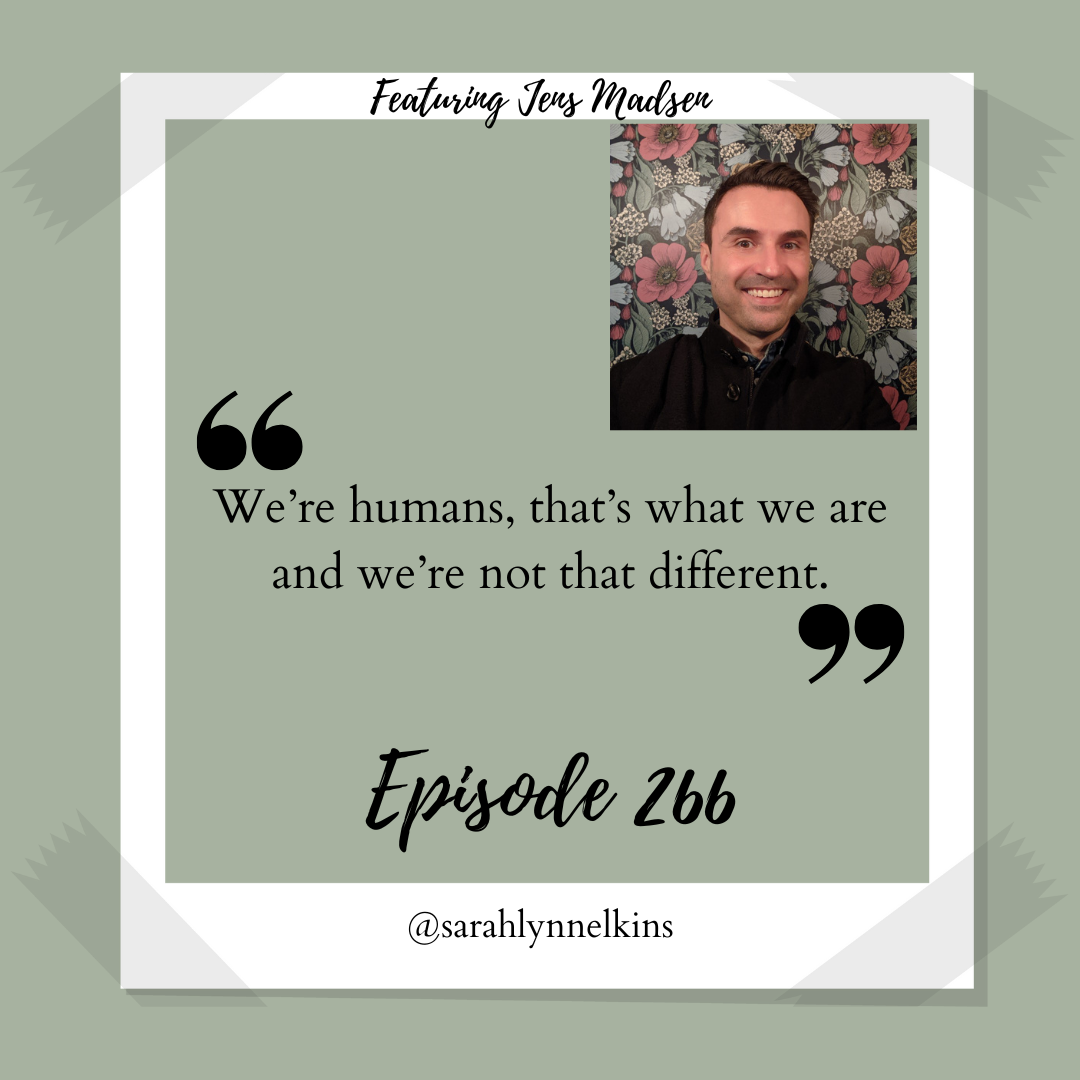
Jens works as a cognitive neuroscientist at the City College of New York where his work spans the intersection between cognitive psychology, neuroscience and artificial intelligence. Jens is originally from Denmark where he was trained in computer science and artificial intelligence, before he moved to New York City to pursue a career in neuroscience. Now he works on both developing techniques that measure attention when we engage with narratives (e.g. podcasts, movies or music) using neural, behavioral and physiological signals. Recently this work has led to investigating what it is in narratives that attracts our attention.
Connect with Jens on his Twitter and LinkedIn as well as his website at jensmadsen.com!
About Sarah
"Uncovering the right stories for the right audiences so executives, leaders, public speakers, and job seekers can clearly and actively demonstrate their character, values, and vision."
In my work with coaching clients, I guide people to improve their communication using storytelling as the foundation of our work together. What I’ve realized over years of coaching and podcasting is that the majority of people don’t realize the impact of the stories they share - on their internal messages, and on the people they’re sharing them with.
My work with leaders and people who aspire to be leaders follows a similar path to the interviews on my podcast, uncovering pivotal moments in their lives and learning how to share them to connect more authentically with others, to make their presentations and speaking more engaging, to reveal patterns that have kept them stuck or moved them forward, and to improve their relationships at work and at home.
The audiobook, Your Stories Don’t Define You, How You Tell Them Will is now available!
Included with your purchase are two bonus tracks, songs recorded by Sarah's band, Spare Change, in her living room in Montana.
Interested in No Longer Virtual? Check out the details and register at elkinsconsulting.com/nlv-home
Be sure to check out the Job Interview Storytelling Course as well to make sure you nail that next interview!
202: Becoming a Scientist: Why Do Stories Matter?
Indulge in this engaging conversation with Sarah Elkins and Scott Hanton, Editorial Director for Lab Manager Magazine and former Industrial Chemist and business leader for 30 years. They explore the beginning of his interest in becoming a chemist, as a young 13-year-old listening to a random man share his work stories, a moment that would instill a life-long passion for him.
Scott Hanton Has Firsthand Experience in the Power of Stories In His Journey to Becoming a Chemist
What do you want to be remembered for when you leave this world?

Indulge in this engaging conversation with Sarah Elkins and Scott Hanton, Editorial Director for Lab Manager Magazine and former Industrial Chemist and business leader for 30 years. They explore the beginning of his interest in becoming a chemist, as a young 13-year-old listening to a random man share his work stories, a moment that would instill a life-long passion for him. This was Scott’s “lollipop memont”, and was only the start - flash forward to Scott’s career today as he and Sarah discuss how managers treat their employees, as well as how our work and stories change others' perceptions of us.
Don't miss this great TED talk, where Drew Dudley talks about "lollipop moments" in the context of everyday leadership. This was a game-changer for Scott.
*podcast show notes contributed by Tracy Ackeret
About Scott:
Scott attended Michigan State University and received his Bachelor’s of Science in Chemistry, before earning his PhD in Physical Chemistry from the University of Wisconsin-Madison. Scott was an industrial chemist and business leader for 30 years. His titles included General Manager, Laboratory Operations Manager, and Chief Scientist for Intertek Allentown. Scott also held the roles of research scientist, laboratory supervisor, and section manager. Currently, Scott is the Editorial Director for Lab Manager Magazine.Due to these positions, Scott has developed expertise in analytical characterization, people leadership, and business management. Scott is an active member of ACS, ASMS, and ALMA.
Visit Scott’s page on Lab Manager Magazine and follow him on LinkedIn.
*podcast show notes contributed by Tracy Ackeret
ABOUT SARAH:
"Uncovering the right stories for the right audiences so executives, leaders, public speakers, and job seekers can clearly and actively demonstrate their character, values, and vision."

In my work with coaching clients, I guide people to improve their communication using storytelling as the foundation of our work together. What I’ve realized over years of coaching and podcasting is that the majority of people don’t realize the impact of the stories they share - on their internal messages, and on the people they’re sharing them with.
My work with leaders and people who aspire to be leaders follows a similar path to the interviews on my podcast, uncovering pivotal moments in their lives and learning how to share them to connect more authentically with others, to make their presentations and speaking more engaging, to reveal patterns that have kept them stuck or moved them forward, and to improve their relationships at work and at home.
The audiobook, Your Stories Don’t Define You, How You Tell Them Will is now available!
Included with your purchase are two bonus tracks, songs recorded by Sarah's band, Spare Change, in her living room in Montana.
Episode 201: What is Risk? And How Can Storytelling Change How We Think About It?
Telling stories is more than just passing time, stories change our viewpoints in life and help us to become risk-takers.
Jonathan Klane Knows How Stories Change Attitudes and the Science Behind Why They Work
Telling stories is more than just passing time, stories change our viewpoints in life and help us to become risk-takers.

Hear from Sarah Elkins and Jonathan Klane as they dive into the science behind stories, the science behind how stories affect our perceptions of risk, and why the stories we tell are important.
Sarah and Jonathan discuss the importance of storytelling and the true impact it can have in your career, relationships, and more.
You'll love hearing about Jonathan’s rejection from the Dallas Cowboys Cheerleaders, and the story of his father’s experience surviving an attack while serving as a sailor with the Navy in Okinawa in WWII.
“Stories are a powerful medium.”
*podcast show notes contributed by Tracy Ackeret
About Jonathan:

Jonathan grew up in New England, before moving southwest to work in safety at the Fulton Schools of Engineering at Arizona State University. There he enrolled in a Ph.D. program for Human + Social Dimensions of Science + Technology.
Jonathan uses this Ph.D. to explore how stories affect risk and safety cultures in and around research labs, where people have been harmed and even killed due to lack of decision-making.
Jonathan Klane is the Owner/Founder of Klane’s Education Information Training Hub and Director of Risk Management and Safety Education at BioRAFT.
In his free time, Jonathan enjoys writing fun stories about risk.
ABOUT SARAH:
"Uncovering the right stories for the right audiences so executives, leaders, public speakers, and job seekers can clearly and actively demonstrate their character, values, and vision."
In my work with coaching clients, I guide people to improve their communication using storytelling as the foundation of our work together. What I’ve realized over years of coaching and podcasting is that the majority of people don’t realize the impact of the stories they share - on their internal messages, and on the people they’re sharing them with.
My work with leaders and people who aspire to be leaders follows a similar path to the interviews on my podcast, uncovering pivotal moments in their lives and learning how to share them to connect more authentically with others, to make their presentations and speaking more engaging, to reveal patterns that have kept them stuck or moved them forward, and to improve their relationships at work and at home.
The audiobook, Your Stories Don’t Define You, How You Tell Them Will is now available!
Included with your purchase are two bonus tracks, songs recorded by Sarah's band, Spare Change, in her living room in Montana.
Episode 172: When You Engage All of Your Talents, You Can Change the World
The moment I saw Bejanae's face on my Zoom screen, I was filled with relief, comfort, and absolute certainty that she would entertain, add insight, and bring much needed light to my day.
The conversation began with an explanation of her unusual, melodic name, shifted to a discussion about the program her agency sponsored for students in the Atlanta, Georgia region, made its way to the difference between STEM (Science, Technology, Engineering, Math), and STEAM (add Art in there), and back to Bejanae's pivotal moments in her career, which includes the story about the program we discussed earlier in the show.
Bejanae Kareem: Stories of Joy Found in Combining Her Talents to Change the Lives of Teachers & Students
The day of this recording didn't start out great. As a matter of fact, I was feeling seriously low energy - I almost asked my guest to postpone.

Bejanae Kareem podcast cover art
Instead, I got myself an espresso and rallied because I knew I'd spend the rest of the day wondering why I didn't just do what I knew I needed to do.
The moment I saw Bejanae's face on my Zoom screen, I was filled with relief, comfort, and absolute certainty that she would entertain, add insight, and bring much needed light to my day.
The conversation began with an explanation of her unusual, melodic name, shifted to a discussion about the program her agency sponsored for students in the Atlanta, Georgia region, made its way to the difference between STEM (Science, Technology, Engineering, Math), and STEAM (add Art in there), and back to Bejanae's pivotal moments in her career, which includes the story about the program we discussed earlier in the show.

Bejanae Kareem holds up her notes as we discuss “to do” lists.
Bejanae shared a story of an "ah ha" moment as a young girl, when her teacher talked about "to do" lists. The idea of writing down tasks and crossing them off her list was enlightening to her. She continues to find great value (and entertainment) in writing down and crossing things off her lists. (See accompanying image.)

Bejanae Kareem in the antigravity chamber
During the conversation, Bejanae spoke about her free ebook: 12 Quick Steps to Writing Winning Classroom Grant, and her free Grant Checklist.
This woman exudes intelligence, compassion, wisdom and warmth. You are going to want to connect with her to learn more about her company by clicking on this website link, connecting with her on LinkedIn, and following her on Instagram.
---
ABOUT SARAH:
"Uncovering the right stories for the right audiences so executives, leaders, public speakers, and job seekers can clearly and actively demonstrate their character, values, and vision."

Sarah Elkins and her dog, Toblerone on Mt. Helena in Helena, Montana
In my work with coaching clients, I guide people to improve their communication using storytelling as the foundation of our work together. What I’ve realized over years of coaching and podcasting is that the majority of people don’t realize the impact of the stories they share - on their internal messages, and on the people they’re sharing them with.
My work with leaders and people who aspire to be leaders follows a similar path to the interviews on my podcast, uncovering pivotal moments in their lives and learning how to share them to connect more authentically with others, to make their presentations and speaking more engaging, to reveal patterns that have kept them stuck or moved them forward, and to improve their relationships at work and at home.
The audiobook, Your Stories Don’t Define You, How You Tell Them Will is now available!
Included with your purchase are two bonus tracks, songs recorded by Sarah's band, Spare Change, in her living room in Montana.